There’s something immediately likable about Sharpshooter Soundworks turning around and refusing to aim at the same target twice. Andrew Shabazz’s “Breakin’ All The Rules (Massive)” pulls from jungle, breakcore, old-school instrumental textures, and that dusty kind of break energy that feels like it came from someone digging through older musical DNA instead of just chasing the most obvious modern reference, but there’s more going on here than just his latest single; if you look at the present in tandem with his past discography, then you start to see a far bigger and more nuanced backdrop.
Then you hear him talk about “Marching Orders,” and suddenly the same project is dealing with snare rolls, cinematic loneliness, progressive-rock drum instincts, and an image of a man walking down a road in the middle of nowhere.
That is the part I kept coming back to with this one. Sharpshooter Soundworks feels more like a personal workshop, where Shabazz can pull from jungle one week, cinematic instrumentals the next, and maybe an indie pop or rock record once he feels ready to bring his own vocals fully into the process.
That freedom matters, especially now, when so much independent music gets pushed toward narrower branding before the artist has even figured out what they are good at.
The throughline is curiosity.
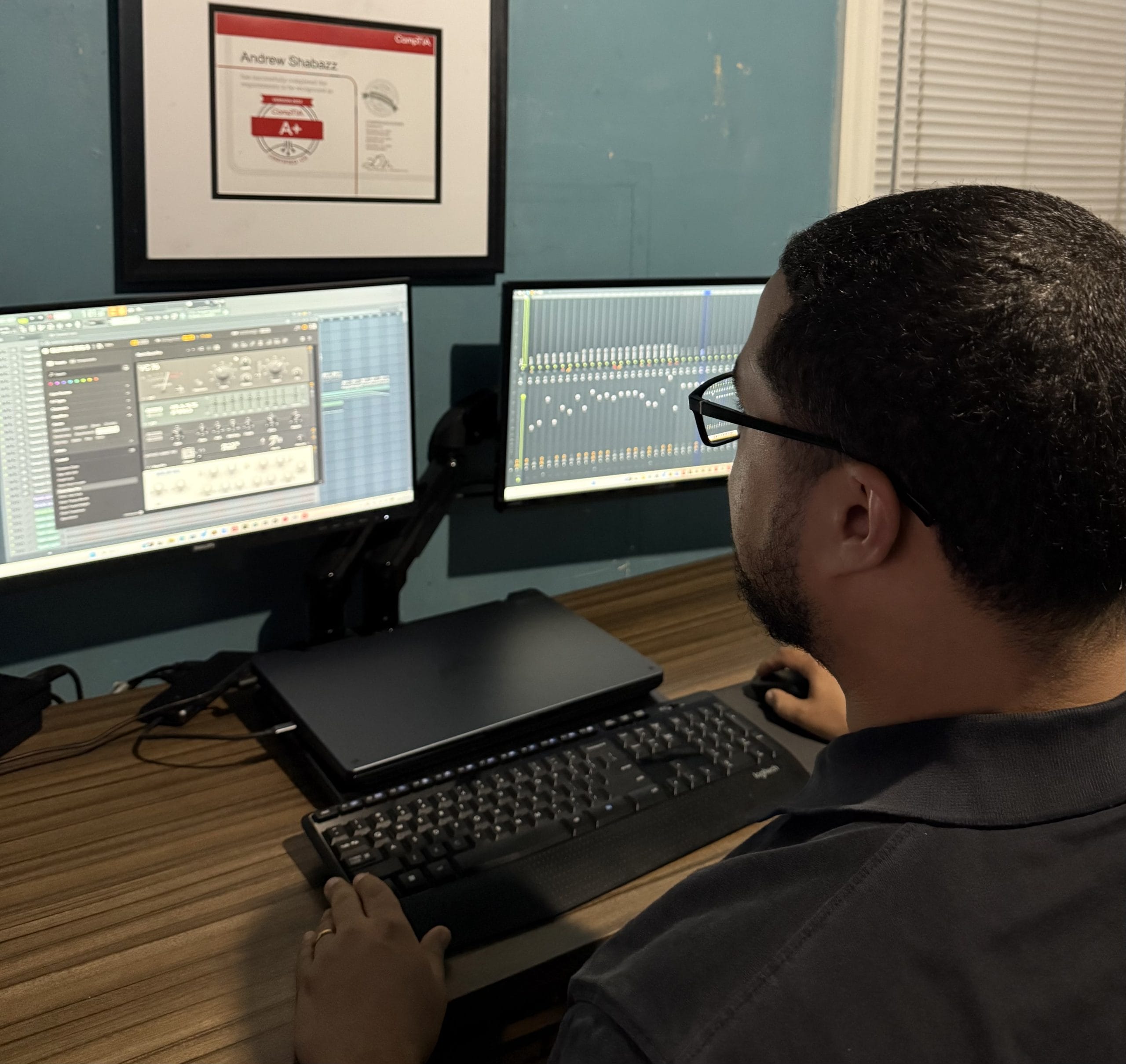
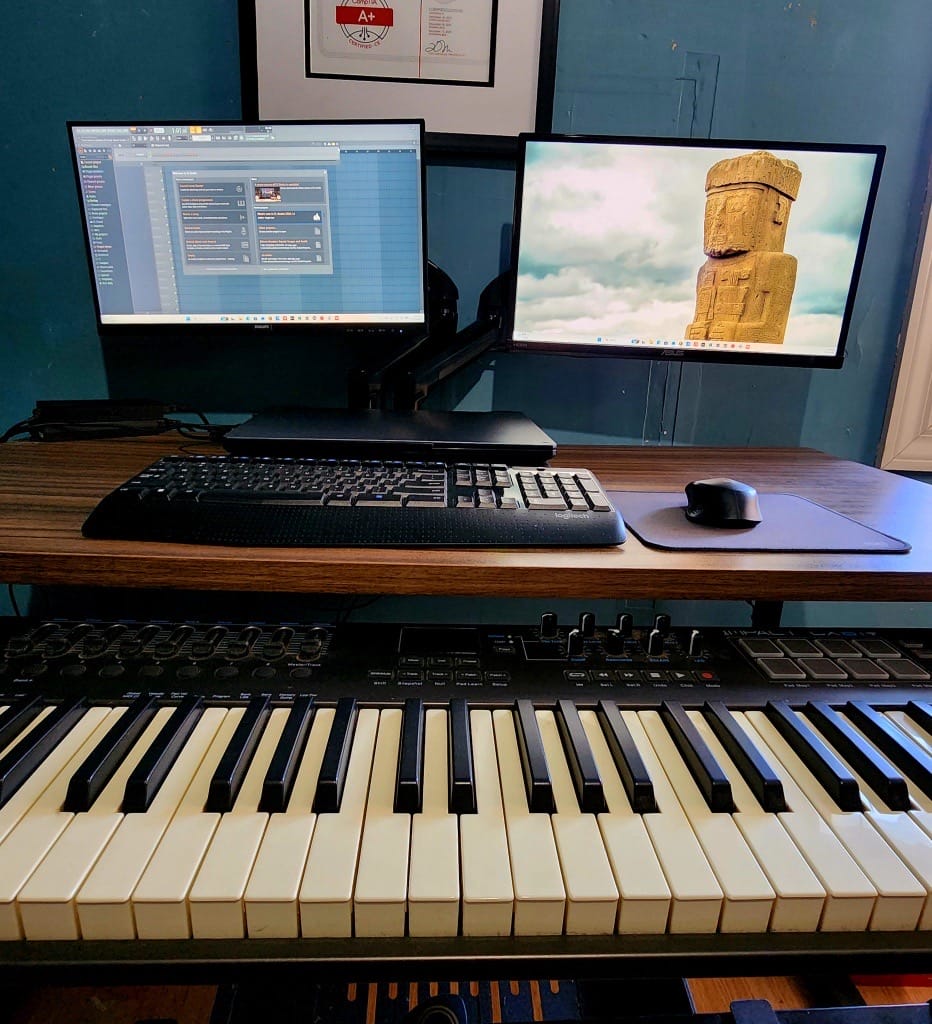
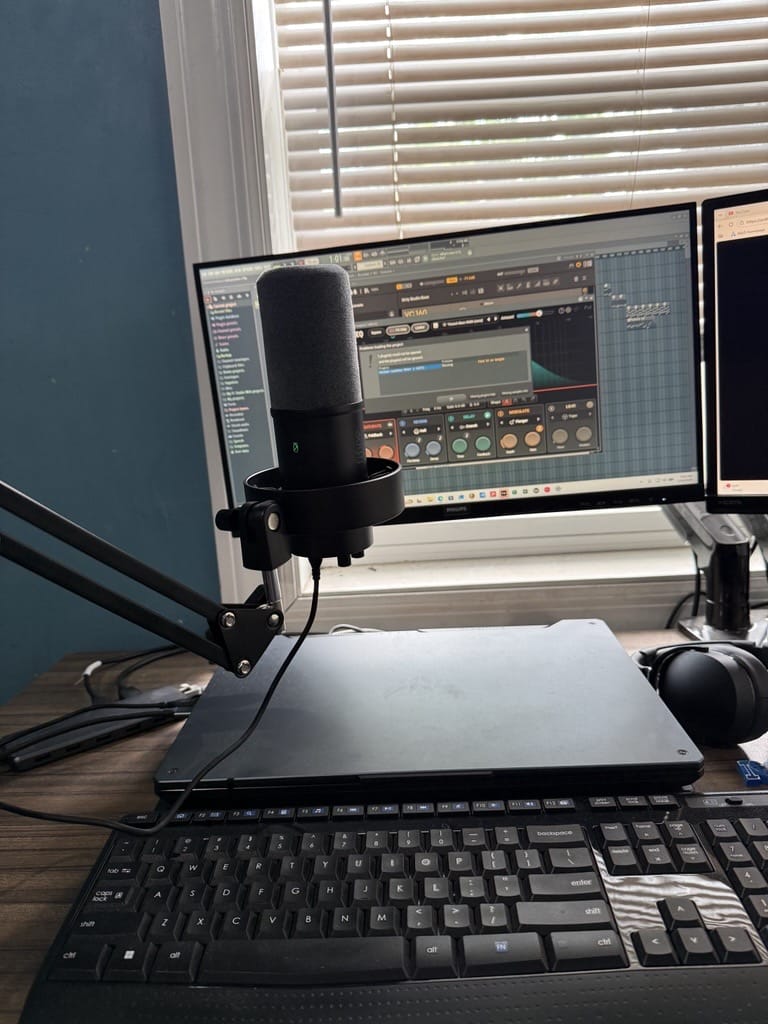
Shabazz has been making music for more than a decade, but he still talks like someone who opens FL Studio because there is one more sound to try, one more arrangement to chase, one more style that might teach him something he could not have learned from the last record.
In our discussion with him below, he talks about learning through production, why Sharpshooter Soundworks gives him room to avoid one-genre thinking, how “Marching Orders” grew from drum rolls and mental imagery, and why writing vocals may be the next real wall he wants to climb.
Interview With Sharpshooter Soundworks

After a decade of making music, what still gives you that feeling of wanting to open FL Studio and try something immediately?
The thing that really motivates me is learning and getting better. I really love experimenting with sound design and learning new aspects of composing and songwriting, and even though I’ve been producing for a while now, I am always getting better little by little.
What does Sharpshooter Soundworks let you express as a project, especially when the songs can take such different musical directions?
For me, more than anything else, it’s a creative vehicle that lets me put out any and everything I want with no limitations. I could never really see myself as the type of artist that must make music in a single genre.
With “Marching Orders,” what interested you about building a song around snare rolls, and what did the earliest version sound like?
I just really like drum rolls and fills. I’m a big fan of the complex type of drumming you hear in jazz or progressive rock. The earliest version sounded completely different. The melody was more stripped down, and I actually ended up writing a few different alternate versions before the final release.
What did the title “Marching Orders” mean to you when you chose it, and did that meaning change while you were working?
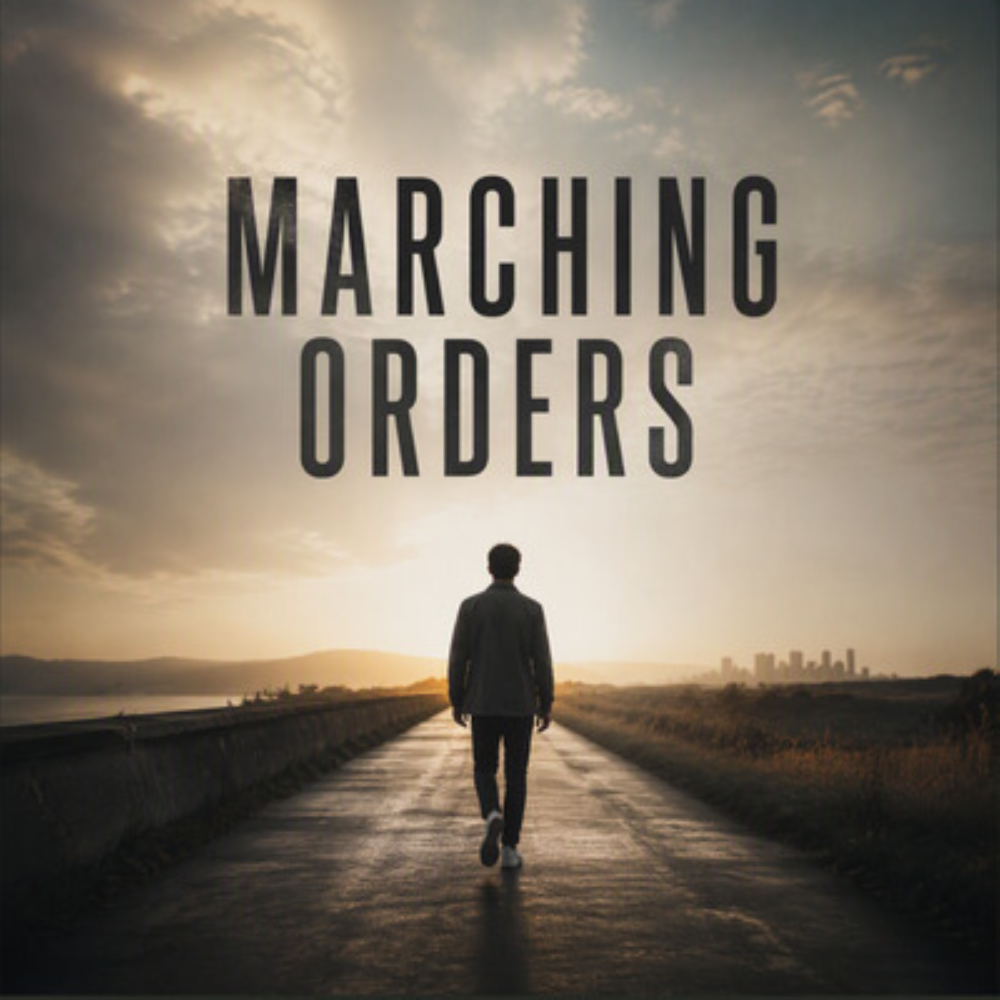
The title and the sound overall put some really specific scenes in my mind, one of them being the solo cover that I ended up going with: a man walking down a road in the middle of nowhere.
To me, this track is really contemplative on one hand and cinematic in the middle and at the end. I actually began a rough draft of lyrics that went something like, “you’re on your own, in a place you never thought you’d ever end…” That’s the idea I’m going for.
Who gets to hear your work before release, and what kind of response helps you assess a track when you’re working in a style that’s new to you?
I like to preview my tracks to as many people as I can, from my friends to my family, to my coworkers, really anyone who wants to hear. I also have been using SubmitHub and platforms like that recently to gauge releases.
The thing about being an artist is that most of the time the people closest to you are the ones who are least impressed by your work because they don’t see you as an artist. They just see you as a friend or cousin or whatever, haha.
After these two records, what are you curious to attempt next, and what would you like the process to teach you?
I’ve actually been curious to try my hand at writing and recording vocals. I plan to actually turn “Marching Orders” into one of the tracks on an upcoming indie pop/rock album. No ETA on this, just something I’m working on little by little.
I am a naturally good singer and I’ve always had people tell me so, but I’ve struggled a lot with writing my own lyrics and coming up with my own vocal melodies and rhythms. Writing instrumental music is easy for me, but this will be a new challenge. I’m sure that this will teach me what I’m capable of moving forward and maybe open me up to more opportunities.That range seems to be the whole appeal of Sharpshooter Soundworks. Shabazz is not positioning the project as a fixed genre identity. He is using it as a way to keep testing himself, whether that means jungle, instrumental writing, cinematic ideas, rock, pop, or eventually the vocal-led material he has started working toward.
Closing Thoughts
What I like about Shabazz’s answers is that he still sounds hungry in a very normal, producer-brained way.
It shows that “Marching Orders” is almost the other half of the picture that you’r rewarded for seeing after you dig a little deeper. Instead of starting from rave pressure, it starts from the sort of drummer-brain detail that can give an instrumental a real spine. Snare rolls can feel corny fast if they are just there for drama, but Shabazz’s explanation gives them a scene: a person walking down a road in the middle of nowhere, alone, with the track sitting somewhere between reflection and tension. That is why the title works. It gives the instrumental room to breathe without forcing it to explain every part of itself.
That sits close to the way we talked about sample work and raw groove in Carlo’s Jungle Magic How It Was Made feature. Different lane, different tempo logic, different end result, but the useful lesson is similar: the track needs a clear physical idea before all the extra production decisions start mattering. If the movement is there, the rest of the record has something to orbit around.
His answer about friends and family is painfully accurate too.
Most artists know that weird feeling of playing a track for someone close and realizing they are hearing you before they hear the record. They know the regular-life version of you too well. That doesn’t make their feedback useless, but it explains why outside reactions can help, especially when you are testing a style that is new for you. At some point, the music has to leave the group chat and survive in front of people who do not owe you encouragement.
The next step may be the most interesting one.
Shabazz says instrumental writing comes naturally, but lyrics, vocal melodies, and vocal rhythms are harder. That is exactly the kind of challenge that can open up a new version of a project. We see that often in production-focused artists who eventually start working with voice: the arrangement suddenly has to make room for phrasing, breath, hooks, and lyrical weight.
Even in our Malvae interview about Chrysalis, we get a useful reminder that vocals can completely shift a track’s center, even when the artist starts from a textural or instrumental mindset.
That is the reason Sharpshooter Soundworks feels worth watching at this stage. “Breakin’ All The Rules (Massive)” shows the break-driven side. “Marching Orders” shows the cinematic instrumental side. The next vocal-led material could send the project somewhere else again, and that seems to be the point. Shabazz does not need the project to sit still. He needs it to keep teaching him what he can do next.

Magnetic byline note: This byline is used for staff produced updates and short announcements, often based on press materials and official release information. Editorial responsibility: David Ireland (Editor in Chief) and Will Vance (Managing Editor). About: https://magneticmag.com/about/ Masthead: https://magneticmag.com/masthead/ Contact: https://magneticmag.com/contact/