Berlin-based composer and producer Lang Father has spent his career moving between hip hop, electronic music and scoring, with past work stretching from Timbaland collaborations to film composition. His new two-track EP, I (Junkyard Dog), sees him turn that broad musical background towards a rawer, jazz-inflected strain of house, drawing on the looseness of J Dilla and the deep, off-centre sensibilities of Moodymann and Theo Parrish.
Released on WeLoFi, the title track is built from resampled synths, swung percussion, saxophone, vocal fragments and layers of submerged texture. Here, Lang Father gets into the details of how it came together.
Wave Evolve Pad

The main synthesizer used is just a wavetable synth called wave evolve pad that I reverse engineered. It’s maybe one of the more standard instrument rack presets, but I wanted to kind of rebuild it, but also create something that was very simple and straightforward that more so emphasized the development of the drums and bass parts. An evolving pad is really just a continuous kind of atmospheric synthesizer sounds. Very simple. But it creates tonal and texture movements and changes as it as it develops. But the initial pad sound that I built is miles away from what is on the record. That came from all the sound design processing I did after.
Wave Evolve Pad Processing

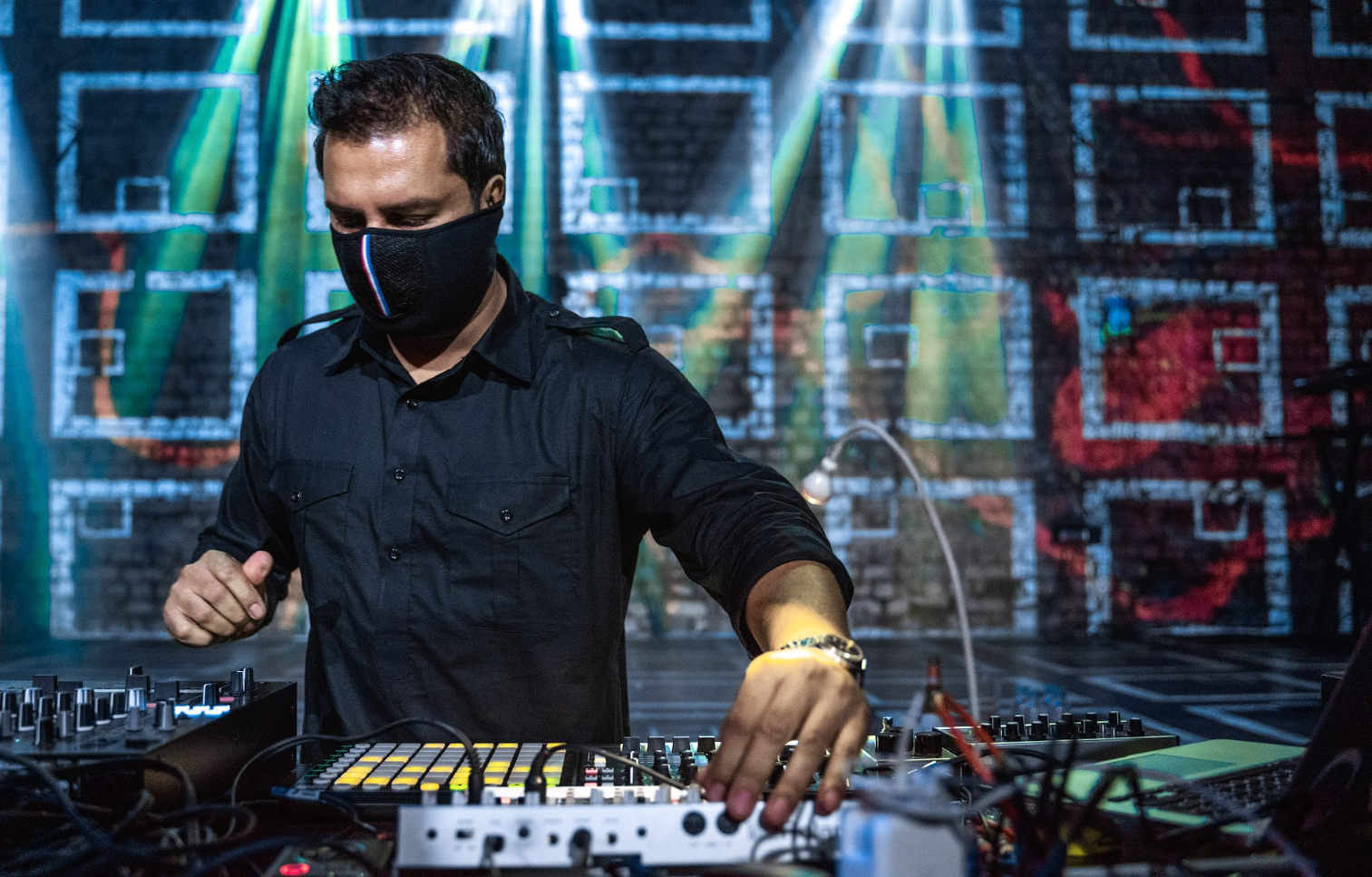
The processing was a lot of trial and error, which is a big piece of my overall process. A lot of my sessions, I use Ableton. I play piano for the most part to develop ideas, and a lot of it comes from digging and hammering and trying different ideas, using Ableton like a sketchpad. I could have four or five different versions of the same idea all stacked on top of each other, and then I filter through and find what I’m looking for.
So as I go through this, I’ll resampled the Wave Evolve pad I was using with multiple different effect chain ideas. In that, there’s an arpeggiator that came from it, and then there’s a half-time version. From there, I have three or four different versions of the same idea, some using just saturators, some reverbs and compressors, very simple. Then a pretty heavy dose of side-chaining on the synth part alone, to create even more movement and bounce. This allows the drums to fill in all the space that I left open with such deep dub heavy synth part.
On top of that, I used a vocal chop of just the word “I.” So what happens is you’ve got this synth part moving and developing, and then at the end of each phrase, you have one stab of this vocal. And that stab of the vocal trails into the next bar. So I was able to leave a huge amount of space and just allow the drums to really develop and flourish, and I could have a lot of very small, simple little drum pieces all moving together.
A lot of those drum parts were really jazz inflected. There’s a lot of swing rhythms on the rides, and there’s some small stabs on a snare that come straight off of a jazz drum solo that I sampled. Then there’s another sampled hi-hat part that comes from a jazz break. So a lot of it was very jazz inflected for me, and then also using a saxophone and trying to keep everything very simple and just letting the groove evolve and morph, and this endless monotony is happening. But at the same time, you have all these very jazz-inflected moments happening, and then there’s a whole lot of space in the middle, kind of in the midsection where there would be a vocal or a lead part. I wanted to get rid of all of that.
The final detail of the composition is the synth, the vocal sample and the saxophone all build through the song to create a 1,2 and 3 part harmony. When you get to the final note played by the saxophone the two vocal parts and sax note make up a triad. Which was just me using again, more jazz based melodic structures to build a certain type of mood and musical idea.
Wave Evolve Pad Tips
I think really, for whatever this particular subsection of house music or dance music, however you would want to call it, it’s really rooted for me in jazz. Not necessarily in the specific technical details of it, more so just in the sonic intention. And I know that for me, a lot of this was built more in resampling. So I think a main pointer that I would say is never really just look at opening a synth and then programming it, or finding something in it and then just going with that, because sometimes that can be a little too dry for me. So I’m always interested in how many times can I resample this, how many times can I redo this, how deep can I get into changing and altering but outside of the synthesizer. So I guess maybe that’s something to look at.
Also, I would say don’t be afraid to leave some dirt. Sometimes you can overmix. Sometimes you can overdevelop. Sometimes things can get a little too clinical if you’re trying to do something a little more in this world, whatever this world might be. So leave some dirt. Leave some mistakes sometimes and see what they turn into as you go, and let things just develop on their own in terms of how it’s being arranged and where the sonic landscape is taking you.
And then I think my final pointer would be nothing is ever really on the grid. That’s a key one. Keep everything bouncy and left and right and push and pull, and then it really starts to feel like one true breathing entity.
Cassette / RC20
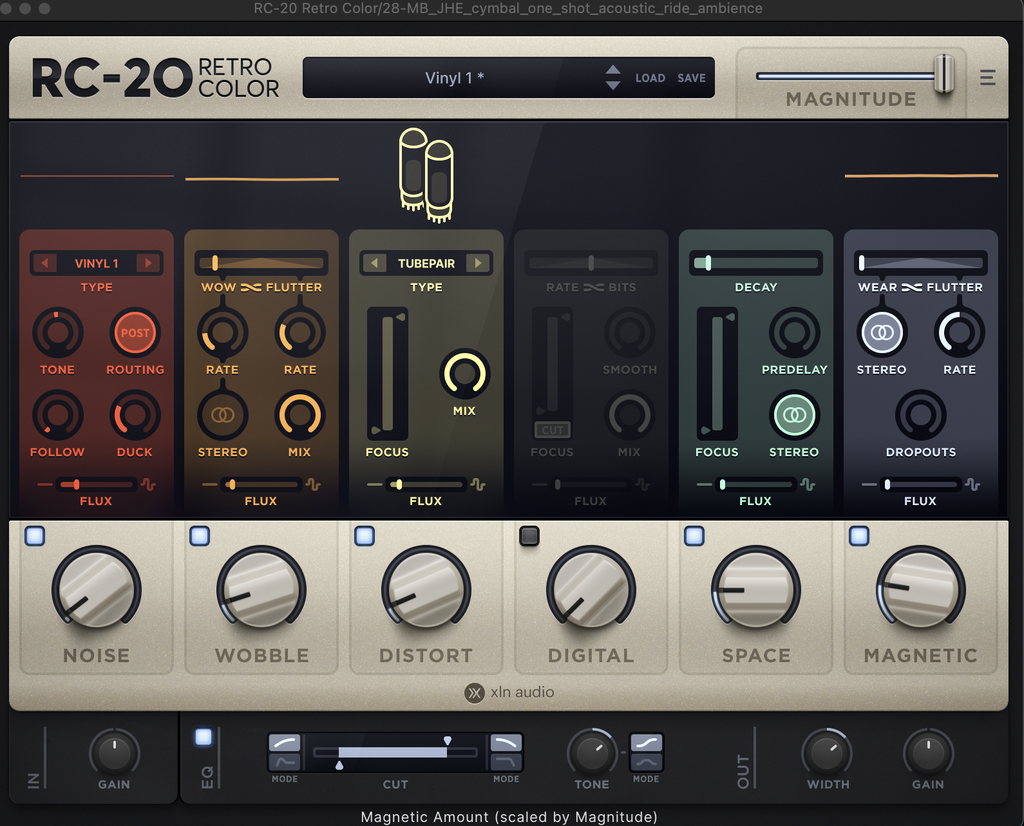
I don’t think there’s one specific plugin that I can point to that had a massive creative and specific effect on where this track went and why. But what I would say is that the intention of the overall tone of the track was very much to keep a lot of the high frequencies very open and empty, and create this really deep, rich, subterranean thing happening. There’s a huge amount of texture. I’ve got rain, and I’ve got club noise, like people cheering, and I have a sample of Moodymann speaking in it, all kind of buried under the surface. And then on top of that, I have a huge amount of very almost inaudible, tiny little percussive things happening, all weaving together. But most of that isn’t really heard if you were to just play it through a phone or if you were to just listen in passing. And a lot of that came from a huge amount of EQing and using things like Cassette and RC20 to create a lot of density and richness in an almost retro feel.
Knock
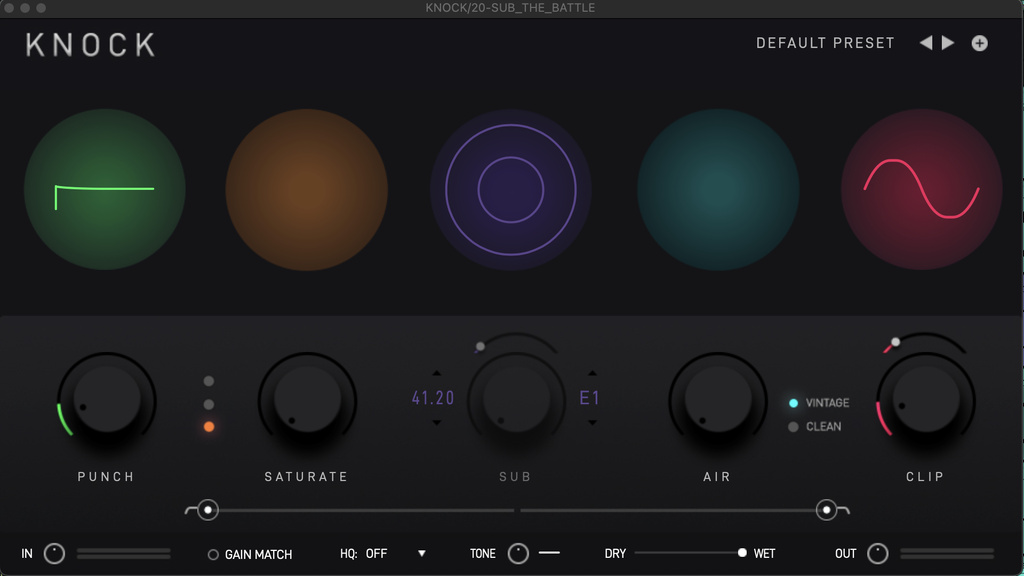
So I think the intention of how I was processing is more specific to what I was trying to do than any actual plugin. I could mention RC20, or I could mention Valhalla, or I could mention Neutron 4, but they’re all very inconsequential in terms of the overall scope. It’s gradually building everything together. Another plugin I would mention is one called Knock, which is like a saturation limiter, but a super high depth one. It’s kind of limiting and saturation on steroids for drums. Again, I use that very sparingly, across the kick drum or on the hi-hat, just to create some more air. But I think it’s more the building of all the textures together, and then how do I harness all of that and place it into a space where it’s all sitting under the surface.
Space and Layering
I think to make something like this, it’s really about space and layering. So I was trying to always create a huge amount of depth kind of under the surface all the time. So finding small percussive details, textures, maybe some small sonic ideas, compositional ideas that are weaving together, but always trying to make sure that everything or like, seventy percent, eighty percent was happening under the surface because I wanted this really big kind of vast, spacious ocean to kind of live above the surface, on the kind of the upper side that would then be filled very gradually with vocal and saxophone. So the idea really was to make everything feel like it was all happening kind of down in the depths. the subterranean and the sub territory to make everything feel really rich and kind of nocturnal and almost woozy.
Quickfire Tips
Tip #1
Heavy amounts of layering to create depth and texture, keep building and stacking different tiny details and look to make most of them almost inaudible; felt, not heard.
Tip #2
Don’t be afraid of empty space in the mid and high frequencies. Let your track breath and develop through rhythm and repetition. Sometimes the right note (either sung with a vocal or played with a synth) can have a profound effect where a whole melody line will just feel to full and busy.
Tip #3
Focusing on the compositional elements of the record is as important as the rhythm and mixing. Even if it’s really minimal. Make sure there is a clear compositional intention with each instrument, how they elate to each other, why they are chosen and what they represent.
Lang Father – i(Junkyard Dog) is out now on Welofi