Table of Contents
Fraimic brings digital art to you home in all the right ways. There has always been something slightly uninspiring about the traditional digital photo frame and Fraimic fixes that.
Most look less like art and more like an iPad that has been sentenced to spend the rest of its life displaying vacation photos on a bookshelf. They’re bright, they’re obviously electronic, and no matter how tasteful the slideshow, you’re still looking at a glowing rectangle. Ok, that’s a bit harsh, there are some cool options out there that have improved the matte finish, but they are still glowing screens.

Why is Fraimic different?
Rather than trying to make a screen look decorative, Fraimic starts with the premise that the technology should disappear once it hits the wall. Its full-color E Ink Spectra 6 display has no backlight, no glossy LCD sheen, and no power cable dangling down the wall.
Instead, Fraimic uses the ambient light in the room much like paper or a physical print. No light, no art.
That distinction is what makes this smart E Ink canvas interesting. Fraimic isn’t really trying to be a better digital photo frame. It’s closer to a reusable piece of wall art, one capable of displaying your own images, illustrations, photography, public-domain artwork, or entirely new pieces generated using Fraimic’s Voice-to-Vision AI system.
For people who love art but don’t have endless wall space, storage space, or the budget to rotate framed prints every few months, the idea starts making a lot of sense.
And for anyone who has stared at the same piece on the wall for four years and suddenly thought, I was really into that in 2022, Fraimic offers an intriguing and logical alternative.
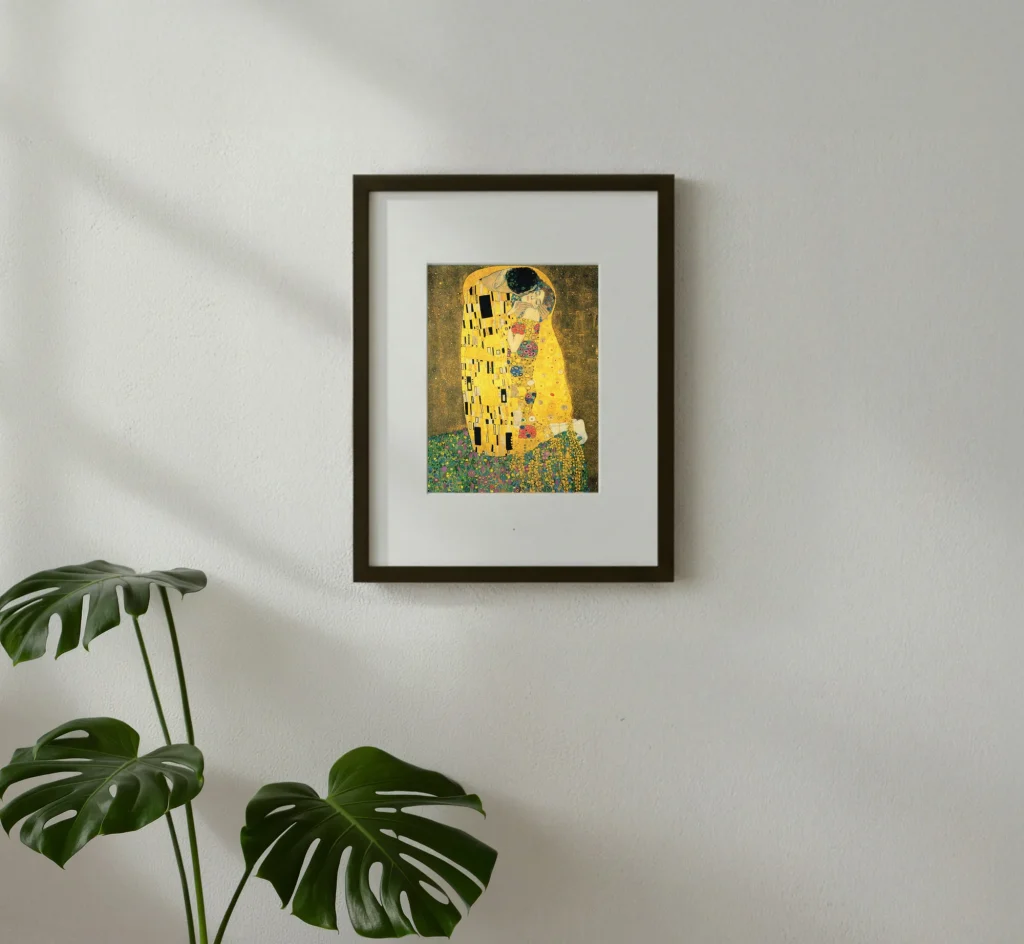

So who is the Fraimic for?
The more useful way to think about Fraimic is as changeable wall art.
Hang it where you would normally put a framed print, photograph, or illustration, and then change what’s inside whenever you want. Unlike an backlit based digital frame, the display doesn’t emit light, so when Fraimic is sitting on your wall it behaves far more naturally within the room.
It is particularly appealing to apartment dwellers and homeowners with limited display space. Instead of dedicating one wall to one image indefinitely, the same space can hold dozens, or hundreds, of pieces over time.
It’s also an interesting proposition for artists, illustrators, graphic designers, and other creatives who want a physical way to cycle through their own work. There is something cool about the ability to design something and immediately get the satisfaction of it sitting in a frame on your wall.
Then there are people who simply enjoy changing up their interiors. New season? New artwork. Dinner party? Change the room. That flexibility is one of the key selling points of the product.

Fraimic Build Quality And Design
Fraimic understands one critical thing most people don’t want their living space to look overly geeky or man cave-ish, well some but that’s not the target audience here.
The included dark walnut wood frame is intentionally conventional, and that’s a compliment. Once Fraimic is hanging on a wall, there isn’t much announcing that a fairly sophisticated piece of technology is hiding behind the mat.
There is no constant glow. No slideshow transition happening in your peripheral vision. Fraimic simply sits there and displays art.
The Standard Canvas comes inside a 14 x 18-inch frame with a 13.3-inch E Ink Spectra 6 display. The larger model jumps substantially in scale, pairing a 31.5-inch display with a 24 x 36-inch frame. Both can automatically orient themselves for portrait or landscape installation.
The Standard version is probably the sweet spot for most homes. It’s substantial enough to register as a legitimate piece of wall art without requiring a major interior-design commitment every time you move it.
The 24 x 36-inch Large Canvas is another animal entirely. At that size, Fraimic stops being a decorative object and starts becoming part of the room. Give it the right wall and it can act as the visual anchor for an entire space.
One Of Fraimic’s Best Features: You Can Change The Frame
One of the smartest aspects of the Fraimic design has almost nothing to do with electronics. The canvas isn’t permanently married to the supplied frame. So yes, your highly detailed significant other can “customize” it if there is any frame conflict.
Fraimic designed the display assembly so it can be removed from its included dark walnut frame and installed into many other appropriately sized frames. The company describes the philosophy simply: this is supposed to be a smart E Ink canvas, not a proprietary smart frame.
That distinction matters.
A walnut frame may look fantastic in one room and completely wrong in another. Maybe your house leans Scandinavian. Maybe it’s Victorian. Fraimic can adapt.
The ability to integrate the display into a frame that better matches your furniture, existing artwork, and interior design makes this product considerably easier to imagine owning for years rather than treating as another piece of temporarily fashionable consumer electronics.

Fraimic Specs
The Standard and Large Fraimic canvases share the same underlying philosophy but target very different spaces.
Standard Canvas
- 13.3-inch E Ink Spectra 6 color display
- 1600 x 1200 resolution
- 150 PPI
- 14 x 18-inch frame
- 65,000+ display colors
- Portrait and landscape orientation
- USB-C charging
- Wi-Fi connectivity
- Matte, paper-like anti-glare display
- No backlight
- Removable dark walnut wood frame
- 10,000mAh battery
Large Canvas
- 31.5-inch E Ink Spectra 6 color display
- 2560 x 1440 resolution
- 94 PPI
- 24 x 36-inch frame
- 65,000+ display colors
- Portrait and landscape orientation
- USB-C charging
- Wi-Fi connectivity
- Matte, paper-like anti-glare display
- No backlight
- Removable dark walnut wood frame
- 10,000mAh battery
Fraimic currently lists the Standard Canvas at $399 and the Large Canvas at $1,299.
The other big E Ink advantage is power consumption.
Once an image has been written to the display, the panel doesn’t need continuous power to keep displaying it. Fraimic says the Standard model can generally run for at least three years on a charge depending on how frequently images are refreshed.
That’s an almost comically different relationship with charging than most modern technology.
You charge your phone every night. Your headphones every few days. Your smartwatch often enough that forgetting the proprietary charging puck before a trip becomes a legitimate travel crisis.
Fraimic can essentially become part of the furniture.

Fraimic Setup And Connectivity
Smart-home products tend to reveal their true personalities during setup. My Meural has been a pain in the ass ever since I bought it, from disconnecting to having to reboot, it never functions smoothly.
A beautifully designed gadget can burn through a considerable amount of goodwill after 45 minutes of router rebooting, pairing, firmware updating, and angrily creating an account that you will never remember the password for and it will always log you out when you need to log in. “Forgot Password” anybody?
Fraimic keeps things refreshingly simple, and this is by design. The founder hates having download apps, and I’m with that on every level, you just don’t need another app to control one device.
After charging the canvas, onboarding handles connecting Fraimic to your network and account. From there, the entire system can be controlled through a browser-based interface rather than forcing you to install another dedicated mobile app. Fraimic also offers a local-only mode for users who want to transfer imagery across their home network without relying on third-party cloud services.
We have reached the point where refrigerators, toothbrushes, lightbulbs, sprinklers, and possibly some ambitious kitchen sponges believe they deserve permanent residency on our phones.
Fraimic doesn’t.
Open the website. Manage your art. Close it. Admire the result of you dressed as an astronaut DJing on the moon, see above…
Using The Fraimic Dashboard
The hardware may be what hangs on the wall, but the dashboard is ultimately what determines whether Fraimic becomes something you continue using or an expensive piece of décor displaying the same image for the next seven years.
Fortunately, the basic workflow is straightforward.
From Fraimic’s web interface you can upload artwork and photography, access previous images, manage the canvas, create albums and slideshows, crop images, and browse available artwork. Fraimic automatically helps calibrate, crop, and orient imagery for the display.
It isn’t trying to become Photoshop. You pick an image, make the necessary adjustments, send it to the canvas, and get on with your day. More importantly, the software encourages you to start thinking about artwork as something that can change with your environment.
A graphic Japanese landscape might feel right through winter. Something bright and Mediterranean can completely change the mood of the same room in July. Create an album for the holidays. Build another around black-and-white photography. Change the image before friends come over. You don’t need to do any of this, of course.
But Fraimic makes doing it easy enough that you probably will.

Fraimic Voice-to-Vision AI: When AI Actually Makes Sense
Then there is the feature everybody is going to try five minutes after setting the thing up. Voice-to-Vision.
AI has reached the stage where manufacturers are putting it into products with the enthusiasm and at a rapid rate. In Fraimic, however, generative AI actually makes conceptual sense.
The canvas includes a touch-active area and microphone. Tap the appropriate area of the mat, describe what you’d like to see, and Fraimic converts the spoken request into text before using third-party AI services to generate the finished image. The work around if you don’t want to use credits is to use your AI of choice on your phone or laptop, then to upload to the Fraimic, but talking to the frame is a pretty cool party trick.
The trick is learning how to talk to it. Ask for “a mountain” and, unsurprisingly, you’re getting a mountain. But something like: “Minimalist mid-century travel poster of the Swiss Alps at sunrise, muted orange, cream and dark green, graphic shapes, vertical composition” gives the system much more to work with.
Think of Voice-to-Vision less like placing an order and more like giving direction to an illustrator. Describe the medium. Describe the mood. Describe the palette. Describe the composition. Details. Not that good at prompting detail, don’t worry there are presets that will give you definitive style and take your bad prompting to decent render.
Watercolor, linocut, geometric collage, pencil drawing, retro travel poster, oil painting, airbrush illustration, the stronger your direction, the more deliberate the result tends to feel.
And those more stylized approaches play directly into one of the biggest lessons we learned while using Fraimic.
Fraimic Looks Better With Art And Illustration Than Photography
Fraimic can absolutely display photographs. But photography isn’t always where this E Ink display is at its best. In my opinion it falls flat, and if you really want to display photography something like a Meural is a much better choice.
Spectra 6 has a very specific visual personality. Colors feel more like pigments than illuminated pixels. Tonal transitions don’t behave exactly like they do on a high-end OLED display, and you’re working with a medium deliberately designed to resemble print rather than a glowing screen.
That’s precisely why illustration looks so convincing. Graphic artwork, paintings, poster art, drawings, landscapes, architectural imagery, and pieces with clearly defined shapes and palettes can look remarkably natural on Fraimic. I fooled just about 90% of the people that walked into my house and looked at it, they all thought it was just a painting or poster print. Put the right illustration on the wall and the brain stops thinking display surprisingly quickly.
Photography can be more complicated. Landscapes, architecture, stylized images, and black-and-white photography can work very well, if you are going for a soft illustrated type of effect. Portraits and images built around extremely subtle skin tones or delicate gradients can expose more of the limitations of the technology.
That shouldn’t necessarily be treated as a flaw, although it’s not my personal choice it still results in a pleasant image as long as you are not expecting it to look like a photo. .
Fraimic AI Credits: What You Get And What Costs Extra
The encouraging news is that buying a Fraimic doesn’t commit you to yet another monthly subscription.
Uploading your own artwork and photographs doesn’t consume AI credits, and Fraimic says core features including image uploading, albums, slideshows, frame management, and its Met public-domain discovery section are available without a subscription.
Every Fraimic account currently receives 100 Voice-to-Vision image creations per calendar year.
Unused complimentary credits reset rather than roll over, while purchased credits do carry forward. If you manage to burn through the included allowance—and anyone with children is probably reading that sentence differently—additional AI generations can be purchased separately.
At the time of publication, Fraimic lists additional creation packs at:
- $9.99 for 50 additional creations
- $19.99 for 125
- $49.99 for 400
More importantly, none of that affects your ability to upload your own artwork or photography. Personal uploads don’t consume Voice-to-Vision credits.
That feels like the right model. The AI system is an entertaining and genuinely useful creative layer, but AI isn’t the reason Fraimic remains useful long-term. Your own collection is.
Beyond AI: Building Your Own Digital Art Collection
The novelty of generating ridiculous images may eventually wear off. Probably. What remains is a surprisingly versatile digital canvas for those who crave regular change ups to their space.
You can load it with your own illustrations. Photography. Graphic designs. Artwork you’ve purchased with appropriate digital-display rights. Family creations. Public-domain pieces. Vintage posters. Seasonal collections. For artists and designers, there’s an especially satisfying element to seeing work escape the computer monitor and exist physically within a room.
And Fraimic has already started giving users more to explore beyond their own uploads. The platform includes a Met public-domain Discover page, allowing users to browse artwork sourced from The Metropolitan Museum of Art’s vast public-domain collection.
That points toward what could become an even more interesting part of the Fraimic ecosystem like more curated collections, artist collaborations and beyond.
Is Fraimic Worth It?
For the right person, absolutely. The $399 Standard Fraimic Canvas feels like the strongest value in the range and the easiest model to recommend, and you probably will want two. It’s large enough to function as genuine wall art, compact enough to work in apartments and smaller rooms, and flexible enough that moving it doesn’t require restructuring the entire living room.
The $1,299 Large Canvas makes a far more dramatic statement. At 24 x 36 inches, you’re getting into a size where the piece can define a room. That also means expectations rise considerably at the price, but for a large living room, office, hotel, studio, or commercial environment, the scale changes the experience.
The economics become particularly interesting for people who already buy art prints. A good print, quality matting, and professional framing aren’t cheap. Change that artwork a few times over several years and the math around a reusable digital canvas starts looking considerably less extravagant.
That doesn’t mean Fraimic replaces collecting physical art. It doesn’t and you might compare it to having albums that you like and stream, and owning vinyl that you LOVE!
Fraimic Isn’t A Replacement For Art
This is probably the most important point. Fraimic should not be viewed as an attempt to replace original paintings, photography, prints, or the emotional attachment people develop with physical artwork.
Real art is just that, real art and something that is carefully curated and bought with intent. Sometimes it also has the slightly questionable story about how you bought it at a flea market after two (or three) margaritas and now insist it represents an important period in contemporary outsider expressionism.
Fraimic isn’t competing with that. Instead, it creates another place for art to exist in your life. Most humans crave a little bit of change, something ephemeral and that can be updated easily, like t-shirts.
Maybe you have one original painting you never intend to move and a Fraimic beside it that changes every week. Maybe Fraimic becomes the place where you experiment.
Maybe you spend six months rotating 19th-century masterpieces and another six discovering exactly how many variations of “astronaut DJing on the moon in the style of a 1960s travel poster” AI can produce before somebody stages an intervention?
.
Fraimic Review: Final Thoughts
The best thing about Fraimic is that after living with the idea for a while, the technology becomes the least interesting part of it. The ability to move the display into a different physical frame is the sort of small product decision that makes an enormous difference to long-term usability.
But those aren’t individually why Fraimic earns our Editor’s Choice Award. It earns it because all that technology serves one beautifully straightforward idea: Living with more art without needing more walls.
Fraimic isn’t a replacement for original paintings, photographic prints, or conventional framed art. Those objects carry texture, history, permanence, and emotional weight that no screen should attempt to imitate. Fraimic gives you something else. Variety.
It creates a space for illustration today, photography tomorrow, a 17th-century public-domain masterpiece next month, your kid’s drawing over the holidays, and whatever wonderfully bizarre thing you asked its AI to make after dinner on Saturday night after a martini or two.
For art lovers with limited space, design-conscious homeowners, creatives who want to see more of their work outside a laptop, or anyone who simply enjoys changing the energy of a room, Fraimic is one of those rare smart-home products that doesn’t demand more attention.

David Ireland is a professional strategist, creative, and marketer. He began his career in 1995 as creator and publisher of BPM Magazine. In August 2000, BPM Magazine merged with djmixed.com LLC, an online media company based in Los Angeles, which later evolved into the Overamerica Media Group [OMG] in 2003. In 2009, Ireland left Overamerica Media Group to serve as the VP of Marketing at Diesel. In 2011, he returned to his roots in media and cofounded the online electronic music publication Magnetic Magazine and created The Magnetic Agency Group. In June 2018, Ireland joined Winter Music Conference (now owned by Ultra Music Festival) as the Director to lead the reboot for 2019 and usher in a new era for the iconic brand. He served as Chief Marketing Officer at Victrola for three years, guiding product innovation and brand growth. He currently serves on the advisory board of Audiopool, a new music tech startup focused on AI-generated music licensing and artist revenue models.





![GUNNAR’s Call Of Duty Ghost Glasses: Tactical Eyewear For Gamers & Everyday Use [Product Review]](https://magneticmag.com/wp-content/uploads/2025/02/COD-GHOST-Vanity-3_V2-scaled.jpg)