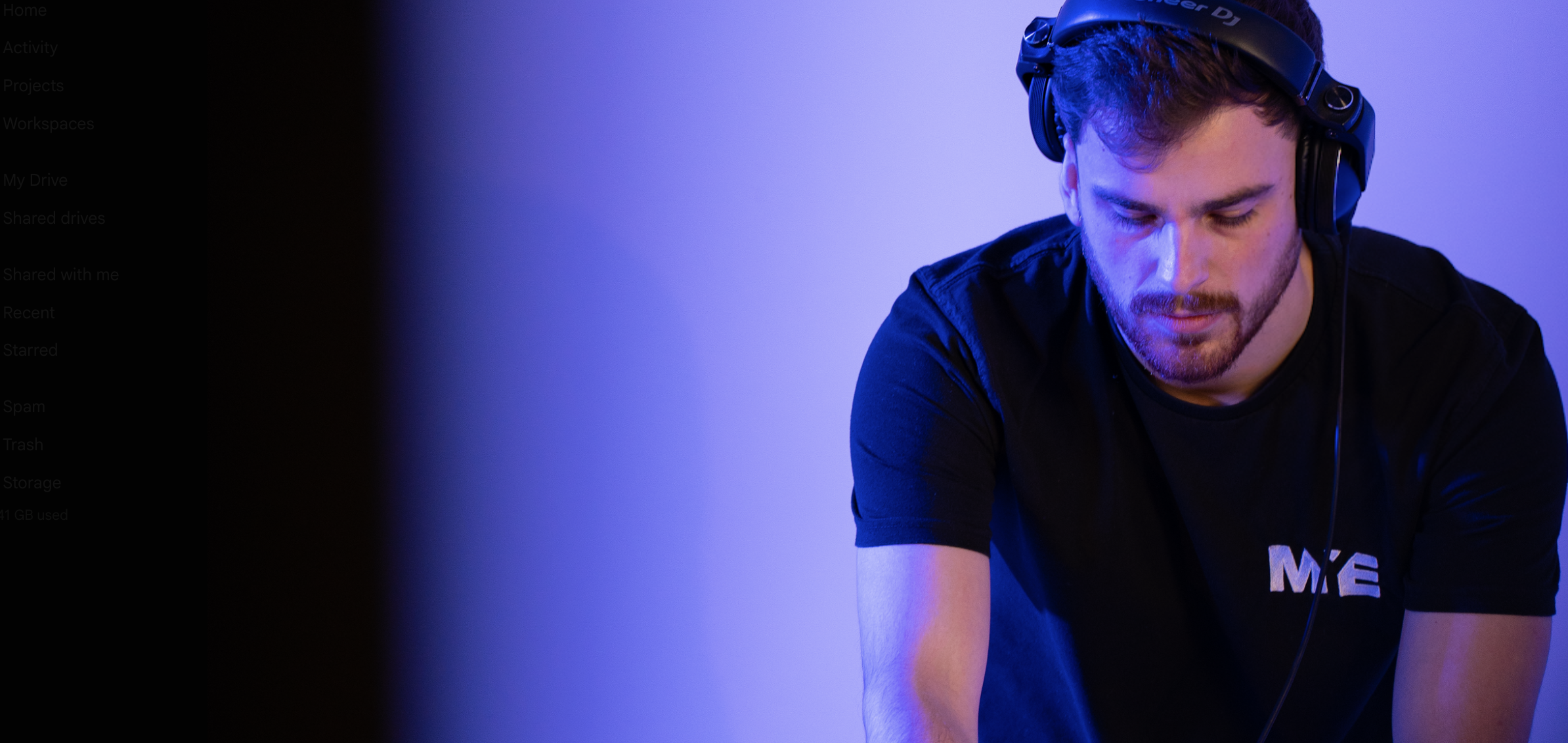
Dimitri Andreas returns in September with Pelican, an eight-track double-vinyl release on Move Recordings that feels built to reintroduce him without flattening his history into a nostalgia play.
The Belgian artist has long moved between hypnotic techno, deep house, and more textured club material, with earlier releases on Music Man and Systematic Recordings, plus appearances at Tomorrowland, Dour Festival, and I Love Techno.
That background gives Pelican a clear function. It is a dancefloor-oriented record, but not one that seems interested in reducing his catalog to simple peak-time utility. The release gathers original material and remixes from Deetron, Extrawelt, and Petar Dundov, framing Dimitri Andreas as an artist returning to the club with a broader understanding of space, pressure, and deep-listening detail.
The format also says something…
A 2×12-inch release asks for a little more commitment than a quick digital single. It gives the music room to sit, move, and be handled by DJs who still care about sequence, sides, pacing, and the physical relationship between records and rooms.
Pelican Reopens the Club Side of Dimitri Andreas

The original title track gives the project its center, with the Deetron and Extrawelt remixes expanding the release outward from there. That remix pairing alone tells you Move Recordings is not treating Pelican like a minor comeback note. Deetron brings decades of refined house and techno language, while Extrawelt’s name carries its own connection to melodic pressure, hardware-minded detail, and darker club architecture.
The rest of the tracklist keeps the release from becoming a single-track remix package. “Omenica,” “Cambolisa,” “Ember,” “Mahu,” and the Petar Dundov remix of “Cambolisa” give the release a fuller album-adjacent shape, even if the format remains rooted in club use.
That matters because Dimitri Andreas’ recent story is tied to expansion. His work has gradually moved beyond direct club function into audiovisual and deeper listening territory. Pelican seems to bring that widened perspective back toward the booth, which is usually where artists with long histories become interesting again. They no longer need to prove they understand the room. They can start bending it.
The Remixers Give the Release a Wider Arc
The remix lineup is a major part of the release’s identity. Deetron, Extrawelt, and Petar Dundov each bring different expectations, and that gives the package a wider arc than a standard EP.
Deetron’s presence points toward a refined house and techno sensibility, the kind built on movement, detail, and long-form DJ utility. Extrawelt adds a more melodic and atmospheric techno association, one that fits naturally with a record pitched between club energy and deeper listening.
Petar Dundov’s remix of “Cambolisa” widens the release again, giving the project another perspective without pulling it away from Dimitri Andreas’ own material.
That kind of remix curation can be easy to overlook, but it is often where a release shows its real intentions. A good remix package does not simply add names. It creates alternate readings of the same artist’s language.
I thought about this while revisiting my coverage of Re.You’s “Higher” on Younion, another release that sits inside the overlap between melodic club construction and deeper emotional pacing. Dimitri Andreas is coming from a different lineage, but Pelican works in a nearby tension: how to keep the record moving without draining out the atmosphere.
Move Recordings Frames Pelican as a Renewed Phase
Move Recordings positions Pelican as Dimitri Andreas’ first major solo release in years, and that is the useful way to hear it. This is not being presented as a career summary.
It is a renewed phase, with the artist’s past informing the record but not freezing it in place.
That is the best argument for the release. Dimitri Andreas has the résumé, but Pelican needs to stand as current work. The double-vinyl format, the remix cast, and the broader dancefloor-oriented shape all suggest a record made to reconnect those older foundations with where his ear is now.
My coverage of Jean Claude Ades and Re.You’s “Together” touched on a similar club-music question from another angle: how seasoned producers keep melodic and rhythmic ideas feeling active instead of purely familiar. Pelican lands in that conversation by giving Dimitri Andreas a format large enough to reestablish his voice without crowding the release with unnecessary explanation.
Pelican Works as a Physical Reintroduction
The appeal of Pelican is that it treats Dimitri Andreas as an artist still moving.
The record acknowledges his place in Belgium’s electronic underground, but it does not rely only on that history. It gives DJs an eight-track package, brings in remixers with their own gravitational pull, and returns his sound to a vinyl format that suits the release’s club-focused intent.
For longtime listeners, Pelican should feel like a reentry point. For newer ears, it works as a compressed introduction to an artist whose sound has always moved between hypnotic pressure, deep house feeling, and more textured electronic detail.
The strongest part of the release is its sense of scale. It is not oversized, but it is not throwaway either. Eight tracks across 2×12-inch vinyl gives the record space to act like a proper statement while keeping its purpose clear. This is Dimitri Andreas returning to the floor with a wider lens, and Pelican gives that return the weight of a full package.

Magnetic byline note: This byline is used for staff produced updates and short announcements, often based on press materials and official release information. Editorial responsibility: David Ireland (Editor in Chief) and Will Vance (Managing Editor). About: https://magneticmag.com/about/ Masthead: https://magneticmag.com/masthead/ Contact: https://magneticmag.com/contact/