
Image Above: Me, the author, playing 45 East in Portland, Oregon.
Knowing when a track is finished usually comes down to one boring question that saves you from a lot of bad late-stage decisions: Is the original idea still at least decent!?
That sounds simple, and it is, which is probably why it gets ignored so often. A track can be mixed well, arranged cleanly, and filled with smart little edits, and still feel like it lost the thing that made it worth opening the session in the first place. That is usually where finishing turns into overthinking. You are still working, so it feels productive, yet the track is starting to narrow beneath the surface because each new move is covering the center rather than protecting it.
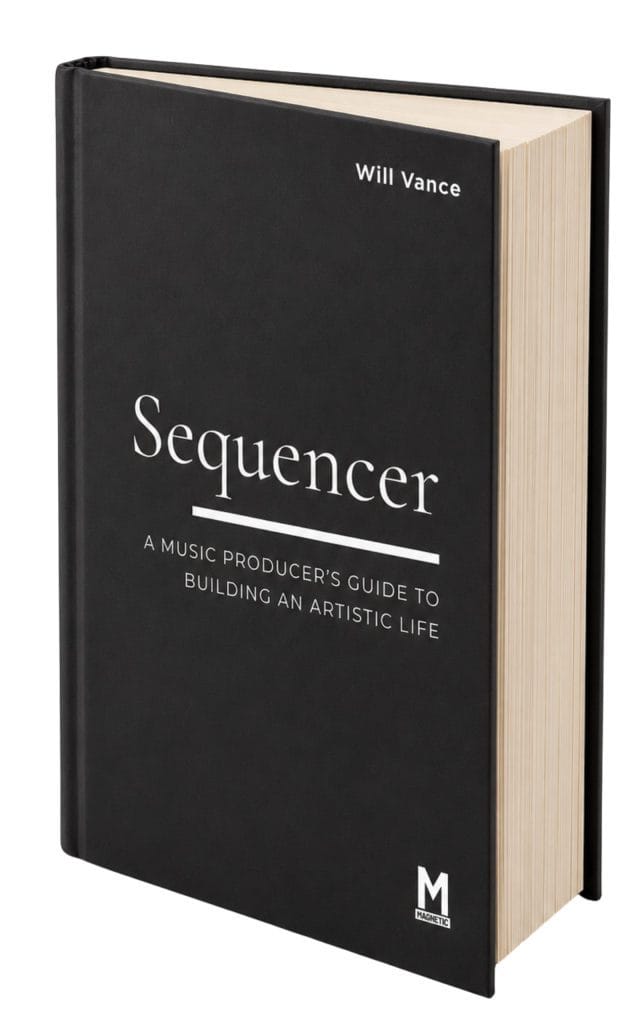
I think this is where taste starts to matter in a real way and it’s something I was revisiting while writing my book, Sequecner: A Music Producer’s Guide To Building An Artistic Life,. Taste is not some vague badge that means you know cool records. Taste forms through repetition, chosen boundaries, and continued friction with outside input. Over time, what begins as a preference turns into discernment, and that gives you an internal filter that can guide decisions without needing to be explained out loud.
A Finished Track Still Has A Clear Center
The easiest way to tell if a track is close to done is to mute the noise around it and ask whether the first idea still is as good as you remember it being… does it still move you (not your fans or somebody on a non-existent dancefloor but YOU). That could be a drum loop, a short vocal line, a harmonic movement, or a rough sketch from the first day. The exact material matters less than whether the track still feels organized around it.
Overthinking can weaken a track through many small moves.
The slide rarely begins with an obvious mistake. It often starts with tiny edits: tweaking automation, stacking light percussion, or reopening sections that already felt finished. Each change seems harmless on its own. Together, they blur the central idea until the impact fades.
Hamza Rahimtula explains this well in our Magnetic premiere for “Algoza” with Rajasthan Folkstars, where he says he tends to overthink when he tries to make a track constantly engaging. He starts filling it with elements so it doesn’t feel boring, and then he can lose the dancefloor energy and drift away from the track’s center.
That is the part worth paying attention to. The track is not getting worse because the parts are bad. It is getting worse because the parts are pulling attention away from the reason the track works.
Taste Tells You What To Leave Out
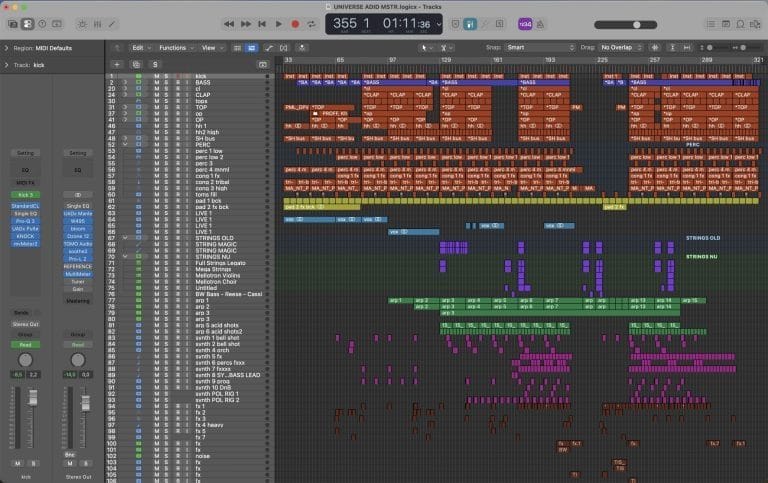
Taste often shows up most clearly in what is excluded. The decision to mute a layer that competes with the vocal, the habit of cutting a reverb tail before a section change, or the refusal to fill space just because the session feels too open can all be signs that your internal filter is doing its job.
That is why finishing a track is usually not about adding one final piece.
A lot of the time, it is about trusting that the piece you already have is enough when it is presented cleanly. Producers with a clear sense of taste often work within deliberate limits because those limits keep the idea focused rather than letting it spread too wide.
Scuba gets at this in our interview on dub, taste, and commercial pressure when he says that anyone’s taste develops over time if they keep listening, reading, and looking. That matters because finishing depends on pattern recognition. After enough sessions, you start to hear when something fits before anyone else has weighed in.
Limits Make The Ending Clearer
Composer Jonathan Thomas Miller gives an even cleaner version of this in our Magnetic interview about good taste in 2025. He talks about composing with as few materials as possible, and he gives a simple rule from his own process: if he has a string line, it is always buried in a specific reverb.
That kind of rule can sound restrictive until you actually work that way. Then it becomes freeing because the session has fewer doors to open. You are not rebuilding your standards from scratch each time you sit down. You have a process that tells you what belongs and what should be left alone.
A finished track often has that feeling when the boundaries seem obvious, and the main idea is still intact enough to punch through the hundred other smaller details you’ve probably added in by that point. The added parts are doing jobs instead of asking for attention. When the track has that kind of internal fit, another edit may be possible, yet it may not be needed.
Reopening Finished Sections Can Weaken The Track
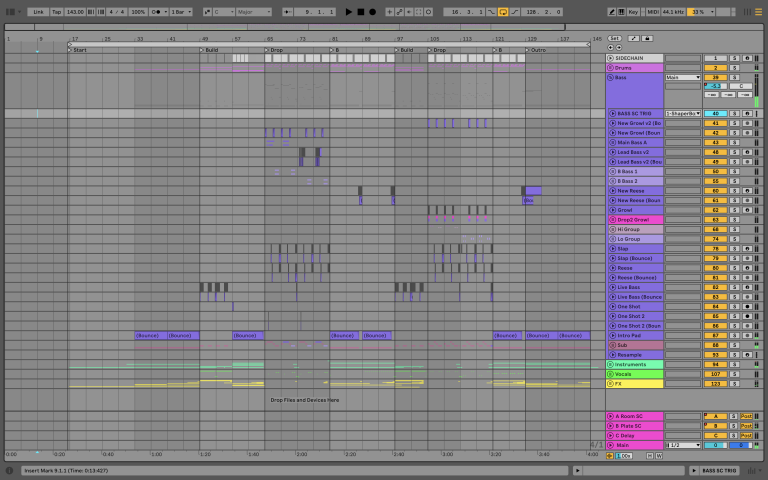
One of the easiest traps is going back into sections that already worked because you want the session to feel active. I have done this plenty of times. You reopen a break, move one automation line, add one percussive detail, and suddenly the older version had more directness.
A quick A/B check can tell you a lot here. If the earlier pass feels clearer, believe that information. If the newer pass has more motion yet less impact, the track is telling you that the last edit did not serve the idea.
That is why separating creation from editing helps.
During writing, get the idea down before judgment starts running the room. Editing comes later, when you have enough distance to hear the track more cleanly. Hamza says the key is to lay down ideas quickly because otherwise you can lose momentum, and he treats editing as a separate process that takes patience and clarity. That distinction is a big part of finishing.
Strip Back Before You Add

When a track feels close yet somehow wrong, I would rather strip back than add. Pull the project down to the parts that carry the idea and remove the layers that hide them. Once fewer elements are active, it becomes much easier to hear which ones are doing the real work.
From there, rebuild around the anchor. That could mean balancing the drums around the main groove, setting the vocal in place first, or committing a resample so the choice stops bouncing back and forth. The point is to get out of debate mode and return to what made the track worth finishing.
Knowing when a track is finished comes back to that same idea.
The track is probably close when the center still reads, the revisions protect that center, and another layer would make the idea less clear. Completion is not the moment when you have no edits left. It is the moment when the track has said what it needs to say, and your taste is telling you to stop.

Will Vance is a professional music producer who has been involved in the industry for the better part of a decade and has been the managing editor at Magnetic Magazine since mid-2022. In that time period, he has published thousands of articles on music production, industry think pieces and educational articles about the music industry. Over the last decade as a professional music producer, Will Vance has also ran multiple successful and highly respected record labels in the industry, including Where The Heart Is Records as well as having launched a new label with a focus on community through Magnetic Magazine. When not running these labels or producing his own music, Vance is likely writing for other top industry sites like Waves or the Hyperbits Masterclass or working on his upcoming book on mindfulness in music production. On the rare chance he's not thinking about music production, he's probably running a game of Dungeons and Dragons with his friends which he has been the dungeon master for for many years.