Møsard closes Triptych Vol. 1 with “FUNK,” and the track gives Paranormal a sharp third angle for its first VA compilation. Notre Dame and Kaytek each bring their own lane to the release, but Møsard’s contribution leans into a funk-inspired two-step groove, low-end pressure, and vocal-driven club energy. It is direct, physical, and built around the kind of synth movement that keeps a short arrangement feeling active.
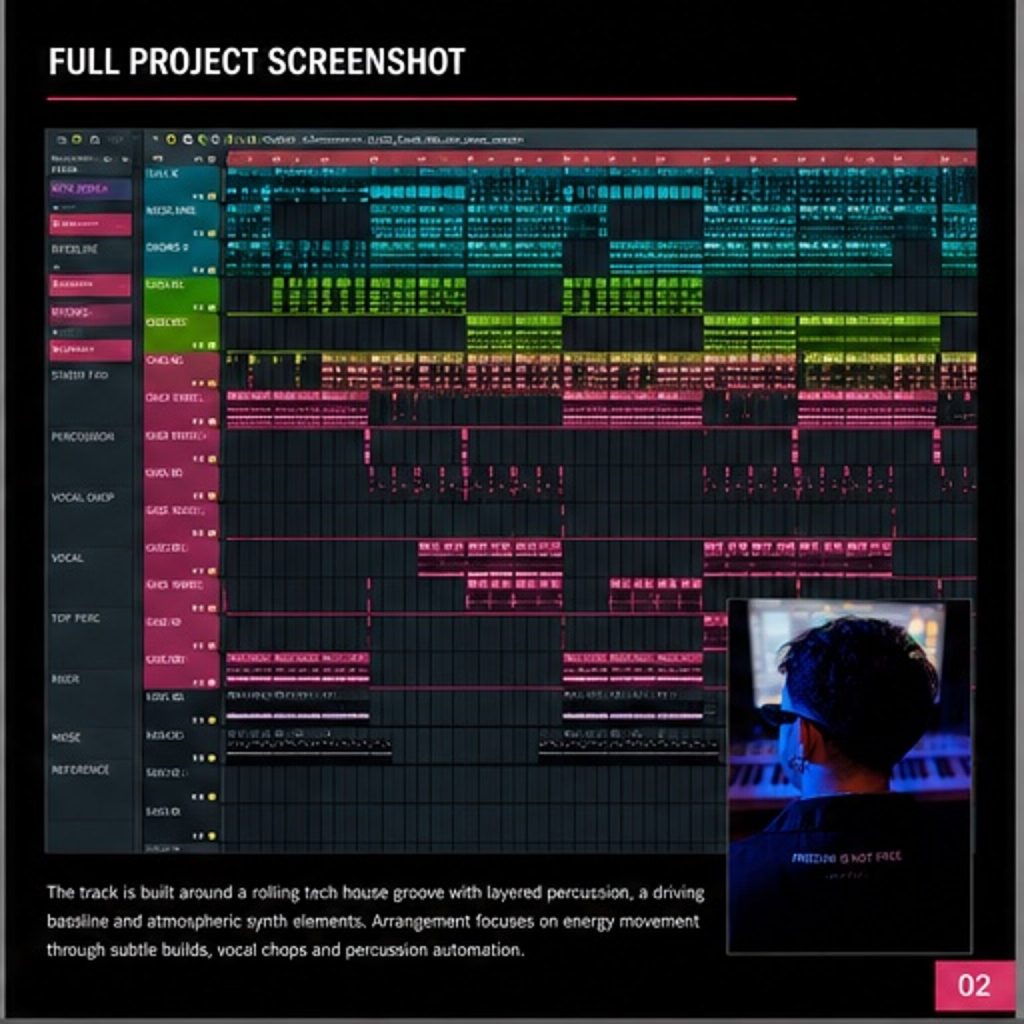
The track works because it keeps the core idea tight. Rather than packing the drop with unnecessary layers, “FUNK” lets the bassline, synth stabs, and vocal parts do the main work. That makes the production choices matter more, because every EQ move, resonance control, and stereo decision has a direct effect on how the record hits in a club.
For this How It Was Made feature, Møsard breaks down the tools behind “FUNK,” including Serum, FabFilter, Soothe2, and Ozone Pro Imager. The workflow is practical and club-focused, with a clear emphasis on groove, clean low-end, controlled brightness, and arrangements that leave enough room for the main idea to hit properly.
Serum

Serum was the main synth used in this track and handled most of the core tonal movement. What I like most about Serum is how clean and precise its wavetable engine sounds, especially for modern house music where punch and clarity matter. Its modulation system makes it easy to create subtle movement without overcomplicating the sound design.
I used Serum mainly for the lead synth elements and groove-driven synth stabs that give the track its character. I focused on keeping the sound tight and rhythmic, using filter automation and envelope modulation to create movement during transitions and drops. Additional processing included OTT and FabFilter.
For Tech House producers, Serum is amazing when used with restraint. You don’t need overdesigned patches, simple sounds with groove usually hit harder.
FabFilter
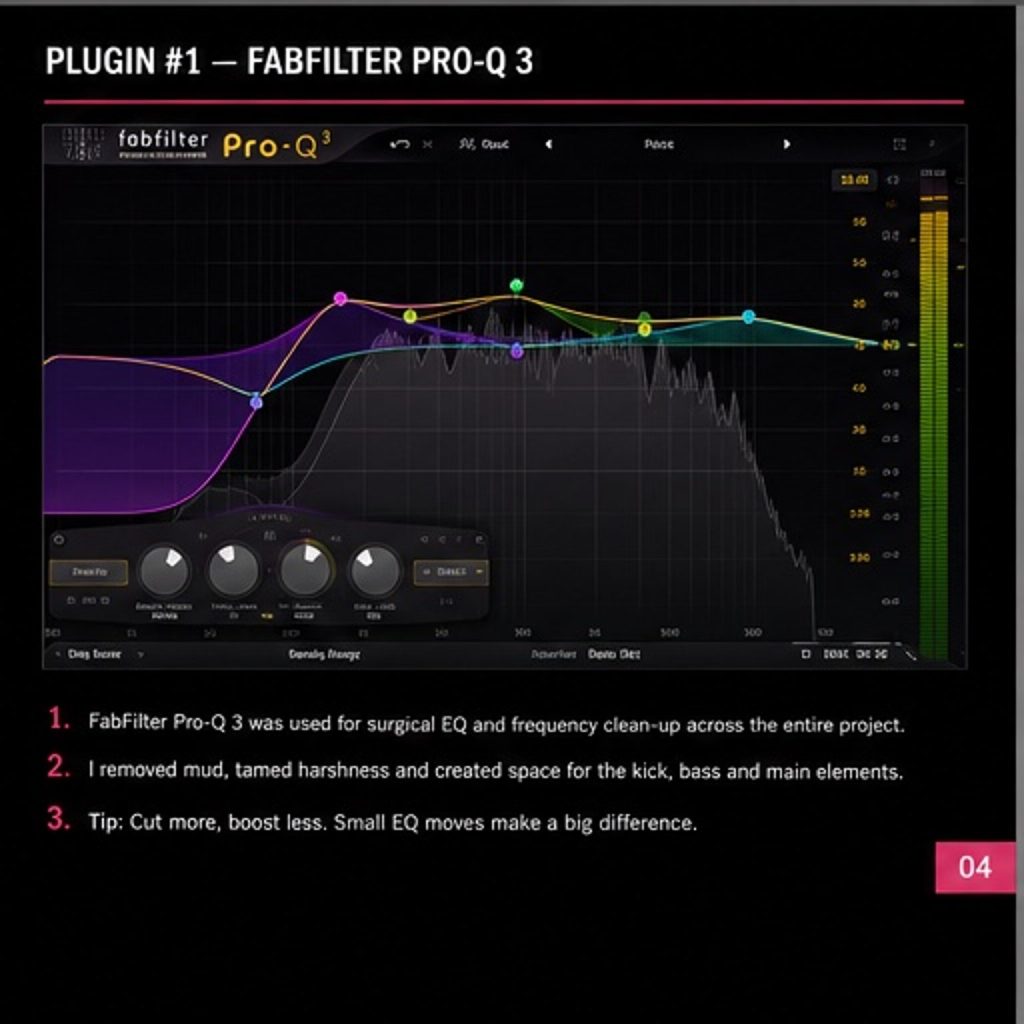
FabFilter was one of the main mixing tools used throughout the project. It’s transparent and surgical, perfect for cleaning frequencies without damaging the original sound.
I used FabFilter across drums, synths, and vocals to carve out space and keep everything controlled, especially in the low-end.
My advice is to stop boosting and start cutting. Cleaner sounds feel louder without extra gain.
Soothe2

Soothe2 helped control harsh resonances automatically, especially in bright synths and percussion.
I used it mostly on synth layers and top percussion to keep the high-end smooth after saturation and OTT processing.
It keeps energy without fatigue, which matters in club music.
Ozone Pro Imager
Ozone Imager was used to control stereo width and spatial balance.
I used it on pads, atmospheres, and FX layers while keeping low-end mono.
Width should support the groove, not distract from it.
Quick Fire Tips
Tip #1: Groove is everything.
Tip #2: Keep low-end simple.
Tip #3: Use automation everywhere.
Tip #4: Don’t overcrowd the drop.
Tip #5: Mix with the club in mind.

Will Vance is a professional music producer who has been involved in the industry for the better part of a decade and has been the managing editor at Magnetic Magazine since mid-2022. In that time period, he has published thousands of articles on music production, industry think pieces and educational articles about the music industry. Over the last decade as a professional music producer, Will Vance has also ran multiple successful and highly respected record labels in the industry, including Where The Heart Is Records as well as having launched a new label with a focus on community through Magnetic Magazine. When not running these labels or producing his own music, Vance is likely writing for other top industry sites like Waves or the Hyperbits Masterclass or working on his upcoming book on mindfulness in music production. On the rare chance he's not thinking about music production, he's probably running a game of Dungeons and Dragons with his friends which he has been the dungeon master for for many years.