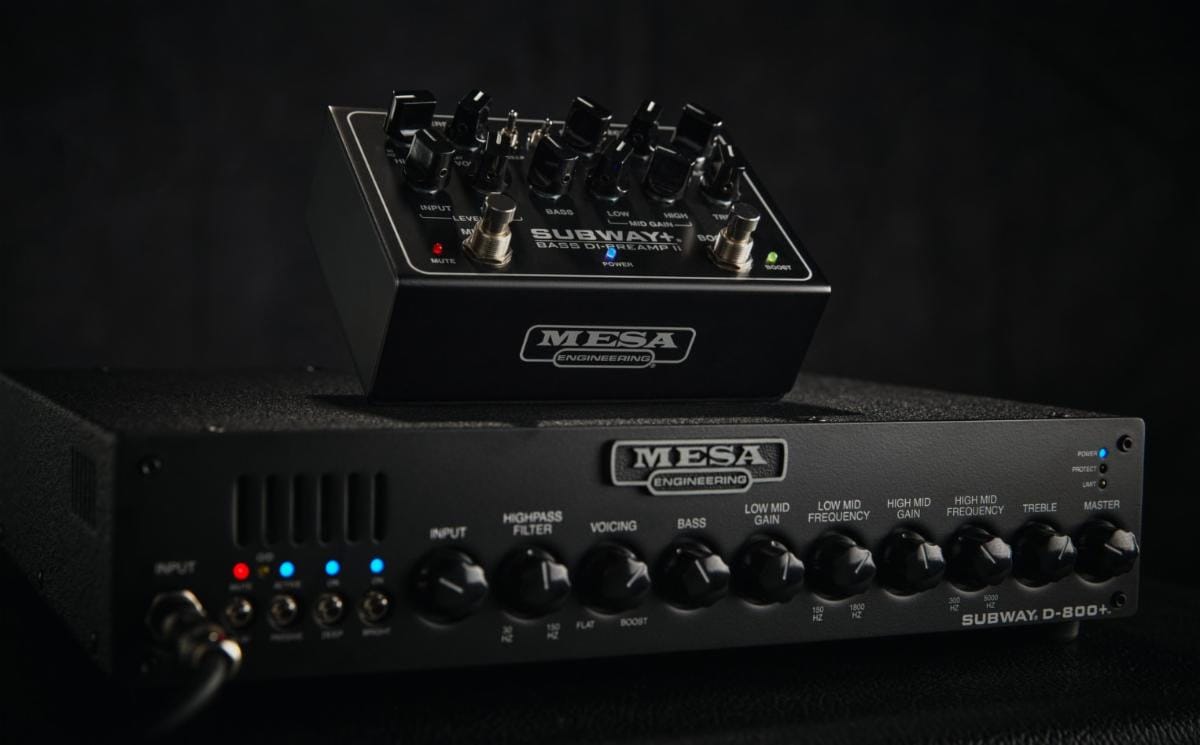
MESA/Boogie has introduced the Subway+ Bass DI-Preamp II, a compact unit that brings its established bass tone shaping approach into a smaller and more flexible format. The design consolidates features from earlier Subway preamp models into a single pedal-sized unit, which places it directly in line with how many players now move between studio sessions, live rigs, and portable setups without changing their core signal chain.
The timing for something like this lines up with how production and performance workflows have shifted over the past few years. A lot of bass players are no longer relying on a single fixed rig, and instead they are building systems that can move between direct recording, live DI use, and hybrid setups that blend hardware with in-the-box processing. This unit fits into that environment by keeping the signal path self-contained while still offering enough control to adapt across those contexts.
The new Subway+ Bass DI‑Preamp II is now available worldwide at authorized MESA/Boogie dealers, at Gibson Garage locations, and at www.mesaboogie.com.
A focused signal path with expanded tone control
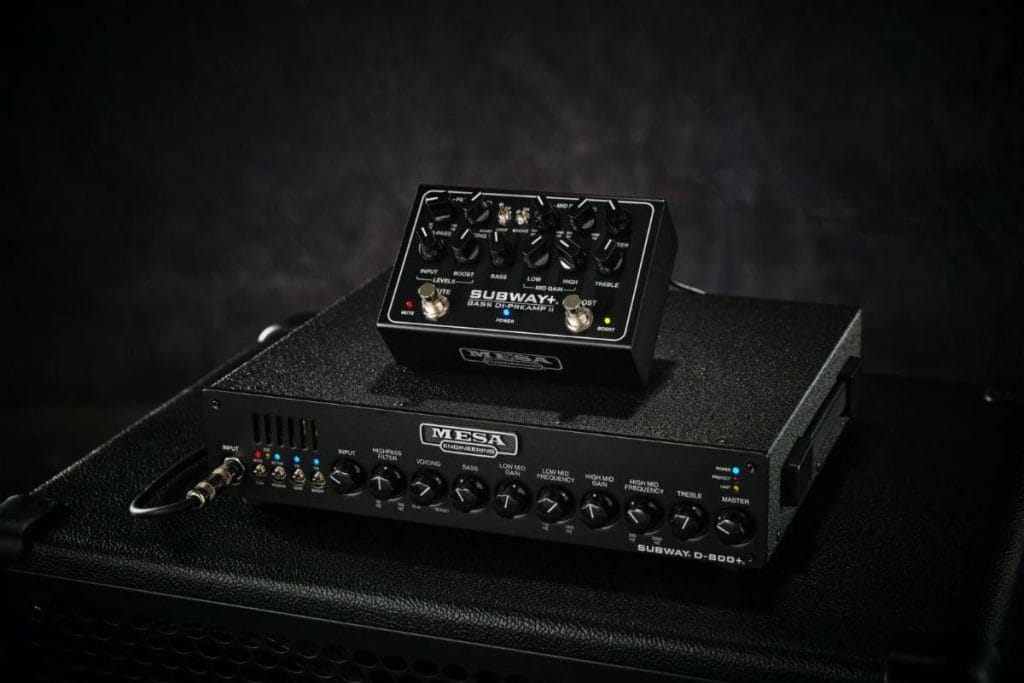
At the core of the Subway+ DI-Preamp II is an extended-range J-FET preamp designed to work across active and passive basses, which gives it a consistent starting point regardless of the instrument. From there, the unit builds out into a detailed tone shaping system that includes a four-band Baxandall EQ with sweepable mid frequencies, along with a variable voicing control that adjusts multiple frequency areas at once.
There are also practical additions that reflect real-world use. A variable high-pass filter allows players to manage low-end buildup in a controlled way, especially in live environments where sub frequencies can quickly become an issue. The Deep and Bright switches provide fast tonal adjustments without needing to rework the full EQ, which is useful when moving between different rooms or monitoring systems.
The gain structure is also flexible, with independent gain, boost, and master controls that allow for clean tones or pushed signals depending on the situation. This kind of control is expected at this level, though the key detail here is how it has been condensed into a smaller footprint without removing core functionality.
Built for direct workflows across studio and stage
Where this unit becomes more relevant is in how it handles connectivity. The inclusion of a balanced XLR DI output with pre or post EQ options allows it to integrate directly into front-of-house systems or recording setups, while standard ¼-inch outputs cover traditional amplification chains. This makes it easy to move between recording sessions and live shows without rebuilding the signal path each time.
Additional features like an aux input and headphone output point toward a broader use case that includes silent practice and mobile production setups. That aligns with how more musicians are working across different environments, including home studios, travel rigs, and hybrid live setups.
The overall design comes down to efficiency. The Subway+ DI-Preamp II reduces the need for multiple separate units while maintaining detailed control over tone and output routing. For bass players who need consistency across studio and stage, this kind of approach keeps the workflow simple without limiting flexibility.

Will Vance is a professional music producer who has been involved in the industry for the better part of a decade and has been the managing editor at Magnetic Magazine since mid-2022. In that time period, he has published thousands of articles on music production, industry think pieces and educational articles about the music industry. Over the last decade as a professional music producer, Will Vance has also ran multiple successful and highly respected record labels in the industry, including Where The Heart Is Records as well as having launched a new label with a focus on community through Magnetic Magazine. When not running these labels or producing his own music, Vance is likely writing for other top industry sites like Waves or the Hyperbits Masterclass or working on his upcoming book on mindfulness in music production. On the rare chance he's not thinking about music production, he's probably running a game of Dungeons and Dragons with his friends which he has been the dungeon master for for many years.