AI stem separation has lived in the browser for years, but LALAL.AI is pulling that process directly into the DAW with its first-ever VST plug-in, and that shift matters more than it sounds at first glance. Instead of exporting files, uploading tracks, waiting on results, and pulling stems back into a session, producers can now split vocals and instrumentals without leaving their project window. That change alone cuts out a layer of friction that has quietly shaped how often people actually use stem tools in real workflows.
The new plug-in runs on LALAL.AI’s Lyra model and works locally on most systems, which keeps processing inside the studio rather than bouncing audio through cloud steps. It supports any VST3-compatible DAW, including Ableton Live, FL Studio, and Audacity, and it is available now to LALAL.AI premium subscribers. Multistem splitting for six separate instruments is already in development, which signals that this release is meant to grow rather than stay fixed at vocal isolation.
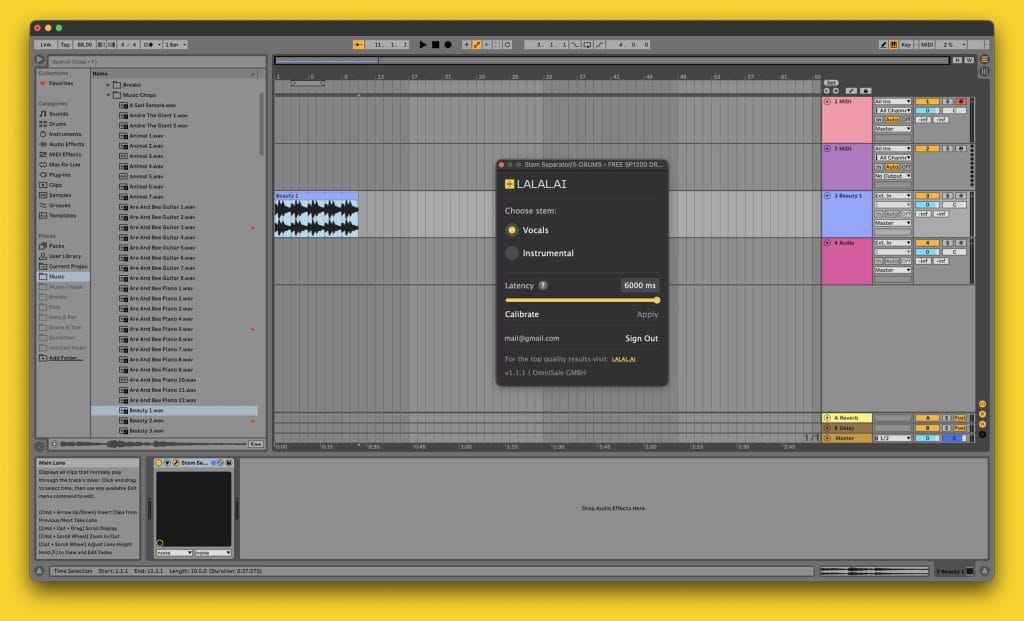
Stem Splitting Without Leaving the Session
Functionally, the plug-in does one thing very clearly. It takes a track with vocals and separates it into a vocal stem and an instrumental bed, and it does so inside the DAW like any other processor. That means no format juggling and no second interface to manage. According to LALAL.AI co-founder Nik Pogorsky, the goal was to make stem separation feel like a native studio task rather than a special external process.
Lyra was built to run locally on a wide range of hardware, and that design choice supports fast turnaround and repeated experimentation. You can isolate vocals, print a version, undo it, and try again without changing tools or contexts. For remixing, mashups, and arrangement work, that kind of immediacy can change how often producers reach for separation tools in the first place.
LALAL.AI already had credibility in this space before the plug-in launch. In Meta’s 2025 evaluation of professional-grade stem splitting systems, the company’s earlier model outperformed competitors strongly enough to be used as a reference point. That history gives this VST release weight beyond novelty.
Why This Release Feels Like a Turning Point
What makes this launch interesting is not that stem separation exists. It is that it now lives where producers already work. AI tools have been talked about as future concepts for years, but this release frames them as utility rather than spectacle. The plug-in does not try to reinvent production. It removes a delay from an existing process.
That design philosophy points toward a quieter direction for AI in music, one based on workflow efficiency rather than replacement. LALAL.AI’s plug-in does not write songs or generate ideas. It shortens the path between intention and result. That is where most studio breakthroughs actually happen.
For producers who already rely on vocal isolation for edits, remixes, or restoration, this update will feel less like a new feature and more like a correction to how the tool should have existed all along. Bringing stem splitting into the DAW makes it easier to stay focused on music instead of logistics, and that alone makes this one of the more practical AI releases to land in recent memory.

Magnetic byline note: This byline is used for staff produced updates and short announcements, often based on press materials and official release information. Editorial responsibility: David Ireland (Editor in Chief) and Will Vance (Managing Editor). About: https://magneticmag.com/about/ Masthead: https://magneticmag.com/masthead/ Contact: https://magneticmag.com/contact/