If you are focused on getting your music onto playlists in 2026, then you already understand that exposure rarely happens by accident and that strategic amplification plays a role when you are trying to generate real algorithmic lift. Boost Collective, which was kind enough to sponsor this article, operates in that space, and throughout this guide, we will talk about how to use tools like that intelligently as part of a larger system rather than as a shortcut.
The goal here is clarity and long-term leverage, not short bursts of vanity metrics that disappear after a week.
Playlists remain one of the most powerful discovery engines in modern music, but the mechanics behind them have matured quickly over the last few years. Editorial teams are more selective, algorithmic playlists are more behavior-driven, and user-generated playlists have evolved into legitimate distribution channels with measurable influence. The old submit-and-hope strategy does not hold up in a landscape where data moves faster than your release cycle.
If you want consistent placements, you need to build a framework that connects positioning, engagement, and amplification in a deliberate way.
In my conversation with edapollo about A&R and Omni Youth, he explained why a good record still needs context when labels receive so much music each week. Playlist curators face the same issue. A focused description helps them understand where the track may fit before they press play.
Everything We’re Covering
In 2026, getting on playlists is less about a single pitch and more about constructing an ecosystem that works release after release. That ecosystem includes assets you own, relationships you maintain, campaigns you control, and data you understand.
When those pieces get in sync with each other, placements begin to compound because the platforms recognize sustained engagement patterns rather than isolated spikes. When they do not align, you end up chasing attention without building momentum that lasts beyond the first week.
Understanding How Playlists Actually Work in 2026
Before you pitch a curator or spend a dollar on promotion, you need to understand how playlists function at a structural level.
There are four primary categories worth focusing on: editorial playlists managed by streaming platforms, algorithmic playlists such as Discover Weekly and Radio, user-generated playlists built by independent curators, and influencer or brand playlists connected to creators.
Each category responds to different signals, and confusing them leads to misplaced expectations and wasted energy. Clarity here allows you to tailor your strategy instead of treating all placements as equal.
Editorial playlists are curated by internal teams that evaluate positioning, audience fit, and contextual relevance. Algorithmic playlists respond to listener behavior including saves, completion rates, skip rates, shares, and repeat streams, and they react to patterns across large data sets. User-generated playlists sit somewhere in between, because they are manually curated but still feed algorithmic signals depending on how listeners behave once they discover your track. Recognizing the differences between these ecosystems allows you to approach each one with intention rather than hoping one placement magically triggers everything else.
Velocity also plays a major role in 2026, particularly within the first 7 to 28 days of release.
If you generate meaningful engagement during that window, the system has enough data density to begin recommending your track to similar listener clusters. If engagement is shallow or inconsistent, the algorithm remains neutral and your exposure plateaus quickly. Understanding this timeline changes how you plan releases, how you pace marketing, and how you measure success beyond raw stream counts.
NOCOLOUR spoke about the care needed with each release when operating independently in my interview on why the group decided to handle the process themselves. That same discipline applies here. Concentrated promotion to interested listeners provides better information than unfocused traffic purchased to increase a visible number.
Build Your Own Playlist Ecosystem Before You Pitch Anyone

One of the most overlooked strategies in playlist growth is building your own curated playlists within your genre lane.
When you own playlist real estate, you create leverage that does not depend entirely on external gatekeepers. By curating intentionally and updating consistently, you train the platform to understand the identity of your playlist and the audience it serves. This becomes a foundational asset that supports every new release you put out.
Start with a focused playlist that clearly reflects your sound and community. Add tracks that align closely with your style, keep it current, and encourage followers to save the playlist rather than treating it as background noise. Then build a second playlist centered around peers, collaborators, and artists in your network, which opens doors for mutual support and playlist swaps built on genre alignment and transparency. This approach strengthens relationships while also reinforcing your positioning within a recognizable scene.
Owning playlists gives you a day-one activation tool for every release, because you can direct engaged listeners toward your new track immediately. It also provides social proof when you pitch other curators, since you can demonstrate active engagement within your niche.
As this ecosystem grows, each release feeds the playlists and each playlist feeds the next release, creating a loop that compounds over time. That loop becomes a stable base from which you can expand into larger placements without starting from zero every cycle.
Building Real Relationships With Playlist Curators
Playlist curators have invested time into building their audiences, and approaching them with respect changes the dynamic immediately.
Instead of sending mass emails, take time to understand the tone and direction of their playlist and support it publicly before you ask for anything. Share their playlist when it genuinely fits your audience, tag them when you are included, and drive traffic back to the playlist to demonstrate that you contribute value. Curators notice artists who help grow the ecosystem rather than simply extract from it.
Offering value can take multiple forms, including introducing other artists who fit their taste, featuring their playlist within your own ecosystem, or sharing insights about trends within your shared niche. These gestures create alignment and build trust, which increases the likelihood of repeat placements. When you do reach out with a pitch, keep it concise and context-driven, explaining why your track fits their curation rather than sending a generic message. Over time, consistent and thoughtful engagement builds familiarity, and familiarity increases opportunity.
Relationships compound in the same way algorithmic signals do, because they are built on repeated positive interactions. When you approach curators as collaborators within a broader music ecosystem, placements become part of an ongoing exchange rather than a one-time transaction.
That mindset reduces friction and creates stability across multiple releases. In 2026, relational capital is often as powerful as marketing spend.
A label can also create a release playlist containing current artists and related music. In my conversation with Rewoven about its label and mix series, the team described using regular mixes to present its artists and their tastes. A maintained playlist can serve a related role between releases.
The Editorial Pitch: Optimizing Your Spotify For Artists Submission
Submitting through Spotify for Artists requires precision and timing, and many of the tools on Boost Collective’s website can help optimize this and streamline an otherwise confusing process.
Pitch your track at least seven days before release and complete every field with clear, relevant information about genre, mood, instrumentation, and context. Editorial teams look for clarity of positioning and evidence that a track serves a specific audience. Providing concise and accurate information increases the likelihood that your song is evaluated in the right context.
Include relevant data points, such as prior placements, consistent listener growth, or notable collaborations. If the track connects to live performances, cultural moments, or community engagement, explain it clearly and highlight its relevance. Supporting your pitch with sustained marketing efforts such as lyric videos, performance clips, or visualizers also strengthens your case. The more cohesive your release campaign appears, the more confidence curators have in its trajectory.
Treat each release as a structured campaign rather than a single drop. Build YouTube assets with strong thumbnails, test content hooks through Instagram Trial Reels, and observe which creative angles resonate before scaling them. Study artists in your genre who are gaining traction and model their packaging strategies where appropriate. Editorial teams respond to clarity and consistency, and your campaign structure communicates both.
Leveraging Boost Collective for Targeted Playlist Growth
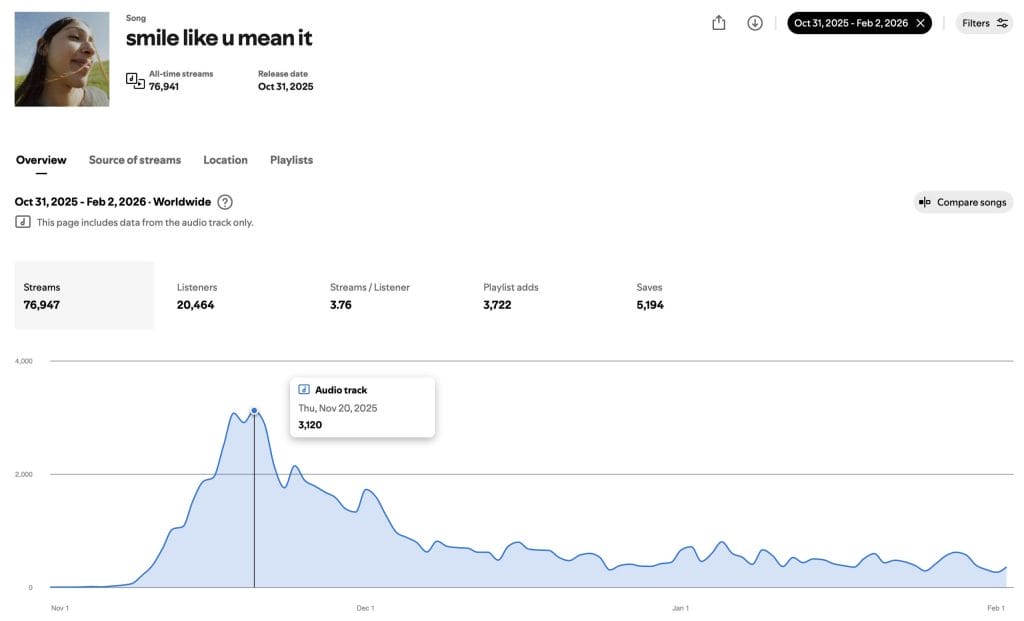
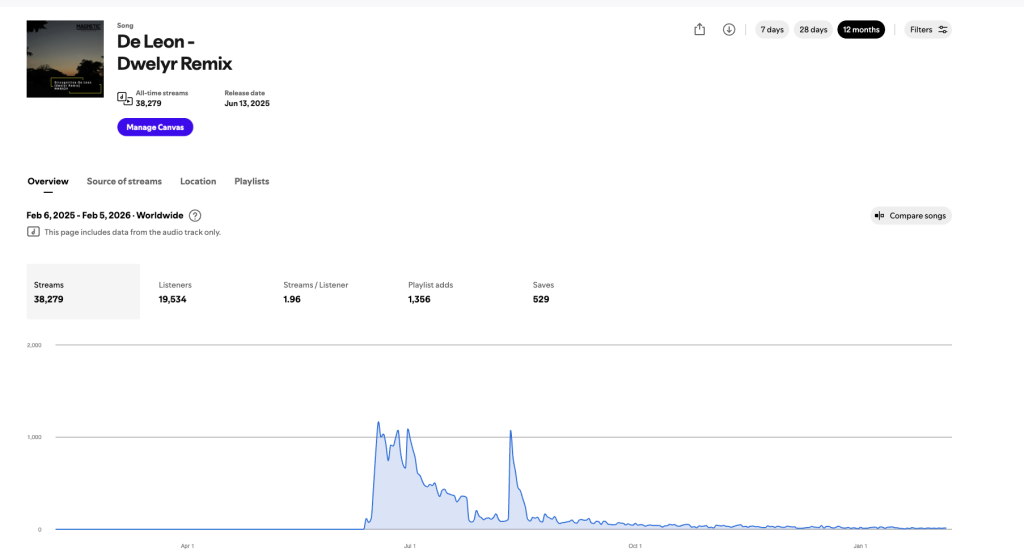
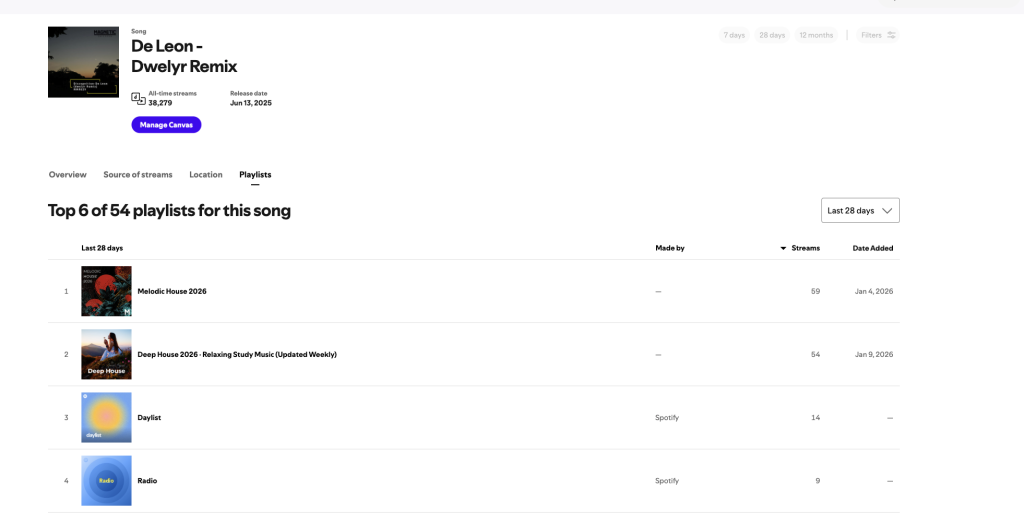
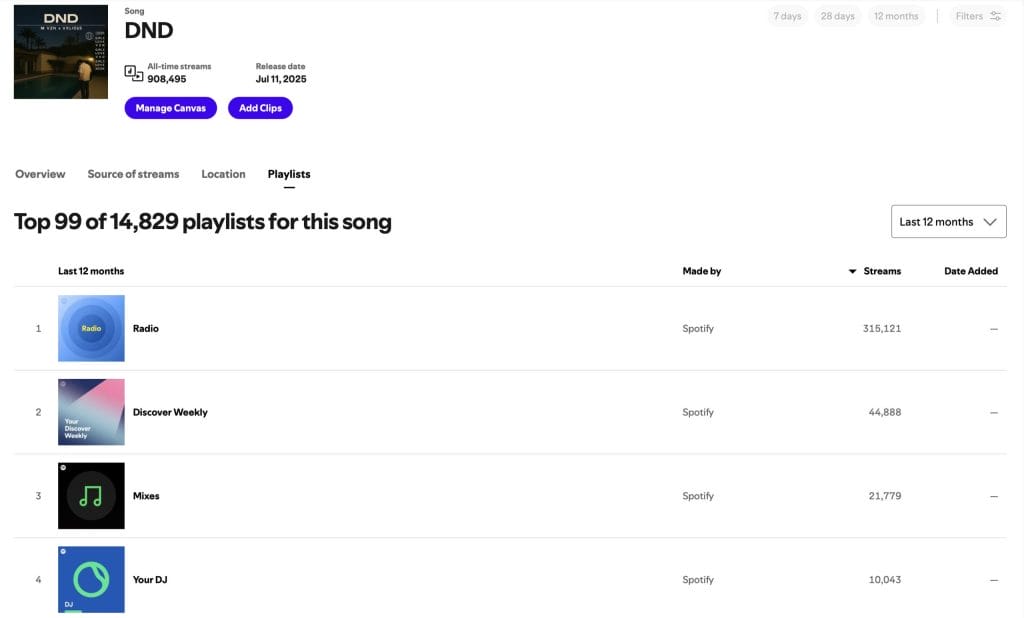
There are moments when a strong foundation benefits from concentrated amplification, and this is where Boost Collective can be strategically integrated. The attached images in this section are results from successful campaigns run through Boost Collective to show just how much it really can move the needle.
Targeted campaigns that drive real listener engagement help increase saves, improve retention rates, and expand your audience in defined markets. When amplification aligns with genre positioning and audience intent, the data signals that follow become more meaningful. That depth of engagement is what ultimately influences algorithmic distribution.
Boost Collective can help amplify releases to audiences likely to engage authentically, strengthening early momentum. When campaigns generate aligned listeners who save and replay your track, the algorithm reads those behaviors as indicators of value. This can lead to increased exposure through Discover Weekly, Radio, and related recommendation systems. The key is ensuring that amplification supports a broader ecosystem rather than operating in isolation.
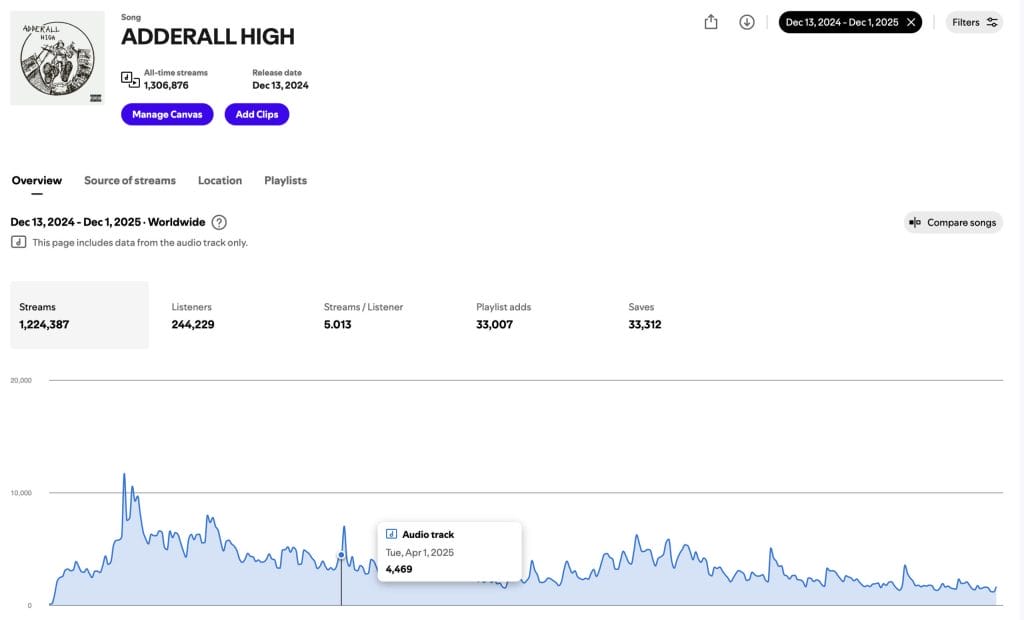
Think of targeted promotion as a way to create data density within the critical early window of a release. When that data is strong and consistent, platforms have enough information to extend your reach organically. Boost Collective functions most effectively when paired with curated playlists, structured content, and sustained marketing. Used within a system, amplification becomes a multiplier rather than a dependency.
Triggering Algorithmic Playlists Like Discover Weekly
Algorithmic playlists respond to behavioral clusters, which means your objective is to generate consistent engagement from listeners who share similar taste profiles. Discover Weekly, Spotify Radio, and related systems analyze overlap between listener habits and artist similarity. When enough aligned users engage deeply with your track, the system begins to map it into adjacent recommendation networks. That mapping process is fueled by quality engagement rather than sheer volume alone.
When I run streaming ads, I approach them as a data system built for control and measurement. I build landing pages with Meta pixels installed, optimize campaigns for View Content conversions under the Engagement objective, and avoid sending traffic directly to Spotify so I can filter low-quality clicks. I use manual placements focused on Instagram Feed, Explore, Stories, and Reels, and I begin at modest budgets while allowing campaigns to stabilize over several days. Cost per conversion becomes the central metric, and I evaluate performance relative to target countries and audience segments.
I test multiple creatives per launch, experiment with different sections of the song, and rotate winning ads without rebuilding campaigns from scratch. I layer Spotify and genre interests while keeping age targeting broad enough for the algorithm to optimize within it. Detailed breakdown reporting by country, age, and placement informs future adjustments, and I pivot underperforming audiences instead of blindly increasing budget. The objective is aligned listeners who save, replay, and share, because those behaviors activate algorithmic systems that extend reach well beyond the initial campaign window.
Promoting Every Placement to Get Placed Again

Securing a playlist placement should mark the beginning of another promotional cycle rather than the end of one. Share the placement across social platforms, tag the curator, and encourage your audience to follow the playlist to reinforce engagement signals. Add the playlist to your bio and integrate it into newsletters or email campaigns to drive traffic back into the ecosystem.
These actions demonstrate that you contribute to the playlist’s growth, which increases the likelihood of future inclusion.
Treat each release as a campaign with structured content, consistent advertising, and ongoing follow-through. Batch short-form content before release and repurpose high-performing clips across TikTok, Reels, YouTube Shorts, and other platforms. Prioritize live shows and touring when possible, as real-world exposure leads to long-term streaming fans who engage consistently. Live streaming performances can also deepen connection and strengthen retention across digital platforms.
Streaming functions as top-of-funnel fan acquisition, and growth compounds when casual listeners become dedicated supporters. Sustained engagement builds momentum that algorithms reward with broader distribution. By approaching growth as a coordinated system that integrates playlists, advertising, collaboration, and live exposure, you create stability rather than chasing isolated spikes. In that environment, placements increase because the supporting infrastructure remains strong.
Conclusion

Getting your music onto playlists in 2026 requires structure, patience, and strategic amplification. Build assets you control, nurture curator relationships, optimize editorial submissions, and deploy paid campaigns with a clear data framework. Use Boost Collective as a targeted accelerator when you need concentrated momentum, and pair that amplification with a strong playlist ecosystem of your own. Each component reinforces the others when aligned intentionally.
When engagement is consistent and sustained, algorithmic systems extend your reach beyond your immediate audience. Placements begin to compound because the data behind them reflects real listener behavior. This structured approach reduces volatility and increases predictability in your release cycle. That predictability is what transforms playlist growth from a hopeful tactic into a repeatable strategy.
FAQ About How To Get Your Music On Playlists In 2026
When can I make my Playlist in a Bottle for 2026?
Spotify’s Playlist in a Bottle is typically a limited-time feature that opens during the first few weeks of January. In 2026, access is expected to follow a similar early-year window, usually promoted directly inside the Spotify app. Users create a time-capsule playlist that remains locked for one year before reopening in January 2027. If you plan to use it strategically as an artist, it can be a subtle engagement tool by encouraging fans to include your track, but it should be treated as a supplemental tactic rather than a core growth strategy.
How do you get your music onto playlists in 2026?
In 2026, getting your music onto playlists requires a layered strategy built around positioning, data, and relationships.
You need to pitch editorial playlists properly through Spotify for Artists, build direct relationships with independent curators, and generate early engagement signals that trigger algorithmic playlists like Discover Weekly and Radio. Owning your own playlist ecosystem gives you leverage and day-one activation power for each release.
Paid promotion, when executed strategically and optimized for real listener engagement, can accelerate the signals that platforms use to determine recommendation strength.
How many streams do you need to make $1,000 on Spotify in 2026?
Spotify payouts fluctuate depending on territory, listener subscription type, and distribution agreements, but in 2026 the average per-stream payout typically ranges between $0.003 and $0.005.
That means earning $1,000 generally requires somewhere between 200,000 and 330,000 streams. However, revenue may vary significantly depending on where your audience is located and whether streams come from premium or ad-supported accounts. Because of that variability, artists should focus less on raw stream counts and more on building high-retention audiences that return consistently over time.
How do you pitch for Spotify playlists in 2026?
Pitching for Spotify playlists in 2026 starts inside Spotify for Artists, where you must submit your track at least seven days before release.
Every field should be filled out carefully, including genre tags, mood descriptors, cultural context, and geographic focus, because editorial teams rely on accurate metadata to evaluate fit. Strong positioning, clear storytelling, and evidence of early traction improve your chances of being considered.
Supporting your release with structured marketing and audience engagement also strengthens credibility when editorial teams assess momentum.
Who is #1 in the world on Spotify in 2026?
The #1 artist on Spotify in 2026 typically refers to the artist with the highest monthly listeners globally at a given time.
This position changes frequently depending on new releases, viral trends, and global touring cycles. Monthly listener counts reflect active reach rather than total lifetime streams, which means the ranking is dynamic and tied to current audience engagement. Tracking this metric gives insight into how sustained marketing, global appeal, and consistent output influence platform dominance.
What is the best way to get your music on playlists in 2026?
Deliver your music early and submit the clearest unreleased song through Spotify for Artists. Research independent playlists that already feature related music, then contact their curators using the submission method they request.
Support the release with direct communication to your existing listeners. Measure saves, followers and later catalog listening alongside the initial stream count.
Playlist pitching cannot guarantee attention, yet a repeatable release process gives each track a fair opportunity. Avoid companies selling guaranteed results, keep accurate records and give curators a clear reason to consider the song.

Will Vance is a professional music producer who has been involved in the industry for the better part of a decade and has been the managing editor at Magnetic Magazine since mid-2022. In that time period, he has published thousands of articles on music production, industry think pieces and educational articles about the music industry. Over the last decade as a professional music producer, Will Vance has also ran multiple successful and highly respected record labels in the industry, including Where The Heart Is Records as well as having launched a new label with a focus on community through Magnetic Magazine. When not running these labels or producing his own music, Vance is likely writing for other top industry sites like Waves or the Hyperbits Masterclass or working on his upcoming book on mindfulness in music production. On the rare chance he's not thinking about music production, he's probably running a game of Dungeons and Dragons with his friends which he has been the dungeon master for for many years.