Louen Poppé returns with ‘Parasites’, a carefully sculpted EP that explores space, tension, and movement across minimal techno, deep house, and left field club music. Following the single ‘Mum’, released on 23rd January, the full EP lands on 6th February with ‘Kwaak’ positioned as the focus cut.
‘Parasites’ stands as a cohesive, nonconformist release that rewards both deep listening and club play, with remixes from Awir Leon and Sapphist expanding its world rather than diluting its vision.
Arturia Minifreak
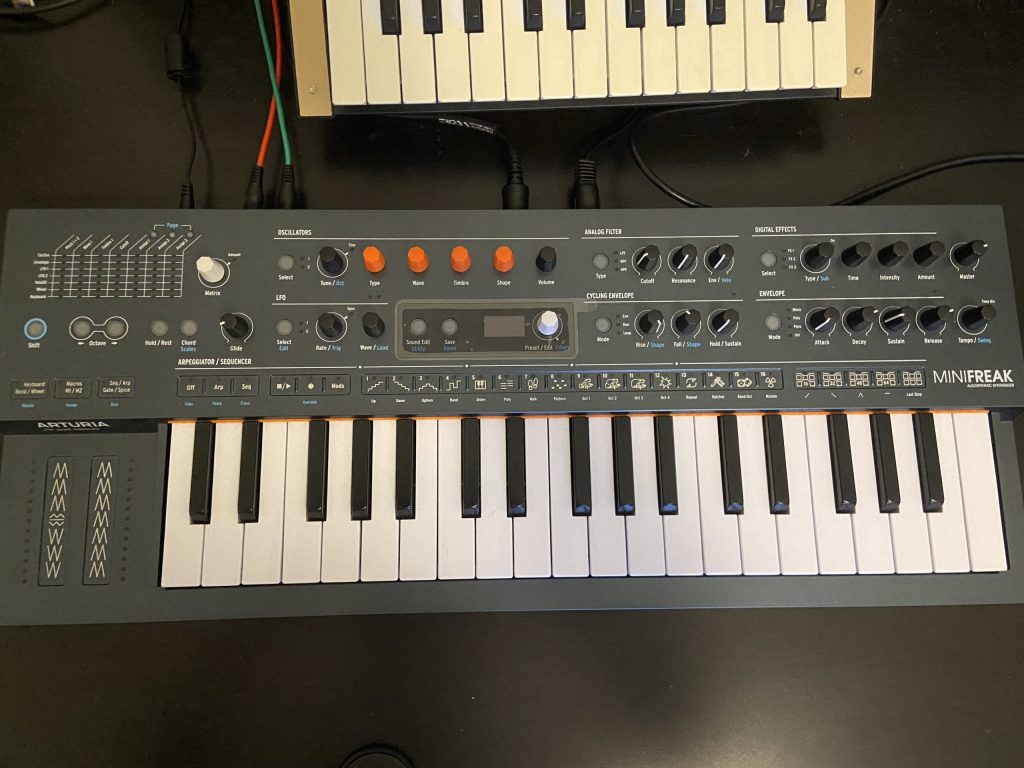
I’ve always been used to composing with plugins, but recently I felt the need to have a synthesizer that could be used both for composition and for live performances. I therefore chose the Arturia Minifreak, because with its wide range of presets, its 6 voices, its effects, and its built-in sequencer and arpeggiator, it felt very complete and like a good bridge between plugins and hardware synthesis.
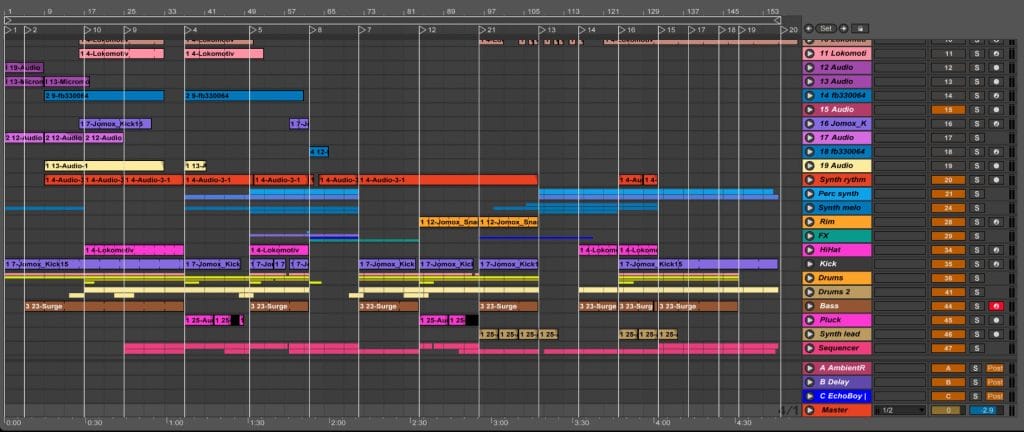
I composed the track Kwaak shortly after getting the Minifreak, so it played a big role in this track! I mainly used it for lead sequences, melodies, and some FX. For the main sequencer, I synchronize the synthesizer with Live via MIDI. This allows me to let the live set run and jam freely while recording what I play. I then isolate the parts that interest me to create the beginning of an arrangement. I then spend a lot of time refining the sound. For this particular sequence, I did a lot of layering, meaning that I duplicated the same part, pitched it up or down by one or two octaves, filtered it, and added effects (often chorus) in order to enrich the sound and widen its frequency spectrum.
Before buying the Minifreak, I had researched this synthesizer extensively, watched many reviews, opinions, and demonstrations, and I was very excited about all the possibilities it seemed to offer. Some producers go very far with this synthesizer, and I thought that I would also spend hours experimenting and exploring countless combinations. And in the end, when I compose, I tend to go straight to the point and don’t always take the time to fully exploit all of these possibilities…
I love the sounds this synth produces; it is very intuitive and gives me a lot of ideas, but I mainly use it to generate material that I then rework in Ableton Live, for example, by using this layering technique.
Ambient Reverb
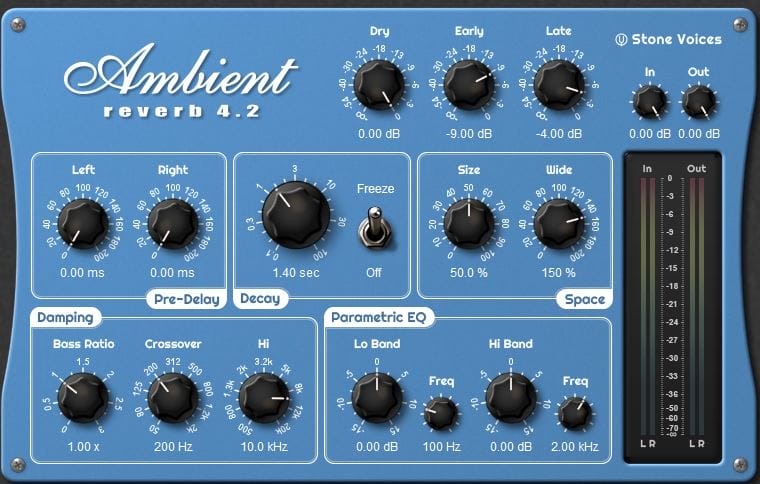
Ambient Reverb is a reverb plugin (an emulation of the famous Big Sky pedal) that I love, and it’s free! It’s very simple to use, with the basic reverb parameters: dry/wet, left/right pre-delay, size/wide, and some EQ settings. I find this reverb quite transparent, perfect for electronic sounds, and that’s one of the main reasons I really like it.
At first, I used Valhalla Vintage Reverb on the early drafts of Kwaak, but I found it too colored and too noticeable. Reverbs like Valhalla have a very recognizable sound, and I wanted something more subtle. I replaced it with Ambient Reverb on a send track, used subtly, with a relatively short decay. It’s perfect when you want a reverb that’s felt but not dominant, just enough to add depth and push some elements back in the mix.
This plugin is really effective and easy to use, a great mixing tool when you want a matte, controlled sound. There are surely thousands of other reverbs that work just as well, but this one fits me perfectly, and I almost always stick to the very first preset! Plus, since it’s free, it’s an excellent option for anyone starting out in music production!
SoundToys Echo Boy
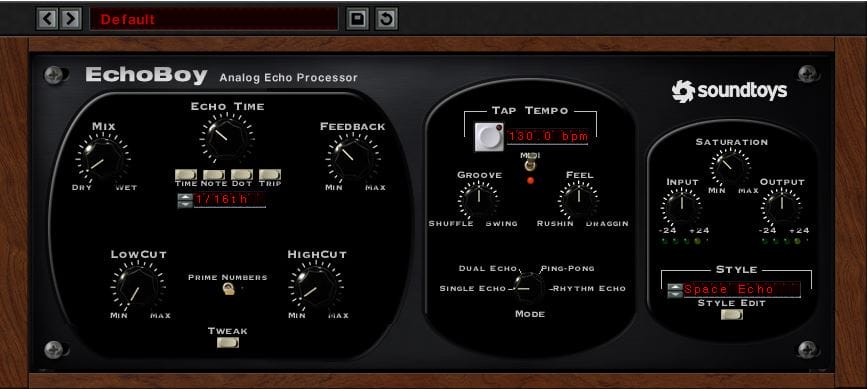
I also really like plugins from Soundtoys, especially the Echoboy delay. It’s a well-known delay with a sound characteristic of tape delays, which I find warm and smooth. It includes the standard delay parameters: mix, feedback, filter, groove, feel, and saturation. There are also different modes: single, dual, ping pong, and rhythm echo. On Kwaak, I used the single mode, but I sometimes use the rhythm echo mode to generate creative and unexpected rhythmic patterns.
I first used Echoboy on a send track, with a delay time of 1/16, to give some depth to certain elements of Kwaak. I specifically sent the bass to this send to add depth and a certain groove, thanks to the repeating effect typical of a delay. I made sure to filter the low frequencies of the delay by adding Live’s native EQ on the send track. I also used Echoboy on the pluck arp, this time directly on the insert of the track, automating the Echoboy mix to add more effect towards the end of the arpeggio.
It’s a delay that works perfectly with the analog-style electronic sounds I like to use. I find that it really enhances the sound and feels very natural and musical. I also really like Echoboy’s built-in saturation, which adds a subtle grain to the sound without being too aggressive. I often use it when I want the delay to feel a bit more present: it adds harmonics and presence to the delay without having to increase the volume.
Ozone 7 Exciter
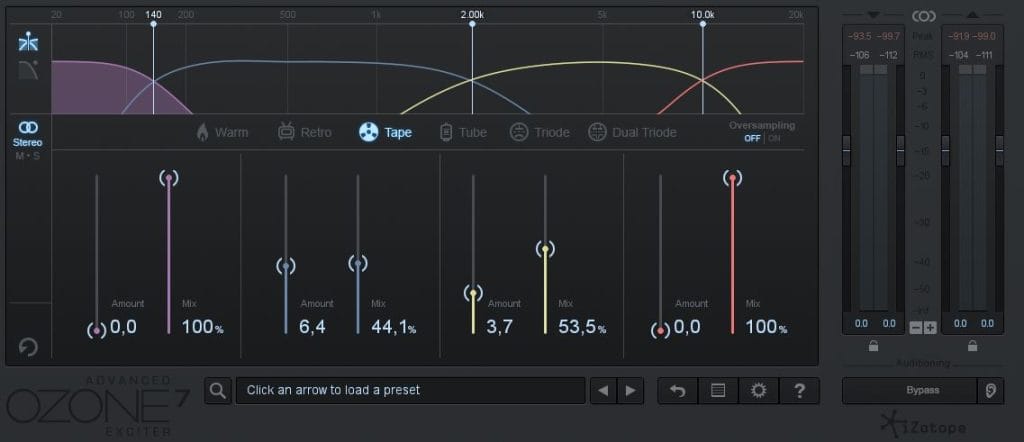
I used iZotope Ozone 7 Exciter at the very end of the mixing process. It allowed me to add a bit of saturation to certain tracks. The plugin offers six types of saturation: warm, retro, tape, tube, triode, and dual triode, which can be applied across four adjustable frequency bands.
I rarely use iZotope plugins (in fact, I’m using a pretty old version), but this one proved to be very effective for adding color to the track and presence to certain synths. I used it as an insert on the lead and sequencer synth tracks, with the “tape” saturation type, mostly on the mids and highs. You have to be careful with this kind of plugin, as it can easily color the sound too much and unbalance the mix. I always set the mix of the plugin around 50% to control it more precisely.
It’s a really interesting tool: it gives a nice color to the track and helps certain sounds stand out without being too aggressive. But I don’t use it systematically. I prefer to first process the tracks with EQs and compressors, and wait until the mix is already well advanced before adding these subtle saturations.
Quick Fire Tips
Tip #1: To achieve a clear and impactful sound, try not to over-compress your tracks or overload your compositions with effects (reverb, delay). This leaves room for silence and helps preserve a sense of dynamic range.
Tip #2: Look for synthesizer emulations created by lesser-known independent developers on the internet. Sometimes, I come across real gems, which allow me to discover original sounds that are different from what we’re used to hearing.
Tip #3: I use a lot of field recording, made using hydrophones, and integrate them into my tracks. This brings a sense of life and helps break away from the mechanical and monotonous feel of electronic loops.
Tip #4: Rather than aiming for a clearly defined genre, focus on whether the track feels coherent and honest. For me, letting the genre blur and evolve naturally is often a strength rather than a limitation.
Tip #5: Try to make tracks accessible on first listen, while also experimenting with sounds and textures. Balancing immediate groove and subtle experimentation is important for me.
Louen Poppé’s ‘Parasites’ EP, including remixes from Sapphist Eye and Awir Leon, is available on February 6th 2026 via Lumiere Noire. Grab it here.