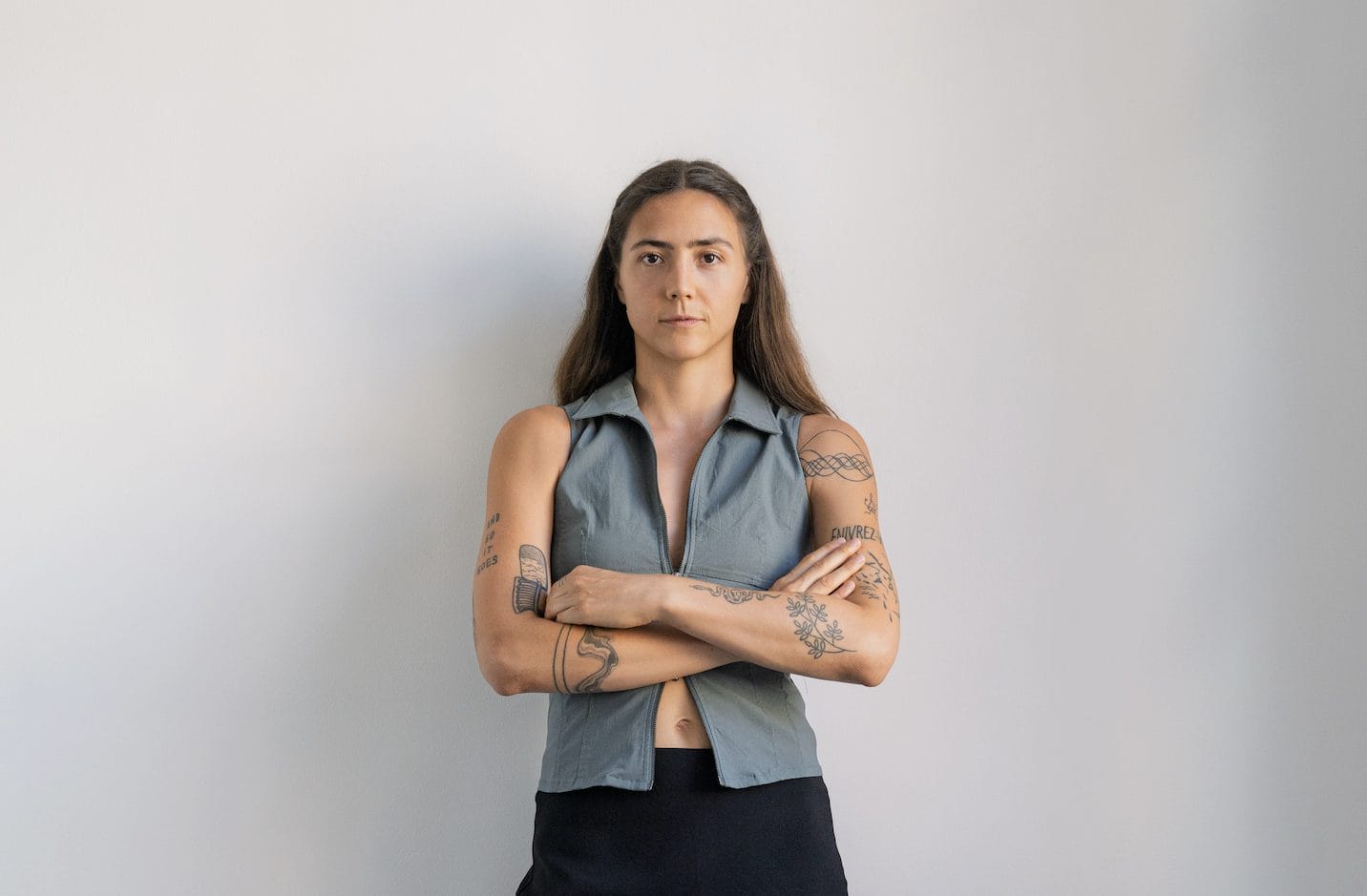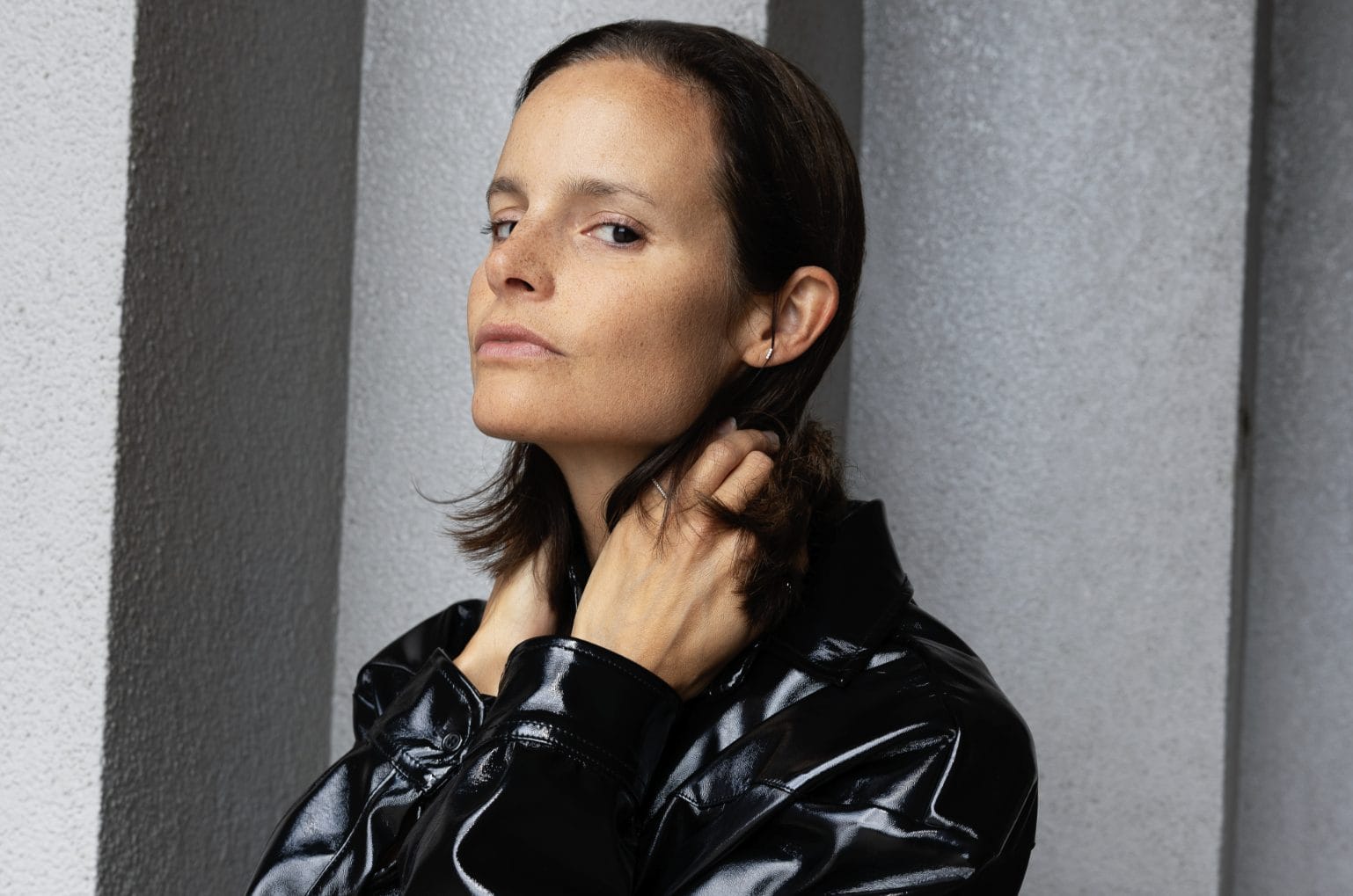
Belgian DJ and producer CALAO steps onto Diynamic with her new single “SCANDAL,” dropping on February 27 as part of the label’s Four To The Floor 47 EP. The record has already circulated widely across international dancefloors after being debuted by Solomun during a b2b with Anyma at Futur Festival in Turin and later featured in Tomorrowland’s The Core 2025 aftermovie. For an artist only two official releases into her career, arriving on Diynamic signals clear backing from one of electronic music’s most established imprints.
Pre-Order The Release Right Here
In this conversation, CALAO reflects on phone culture, visibility, and how the booth shapes the room. Her perspective aligns with the trajectory of “SCANDAL,” a track that grew organically in clubs before its official release. Rather than framing phones as disruption, she describes them as part of a system DJs themselves helped build, tying performance, promotion, and audience behavior into one feedback loop.
Below, CALAO speaks directly about presence, intention, and how DJs can maintain focus in an era defined by documentation. As “SCANDAL” prepares for its official release on Diynamic, the discussion clarifies how she balances visibility with purpose while stepping into a wider global spotlight.
Interview With CALAO
When did you first notice phones shifting the vibe of a dancefloor?
Honestly, since I started playing, phones have always been part of the dancefloor.
For me, it never really shifted, even if at times there are simply more screens. Phones didn’t arrive by accident. They grew alongside the rise of DJs as visible figures. As DJs became more photographed and filmed for festivals and clubs, the crowd naturally mirrored what was happening in the booth. Energy circulates that way.
What we project comes back to us. Content creation is now embedded in how events exist and communicate. It’s not something you can put entirely on the crowd. We helped create that dynamic ourselves.
Have you ever caught yourself playing to the phones instead of the crowd?
No. If I did, it would mean I’m playing for my ego and not for the room. Thinking about stories or posts while playing disconnects you from the energy. I’m there to serve the room. Lifting a space and making people dance takes full presence. There’s no space left for self-consciousness when you’re truly inside the music.
What’s something you miss about the pre-phone era that new DJs might never experience?
Maybe a certain intimacy, a deeper collective focus. But I don’t miss it in a nostalgic way. The world evolves. What matters doesn’t disappear. Our values and intentions don’t change just because the context does.
How do you think phone culture affects the way people listen or don’t listen?
It challenges presence. We live at a pace where being fully in the moment has become difficult. Everything moves fast, people are constantly overstimulated. But cycles shift. At some point, people get tired of surface-level experiences and start searching for depth again. That’s part of life.
Do you ever feel pressure to create Instagram moments when you play?
No. Communication is part of the job, so documenting moments is unavoidable. If there’s no photographer, I might ask someone close to capture something. But once the set starts, that disappears completely. When you’re locked into the music, there’s no pressure left. Thought dissolves. You’re just there.

What advice would you give to new DJs trying to keep people present in the room?
Ask yourself why you’re there. Is it for visibility, for status, because it looks attractive? Or is it because music pulls something real out of you and your only intention is to move people? The intention behind what you do is what shapes everything else.

Have phones changed the way you experience DJing?
It’s not really about phones. It’s about the rise of social media and content as a business tool. That shifted how events are promoted and how DJs are perceived. It professionalised everything. It’s another layer of the industry. The world doesn’t change, it evolves. You either move with it or stay stuck complaining.
People mirror the booth. That’s key. If promoters want fewer phones, they need to rethink how content is produced, maybe integrate discreet cameras. But visibility and fame are part of the same system. You can’t fully separate them. Some DJs reject it, but today visibility still influences bookings.
Circoloco in Ibiza is a strong example. Phones are forbidden in the booth, and the difference in the crowd is obvious. Few phones in the crowd, the attention is deeper, more collective.
When people film or take pictures, I see it as a sign of joy. They want to capture a moment, to keep a memory. If they share it, they’re actively supporting what we do. That support matters.
LET THEM THEORY 🙂

Will Vance is a professional music producer who has been involved in the industry for the better part of a decade and has been the managing editor at Magnetic Magazine since mid-2022. In that time period, he has published thousands of articles on music production, industry think pieces and educational articles about the music industry. Over the last decade as a professional music producer, Will Vance has also ran multiple successful and highly respected record labels in the industry, including Where The Heart Is Records as well as having launched a new label with a focus on community through Magnetic Magazine. When not running these labels or producing his own music, Vance is likely writing for other top industry sites like Waves or the Hyperbits Masterclass or working on his upcoming book on mindfulness in music production. On the rare chance he's not thinking about music production, he's probably running a game of Dungeons and Dragons with his friends which he has been the dungeon master for for many years.