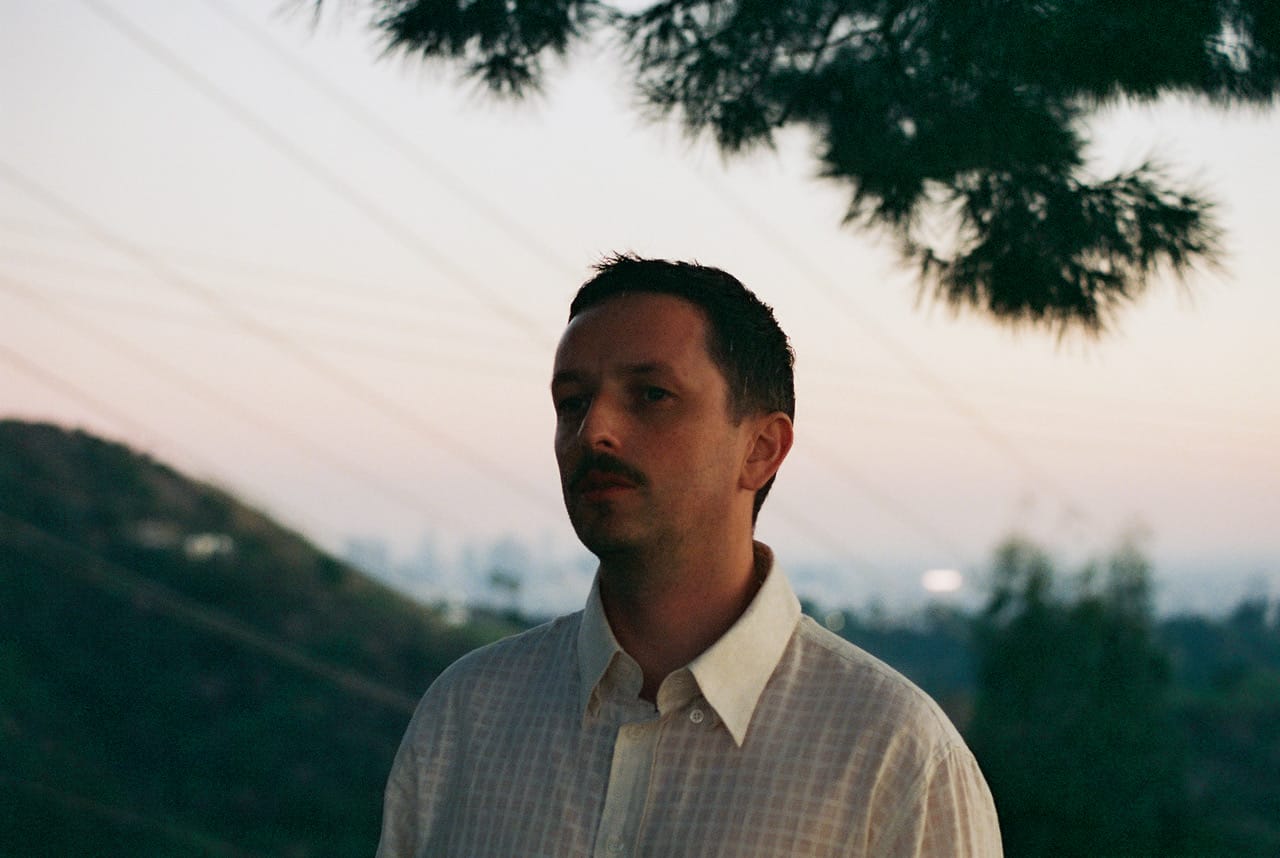
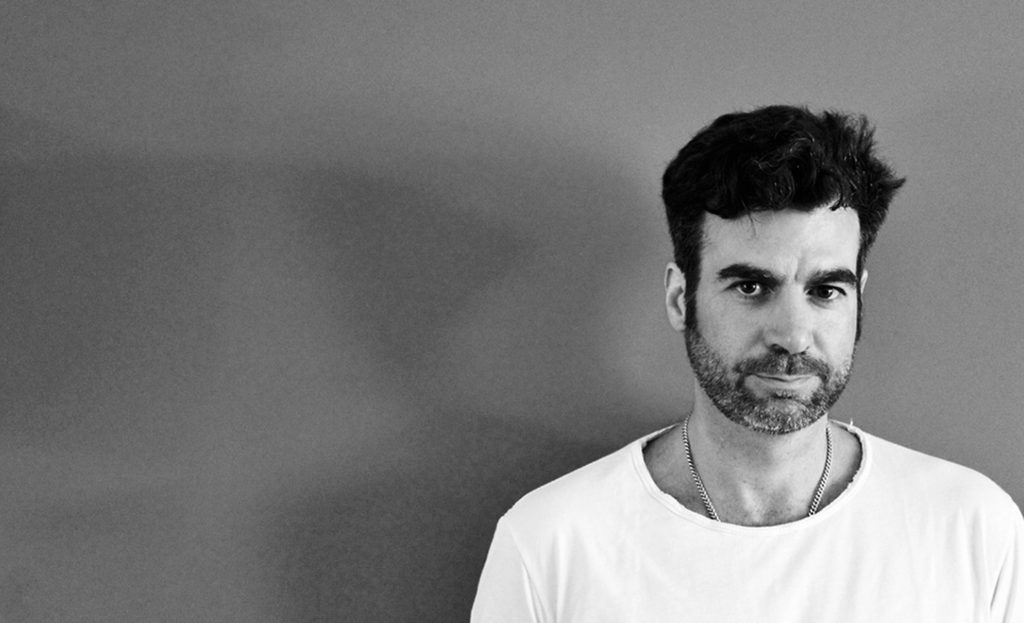
Above Image Cred: Iulia Alexandra Magheru
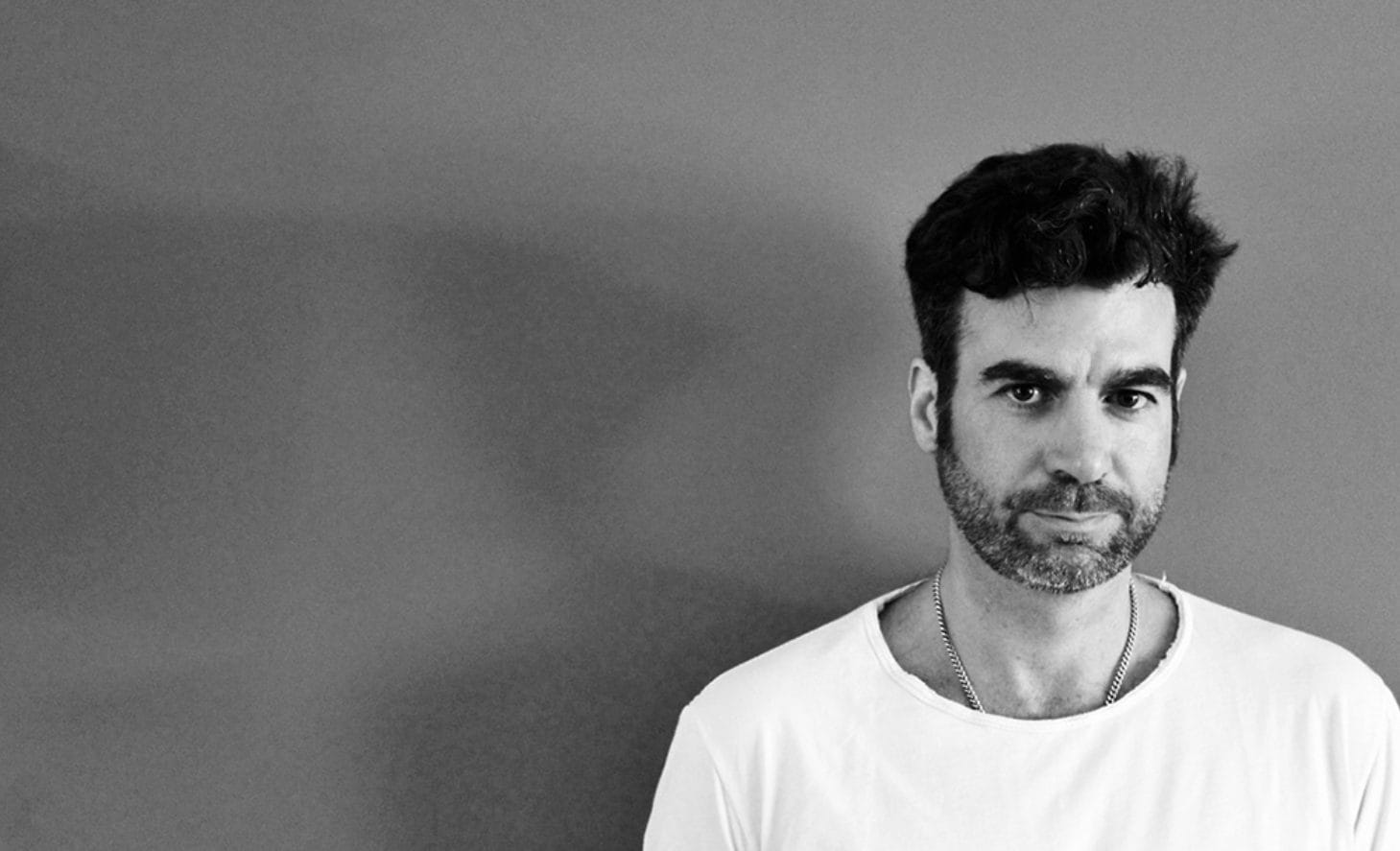
Rafael Anton Irisarri has been shaping long-form electronic work for decades, and his new album Points of Inaccessibility shows how far his process has moved since the early days of his career. The project started during a residency inside the former Pieter Baan Centre in Utrecht, which introduced a physical environment that influenced the earliest recordings. He tracked bowed guitar, layered tones, and slow harmonic movement inside rooms built for observation, then rebuilt the material later in his New York studio with precise processing and detailed treatment.
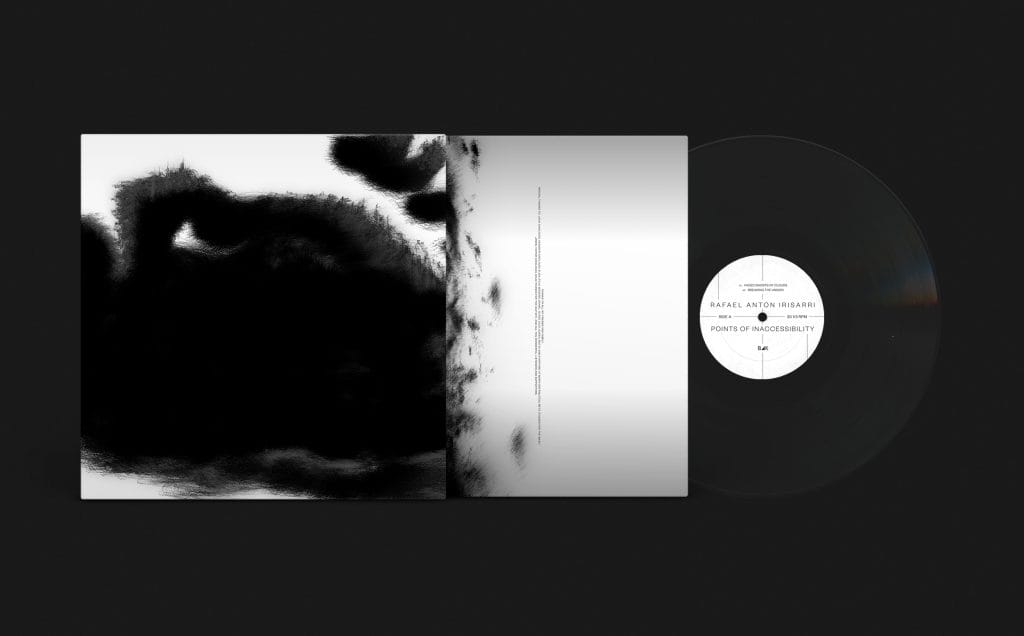
The record examines the tension created when digital systems define the pace of attention, release cycles, and audience behavior. Irisarri set out to work at a tempo that rejects that pressure, producing an album that requires uninterrupted listening and long spans of focus.
His approach relies on real-time looping, extended decay, and a guitar-driven process that expands the size of the signal without speeding it up.
Points of Inaccessibility arrives in February 2026 with a run of European dates that highlight the scale of the project. Several shows will include live visuals by Dutch artist Jaco Schilp, whose point cloud system reacts to the sound in real time. Irisarri continues to work from his Hudson Valley studio, carrying forward the same long-term investigation into space, perception, and the influence of digital structures on modern listening.
Interview With Rafael Anton Irisarri
How has your relationship with technology changed the way you make and release music?
When I started almost thirty years ago, technology felt like a frontier. Digital tools were opening up new ways of working, experimenting, and breaking away from the old industry. Little by little, that sense of possibility collapsed, as the digital world became less about creating and more about managing yourself inside a system shaped by algorithms. Algorithms that reorganize how we listen, how attention moves, and how culture is fed back to us. My new album Points of Inaccessibility responds directly to that shift.
It looks at what happens when technology stops being a tool and becomes the environment itself. Breaking the Unison, the first piece we are releasing, sits at the center of that idea. It deals with the moment when the individual and the system fall out of sync, when signals meant to connect us start scattering us instead.
We all feel the distance between the promise of digital progress and the reality of algorithm-driven isolation. Platforms reward constant output, quick hits, and context-free fragments. Listening to an album like mine requires time, patience, and continuity, which are the very things the attention economy pushes aside.
Technology is still central to how I make music, but I use it in a very specific way. Running my guitar through my looping system and building shifting layers in real time simply wasn’t possible when I started. I use those tools to expand the physicality of the sound, not to speed anything up. The album dictates the pace, not the platforms. As everything moves toward frictionless consumption, this record goes in the opposite direction. It insists on taking time, on listening without distraction.
Why did the former Pieter Baan Centre feel like the right place to start this project?
I didn’t intend to make this album in a former psychiatric prison, it happened by chance actually. Dutch visual artist Jaco Schilp and I met in October 2024 at MUTEK in Mexico City.
We crossed paths again a few weeks later during Le Guess Who? in Utrecht, where we talked for hours about perception and process, and he invited me to the Uncloud studio in the Spring. When I arrived for the residency in March 2025, I realized the studio was inside what used to be the Pieter Baan Centrum, a forensic psychiatric institution where people accused of severe violent crimes were evaluated. Walking through old cells and reinforced doors meant stepping into a space that had been built around observation and control.
The atmosphere carried a heavy psychological weight.
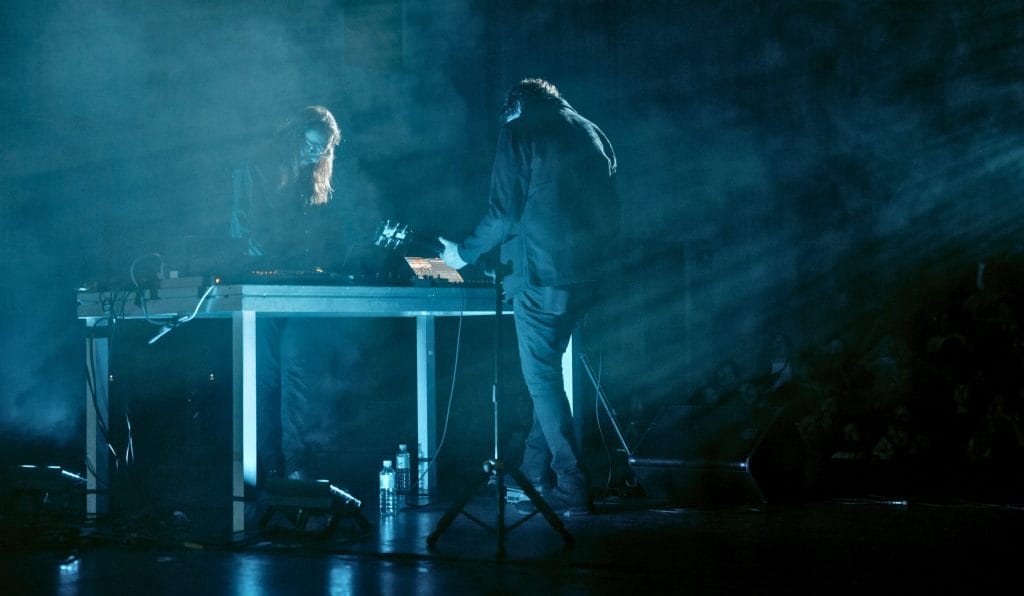
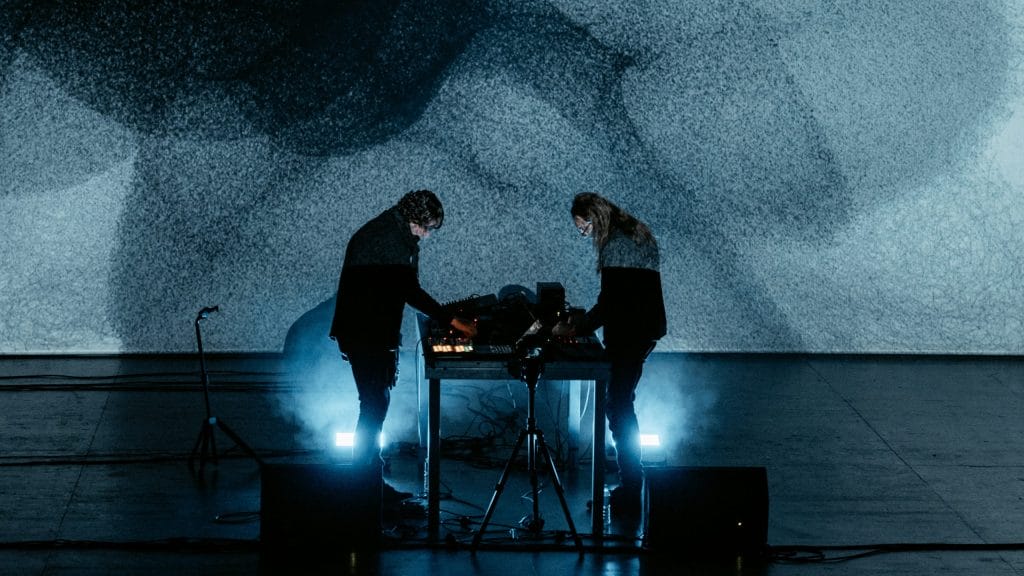
Being there as an artist rather than someone under evaluation created a tension that immediately shaped my awareness of the place. That environment changed the project completely. Jaco was building visuals from point cloud data that reacted in real time to whatever I played, so I had to perform nonstop for hours. The shifting black and white abstractions felt like psychological tests, somewhere between Rorschach patterns and the building’s ghostly residue. Being inside a building designed to probe human limits (the visuals, sound, space, etc) formed a closed loop.
The echoes, blind corners, and uneven resonance forced a different kind of listening, one tied to physical tension rather than abstraction. That fitted naturally with the themes of Points of Inaccessibility: digital drift, algorithmic isolation, and trying to orientate oneself inside systems that mediate perception.
Recording in a place built for scrutiny gave the work a kind of grounding no digital environment could offer.
What changes when you collaborate with a visual artist who shapes the mood of the performance?
Collaborating with a visual artist changes the entire architecture of the work. It forces the sound to operate inside another system of meaning, one that has its own logic and its own psychological pressure. With Jaco, the visuals are structural rather than ornamental. His point cloud imagery reacts to the sound in real time, which means each performance is a live construction rather than a repeatable sequence.
Nothing is pre-rendered or fixed.
The visual patch responds to small shifts in attack, tone, and density, so no two shows are ever the same. That makes the performance a negotiation between two parallel processes: the music pushes the imagery, and the imagery pushes back. The sustained drones play a central role in this exchange as their long decay, harmonic weight, and physical presence shape the way the visuals behave and how the space itself responds. We are building an audio visual environment that has to support both mediums without collapsing into spectacle.
You see the full force of that interaction most clearly in the live performance. After we presented the piece in Valencia in October of this year at the Volumens Festival, someone told us that their first reaction was “fuck you, why are you doing this to me!” The combination of the sound system, the sheer pressure of the sustained drones, the lights, and the enormous floor-to-ceiling projection of those Rorschach-like point cloud forms hit them with an intensity they were not prepared for.
The scale and density of the environment created a kind of sensory overload that triggered anxiety and resistance, as if the work was dismantling familiar perceptual cues faster than they could process them. But once they stopped fighting it, the experience shifted. They described drifting, entering a dissociative state where the boundary between the visuals and the sound collapsed, their sense of time loosened, and the emotional impact of the piece became more pronounced. What began as confrontation turned into something fluid and absorbing.
By the end they said it was mind blowing and unforgettable, not because it was easy – but because it forced them to relinquish control. Transitioning from resistance to surrender is where the collaboration does its real work. The environment pulls you out of your habitual frame, and once you let go, the piece reveals a scale and intensity neither medium could produce on its own.
When you move between projects, how do you keep your momentum steady?
Momentum comes from shifting between different modes of work instead of forcing continuity. Every project has its own gravitational pull. Rotating between composing, mixing, mastering, curating, and performing keeps things sharp. When one area reaches a natural pause, another opens up. That change in focus resets my attention. I avoid the pressure to produce nonstop.
Letting projects breathe gives me the distance needed to understand their shape. That’s what keeps things moving. Everything I make sits inside a long arc. The surface language changes, but the core investigation stays the same: memory, place, perception, and the effects of digital systems on how we experience time. When that through-line is always there, I never feel like I’m starting from zero. Momentum doesn’t come from speed. Momentum comes from coherence.
How do you stay present in the creative process while managing public visibility?
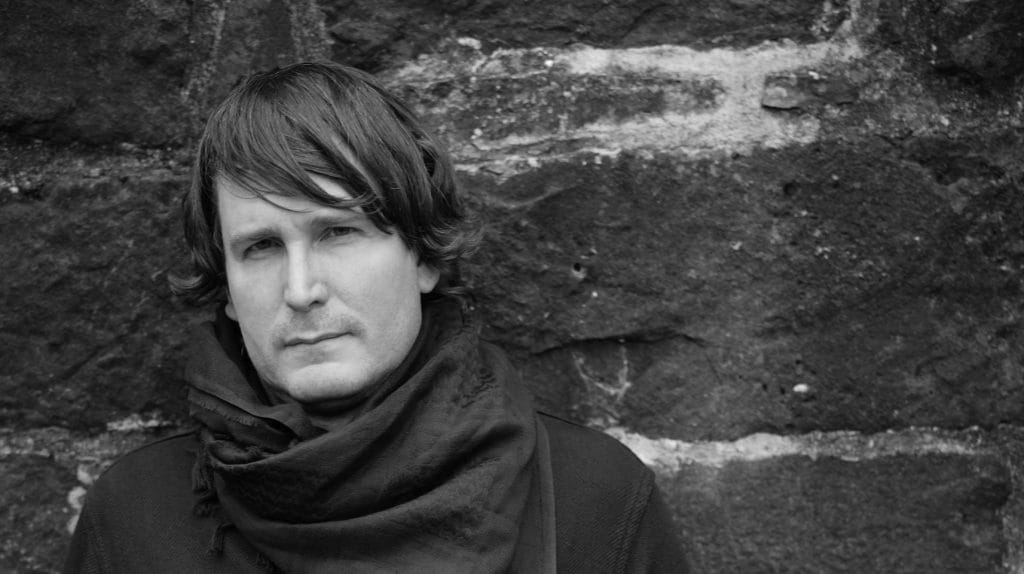
For me, staying present means treating attention as something limited. I’m naturally private. I’ve spent the past decade living quietly in the Hudson Valley of New York with my family and my cats. I built my studio, Black Knoll, inside my home, and most of my days are spent working there. I keep a low profile and protect the conditions that allow the work to happen. I stay off social media because it rewards distraction, drama, and reactive noise. I refuse to waste energy on false narratives or toxic people.
My circle is small and made of people whose values align with mine, and that keeps everything grounded. I share my time between New York and Europe, but the rhythm is the same: the work comes first, and anything public-facing happens only when necessary.
Taking control of my career again through Black Knoll Editions came from that same instinct. Over the years I dealt with agents, managers, and labels that were exploitative, opaque, or just incompetent. Those experiences made it clear that I needed to rebuild a sustainable structure around my work. On the other hand, I’ve collaborated with people who operate with real integrity, and that contrast made the larger problems impossible to ignore.
My current team is built around trust and competence: Daniel at Umor Rex handles all the design for the label, and Karen at Klang Signals manages strategy, my live bookings, and press. Having a focused group of people genuinely supporting the work keeps that long arc intact. Public visibility stays secondary. The priority is maintaining an environment in which the ideas can grow and develop.
Which upcoming venue on the 2026 tour feels like the most interesting place to present this album?
These tour dates have great rooms, but the places I keep imagining for this album aren’t typical venues at all. I think about sites shaped by landscape/geography, architecture, or a strong psychological charge. The Zugarramurdi cave in Navarra is the clearest example of that. It sits inside my ancestral homeland, and its history blends myth, projection, and collective fear into something that feels almost architectural.
The natural reverb, the way the cave holds low frequencies, and the cultural memory embedded in it would push the music into a different mode of listening. It’s the kind of setting where the environment becomes part of the composition.
Other spaces that feel aligned with the work include Ushuaia in Argentina, the southernmost city in the world, where the sense of geographic extremity adds its own tension; the Bank of Georgia building in Tbilisi, whose brutalist mass and suspended geometry could interact with the sustained drones in a very physical way; and the Teshima Art Museum in Japan, which behaves almost like a living organism shaped by water, air, and silence. These are the kinds of environments where the performance stops being a presentation and becomes a dialogue between sound, space, and the psychological weight the site carries.
Even if the tour takes place elsewhere, these are the places I think about when I imagine the work at its full scale.

Magnetic byline note: This byline is used for staff produced updates and short announcements, often based on press materials and official release information. Editorial responsibility: David Ireland (Editor in Chief) and Will Vance (Managing Editor). About: https://magneticmag.com/about/ Masthead: https://magneticmag.com/masthead/ Contact: https://magneticmag.com/contact/