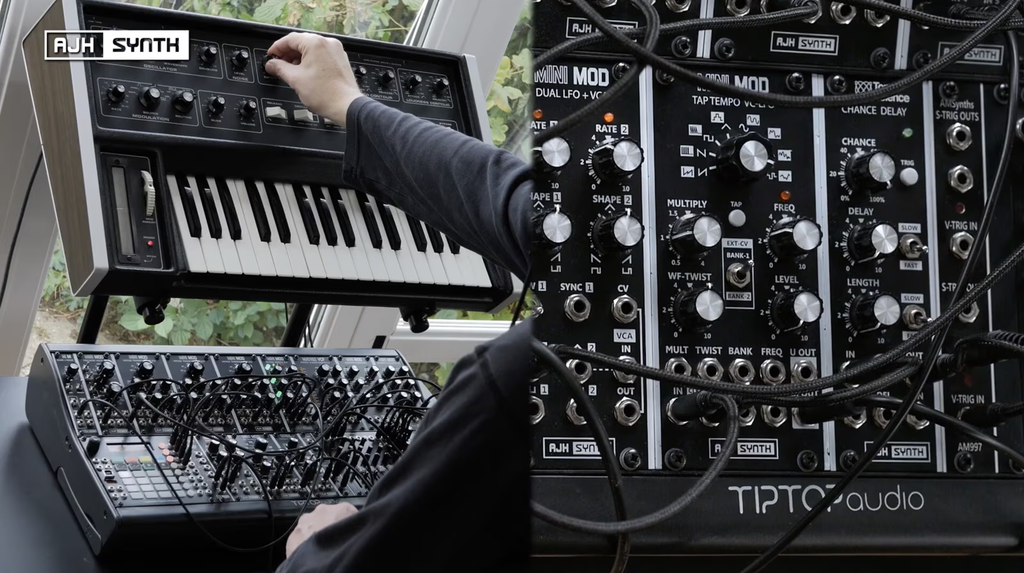
This edition of How It Was Made focuses on Oxia’s work on Aelle, a release that reflects decades of refinement from one of France’s most respected electronic artists. Known for his long-standing role in shaping modern club music, Oxia approached this project with a measured, detail-driven mindset, prioritizing control, restraint, and clarity across every stage of production.
Rather than chasing novelty or overloading arrangements, Aelle centers on balance and intent. The tracks evolve through subtle shifts in tone, rhythm, and texture, with each element serving a clear function inside the mix. Oxia’s process here highlights an emphasis on decision-making over excess, where sound selection, timing, and space carry as much weight as synthesis or processing.
In this How It Was Made edition, Oxia breaks down the tools and techniques behind Aelle, offering insight into how he builds structure, maintains groove, and keeps long-form electronic compositions engaging without relying on shortcuts. It’s a clear look at how experience shapes workflow, and how restraint, when applied deliberately, becomes a defining production strength rather than a limitation.
Battery – Native Instruments

For the album, Battery was really at the center of all my rhythm work. I actually use it on every track I make, because it’s the tool I rely on to build all my beats from the ground up. What I love about Battery is its simplicity and flexibility. You can select each drum sound individually, like a kick, a snare, a hi-hat, and load them quickly into the cells. It gives me full control over every single element, which is really important for shaping the beat.
Once my sounds are loaded, I assign each one to its own mixer channel. This allows me to process every drum independently: EQ, compression, effects, and so on. I can really work on each sound, making sure it sits perfectly in the mix. On top of that, I can tweak the attack, adjust the release, filter the frequencies, add noise, change the tuning, and more.
I build all my rhythms piece by piece, focusing on each sound individually. This approach lets me control every tiny detail, from the texture of a snare to the punch of a kick. Basically, I work on each sound separately until I get exactly the texture I want.
Prophet – Arturia
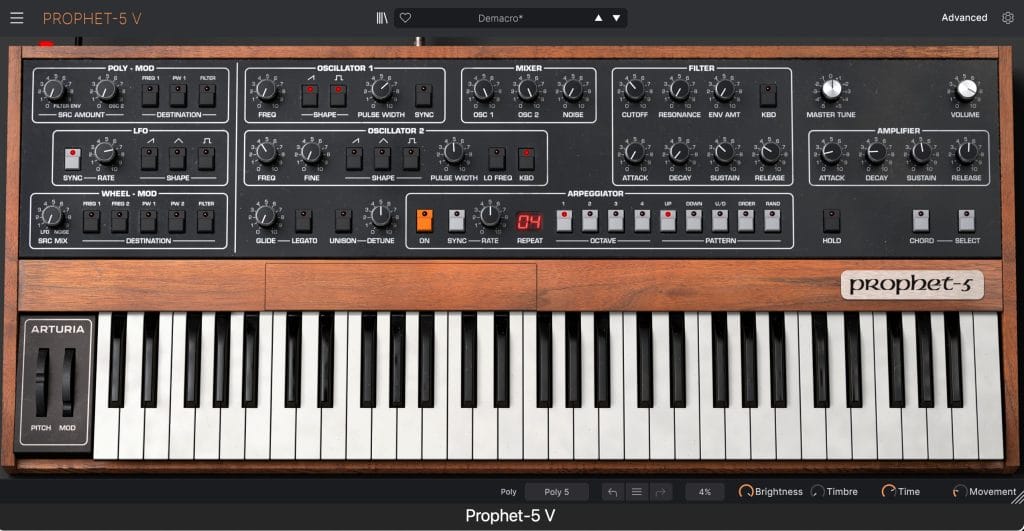
I used the Prophet from Arturia on several tracks. It’s a synth I really love because of its versatility and its rich, analog-like sound. On the album, I mainly used it for basses on the tracks Aelle, Presence, On The Trip, and Calling The Sun, but also for pads on Aerial. What I appreciate about the Prophet is how it combines classic analog warmth with modern digital precision.
For the basses, I tweaked the oscillators to get the right tone and sometimes added subtle modulation to give the sound a bit more movement. I like how the Prophet lets me shape the envelopes and the filter very precisely – the attack, decay, cutoff, resonance, and so on. All of that is crucial for making the bass sound exactly the way I want.
For the pads, I often layered multiple oscillators, adjusted the detune, and played with slow filter movements to get a wider texture. I usually start from one of the Prophet’s presets, but I modify them a lot, changing the waveforms, reworking the filter, tuning, and effects. Each sound becomes unique to the track.
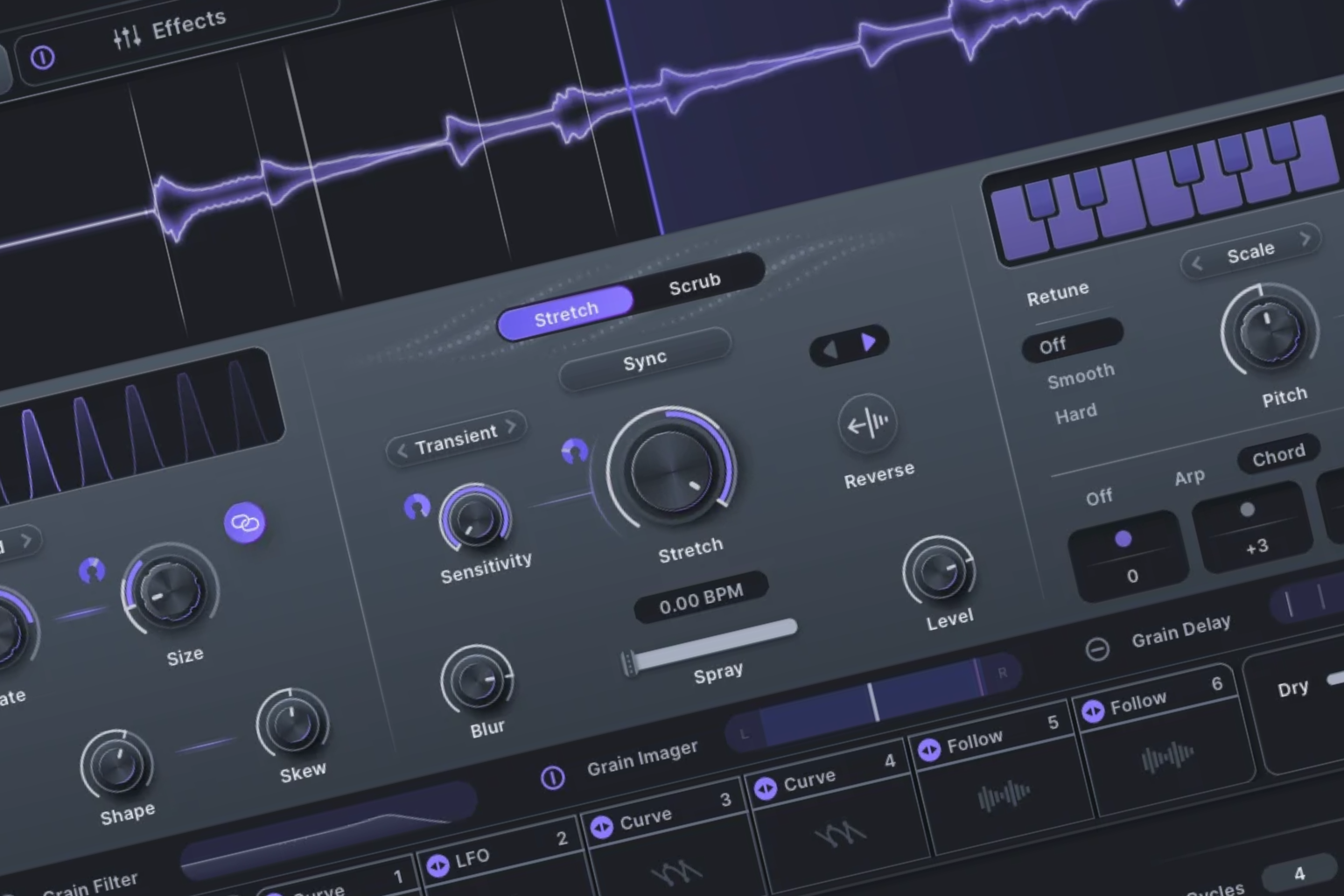
Looptrotter SA2RATE2 – Plugin Alliance
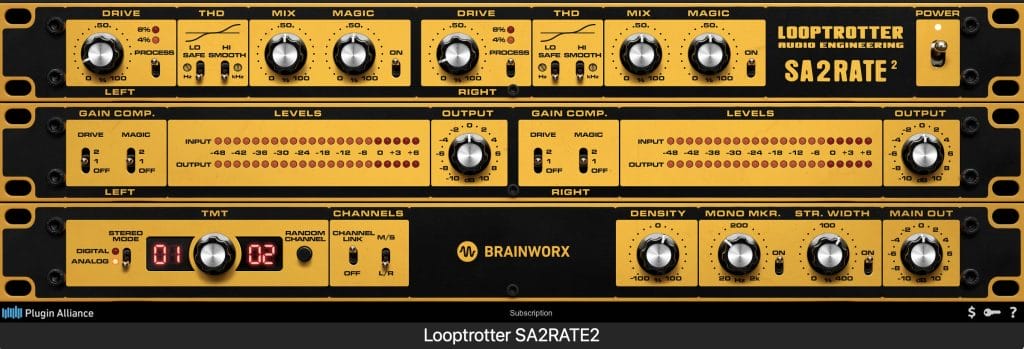
We used Looptrotter SA2RATE2 on almost every track of the album. It was actually my sidekick, Nicolas Masseyeff, who helped me with the mixdown of the album and also collaborated on Faces, who introduced me to this plugin. We mainly used it on the rhythm buses.
I really like it because it adds character to the whole rhythm. You can subtly color the drums without losing clarity, giving the beat texture and presence so it blends perfectly into the mix. We use it to add harmonic distortion and saturation, which gives the drums a warm, slightly analog feel.
Sometimes I tweak the rate and depth to make the groove more dynamic. It’s very flexible, so depending on the track, we can push it for a more aggressive tone or keep it subtle. Using it on the rhythm bus helps glue all the percussive elements together, giving the rhythm a strong sense of unity. It’s one of those plugins that instantly adds personality to the drums.
Neve 1081 – UAD
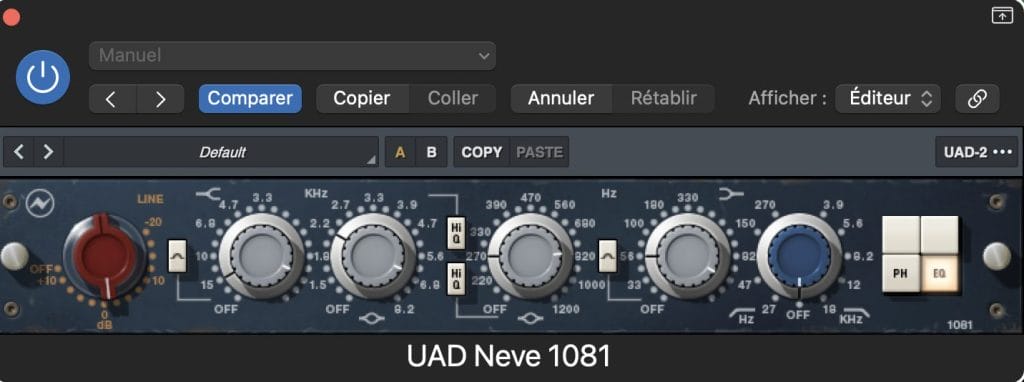
I used the UAD Neve 1081 a lot throughout the album, mainly to add warmth and character to certain sounds. It’s one of those EQs that doesn’t just shape the frequency balance, it brings color and a kind of vintage texture that I really like. Whenever a sound felt a bit too clean or too flat, the 1081 was often the first tool we reached for.
I like using it to slightly boost the mids or high-mids to bring presence, or sometimes to warm up the low end without losing definition. Even subtle moves with this EQ make a difference, because it naturally adds a bit of analog color. It helps the sounds sit better in the mix while giving them more personality.
Sometimes I even insert it just to let its natural tone do the work, even with almost no EQ applied, because it adds a subtle thickness and depth. It’s one of those tools that instantly gives the sound a more finished, polished feel without having to push it too hard.
Tips And Takes From Oxia
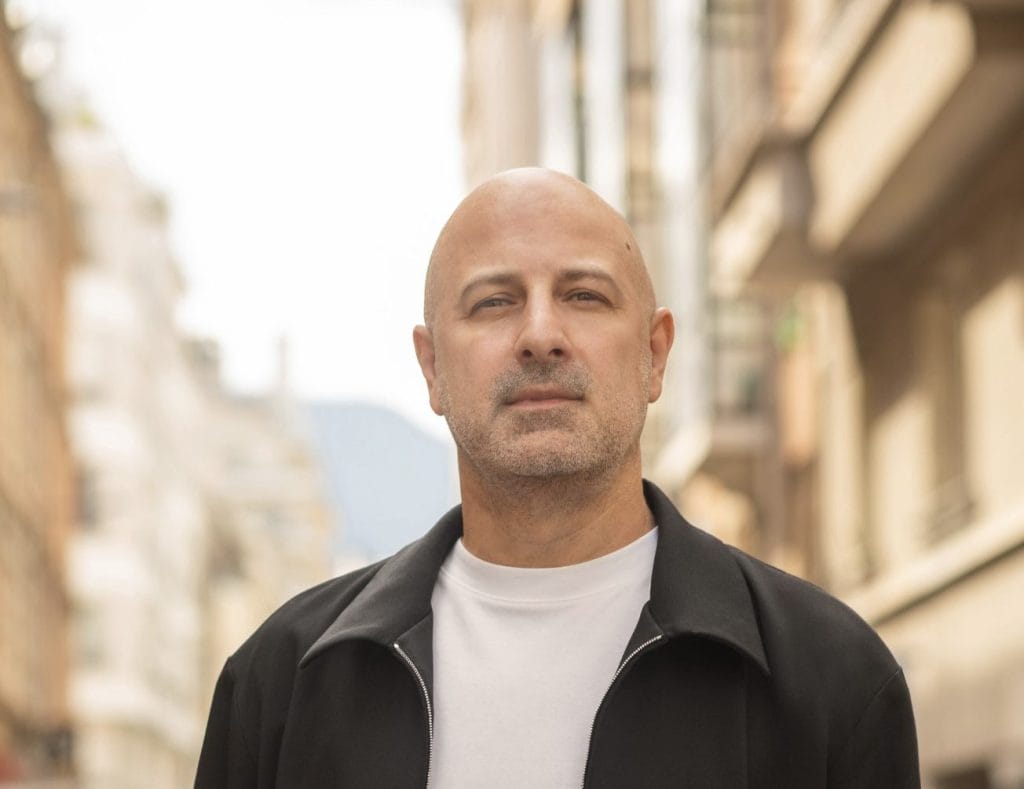
#1 – In today’s industry, it’s easy to get caught up in numbers and trends. But whatever the genre, I think making the music you truly want to make is still the best way to stay fulfilled as an artist.
#2 – In production, the pursuit of perfection can easily become the enemy of the good. I’ve made that mistake myself many times, always trying to improve, but sometimes it’s better to trust your first instincts.
#3 – Of course, socials are part of the game and need to be considered, but artists and producers should stay focused on their music as much as possible.

Will Vance is a professional music producer who has been involved in the industry for the better part of a decade and has been the managing editor at Magnetic Magazine since mid-2022. In that time period, he has published thousands of articles on music production, industry think pieces and educational articles about the music industry. Over the last decade as a professional music producer, Will Vance has also ran multiple successful and highly respected record labels in the industry, including Where The Heart Is Records as well as having launched a new label with a focus on community through Magnetic Magazine. When not running these labels or producing his own music, Vance is likely writing for other top industry sites like Waves or the Hyperbits Masterclass or working on his upcoming book on mindfulness in music production. On the rare chance he's not thinking about music production, he's probably running a game of Dungeons and Dragons with his friends which he has been the dungeon master for for many years.