Table of Contents
If you’ve ever opened your DAW, stared at a blank MIDI clip, and immediately felt like your brain evaporated… congratulations, you’re an actual producer. That moment where you’re supposed to “just write something” is exactly where most ideas lose steam. Not so much because you’re necessarily out of inspiration, but more so because starting from zero is way harder than anyone admits (it’s that whole blank-canvas syndrome thing)
One of the easiest ways to skip that weird creative limbo is to begin with something that already works: a chord progression that’s been powering some of the biggest hit records since the dawn of musical time (… or at least longer than most of us have been alive). Native Instruments actually covered the ten most famous chord progressions a while ago, and reading that article is actually what inspired me to get this one going! When you anchor your loop to tried and true chord progressions that naturally feel good to listeners, everything else becomes easier: melodies, basslines, rhythms, textures, transitions.
The whole track starts growing on its own.
This guide is basically a blueprint for that workflow. If you want your loops to hit faster, feel catchier, and translate across genres, the starting point matters. So let’s build the loop that pulls listeners in before they even realize they’ve stopped scrolling.
Why Tried and True Chord Progressions Help You Move Faster

Certain progressions show up across genres because the intervals feel natural to listeners.
Even without understanding theory, people gravitate toward these patterns because the movement between chords creates emotion in a reliable way and the way that chord progression can uplift our emotions, pull them down, or suspend them with a sense of faux anticipation. When you start your loop with a familiar harmonic shape, your melody receives an immediate sense of direction and a framing which makes writing that melody all the more easy.
Because a progression also gives your session structure. Without structure, every choice feels equally possible, which often slows creativity. Once harmony is present, rhythm and melody become easier to explore because your brain responds to the emotional cues inside the chords. The process feels more like shaping something that already exists rather than forcing an idea into place.
This is why progressions play such an important role in melody writing. They support instinct and give the session a tone that influences every choice you make from that moment forward.
Progressions That Always Pull Their Weight
Producers return to a handful of progressions because these harmonic shapes consistently activate creative ideas. They help melodies fall into place, encourage expressive basslines, and guide the overall tone of the loop. Roman numerals also simplify everything because you can shift the shapes into any key without slowing down.
Once you understand how the intervals behave, you can move freely while keeping the progression intact. So let’s talk about some of the most classic progressions in the game, with some of the most popular tracks using those chord progressions.
I V vi IV
The I V vi IV pattern brings a sense of uplift that works in house, pop, melodic techno, indie, and many other styles. The movement from the tonic into the dominant offers a sense of strength, and that strength often becomes the emotional anchor for your melody. Producers enjoy this pattern because it works for bright leads, gentle pads, rhythmic plucks, and everything in between. The shape feels familiar to listeners and encourages phrases that are easy to remember.
vi IV I V
Starting with vi IV I V creates a reflective and sensitive mood. This progression often inspires deeper or more intimate melodic lines because it begins in a minor space and rises into major colors. The feeling is thoughtful without leaning too heavy.
Many producers use this pattern when they want to explore warmer textures or cinematic layers. The movement supports atmospheric ideas and offers plenty of space for spacious pads, vocal chops, and slowly unfolding melodies.
I vi IV V
The I vi IV V pattern carries a smooth sense of motion that works well for loops that build over time.
The progression creates a constant cycle that feels comfortable to the ear, which makes it ideal for grooves that need extended development. Producers who create chord-driven music often rely on this pattern because it allows rhythmic layers to settle into place while the harmony keeps everything moving forward. It becomes a strong backbone for arpeggios, piano lines, and melodic leads.
ii V I
The ii V I sequence from jazz delivers expressive movement and a well-defined sense of arrival. This progression creates lift and resolution, which encourages melodic phrases that feel intentional.
Even simple ideas gain maturity when written over this shape. Electronic producers often use it to bring subtle sophistication into genres that thrive on repetition. The emotional clarity inside this pattern gives your loop a refined character without requiring complex arrangement.
i VII VI VII
The i VII VI VII pattern shapes darker and more grounded moods. This progression works well for deeper or atmospheric music that benefits from weight and texture. The repeating cycle helps create hypnotic patterns that suit slower tempos or evolving pads. Producers often discover that even minimal melodic ideas feel rich here because the harmony provides such a strong tonal identity.
This progression thrives when paired with long-decay synths, filtered percussion, or sustained bass layers.
Each of these progressions can support an entire track. Once you choose a shape, you establish the emotional language of the loop. This becomes the foundation that guides your voicings, your melodies, and the rhythmic decisions that follow. The progression is not the final product. It is the creative backdrop that helps you discover the ideas your track needs.
Turning A Classic Progression Into A Track
When you drop a progression into your DAW and start looping it, the session opens up. The chords give your mind something to respond to, and ideas tend to appear without far less friction, almost like bowling for strikes with the bumpers on instead of gutters; it just makes the processes safer, easier and more fun for all involved.
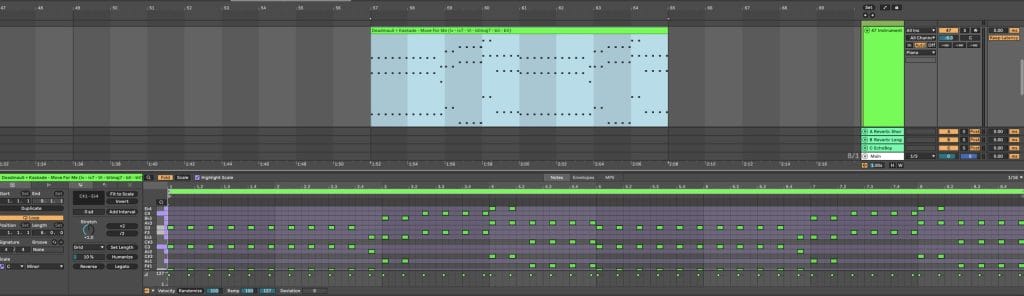
The first step is simple. Commit to the progression. Let it loop long enough for your ear to absorb it. Once the harmony settles into the background, your creativity starts to rise.
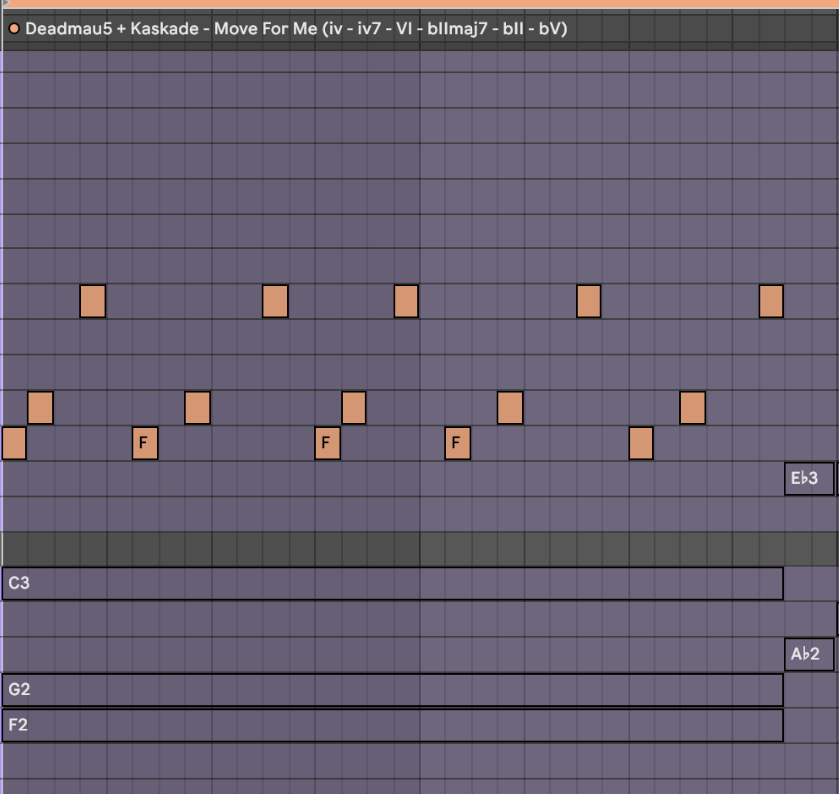
As we move through the rest of the article, I’ll be working on a fresh idea of my own using the chord progression of the classic dance track ‘Move For Me’ by Kaskade & Deadmau5 (the original MIDI of which is shown above). In almost every situation, chord progressions cannot be copyrighted because they are considered fundamental building blocks of music with a limited number of combinations (probably why it’s also so effective for starting tracks with a chord progression; it’s the foundation!).
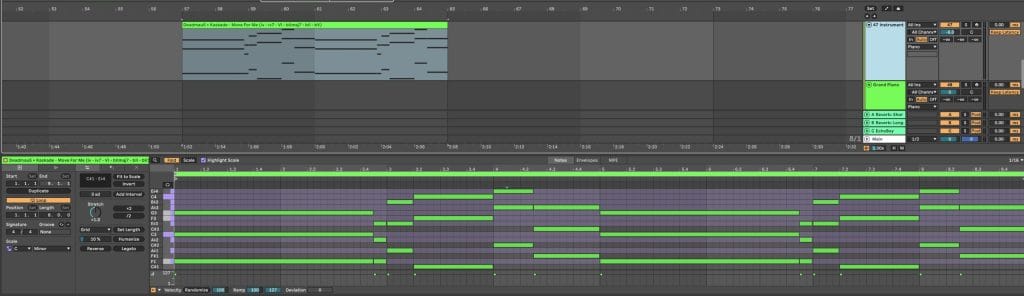
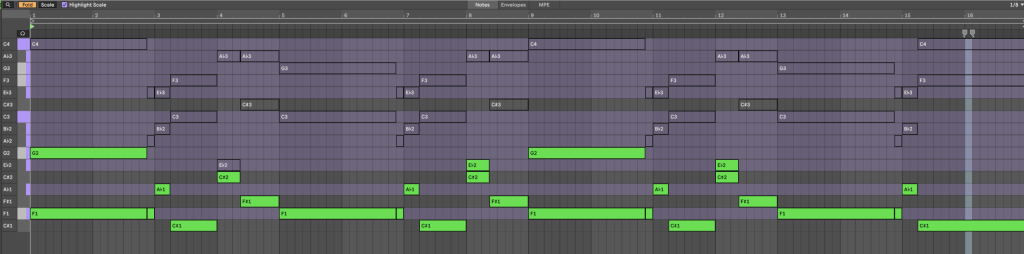
The next thing is going to be making some quick edits and elongating the chords so I get sustained notes instead of the pluck patterns that are so iconic about the track from which the progression is pulled, but that’s just the beginning.
The way you voice the chords matters. Look at the overall architecture of how the notes move and see how the changes I made below bring a more descending motion to the progression? They’re the same notes, just the leading tones and the voicing modifications to create an entirely different sound different movement within the same progression.
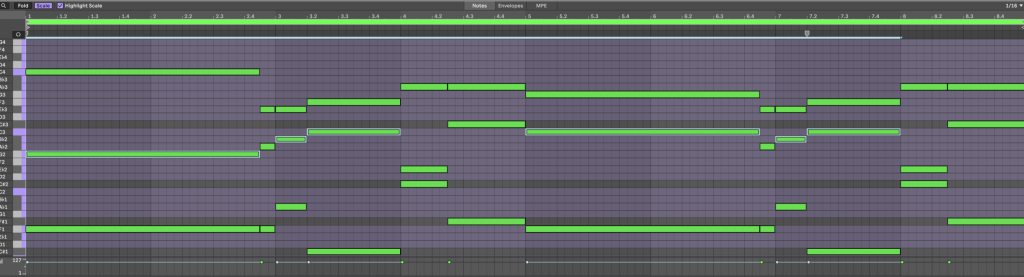
A progression in its basic form may feel too straightforward. Changing the order of the notes or spreading them across octaves can shift the entire emotional tone. Inversions can soften transitions, while wider spacing creates a sense of openness. Even one altered note can pull the harmony in a new direction.
These small choices help define the personality of the loop.
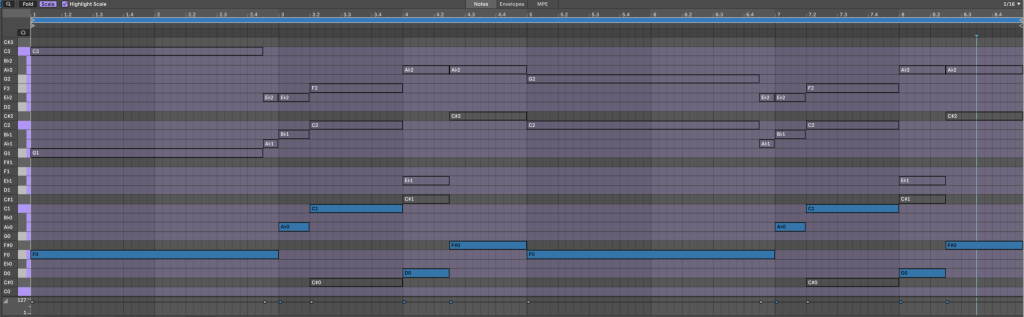
A well-structured bassline supports the harmony and encourages melodies to form naturally. In the image above you can see that I copy and pasted the MIDI notes from the chords into the bass line channel, muted the notes and then unmuted most of the root notes. I say most because you may see that in a few choice chords, I actually used the non-root note of the chord, just to create a bit of excitement in how the bass would harmonize against the chords above it.
Then I dropped the whole clip by an octave as well, just to ensure those notes are down in the sub-range.
The bass establishes the gravity of the progression, and that gravity influences where your melodic phrases want to land. You can keep the pattern simple because the role of the bass is to shape motion. When the bassline feels confident, the rest of the loop develops more easily.
For some genres, this could be 80% of the work done already (at least once we threw on some drums and a vocal texture or two). But I want to get a melody going as well, so let’s start talking about writing something that sticks in our listeners’ ears.
Repeating the melody is important because repetition builds recognition. I usually start with a one or two-bar ostinato pattern that helps define the cadence, placement, and movement of the notes in my melody and then expand on that short ostinato until it’s got just the right amount of complexity and variation. I liked the movement and rythmn of the short 2-bar pattern above, so I extrapolated up on so that it stretched over the whole progression, with the notes changing in tandem with the chord changes (pulling up the MIDI notes on the chords as well can help make this super easy).

I do this by adding slight timing shifts, raising a note, or altering the final phrase, creating interest without disrupting the overall feel. These minor changes add momentum and prevent the loop from becoming static.
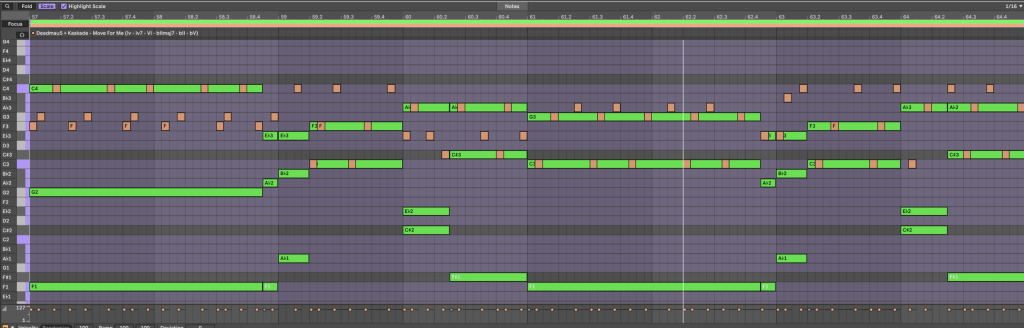
Melodic textures add depth to this workflow as well. You’ll notice in bat 61 of the MIDI note above how I went a whole step above what the leading tone of the chord is playing. That slight dissonance breaks from what the listener is expecting, and can play with anticipation to create more emotional moments. Just don’t go overboard with that type of dissonance or else it will feel, well, dissonant.
A quiet countermelody, a soft pluck, a reversed tail, or a filtered pad can introduce subtle movement. These elements fill the space around the main melody and support the emotional tone of the loop without overwhelming it. The goal is to create dimension while keeping the core idea intact.
Keeping Familiar Progressions Fresh
Progressions become even more useful when you know how to add variation. Rhythm can reshape the emotional effect of any harmonic pattern. Straight chords feel different from syncopated patterns or slower arpeggios. Even a simple shift in timing can change how the progression sits inside the groove, a move that’s super powerful when you’re producing music that relies on a 4×4 kick pattern.

Noticee how the eight-bar loop I’ve been using has been duplicated and combined to form a single 16-bar progression and then the notes at the end of the loop’s second cycle have been drawn out more? That can create a sense of anticpation that draws the listener into the start of the loop again (plus it prevents there being more meldoic movement at the end of a larger 16-bar progression which means more attention can be drawn towards some melodic ear candy or drum fill which oftentimes fills that space as well).
Borrowed chords add a sense of color that pushes the harmony into new territory. This technique creates moments that feel unexpected but still natural. The melody often responds with richer shapes because the harmonic environment becomes more expressive.
Pedal tones create tension by holding one note steady while the rest of the harmony moves. This technique creates a hypnotic pull that works well for cinematic or minimal styles.
Inversions also influence the emotional direction of a progression. Reordering the notes can create different degrees of lift or weight, which helps shape the loop without altering the progression itself. Melodies sometimes lead the harmony. When a melodic line suggests a new chord or pathway, follow it. These small deviations often become the most memorable moments in a track.
Turning a Loop Into a Track Without Losing Its Spark
A strong loop contains everything you need to build a full arrangement.
Begin by stripping the loop down to its core. In the image above, which is used for the introduction and first verse of the track, I’ve cut all the leading tones and upper voicings of the chords so that the chords can still be felt and the warmth that the pads or piano playing the chords still fill out the midrange of the track, but they don’t really offer a “progression” just yet. Chords, bass, and one melodic idea can set the stage. Introduce new layers gradually so the energy rises in a natural way.
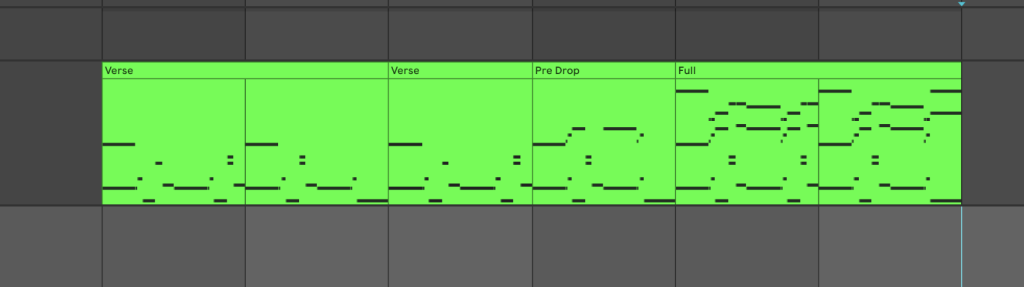
Allow quiet moments to create space for anticipation. Bring elements in slowly. Remove them when the track needs contrast. Save your heaviest variation for the final section so the track reaches a satisfying peak.
Automation keeps the loop alive. Small movements in brightness, filtering, pitch, or effects help the listener feel the track evolving. These subtle moments create life inside the arrangement without demanding constant new material.
The loop should feel like it grows and breathes throughout the track.
Why This Workflow Feels So Effective
Starting your creative process with a time-tested progression helps every part of the track form more easily. Harmony gives direction to melody. Melody informs rhythm. Rhythm shapes energy. The session becomes a cycle where each idea inspires the next.
This approach removes pressure from the early stages and helps you move quickly toward sounds that feel authentic. Your ideas gain structure and emotional clarity because the progression sets the tone from the start.
A progression does not decide the quality of your music. It simply holds the space where your creative instincts can unfold with more freedom.

Will Vance is a professional music producer who has been involved in the industry for the better part of a decade and has been the managing editor at Magnetic Magazine since mid-2022. In that time period, he has published thousands of articles on music production, industry think pieces and educational articles about the music industry. Over the last decade as a professional music producer, Will Vance has also ran multiple successful and highly respected record labels in the industry, including Where The Heart Is Records as well as having launched a new label with a focus on community through Magnetic Magazine. When not running these labels or producing his own music, Vance is likely writing for other top industry sites like Waves or the Hyperbits Masterclass or working on his upcoming book on mindfulness in music production. On the rare chance he's not thinking about music production, he's probably running a game of Dungeons and Dragons with his friends which he has been the dungeon master for for many years.