French producer Taaris has been carving out her own space in techno with a ritualistic edge, weaving ancestral influence and raw club energy into her productions. Her latest release, Nankay on Lady Tazz’s Mind Medizin, is one of her most immersive works yet — a trip that moves between hypnotic percussion, haunting atmospheres, and jungle-inspired textures that feel as physical as they do spiritual.
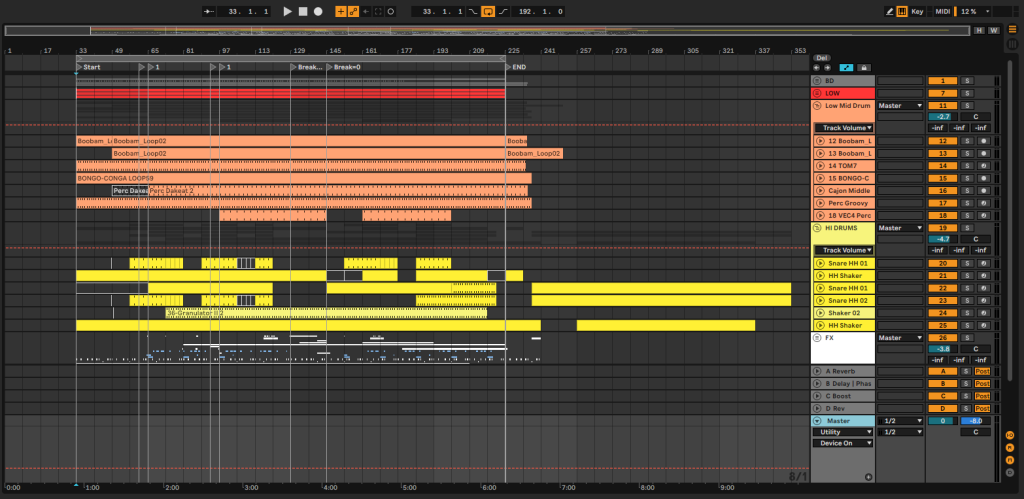
The EP doesn’t sit still. “Nankay” pushes with stacked kicks and low-end rumble, while “Ranzai” dives into a deeper workout full of glitchy details and tribal percussion, flipping between tension and release. Vinicius Honorio’s rework brings his own dark, dubby approach into the fold, rounding out a package that highlights the versatility of the label and the forward momentum of Taaris’s sound.
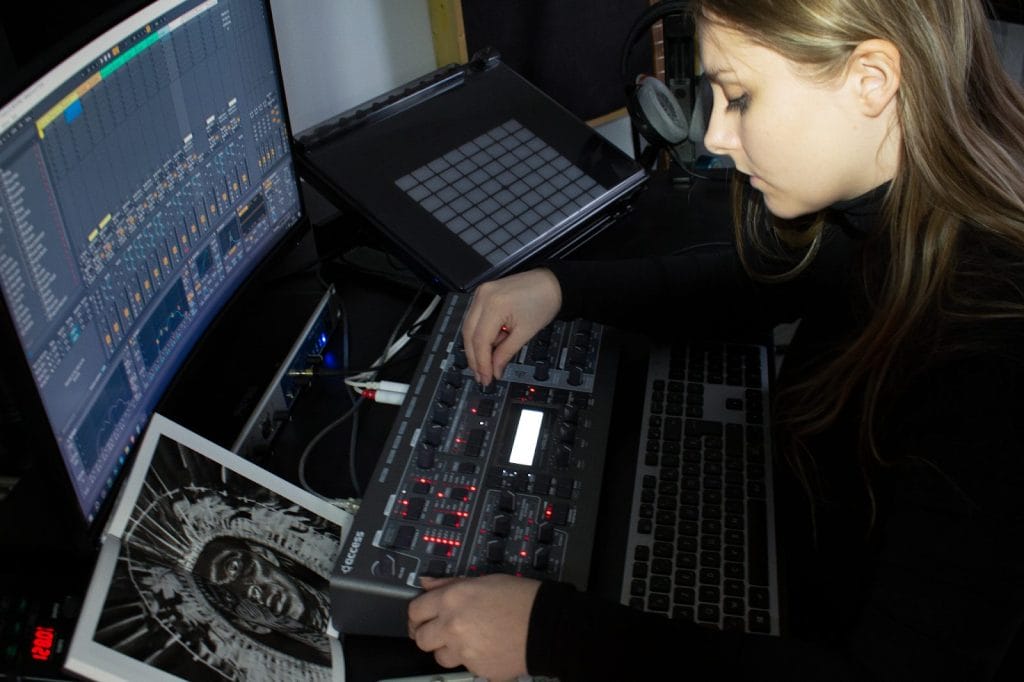
For this How It Was Made feature, Taaris walks us through the tools and techniques behind Nankay. From twisting samples with Ableton’s warp functions to reshaping atmospheres with Eventide’s Blackhole, her approach balances precision with experimentation. It’s a breakdown that shows how field recordings, modulation, and subtle imperfections can push techno into deeper and more ritualistic territory.
Grain Delay (Ableton)
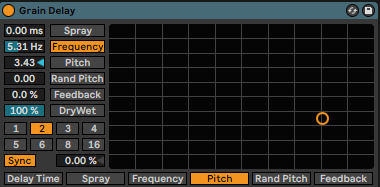
Ableton’s Grain Delay is a unique effect that chops audio into tiny “grains” and then delays, shifts, and scatters them in creative ways. Unlike a standard delay, it can completely transform a simple sound into something textural, glitchy, or even melodic. By tweaking just a few parameters, you can go from subtle depth and movement to wild, otherworldly soundscapes. It’s one of those plugins that feels more like an instrument for experimentation than just an effect.
I use Grain Delay on many of my tracks and in different ways, but on Nankay it really shines in a specific moment. After recording the full master of the track, importing it onto an audio channel, and adjusting the mix, I added Grain Delay. With this technique, I keep the same tonal character of the track, but the notes feel different because Grain Delay kind of “flips” them. It’s such a creative tool, adding character and giving the track more presence.
For anyone working in this genre, Grain Delay can be a great way to add movement and surprise to repetitive patterns. One trick I’ve learned is to use it subtly on background elements or transitions, it instantly gives the track more depth without overwhelming the main groove. It’s all about finding that sweet spot where the effect enhances the track’s energy without taking away from its core.
Decimort

Decimort is a high-quality bit crusher that recreates the character of vintage samplers. Instead of just adding distortion, it carefully emulates the coloration and grit you’d get from classic hardware, which gives sounds extra warmth and punch. Making audio feel less “clean” and more alive.
On Nankay, I mainly used Decimort on the drums to give them more punch and presence. I didn’t stick to a preset, I adjusted all the controls manually, experimenting and trusting my ears to find the sweet spot. To keep it from overpowering the groove, I carefully worked the wet/dry balance. The result was a rhythm section with more weight and personality, feeling both tight and raw at the same time.
One thing I’ve learned with Decimort is that it’s not just about making sounds dirtier, it’s about giving them personality. It really brings out the frequencies and adds depth to the track. It also creates more movement and a dynamic feel.
Warping & Time-Stretching
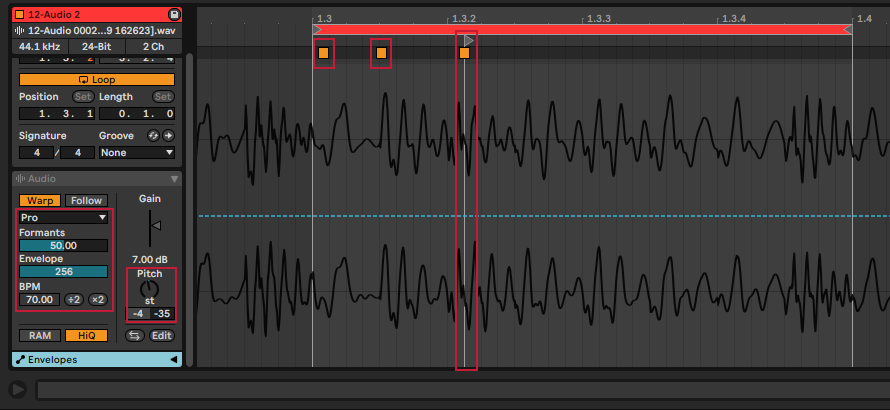
Ableton’s Warping and Time-Stretching tools are some of the most powerful creative features in the software. They let you manipulate audio in extreme ways, slowing it down, speeding it up, or completely reshaping the timing while keeping everything locked to the grid. It’s a function that’s just as useful for precise editing as it is for pure experimentation.
I’m a samples addict and I used Ableton’s warping and stretching tools to completely reshape almost all of my samples. For example, I took recorded jungle or water textures and slowed them down, which created deep, atmospheric pads that weren’t present in the original sound. At other times, I experimented by stretching percussion until they turned into elongated and abstract sounds. I also combined these with EQ and reverb to blend everything smoothly into the mix, which added more depth and made the track feel more alive.
Warping and stretching in Ableton can be a game-changer when it comes to transforming samples into something completely new. One trick I’ve learned is to take organic recordings (like field sounds or percussion) and slow them down until they turn into ambient textures that add atmosphere to the track. The key is to experiment without fear, because sometimes the best moments come from happy accidents.
Blackhole
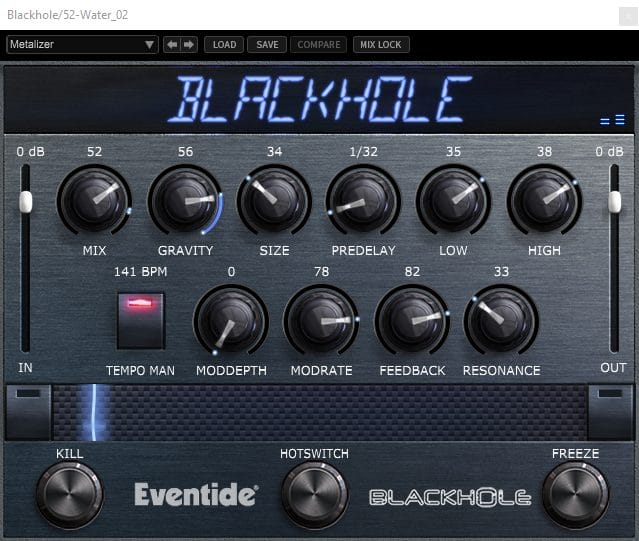
Eventide’s Blackhole is a reverb plugin designed to create massive reverberant spaces. Unlike traditional reverbs that emulate real rooms or halls, it stretches sounds into vast, almost infinite atmospheric tails. With parameters like size, gravity, and modulation, it can transform even simple sounds into deep, evolving textures. On its own, it can create an entire sonic universe.
I mainly used Blackhole on the water and jungle atmospheres to give them an expansive and immersive quality. I experimented without relying on any specific preset. It’s one of those tools that keeps background atmospheres constantly present, yet subtle.
Blackhole is perfect for adding depth and atmosphere to any track, especially when working with natural recordings or textures. Sometimes it works perfectly, other times it doesn’t fit at all, it really depends on the sound and context. It’s perfect for background sounds that need to stay present without stealing the focus while keeping the mix busy and interesting.
Quick Fire Tips For Making This Genre
Tip #1: Experiment fully without expecting anything. Let the sounds inspire you, you never know what will come out. Just meditate.
Tip #2: Use a landscape photo, a reference track, or any source of inspiration to guide your creative process. Visuals and sounds can spark ideas you wouldn’t think of otherwise.
Tip #3: Use organic samples and field recordings from nature. Jungle textures, water sounds, and environmental layers give your track life and depth.
Tip #4: Humanize sounds with subtle timing, velocity, chance or pitch variations. Small imperfections make your track feel alive and organic.

Will Vance is a professional music producer who has been involved in the industry for the better part of a decade and has been the managing editor at Magnetic Magazine since mid-2022. In that time period, he has published thousands of articles on music production, industry think pieces and educational articles about the music industry. Over the last decade as a professional music producer, Will Vance has also ran multiple successful and highly respected record labels in the industry, including Where The Heart Is Records as well as having launched a new label with a focus on community through Magnetic Magazine. When not running these labels or producing his own music, Vance is likely writing for other top industry sites like Waves or the Hyperbits Masterclass or working on his upcoming book on mindfulness in music production. On the rare chance he's not thinking about music production, he's probably running a game of Dungeons and Dragons with his friends which he has been the dungeon master for for many years.