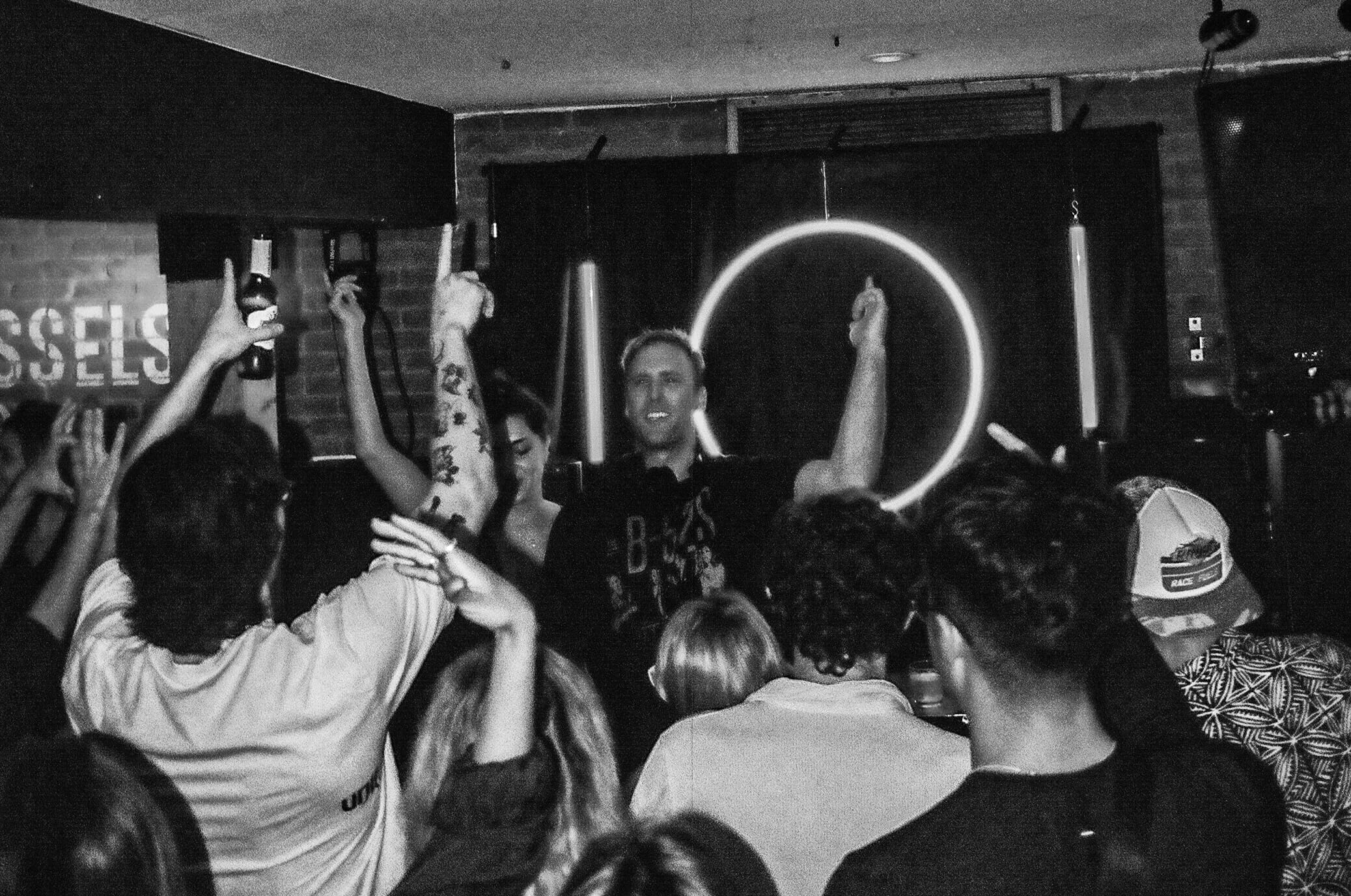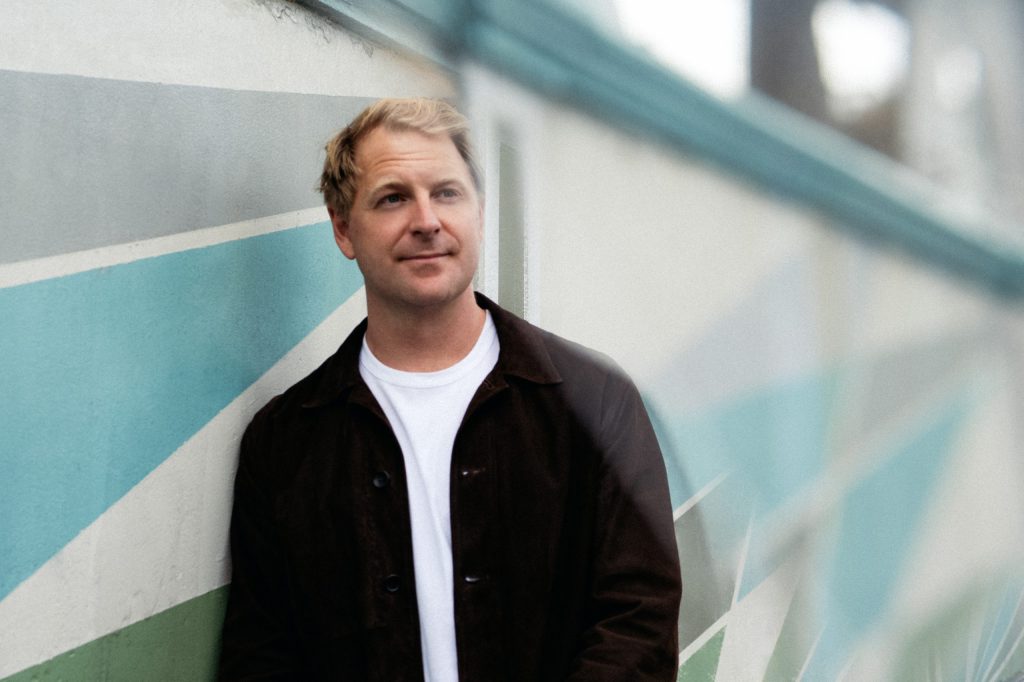
For Denace 2 Society, curiosity was the starting point. Long before Espada Recordings, he was a kid delivering newspapers to buy a Gemini mixer and modifying his own turntables to pitch records.
That do-it-yourself drive eventually evolved into a label and community that now stands as one of the most respected voices in underground UKG and tech house. His new Rewind EP with Whoizz on Espada Recordings captures that raw spirit with the balance of experience and experimentation that defines his sound.
Across “Rewind” and “Freeze,” Denace 2 Society taps into the darker, sweat-soaked side of garage. The EP also features reworks from Tsodor, Dejago, and Whoizz, who each add their own perspective to the original ideas. Together, they form a release that celebrates collaboration and history while keeping the energy firmly on the dancefloor.
In this interview, Denace 2 Society speaks on the value of community, authenticity, and growth. He reflects on his early years chasing records through Hannover and London, the evolution of DJ culture in the digital age, and how Espada Recordings became the home base he always wished existed when he was first starting out.
Did you come up as part of a crew, label, or local scene—or was it always a solo path for you?
My path began without a crew or scene behind me, only my own curiosity. The first spark came when a school friend gave me a cassette with a smiley on it titled “Acid-Mjusik.” It had Rififi’s “Dr. Acid and Mr. House” on it, and those strange new sounds completely fascinated me. By 1995, I had my first turntables, which I modified so they could pitch, and after months of delivering newspapers I proudly bought a three-channel Gemini mixer. I spent hours practicing in my room and became a regular at local record shops.
From 1997 on, I often traveled to Hannover, where Peppermint Jam became my second home. I even met Mousse T. there, and he immediately signed a record for me. In 1999, I went to London, living mostly on canned beans so I could buy vinyl and absorb the club culture. In 2000, I won a DJ contest at the Dortmunder Westfalenhallen with a three-turntable set that included my own trick of pitching House of Pain’s “Jump Around” at 45 and layering it with Spinal Scratch beats. Later, I studied DJs like Terrence Parker and learned a lot from his unique style, but at the time I was mostly experimenting on my own. Espada Recordings today is the crew and label I always wished I had back then.
Do you think something’s been lost now that most DJs operate as personal brands?
Yes, I think a certain rawness has been lost. In the 90s, the DJ was often faceless, hidden behind crates of vinyl, and it was only about sound. Branding wasn’t part of the equation; what mattered was how you built a room with music. Today, social media often overshadows that purity. At the same time, I can’t deny that branding has helped me. Without it, Espada Recordings would never have reached listeners around the world. The challenge is using branding as a tool without letting it replace authenticity. What inspired me back then was music itself, not logos or curated images. That’s the spirit I try to preserve.
How does having a collective or community around you shape your taste and identity differently?
Being in a collective constantly pushes you. When I was younger, I approached music like math and physics—analyzing beats like equations. But once I started Espada, working with artists like Tsodor, Whoizz, Dompe, and Alfrenk, I learned to let go of rigid structures. Their sounds and feedback challenge me to rethink my own approach. Community also brings accountability; you want to bring your best to the table. My students at the Waldorf school know me as both a teacher and a DJ, and sometimes I even give them guest list spots for top grades in math or physics. That overlap between education and music reminds me that identity is never built alone. It’s shaped by those around you.
Has the focus on self-branding changed how people present their music—or even select it?
Definitely. In the 90s, when I dug for records in Hannover or London, I chose them because they made me feel something, not because they’d look good on a clip. Today many DJs select tracks with social media in mind, curating moments for Instagram or TikTok. That changes the culture. But it also means niche sounds like UK Garage can find a bigger audience again. For me, the dancefloor is still the ultimate filter. If it doesn’t work with people in front of me, I don’t care how well it performs online. Authenticity always outlasts algorithms.
What’s a time you felt the strength of a scene or crew behind you, creatively or emotionally?

When we released Espada 001, “Rudeboy,” I felt that strength for the first time. Claptone picked up the Dompe remix for his Clapcast, Lee Reynolds played it at Desert Hearts, and Beatport featured it on their front page. For me, it was surreal. I remembered being a teenager saving money from newspaper rounds to buy a mixer and later living on beans in London just to afford vinyl. Now my label was getting global support. But it didn’t feel like just my success; it was a win for everyone around Espada.
Another surreal moment came later in Ibiza. Since 2017, I’ve been going there regularly and making it a priority to connect with resident DJs. That led to gigs at Bora Bora and the Tantra Bar, as well as several radio shows on Pure Ibiza Radio. Standing in those places I had once only visited as a fan reminded me how far the journey had come. Those experiences made me realize again that music is about people, energy, and community.
Do you think newer DJs today are finding community in the same way—or has that faded?
I think community has changed form but not disappeared. In the 90s, community meant record shops, flyers, and hours spent digging side by side with other DJs. Today, many young DJs connect online through Discord, Instagram, or collaborative projects. It doesn’t have the same raw intimacy as standing in a shop together, but it creates global connections. A DJ in Berlin can collaborate with someone in New York instantly, which was impossible when I started. What matters is keeping those connections genuine. The spirit of community is still alive, only expressed differently.
What’s something you learned by being around other DJs that you couldn’t have learned alone?
One lesson is restraint. On my own, especially with my mathematical mindset, I tended to overcomplicate mixes and productions. Watching other DJs later on, especially Terrence Parker, showed me the beauty of simplicity and precision. I also learned how much psychology goes into DJing—reading a crowd, adapting tempo, and knowing when to hold back. These lessons can’t be learned from theory; they only come from sharing space with other DJs.
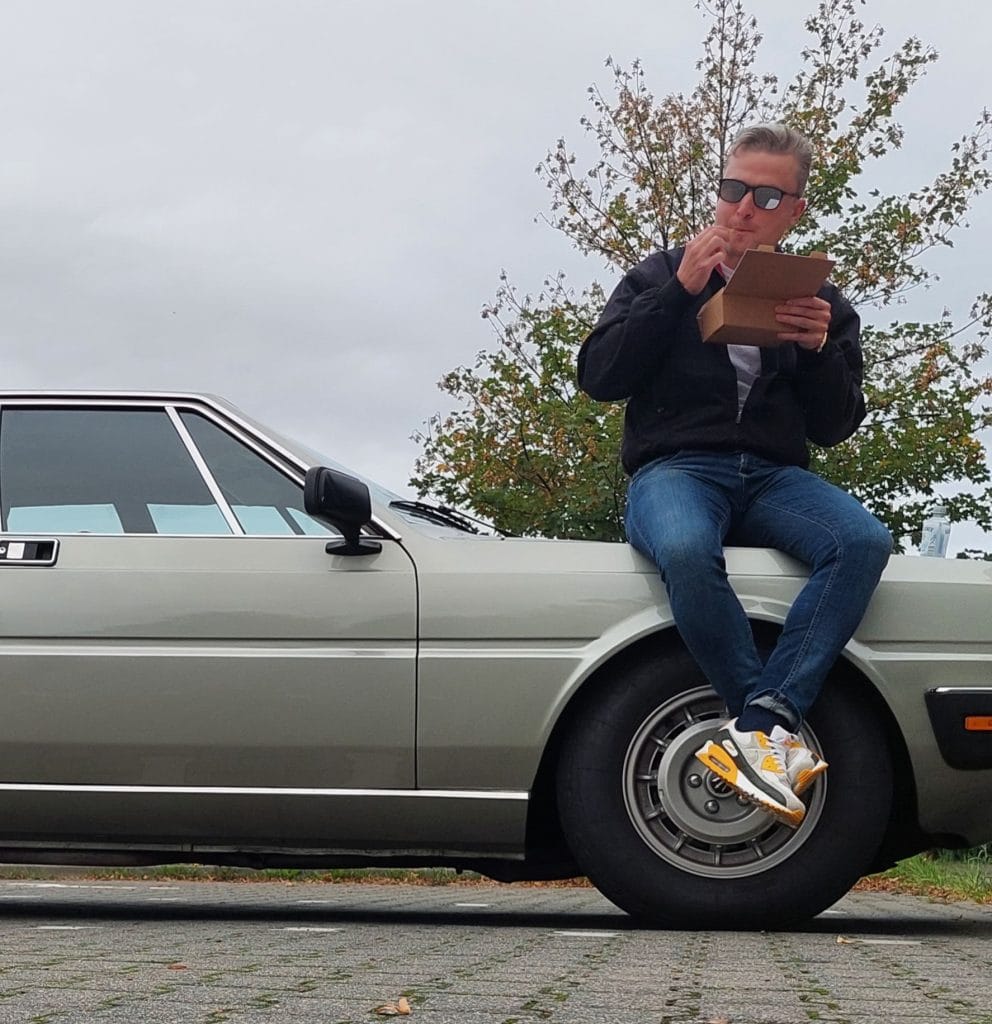
Beyond the decks, I’ve always been drawn to analog culture. I even collect and drive cars from the 80s, the same ones I admired in the trading cards of my childhood. Just like with vinyl, there’s something about these machines that feels alive. No shortcuts, no software, just pure connection. That mindset also shapes my music—raw, authentic, and built to last.

Will Vance is a professional music producer who has been involved in the industry for the better part of a decade and has been the managing editor at Magnetic Magazine since mid-2022. In that time period, he has published thousands of articles on music production, industry think pieces and educational articles about the music industry. Over the last decade as a professional music producer, Will Vance has also ran multiple successful and highly respected record labels in the industry, including Where The Heart Is Records as well as having launched a new label with a focus on community through Magnetic Magazine. When not running these labels or producing his own music, Vance is likely writing for other top industry sites like Waves or the Hyperbits Masterclass or working on his upcoming book on mindfulness in music production. On the rare chance he's not thinking about music production, he's probably running a game of Dungeons and Dragons with his friends which he has been the dungeon master for for many years.