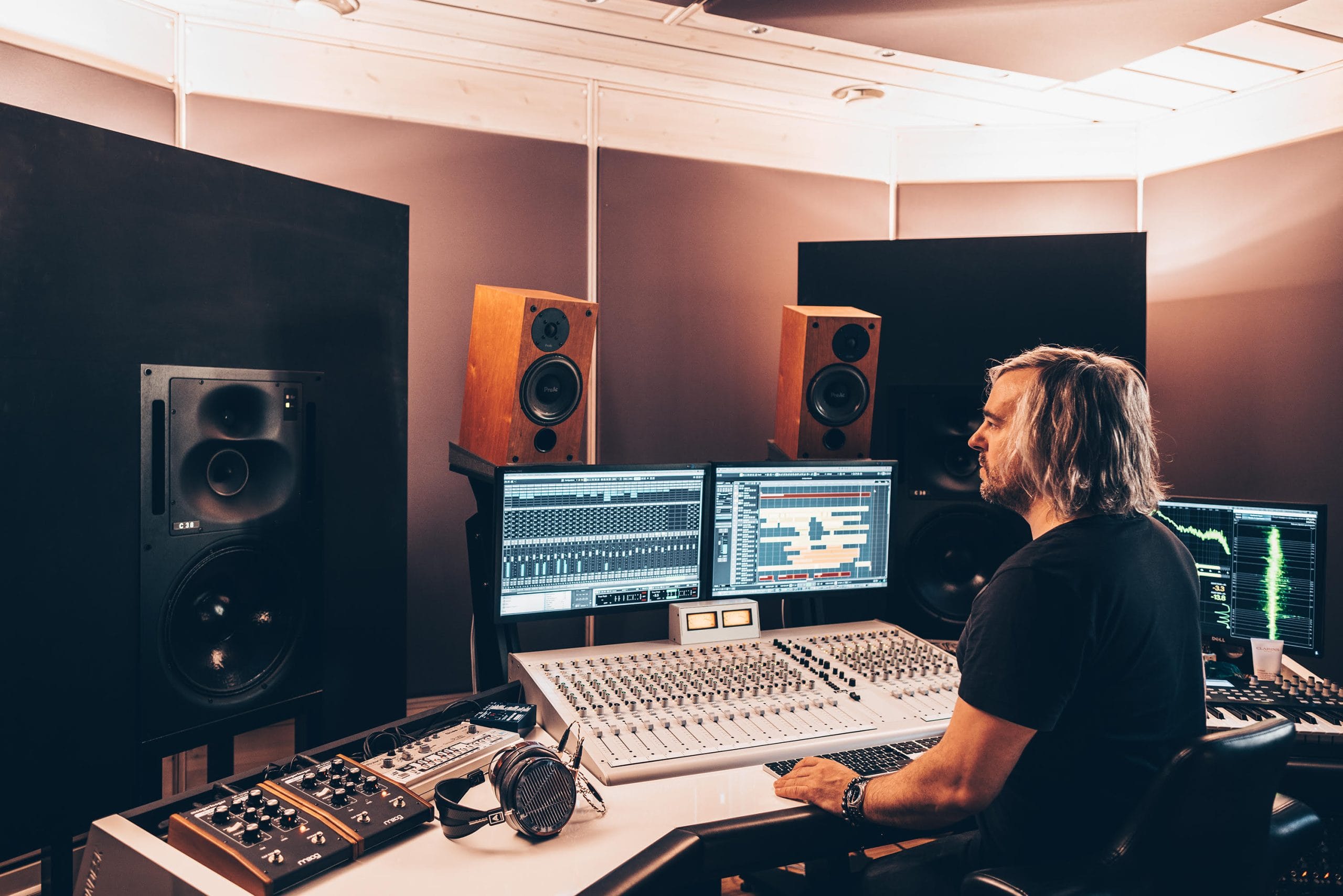
Eli Fola has built a reputation as a forward-thinking artist blending Afro-diasporic rhythms with electronic innovation, a style he calls Yoruba Tech Soul. His work spans DJing, live saxophone, and production, bringing a multidisciplinary perspective to dance floors worldwide. For his remix of “Madness” by Eric Sharp and Charity Redding featuring ARi, released on Intentional Records, Fola reimagines the track through this lens of cultural fusion and spiritual energy.
“Madness” already carried a message of feminine strength and self-trust, delivered through ARi’s vocal performance and Sharp and Redding’s refined production. Fola’s remix honors that core while introducing polyrhythmic percussion, layered textures, and Afro-house grooves that expand the track into a communal dance floor experience. His approach balances intention with physicality, grounding the emotional weight of the song in a framework built for movement.
In this How It Was Made feature, Eli Fola walks through the tools and techniques that shaped his remix. From Serum sound design to creative MIDI effects, percussion programming, and modulation choices, he breaks down the technical details while keeping the focus on the energy he wanted to channel. It’s a close look at how one of Afro-house’s rising names reshaped a record with both precision and purpose.
Xfer Records Serum
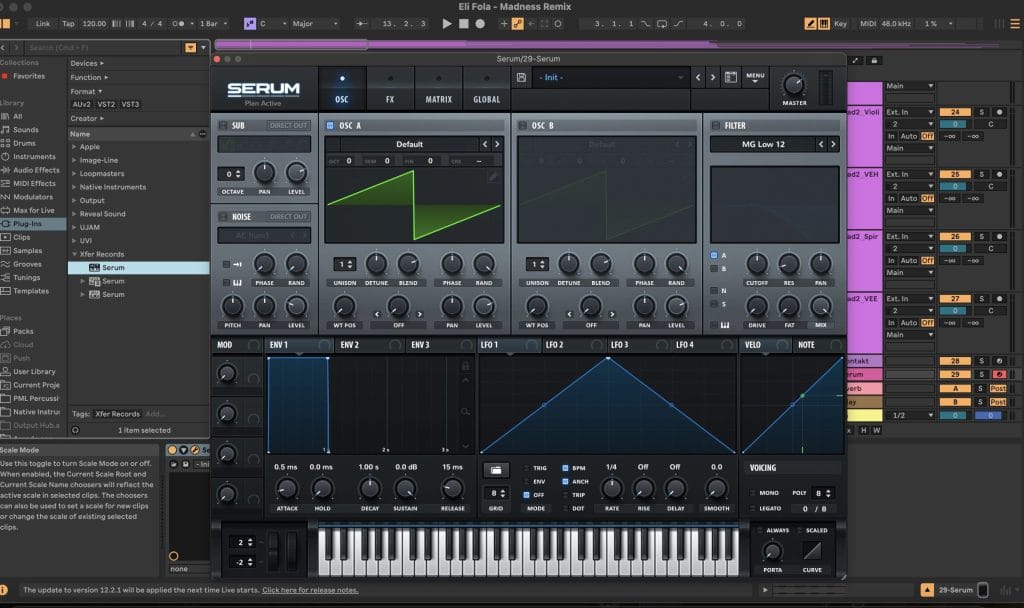
Serum is a modern wavetable synthesizer that makes programming fast and intuitive. The drag-and-drop workflow lets you assign LFOs and envelopes to almost any parameter, so creating movement feels natural instead of tedious. Between two wavetable oscillators, a sub oscillator, and a noise oscillator, you can build anything from deep subs to animated plucks. With its built-in FX rack of filters, distortion, chorus, reverb, and more, you can finish sounds without leaving the synth.
For this Afro House remix, Serum powered both the bass foundation and the main pluck/lead motif. I started from an Init patch, built a tight sub on OSC A (Basic Shapes), and layered OSC B with a brighter wavetable for bite. LFO 1, synced at 1/8, modulated the filter cutoff and wavetable position to create a breathing groove. Macro 1 controlled drive, while Macro 2 handled cutoff for live risers into the chorus. I kept unison modest—around 4 to 7 voices with light detune—to stay punchy, and used the FX rack’s Distortion and Hyper/Dimension sparingly to add width without losing mono compatibility in the low end.
The key to making Serum work in Afro House is keeping the sub clean and mono, while letting subtle modulation drive the movement. Small LFO adjustments on filter cutoff or wavetable position give a hand-played feel that complements live percussion. Mapping macros to distortion or drive and automating them into transitions creates tension and excitement. Even the Noise oscillator can add shaker-like transients to help bass parts pop on big systems.
Ableton Note Echo with Ableton Pitch
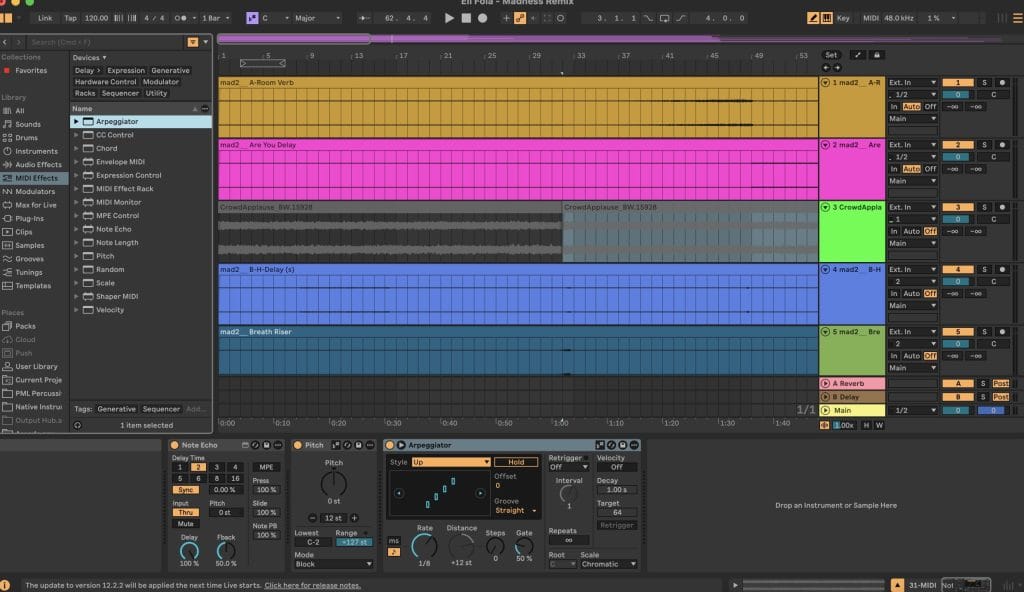
Note Echo is a Max for Live MIDI effect that generates rhythmic echoes as new MIDI notes. With synced divisions, velocity decay, feedback, and pitch shifting, it functions like a delay for MIDI data. Pairing it with Ableton’s Pitch device allows you to keep echoes in range or build call-and-response patterns, turning a single note into something polyrhythmic before it even reaches your instrument.
I set up Pitch into Note Echo in front of the Serum pluck/lead to create a conversational answer to the main motif. During the verses I used 1/8 divisions with about 30–35% feedback and velocity decay to soften each repeat. On the pre-chorus, I automated Pitch +12 for octave jumps, then reset it for the drop. A short Gate/Length setting kept everything tight against the percussion, and I printed the MIDI output so I could emphasize or mute notes in an Afro House pocket. With Kontakt’s West Africa percussion providing interlocking drum grooves, the echoed notes acted like another live performer in the ensemble.
Note Echo is a powerful way to suggest polyrhythm without overcrowding the mix. At 120–125 BPM, 1/8 or 1/16 divisions with moderate feedback create evolving movement, and automating feedback adds intensity during builds. Shortening the gate avoids clashes with percussion, and converting echoes to MIDI lets you edit ghost notes for more musical feel. Sidechaining the echoed signal lightly to the kick can keep the groove breathing and balanced.
Additional Tools & Textures
- Splice & Loopcloud were used to source textures and one-shots. Auditioning in key and BPM, then resampling, ensured they felt personal rather than stock.
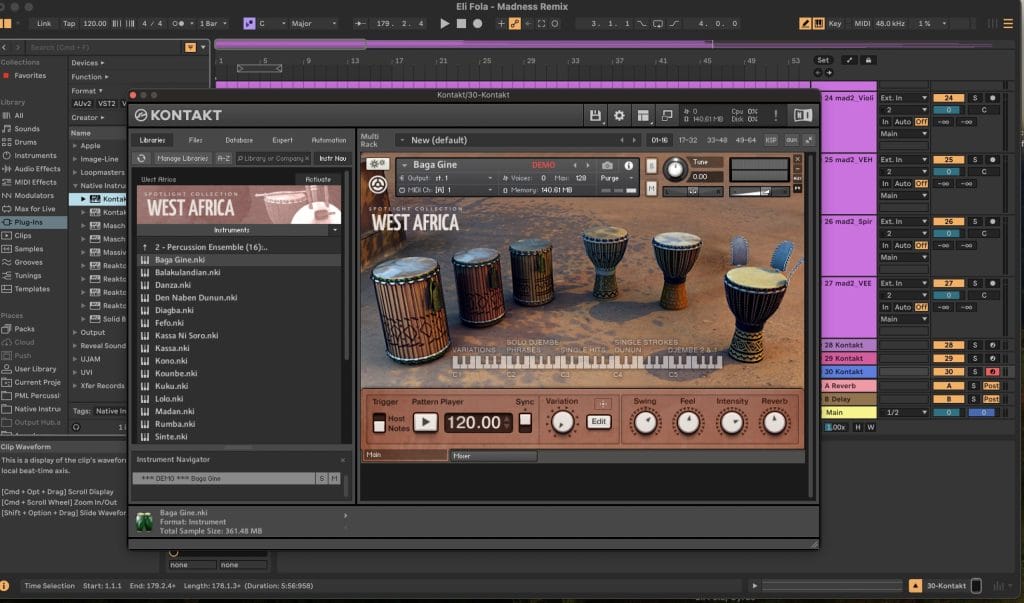
- Kontakt 5 – Spotlight Collection: West Africa provided djembe, dunun, calabash, krin, kora, and balafon. While ensemble patterns worked as starters, most parts were reprogrammed in MIDI to lock into the exact pocket and dynamics of the remix.
Quick Fire Tips for Afro House
- Lock in your percussion groove first—every other element should orbit around that rhythm.
- Use subtle modulation with filters, LFOs, and velocity shifts to make synths interact with the percussion.
- Layer organic textures such as hand percussion, vocal chops, and field recordings on top of electronic parts to add depth.
- Keep your low end mono and punchy, while letting the highs spread wide for impact.
- Automate transitions with filter drive, percussive echoes, and micro builds instead of relying solely on sweeps.

Will Vance is a professional music producer who has been involved in the industry for the better part of a decade and has been the managing editor at Magnetic Magazine since mid-2022. In that time period, he has published thousands of articles on music production, industry think pieces and educational articles about the music industry. Over the last decade as a professional music producer, Will Vance has also ran multiple successful and highly respected record labels in the industry, including Where The Heart Is Records as well as having launched a new label with a focus on community through Magnetic Magazine. When not running these labels or producing his own music, Vance is likely writing for other top industry sites like Waves or the Hyperbits Masterclass or working on his upcoming book on mindfulness in music production. On the rare chance he's not thinking about music production, he's probably running a game of Dungeons and Dragons with his friends which he has been the dungeon master for for many years.