Morgin Madison’s latest original, Pieces, marked an important shift in his sound after last year’s Odyssey album. Leading into his new Visions EP on Enhanced, the track leans into bold progressive house energy, centered around a massive drop that pushes the frequency spectrum to its limit. Production-wise, it was one of his most challenging projects, demanding a balance between density and clarity across a wide array of layered synths and textures.
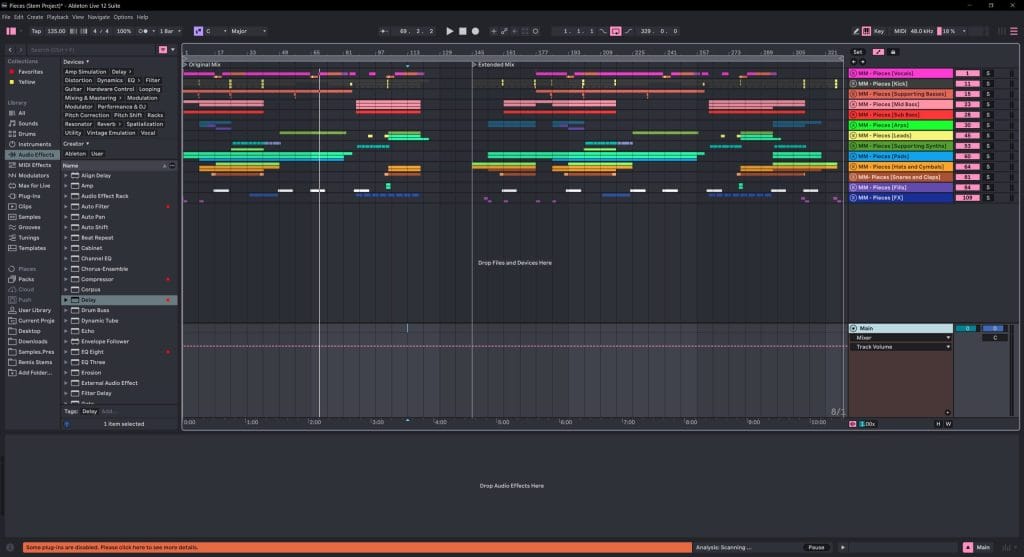
In this How It Was Made feature, Morgin breaks down the key tools and techniques that shaped Pieces. From automating parameters in Arturia Mini V3 to layering transitions with Bass Kleph’s Easy Wash Out, he shares practical insights into how he created tension, managed stereo space, and ensured the soft vocal stayed present over the track’s aggressive instrumentation.
What stands out is Morgin’s willingness to share both his workflow hacks and the problem-solving moments that defined the song. His process offers progressive house producers a rare inside look at how to turn complex arrangements into cohesive, high-impact productions that hit with force while maintaining detail.
Arturia Mini V3

Arturia Mini V3 is one of my favorite synths for a lot of reasons. Most of all it’s amazing for lead synths and arpeggio’s because it’s meant to emulate Analog synths as accurately as possible. It has a lot of unexpected qualities that make it unique – my favorite being the ‘contour’ knob, which I always use to add really nice fuzz and texture on top of my synth patches. It just adds so much character.
In ‘Pieces’, the entire song builds towards this huge drop at the end that has a 16th note lead melody which is super dense. Instead of the synth patch being the same for every note, I subtly automated both the attack and the contour of the Arturia Mini V3 synth, which turned an otherwise dry and repetitive synth line into one that has a ton of high end texture and depth soaring on top of the mix. Usually this would be populated by a sampled white noise sweep or something, but the contour within Arturia Mini V3 allowed the actual synth notes to populate that top range instead. I think it gives that climax section a lot more depth and vastness.
The biggest struggle with progressive house, in my opinion, is making it sound dynamic, sonically speaking, instead of shallow and ‘preset-y’, for lack of a better term. Incorporating Arturia Mini V3 into my plugin arsenal instantly opened up more interesting options as far as synth patches. The synth just has so much warmth and character that innately adds to a production, even if sometimes the listener is just hearing the little details subconsciously.
Bass Kleph’s Easy Wash Out
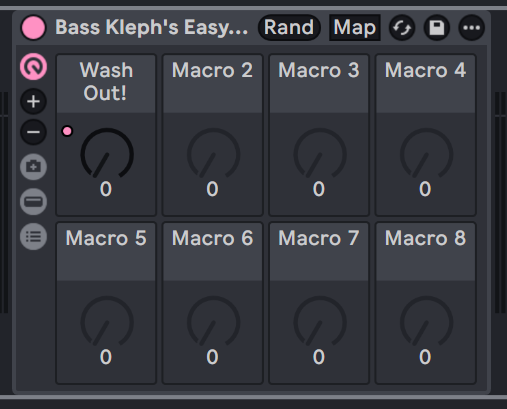
I love this one because it’s a very simple productivity hack. It’s free, and its entire purpose is to combine sweeps, FX, and filtering for transitions into one easy knob. For years I was using Ableton’s auto filter, reverb, and stacking samples of FX builds and white noise to build up anticipation for drops or sections in my songs. And while I still craft custom sounds and FX for transitions, this Ableton rack made it super easy to twist one singular knob that takes out the low end, and adds wispy reverb for that washing effect, instead of me automating 4-5 different things to achieve the same goal.
‘Pieces’ is all about building tension throughout the song, leading to that final release at 2:45 where everything comes together. This song was one of those tracks where instead of trying to streamline things and minimize clutter, I just kept stacking elements on top of eachother to create this sense of vastness with the synths. Bass Kleph’s Easy Wash Out came in handy here because I could group elements together and apply the washout effect to everything at once, turning all the complex synth stacks into one massive sweep.
If you’re a progressive house producer, you know how important a proper handling of tension and release can be. This little Ableton plugin can streamline a lot of workflow for you with one easy knob.
A1 Stereo Control
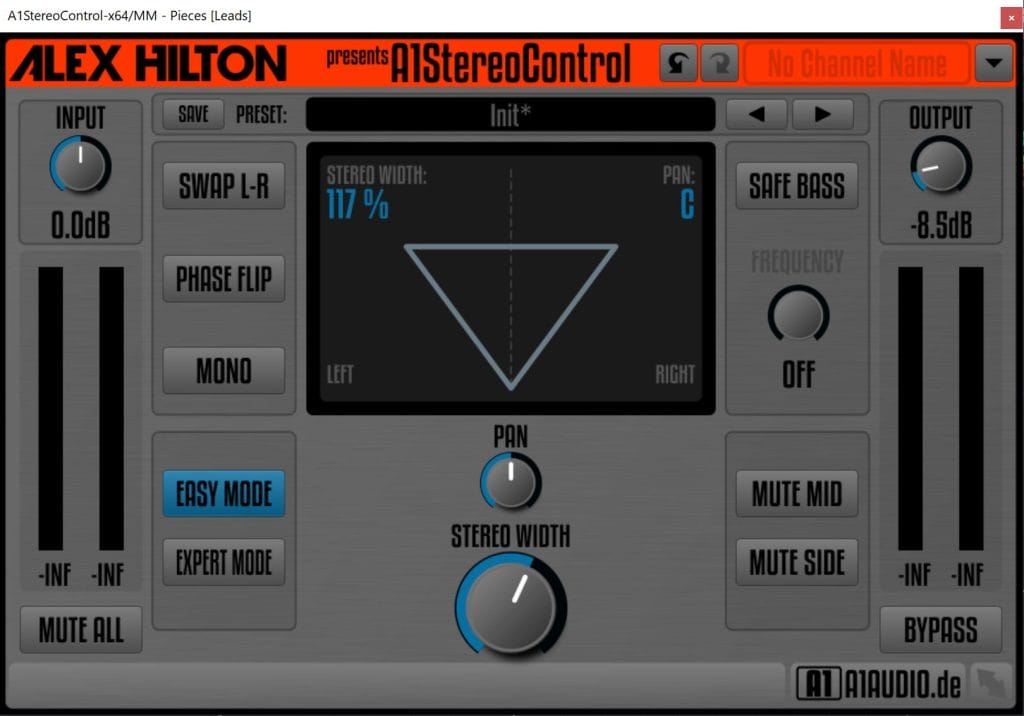
Another free plugin actually! I use this one in almost every song I make, and I only use two parameters – the Stereo Width knob, and the Output knob.
Finding the right amount of stereo width with certain elements in progressive house can be the key between the song sounding way over-crowded and confusing, or everything having its right place. In ‘Pieces’, especially when the drop at 2:45 hits, there’s almost an unmanageable amount of elements going at the same time. I find that using A1 Stereo Width to get the top end leads and arps a little wider and vast sounding is super quick and convenient, while keeping the drums and low end more down the middle gives the song its drive and rhythmic focus. Having the Output knob right inside the plugin helps a lot too, because sometimes the volume needs quick adjustments depending on the changes made to the stereo width of whatever you’re messing with.
Every producer deals with stereo vs mono on a day to day basis, but for me this plugin streamlines my process a bit. I can deal with how wide or narrow a sound is on a case-by-case basis, and do it in a really simple and efficient way.
Ableton Stock Compressor
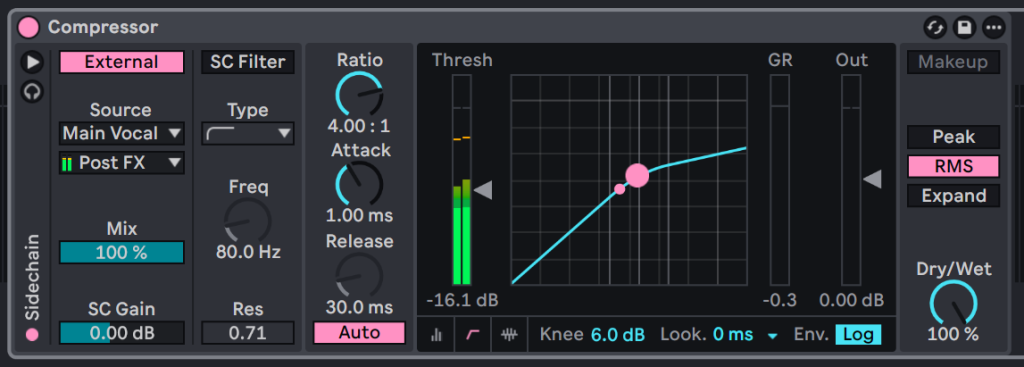
I wanted to share this one because it’s something I don’t usually do unless a song feels like it has a bunch of sounds competing with each other, and ‘Pieces’ definitely did in its earlier stages. Obviously Ableton’s stock compressor can be used for anything from generic compression, to sidechaining elements to the kick drum, and a variety of other things. But in this instance I actually used it for mixing interplay between the synths and the vocals.
The vocal on ‘Pieces’ is very soft. It’s almost like a whisper in some spots. This is great for giving the song a moody and mysterious feel, but it’s also problematic because the vocal is easily overwhelmed and masked by louder, more bold elements. In this instance I literally used the compressor to do a simple and subtle sidechain of the main synth line to the vocals in the big drop starting at 2:45. It’s not really audible in the finished song, which is a good thing, but what’s happening is the entire main synth line is dipping out of the way appropriately to let the soft vocal shine through and sit on top so it can be the focus when it’s being sung. Then in the gaps between lyrics, the synths are coming back up to the forefront to keep the melodic movement rolling.
This is a trick I’d imagine most producers do in their own way. I wanted to bring this up for ‘Pieces’ because I had a very hard time getting the soft vocal to fit over the top of such aggressive production. I almost wanted to give up and just find a different vocal, but this goes to show that the right solutions, however simple they are, can really bring a song home.
Quick Fire Tips

#1 – Be bold with your sound selection. Put in the work to blend elements that sound awkward or weird at first, until it becomes its own unique sound or hook. Sometimes the extra effort is the plot twist that turns a song from good to great.
#2 – Don’t give up on a song because it doesn’t immediately click. Putting it down and re-evaluating your approach at the most basic level can unlock the song for you later.
#3 – A lot of progressive house can feel very repetitive or lifeless. Try making your second drop so iterative that it feels fresh enough to warrant another listen.
^ Thanks a bunch for having me, this was a fun one 🙂 – Morgin


Will Vance is a professional music producer who has been involved in the industry for the better part of a decade and has been the managing editor at Magnetic Magazine since mid-2022. In that time period, he has published thousands of articles on music production, industry think pieces and educational articles about the music industry. Over the last decade as a professional music producer, Will Vance has also ran multiple successful and highly respected record labels in the industry, including Where The Heart Is Records as well as having launched a new label with a focus on community through Magnetic Magazine. When not running these labels or producing his own music, Vance is likely writing for other top industry sites like Waves or the Hyperbits Masterclass or working on his upcoming book on mindfulness in music production. On the rare chance he's not thinking about music production, he's probably running a game of Dungeons and Dragons with his friends which he has been the dungeon master for for many years.