Ambient music is deceptively tricky to produce. So, whenever we see a great example of the genre, we always love to dive into how that track was made. Today, we’ve got a truly excellent one.
A classically-trained long-time performer and multi-instrumentalist, James Myhill‘s “Strange Flowers” is a masterclass in ambience. With rhythmic bass guitar plucks, eerie bagpipes, and all areas of the frequency spectrum attended to throughout the track, it softly invites the listener in to a liminal, natural space. Soft distortion and saturation adds tension, while huge reverbs make the whole thing feel like a dream sequence. It’s inspired by distant planets with bizarre plant life, and that spaced-out, organic feeling really comes through in every second of the track.
We had a chance to sit down with the UK-based composer to see how this tune came together. Read on for some helpful tips about distortion, saturation, organic instrumentation, and some pro advice on how to make ambient music. By the end of this article, you should be a master of ethereally gorgeous ambient: just like James Myhill.

Uilleann Pipes

Uilleann Pipes is a plugin from Spitfire Labs. This plugin has various presets that emulate the behaviour of the instrument, has a smooth sound that is ‘real’ but also fairly synthetic out the box. It has controls of distance, reverb and drone to adjust the timbre of the sound. It’s a free plugin as part of the Spitfire Labs project.
I wanted a sound that could adequately express a feeling of vastness and being in wilderness so a sound like bagpipes seemed like the obvious choice. I used the ‘drone’ and ‘pipes ascension’ settings to create a wall of sound that is faded in and then the latter setting to create the strange pitch bend like pipes melody that comes in after the intro. I didn’t touch any of the reverb or distances settings on the plugin, but rather used my own sends to apply a long reverb to both pipes tracks and heavy quarter delay to the pipe melody making the sounds overlap like a continuous but pulsing tone. The strange melody comes in again and again throughout the piece and is fundamental to the overall mood which is why I consider it the main synth, although there are other dominant synth themes.
(The main feature is of course the bass guitar which is used in different registers in combination with the looped single harmonic and the solo which is played using pinch harmonics on the bass)
It’s a nice plugin to create ethereal bizarre sounds for anything that might be instrumental/alternative/experimental etc. That being said, its pad like nature means it could reasonably be used creatively in a wide manner of ways with all sorts of musical genres, either as an embellishment or harmonic thickener as well as a lead instrument. Nothing much learnt except that it’s a nice plugin!
iZotope Trash
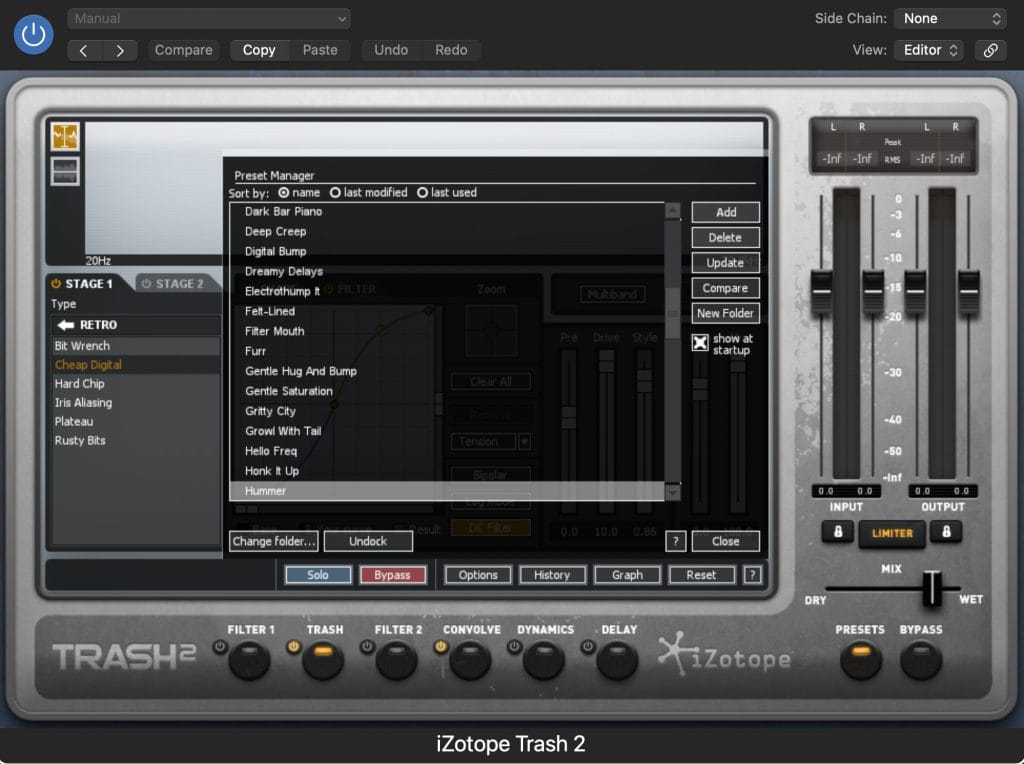
iZotope Trash is a great little plugin for adding anything from mild saturation to raucous distortion to a sound. It has a tonne of settings to choose from and various options and configurations for manipulating the sound.
I used this plugin on the Burning Pad, Sublime and Event Horizon synths, 100% wet on the latter two, and mostly wet on the first. The EQ on the burning pad has a high end cut which is gradually reduced towards the end of the intro to bring out the intensity and harshness of the sound. I used subtle distortion settings with the iZotope plugin as I didn’t want anything too intense on the track. The Burning Pad uses the Subtle -> Hummer setting. Sublime uses Subtle -> Add Muscle and Event Horizon the somewhat oddly titled Subtle -> Baby Fat.
The plugin is enormously versatile but I’ve learnt to treat it with care. For the more intense distortions it works better probably as a send, as it’s easier to control and automate that way, unless what you want is a sound with intense amounts of overdrive and distortion on it. It works very well on pads, but you could easily use it on anything (bringing out a snare, enhancing a guitar etc) so it’s a great little go to plugin for saturation/distortion needs.
Tokyo Dawn Slick EQ
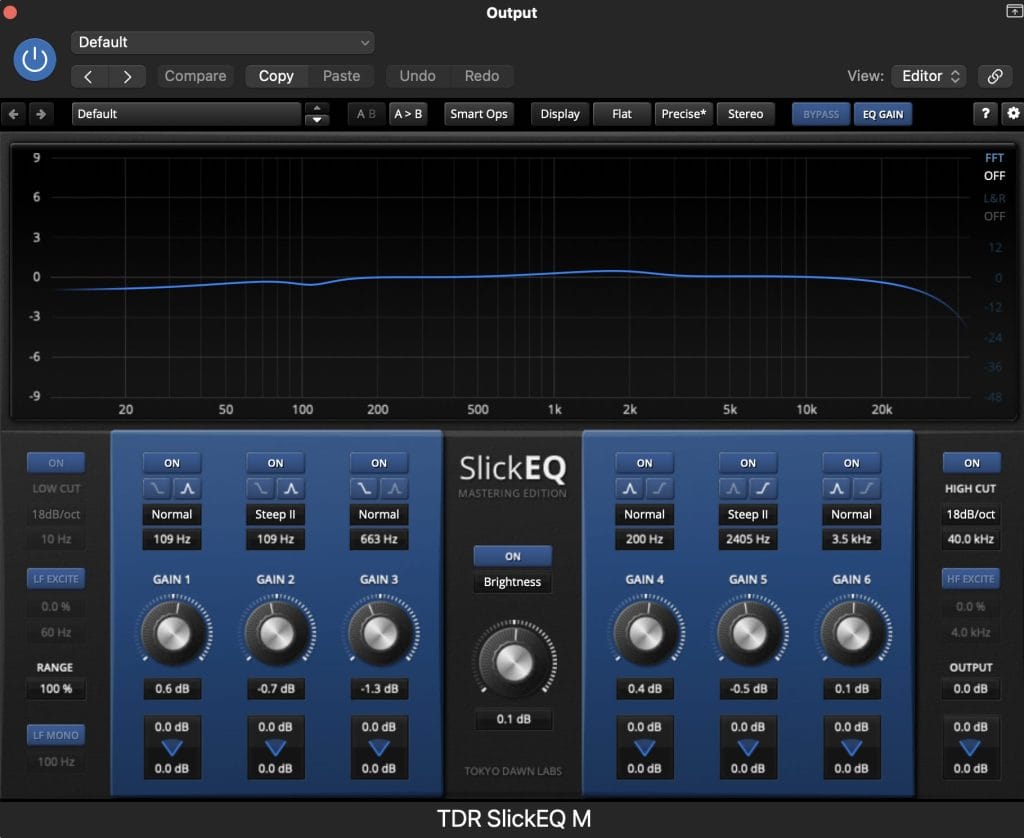
Tokyo Dawn slick EQ mastering edition is a superb plugin that works great as part of the mastering chain. It has 6 controllers for EQ bands and various functions including de-resonating and pink noise matching. It’s easy to balance and visualise everything and the whole EQ contour can be rotated for brighter or darker sounding masters.
I used this plugin with the pink noise matching preset and placed it 2nd in my mastering chain after compression. Playing the track in its entirety, TD Slick EQ learns the frequency spread and then adjusts EQs at the end to match the overall frequency profile towards pink noise, which is essentially a best guess at how we best hear and process audio frequency levels making the music come to life and please our ears. It should be treated with kid gloves though and applied in a fairly small percentage in most cases, also it can often attenuate the bass too much and make the master sound thin, so it’s important to consider bringing the bass up after pink noise matching.
This is a perfect go to EQ plugin for any mastering requirements. It’s versatile and has all the presets and curve control you should need. EQ when mastering is a sensitive art of course and as aforementioned great care should be taken if de-resonating or pink noise matching. I also turn the plugin on and off whilst listening back to make sure I’ve enhanced the sound rather than degraded it.
Stock Logic Compressors
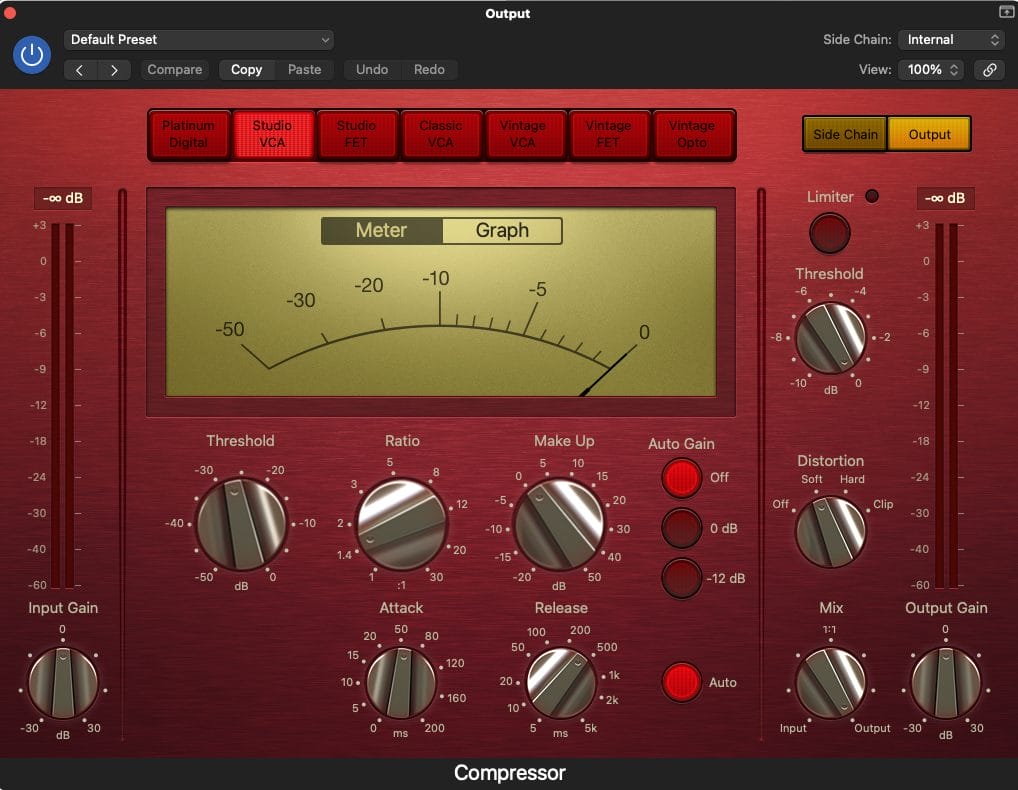
The built in Logic compressors are excellent in general. They have everything you would need, including frequency filtered side chaining and 7 different flavours of compressor type based on classic models. The Distortion setting also makes sounds spring to life.
I used the Studio VCA compressor first on my mastering chain, with auto gain off, a ratio of 1.4, a threshold of around -35, attack 52, release 500 and soft distortion. This gives a gentle leveling feeling with nice saturation, bringing the music to life.
The sky’s the limit with these compressor plugins and if you were making hard electronic music you could of course have many compressors on the mastering chain. For this style of ambient-alternative-chilled electronic though, we’re only really looking to add leveling compression as there are no big noises to crunch and definitely the key is to use the saturation/distortion. Just chucking it on the master chain and putting the distortion to soft without even adding compression gives the overall sound real color and character.
Quick Fire Tips:
- Use space and let the sounds breathe, don’t over crowd the mix with too many sounds at once.
- Be experimental but not too much, the idea is to evoke calm and interest in the music.
- Use reverb and delay effectively but carefully, you want the ambience to wash over people but not too much.
- Think about slow build ups, automate EQs and gains to bring sounds in and out to create interest.
- Use minimal or no percussion, percussive effects can be achieved by arpeggiators or synth pluck sounds.
Stream “Strange Flowers” here.

Ben Lepper is a music producer and journalist from Boston, Massachusetts.