Roland Future Design Lab and Neutone have announced Project LYDIA Phase 2, the next version of their AI-powered neural sampling pedal concept. The updated prototype debuts at Superbooth Berlin from May 7-9, giving musicians and developers hands-on access to a more integrated version of the hardware.
The main story here is that LYDIA is starting to look less like a tech demo and closer to a self-contained music device. The first version, shown in November 2025, introduced the idea of putting neural sampling into a tactile pedal format. Phase 2 now adds the kind of hardware details that musicians actually need before something like this can survive outside a demo booth.
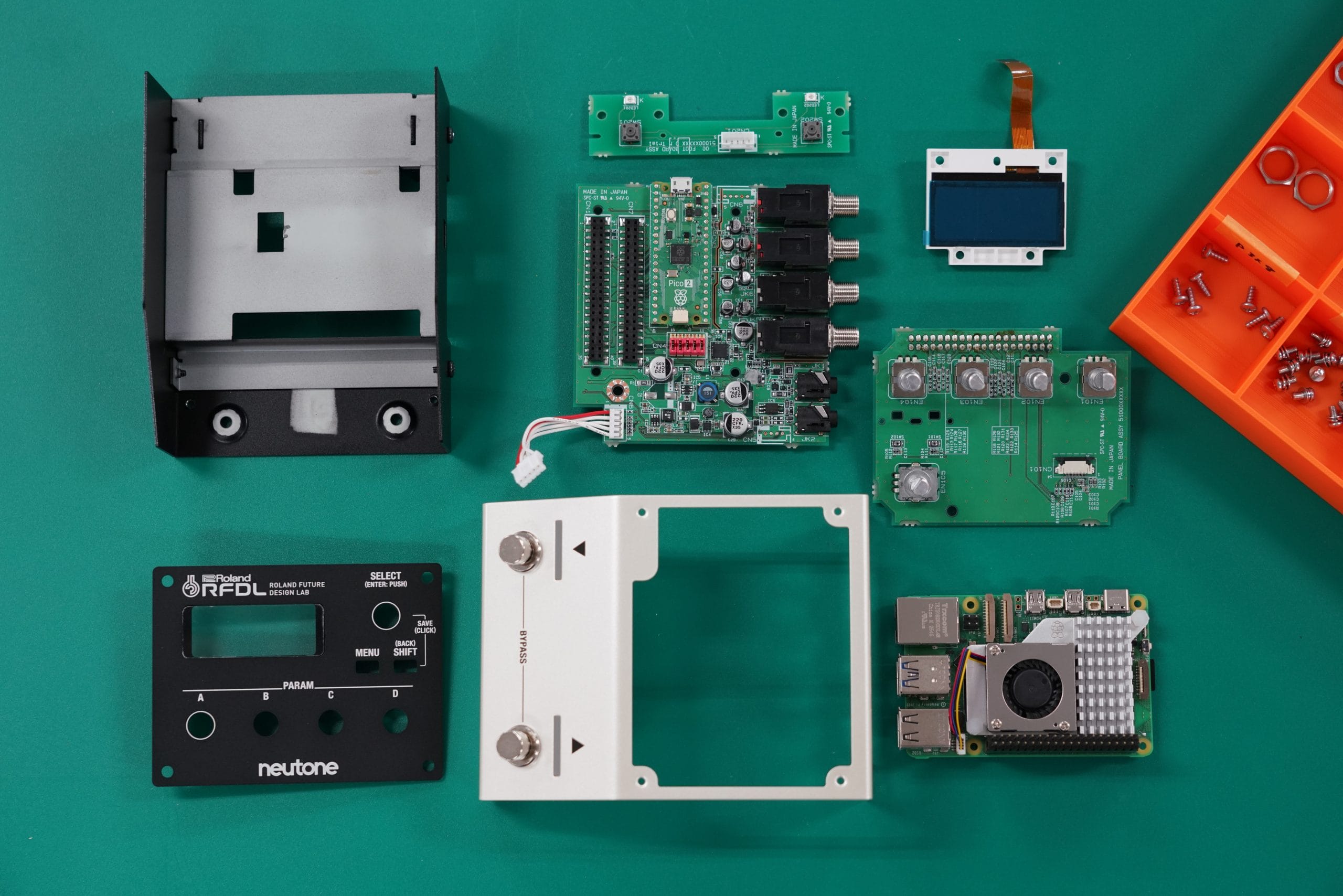
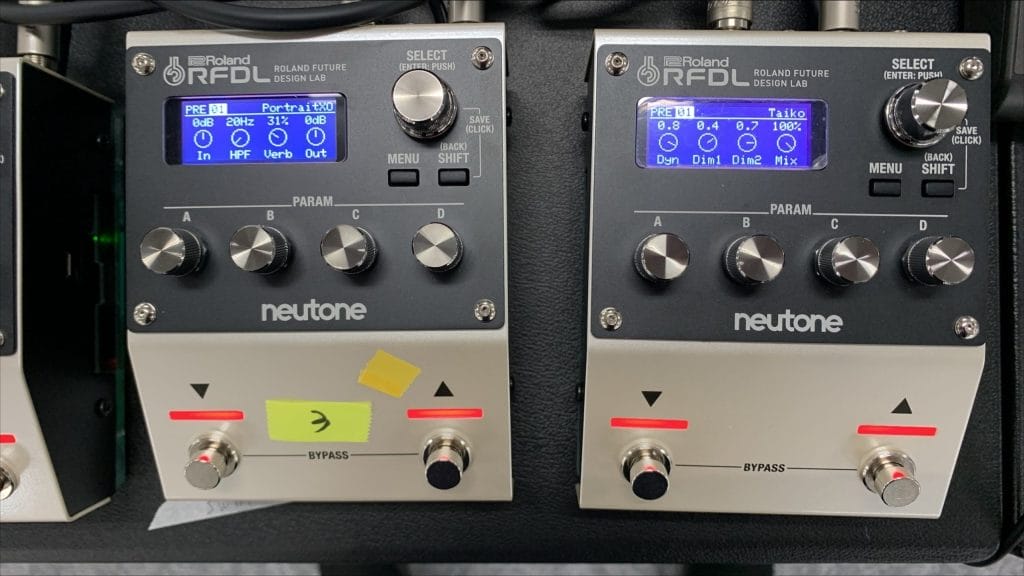
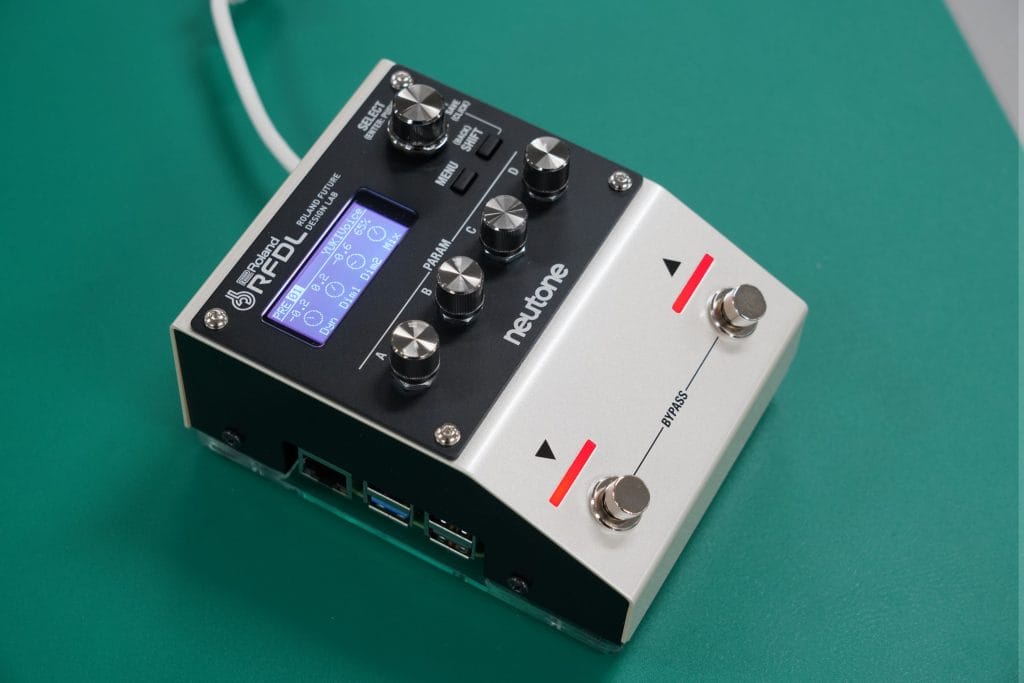
Those changes include fully integrated audio I/O, an onboard LCD display, user preset memory, MIDI connectivity, easier Raspberry Pi 5 installation, and standalone USB MIDI controller operation. That may sound like a technical checklist, yet these are the exact details that determine if an AI music tool feels usable in a studio or live setup.
AI Sampling That Feels Like Hardware
The most useful part of Project LYDIA is the format.
AI music tools often live behind screens, logins, prompts, and abstract workflows. LYDIA places neural sampling inside a pedal, which gives musicians a more familiar relationship with the technology. You step on it, route audio through it, change parameters, save settings, and control it with MIDI.
That matters because AI in music can become detached from performance quickly. Roland and Neutone seem aware of that issue, and Phase 2 appears designed around control rather than automation. The goal is not to replace the musician’s role in the signal chain. The goal is to make neural models feel playable, adjustable, and physically present.
The integrated audio I/O is especially important. The earlier concept relied on external USB audio hardware, which makes a prototype workable, though it adds friction for anyone trying to use it in a real setup. By bringing audio I/O onboard, Phase 2 becomes easier to imagine on a pedalboard, in a synth rig, or next to a hardware sampler.
Project LYDIA Phase 2 At Superbooth
Project LYDIA Phase 2 also reflects a feedback-first design process. Roland Future Design Lab and Neutone shaped this version after live demos, industry presentations, and survey responses from musicians, developers, and performers. That shows in the new hardware priorities: better navigation, stored settings, MIDI control, and cleaner standalone operation.
The LCD display should help with real-time parameter feedback, which is essential for a device dealing with neural sampling. User presets are equally practical because experimental processing becomes much easier to use once players can save useful states and return to them later.
MIDI connectivity also gives LYDIA a better chance of fitting into existing rigs. Automation, external control, and synchronized performance changes are the difference between an interesting box and a usable instrument for stage or studio work.
Roland Future Design Lab and Neutone will continue collecting feedback after Superbooth, with additional appearances planned at Audio Developers Conference Tokyo in early June and other events later in 2026.
For now, LYDIA Phase 2 feels like one of the cleaner examples of AI music hardware moving toward a format that musicians can actually understand through touch, routing, and performance.

Will Vance is a professional music producer who has been involved in the industry for the better part of a decade and has been the managing editor at Magnetic Magazine since mid-2022. In that time period, he has published thousands of articles on music production, industry think pieces and educational articles about the music industry. Over the last decade as a professional music producer, Will Vance has also ran multiple successful and highly respected record labels in the industry, including Where The Heart Is Records as well as having launched a new label with a focus on community through Magnetic Magazine. When not running these labels or producing his own music, Vance is likely writing for other top industry sites like Waves or the Hyperbits Masterclass or working on his upcoming book on mindfulness in music production. On the rare chance he's not thinking about music production, he's probably running a game of Dungeons and Dragons with his friends which he has been the dungeon master for for many years.