Table of Contents
It’s no secret that electric bikes are rapidly becoming the EV of choice for young people and urban commuters. The old-school bike is sadly seeing a slow demise among younger riders, but this article is not about me yelling at my lawn; as battery technology improves and more riders seek ways to blend fun with function, brands like Buzz are making compelling cases for taking an ebike.
The Buzz Drone Ebike is one of the more eye-catching entries in the “moto-style” category—a Class 2 electric bike that blends vintage moped cues with modern EV functionality, priced at $1,399 (currently on sale for $899). It’s pitched squarely at riders who want minimal pedaling, high comfort, and a ride that has some swagger.
I spent the last couple of weeks riding the red version of the Buzz Drone through a mix of suburban streets, light trails, and dirt road loops. Here’s the full breakdown of what works, what doesn’t, and who this bike is made for.
Design
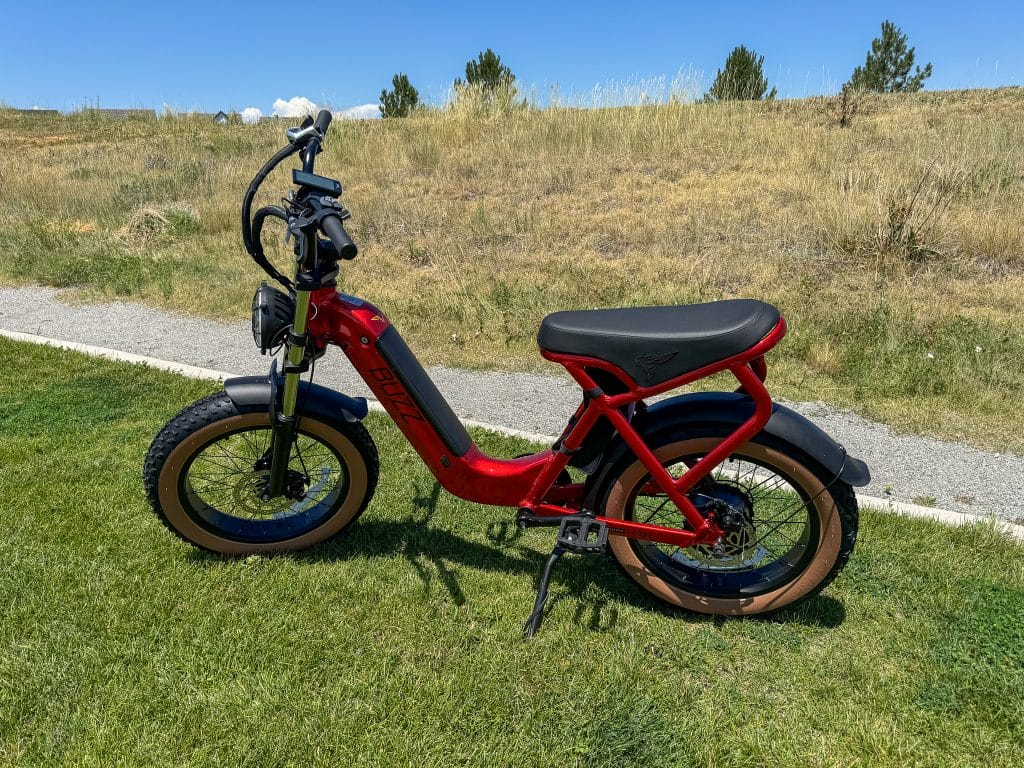
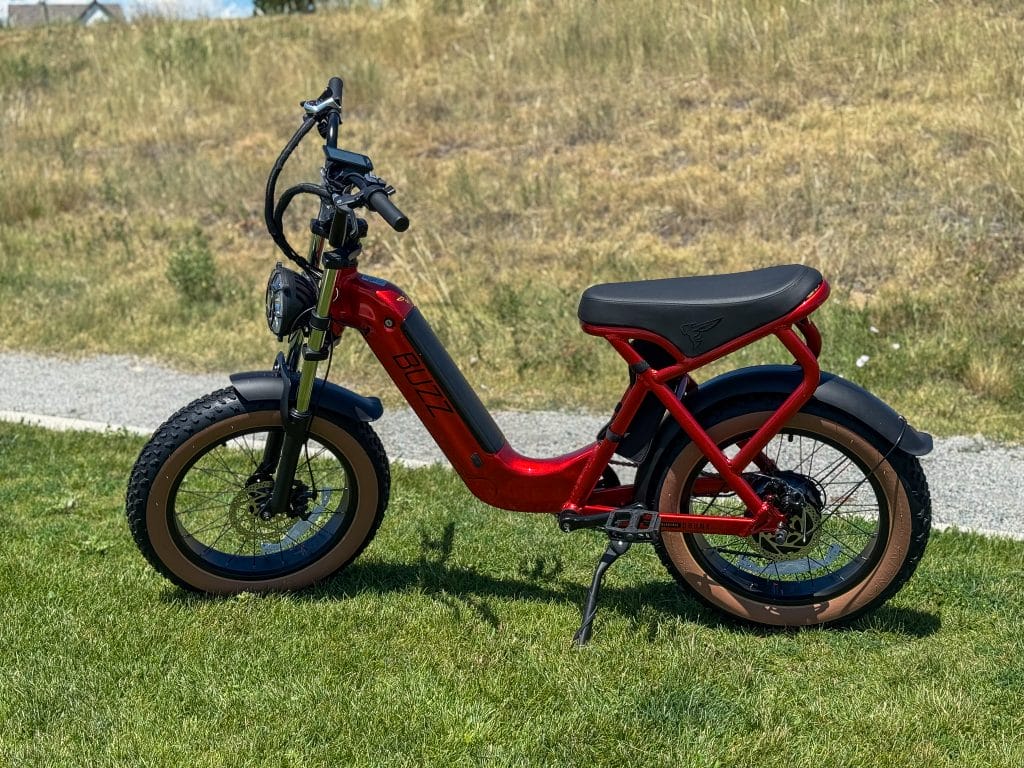
From a distance, the Buzz Drone resembles a retro moped more than a traditional bicycle, and this style has become increasingly popular among e-bike enthusiasts. The bold, sculpted frame with a built-in bench seat, fat tires, and industrial red finish gives the bike a distinctive look. Hell, it’s slick enough that if you were a teenager without a car, it might even get you a date.
It’s a design that leans into the current wave of moto-inspired e-bikes, such as the Super73 or Juiced Scrambler, but Buzz adds its own flavor with a step-through frame and some practical touches that make it easier to live with.
The step-through design is a massive win for me, making it quick and less cumbersome to get on and off the bike, especially if you’re carrying a backpack or wearing bulkier gear. That ease-of-use mindset continues with the bike’s integrated lights, fenders, and small storage compartment tucked beneath the seat. The layout feels intentional, not overdesigned. And that bright cherry red finish? It’s not just cool—it’s also one of the better paint jobs I’ve seen at this price point, if not one of the best.
Build Quality
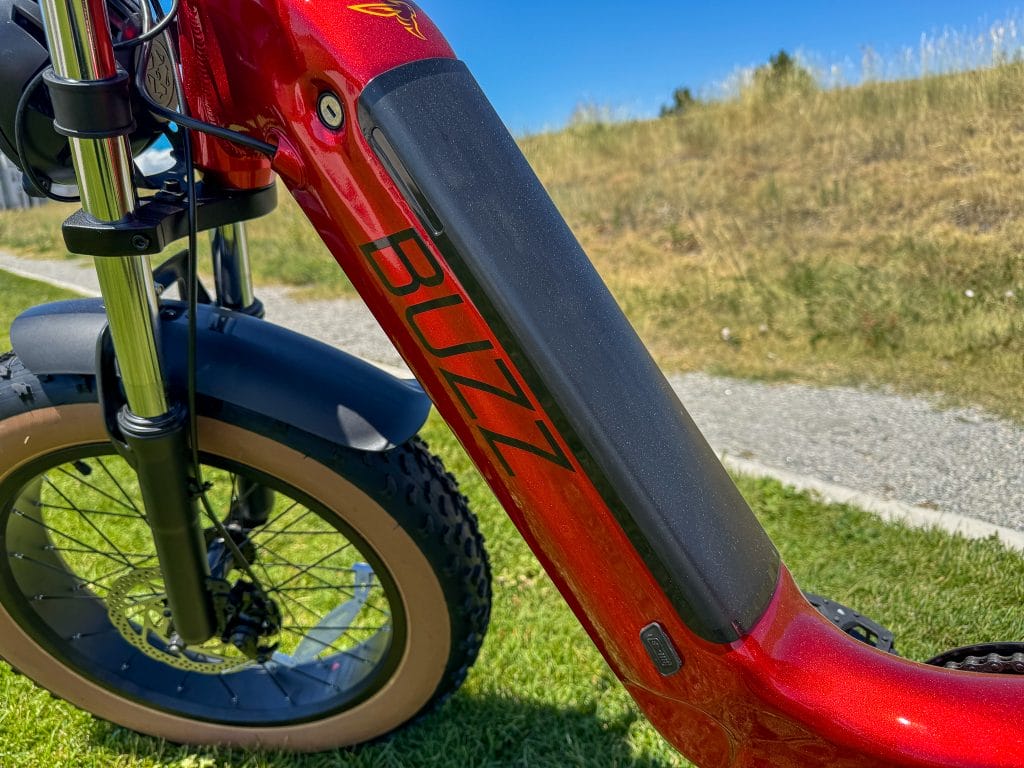
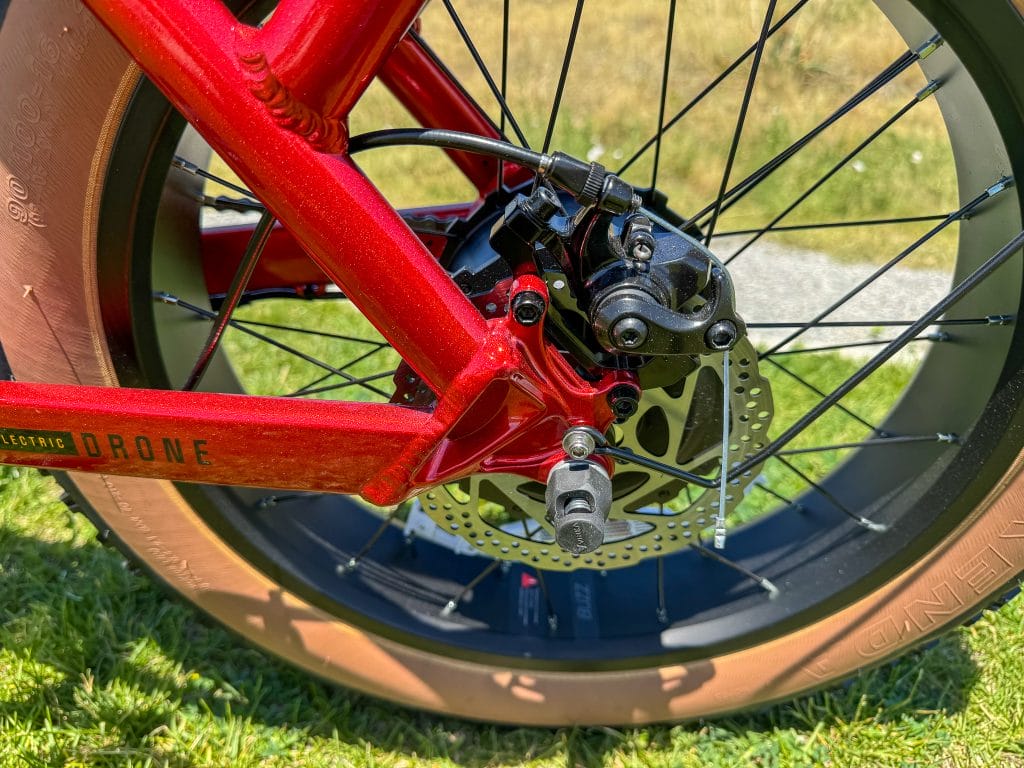
The Buzz Drone doesn’t pretend to be a premium bike, but it doesn’t feel cheap, either. The welds are clean, the paint feels thick and durable, and the major touchpoints—the handlebars, seat, and pedals—feel robust. The 20″ x 4″ Kenda fat tires are beefy enough to absorb bumps and cracks in the road and handle a variety of terrain without complaint. Gravel, grass, light trails—it all felt smooth, with the front suspension fork and tire volume doing most of the work.
One key note: the bench seat, while comfortable for short rides, is non-adjustable. That means taller or more leggy riders (like myself) will find pedaling to be a bit of a knee-high shuffle. It’s doable, especially in a pinch if you’re trying to save battery, but this is not a bike designed for long-distance pedaling. It’s intended for throttle-heavy cruising, and that’s where it shines. Additionally, the fabric on the bike seat is only average, so be sure to keep it out of the sun whenever possible, as it could eventually crack.
Performance:
Let’s talk about the drivetrain. The Buzz Drone is a Class 2 e-bike, which means it has both throttle and pedal-assist capabilities, and it’s capped at 20 mph. That’s a meaningful distinction, especially if you’re riding in areas where class 3 bikes (which can go up to 28 mph with pedal assist) are prohibited.
The motor produces 500W (with a higher peak output when needed) and delivers smooth, consistent power. Acceleration from the throttle is responsive but not jerky, which is a big deal for newer riders. However, achieving a smooth ride requires some practice with the throttle to dial in the smoothness.
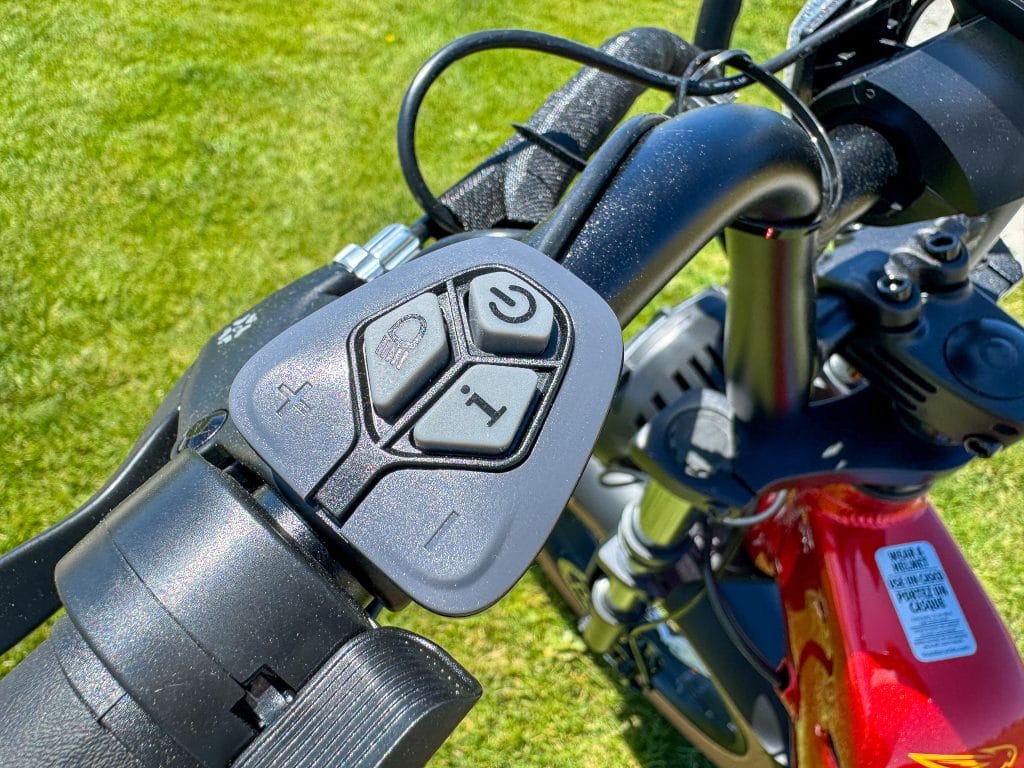
When starting your ride, like most ebikes, you want to have the pedal assist set to 0 and begin with pedaling to prevent the bike from jerking forward on you. The throttle on the Buzz will not engage until you turn on pedal assist, and you have levels ranging from 1 to 5, depending on how much boost you want. For riders who want to do a little pedaling, this is a nice feature that allows you to dial in the amount of support you’re getting from the motor while using human power.
Range is respectable, but not exceptional. With the 48V 10.4Ah battery, I was seeing around 25–30 miles per charge in mixed-use mode (some throttle, some pedal assist). If you’re heavy on the throttle and riding up hills or rough terrain, expect less. The battery is removable, making charging off-bike more convenient and reducing the bike’s weight when transporting it on a rack and storing the battery in a car or truck.
Who The Buzz Drone Ebike For
The Drone isn’t trying to be a commuter’s dream or a lightweight city sprinter, but it will work for some commuters who don’t have to lift it onto trains or buses.
The Buzz Drone Ebike is ideal for riders who want a fun, low-maintenance, and easy-to-ride e-bike that leans more toward joyrides, campground loops, and casual utility, such as rides to the pool or market. Think of it like a digital camera with a fixed lens—there are limitations, sure, but within those bounds, it delivers a fun ride.
It’s especially well-suited for:
- Suburban riders who want to cruise the neighborhood
- Anyone who’s less interested in pedaling and more into powered riding
This is not a bike for fitness-oriented riders or urban cyclists looking for speed and agility. But for its target audience, it checks all the boxes.
Class 2 vs. Class 3: What’s the Difference?
Since ebike classifications can be confusing, it’s worth clearing up where the Buzz Drone Ebike fits.
Class 2 ebikes (like the Buzz Drone) have both throttle and pedal assist, and are limited to 20 mph. They can be used in more areas legally, including most bike paths, parks, and public roads.
Class 3 ebikes can reach speeds of up to 28 mph with pedal assist, but typically don’t include a throttle. They’re generally faster, but also more restricted in terms of where they can legally ride.
Class 2 ebikes offer a sweet spot for recreational use. You’re not blowing past traffic, but you’re also not sweating through your shirt trying to climb a hill. The tradeoff is speed and performance versus accessibility and flexibility. The Buzz Drone stays on the safe, user-friendly side of that spectrum.
Buzz Drone Ebike Pros and Cons
Pros
- Moto-style aesthetic that looks fantastic and draws attention
- Step-through frame makes it easy to mount and ride
- Throttle and pedal assist offer versatility
- Fat tires provide smooth rides on varied terrain
- Integrated lights and fenders are a nice value add
- Affordable price for a moto-style ebike with solid specs, especially right now with the discount.
Cons
- Unadjustable seat limits comfort for taller riders who want to pedal
- Class 2 speed cap may feel limiting to riders who want to go faster
- No rear rack or mounting points for carrying cargo (at least on the model I tested)
- Not ideal for long-distance pedaling
- Range – Other bikes in this price point offer better range
Specs
Electrical System:
Motor – 500W Rear Hub Drive
Battery – 48V, 10.4 amp hours, 500 watt hours
Max Speed – 20 mph
Pedal Assist Levels – 5
Class Type – Class 2
Throttle – Yes
Estimated Min/Max Range – Up to 40 miles*
Charger – 4-6 hours
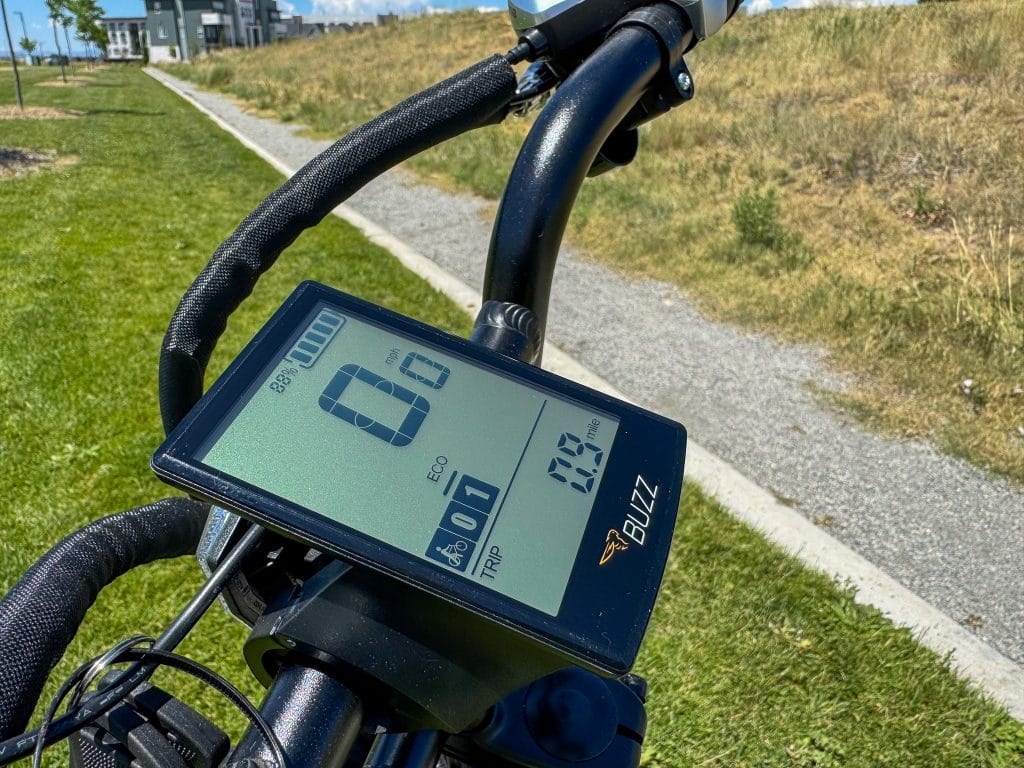
Display – Center Mounted Black and White LCD
Drivetrain & Braking:
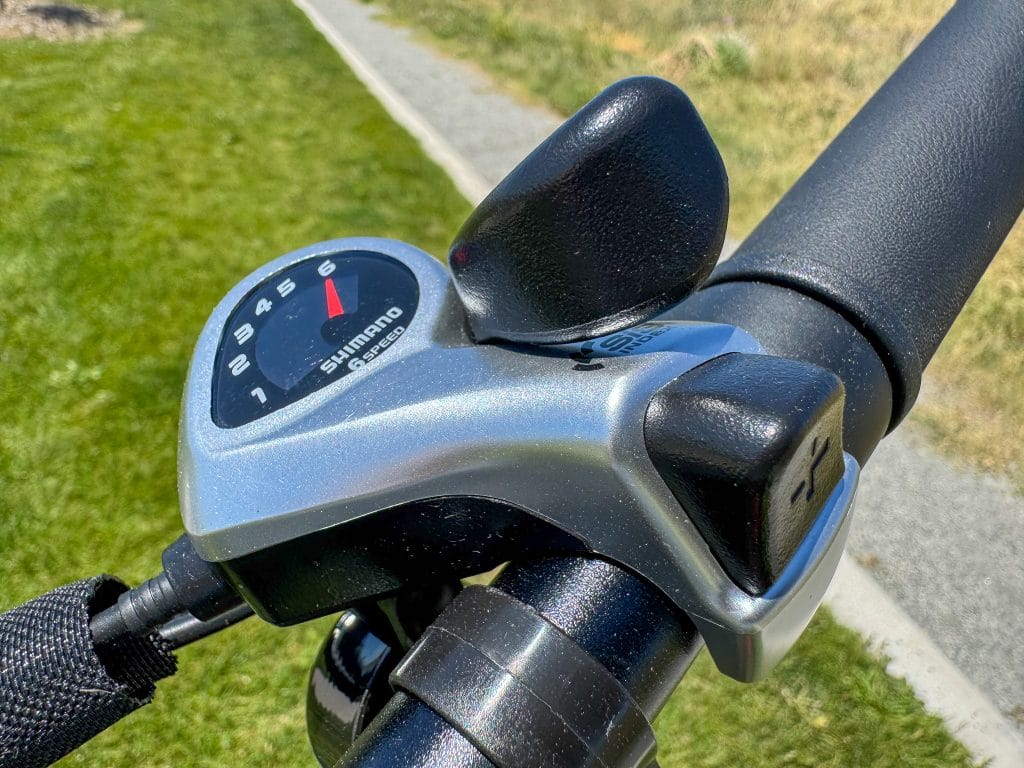
Shifters – Shimano 6 spd trigger
Cassette – Shimano TZ 14-28T
Chainring – 42T
Crank – Aooly 3pc, 165mm
Brakes – Front/Rear Mechanical Disc Brakes
Suspension – Front
Frame & Features:
Material – Aluminum
Tire Size – 20″x4″
Rims – Alloy
Saddle – Extended Padded
Fenders Yes
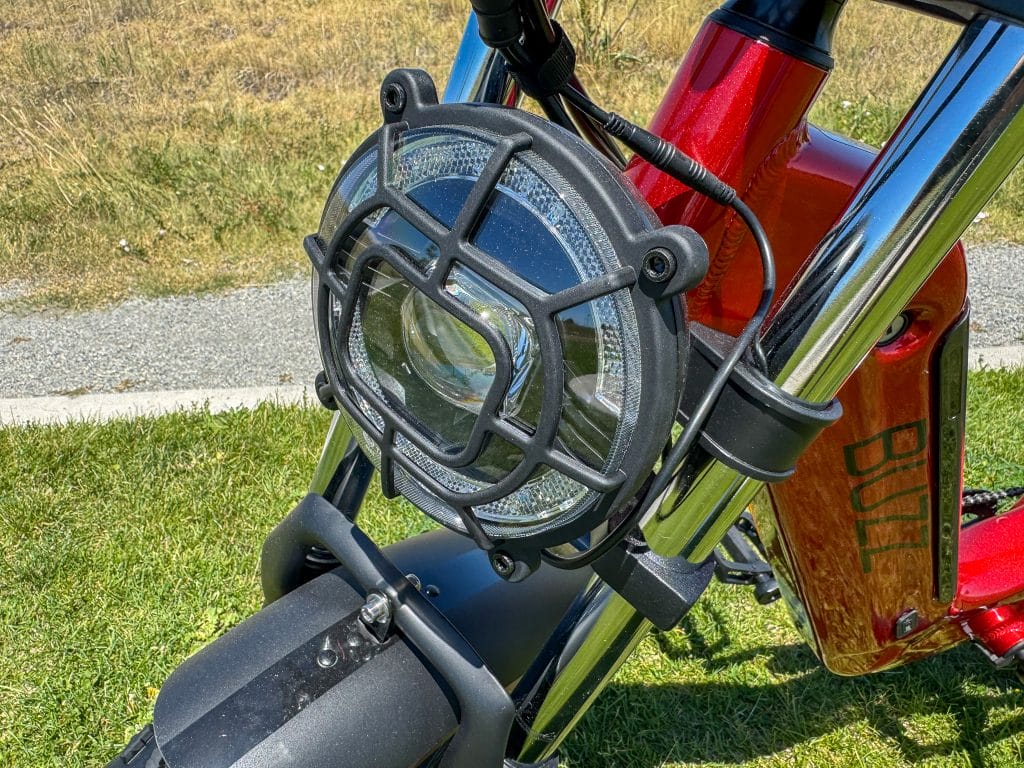
Lights – Front and Rear
Rack – None
Bell – Yes
Recommended Height – Fits most riders
Other Features
Shipping Weight – 84 lbs.
Assembled Weight – 66 lbs.
Travel – 55mm
Folding – No
Frame Type – Step-Thru
Final Thoughts on the Buzz Drone Ebike: Ride It, Don’t Overthink It
The Buzz Drone is not a precision machine—it’s not trying to be. What it is, is a fun, retro-inspired cruiser with enough power to keep things interesting and enough comfort to make short to medium trips enjoyable. It delivers on style, remains affordable, and will satisfy casual riders who want a more mini-moto experience without the gas, noise, or maintenance.
If you’re looking for a bike to cruise around the campground, pick up some snacks from the store, or enjoy an evening ride without breaking a sweat, the Buzz Drone Ebike is a great choice—and at $1,399 ($899 at time of this article), it’s a substantial value in a crowded space.
Just don’t forget your helmet and a matching retro Baracuta G9 Harrington jacket to complete the look.
For More Info Visit Drone’s Website Here

David Ireland is a professional strategist, creative, and marketer. He began his career in 1995 as creator and publisher of BPM Magazine. In August 2000, BPM Magazine merged with djmixed.com LLC, an online media company based in Los Angeles, which later evolved into the Overamerica Media Group [OMG] in 2003. In 2009, Ireland left Overamerica Media Group to serve as the VP of Marketing at Diesel. In 2011, he returned to his roots in media and cofounded the online electronic music publication Magnetic Magazine and created The Magnetic Agency Group. In June 2018, Ireland joined Winter Music Conference (now owned by Ultra Music Festival) as the Director to lead the reboot for 2019 and usher in a new era for the iconic brand. He served as Chief Marketing Officer at Victrola for three years, guiding product innovation and brand growth. He currently serves on the advisory board of Audiopool, a new music tech startup focused on AI-generated music licensing and artist revenue models.