Table of Contents
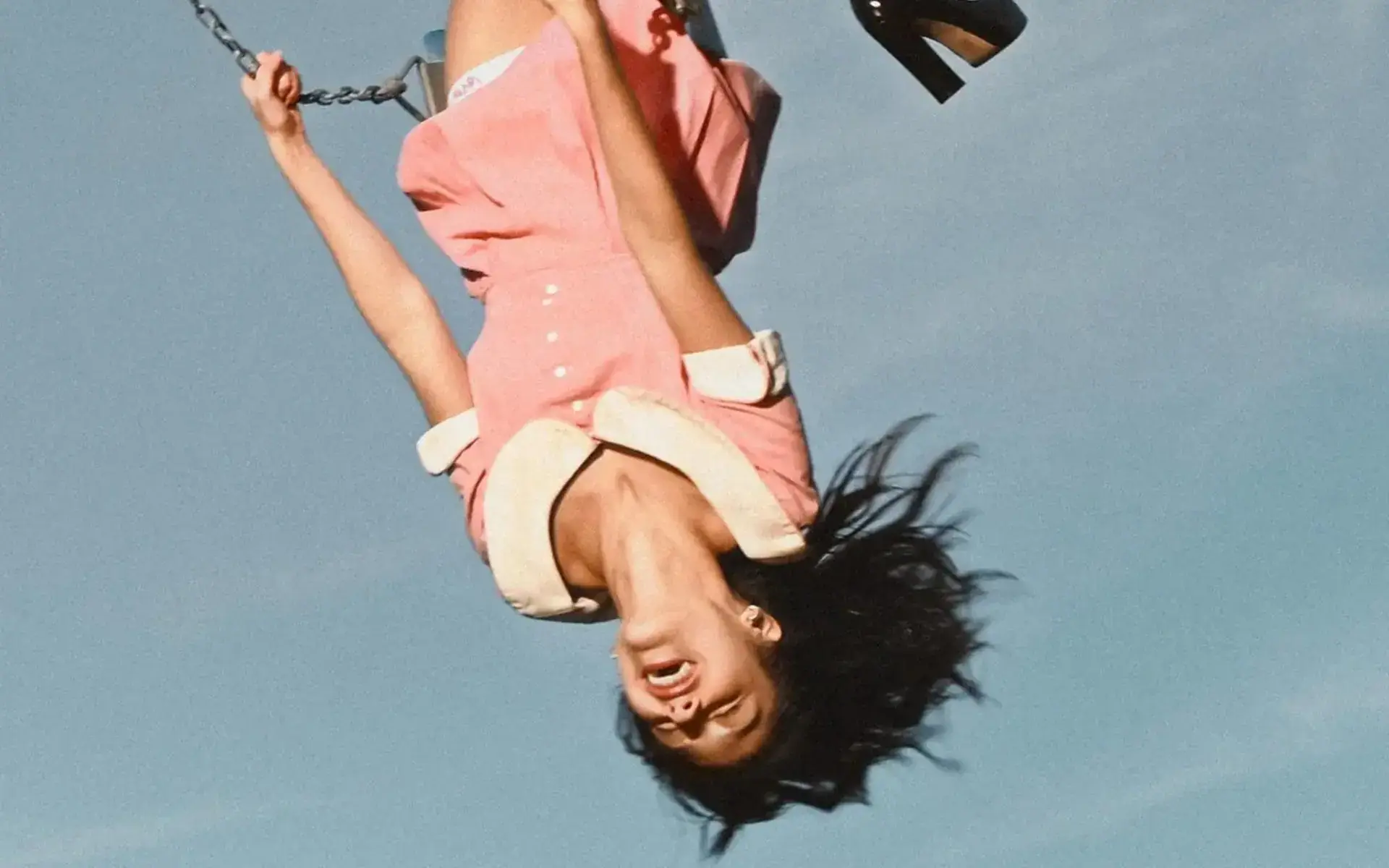
Image Credit: Red Hot Chili Peppers And Warner Bros. Records. Used For Creative Commentary And Educational Purposes
I’ve always thought Californication sounded like it was saying something serious with its hands in its pockets — and the more I listened, the more it felt like a song that invites you to lean in a little. Released in 1999, this was the title track off an album that pulled the Red Hot Chili Peppers out of the fog of One Hot Minute and back into something that felt grounded again — both musically and personally.
Frusciante had just rejoined the band, barely out of rehab. Kiedis had been trying to reset his life too, floating through India and back again, unsure if anything was still going to hold. What they ended up writing together was less of a rock comeback and more of a slow-burning thesis on disillusionment — set to the soundtrack of a culture always two steps ahead of its own collapse.
The song itself never fully raises its voice, but the lyrics are packed with ideas — some obvious, others buried under phrases that feel strange on purpose. Kiedis later said it was about “wandering souls who’ve lost their way chasing the American dream in California.” I do not read that as a neat summary. I think it is more like a placeholder for a lot of tension the song does not resolve.
Fame, surgery, Hollywood, space travel, global mimicry, media saturation — the song touches each of these with the same quiet, offhand delivery, as if to say: this is all normal now. And somehow, even twenty-five years later, the song still tracks. It still gets name-checked, quoted, streamed — it still shows up on charts. It is not just a nostalgia piece either; younger listeners are still finding their way to it. That makes sense to me. Because if anything, the world has become more Californicated. The dream has scaled.
Californication at a glance
- The lyrics trace the global reach of California’s entertainment culture — not as celebration, but as quiet concern.
- Kiedis and Frusciante both came into the writing process just out of their lowest points, which is why the song feels haunted and clear at the same time.
- The track pairs everyday images with surreal ones, inviting the listener to think less in answers and more in moods. The meaning lives in that tension.
As someone who’s spent a long time reading poetry and writing about culture, I wanted to take a moment to look at this song a little differently. Not as a fan breakdown, and not as a cultural thinkpiece either. Just as a reader — using the tools I’ve leaned on from literature, fiction, and creative writing to pull apart the lyrics and see what’s going on in there. This isn’t a universal reading, but it is one that tries to pay attention to how words are doing their work.
The song feels mythic and broken, smooth and anxious, all at once.
That’s a tough balance to strike.
So let’s sit with it for a while — slow it down, turn it over, and see what shakes loose when we press the lyrics up against a little more literary weight.
Californication Lyrics

Californication Meaning
Psychic spies from China try to steal your mind’s elation
When I listen to this line, I feel caution. The singer shares concern that a big world full of ideas can shape how people feel and think. He signals that even distance cannot stop someone from trying to change what goes on inside your head. That feels heavy, but it opens our eyes to how media and stories reach every corner of the globe.
In an interview, the band said they pursued truth inside their own view of California. They noted that people everywhere chase Hollywood dreams without stopping. I feel that they meant this line as a wake-up call. They want listeners to acknowledge how strong images and messages truly become in everyday life.
This reminds me of Auden. He wrote in “The Unknown Citizen”:
“Was he free? Was he happy? The question is absurd.”
Like the song, Auden shows how someone can follow all the rules and lose everything real in the process. These two lines from different times connect around one idea: a person may become hidden beneath layers of expectation.
Little girls from Sweden dream of silver screen quotation
Here the singer shifts to a quieter image. A little girl in Sweden dreams of words spoken in movies. That dream seems innocent. Then it feels complicated by beauty standards, attention, fame. She seeks something she sees on a screen. That shows how the song reminds us media shapes young hearts.
The band mentioned in interviews that they observe people who chase fame early. They pointed out how a wholesome dream can become bigger than the individual behind it. I believe their meaning is that a simple hope for story and memory may grow into something much heavier.
This line connects to Kenneth Fearing’s words in “Dirge”:
“He was a most efficient worker, prompt and regular in attendance.”
That poem and this song both use everyday scenes of life controlled by outside forces. A girl may chase a role in a movie, while a man just follows routine. Both risk losing their own voice inside a mold.
Pay your surgeon very well to break the spell of aging
When I say this line is sharp, I feel its sting. The singer shows that in California, people pay large sums to look younger. That tells me youth is prized and aging may feel like a threat. That claim reveals how appearances gain power.
In the studio conversation, the band pointed out that body and image become work. They shared how fear of age led people to rely on the mirror. I sense they wish to show a culture swapping moments for surface.
James Merrill’s tone in “Self‑Portrait in Tyvek™ Windbreaker” matches this line. He spoke about creases, weather, things that show ageing. He wrote:
“The windbreaker’s a little snug. I blame the dryer.”
Both song and poem handle time through everyday life and appearance. Both signal a blur between who someone is and how others view them.
First born unicorn
Hardcore soft porn
Seeing these phrases together, I feel confusion wrapped in wonder. “First born unicorn” sounds rare and mythical. That idea pulls me into beauty rooted in myth. Then “hardcore soft porn” twists that beauty. It puts a second thought into how we may find fascination in odd blends.
The band said in interviews that they chose words that make listeners pause. They wanted phrases that layer beauty with conflict. I feel they wished to spark feelings of wonder mixed with questioning of what seems fine.
The poet Fearing came close in style. He used business lingo to write grief and loss. This line shares that technique—making the strange blend with the everyday to ask deeper questions about what we accept.
Space may be the final frontier, but it is made in a Hollywood basement
This line draws me in again. It exhales a sigh that even wide space can become fake. The singer shows that the image of space takes shape behind cameras and lights. That claim speaks to how storytelling can make the grand seem small.
The band shared an anecdote when talking about watching films about science. They said they found wonder, then they remembered how few crew members stood behind those scenes. That memory became part of this line. They believed that knowledge matters more than spectacle.
When I read Merrill’s line again, it resonates:
“The windbreaker’s a little snug.”
He looked small inside his own clothes. Here, space looks small inside a room made to look big. Both feel crafted and bound by frames inside frames.
Destruction leads to a very rough road, but it also breeds creation
This phrase stops me in thought. It tells me that things fall apart, and that falling can help something new grow. The singer says rough roads form from destruction but also spark change. It feels hopeful but honest.
Band interviews reinforced this idea. They said they see breaking points as chances to form something better. They used words like rebirth and renewal. I feel they aimed to show that hard times can hold purpose.
Those ideas appear in again Auden’s lines:
“Was he free? Was he happy?”
They ask similar questions about living for others versus living for self. That shared aim offers us a way to link the song and the poem as companions to truth emerging from challenge.
Why I’ve Love This Song Since I Graduated HS In 2009
One thing I keep coming back to with Californication is how steady it sounds, even while everything inside the lyrics is breaking down. The song’s built like a slow swim — smooth, melodic, almost hypnotic — but the images it lays out are fractured, distant, loaded. You get plastic surgery, fame-chasing, media overload, kids trying to live inside stories they’ve seen on screens. And none of it feels accidental.
This came out in 1999, but the writing started just after the band nearly fell apart. Kiedis had been traveling, coming off drugs again, looking for something to hold on to. Flea was trying to convince Frusciante to come back. And when he finally did — fresh out of rehab, no guitars left to his name — the band started writing in garages, quietly, just trying to get the feel back. That’s the undercurrent here. You can hear them looking at the culture around them and realizing that it had gotten hollow while they weren’t looking.
That’s part of why this song still holds up — and also why it lands next to poems like Auden’s “The Unknown Citizen” or Fearing’s “Dirge” without feeling forced. In both those poems, you get people whose lives are completely accounted for, but only from the outside.
All the boxes are checked.
Job done.
But you walk away not knowing what kind of person was inside that outline. The same thing happens in this song. Kiedis gives you these characters — the teenage bride, the girl with the surgeon, the fan buying a star on the boulevard — and you only ever see what the culture has made of them.
It’s like watching people get flattened into billboards. Merrill’s “Tyvek Windbreaker” adds to that too, with this speaker who sees himself aging and wearing cheap, throwaway materials, but still has to pretend he fits inside it all. That’s what makes the literary comparison useful here — not as a flex, but as a way to make sense of how this song keeps its focus tight while still talking about something global.
Even the line “Space may be the final frontier but it’s made in a Hollywood basement” has layers once you start looking at where the band was when they wrote it.
This was the late ’90s — digital culture was starting to speed up, and everything that used to feel sacred or futuristic was getting remixed into content (which pales in comparison to everything even happening these days lol). Hollywood wasn’t just an industry anymore; it was an operating system. Kiedis later said the song came out of watching people chase something that was supposed to make them whole, and ending up more lost than when they started. That is not an easy idea to wrap up cleanly, which is why I think the song doesn’t try to.
Instead, it leans into the disorientation — lets each line pull in a slightly different direction — and trusts that the deeper meaning will show up in how all the pieces sit next to each other. Just like in those poems. What matters is not resolution, but attention.

Will Vance is a professional music producer who has been involved in the industry for the better part of a decade and has been the managing editor at Magnetic Magazine since mid-2022. In that time period, he has published thousands of articles on music production, industry think pieces and educational articles about the music industry. Over the last decade as a professional music producer, Will Vance has also ran multiple successful and highly respected record labels in the industry, including Where The Heart Is Records as well as having launched a new label with a focus on community through Magnetic Magazine. When not running these labels or producing his own music, Vance is likely writing for other top industry sites like Waves or the Hyperbits Masterclass or working on his upcoming book on mindfulness in music production. On the rare chance he's not thinking about music production, he's probably running a game of Dungeons and Dragons with his friends which he has been the dungeon master for for many years.