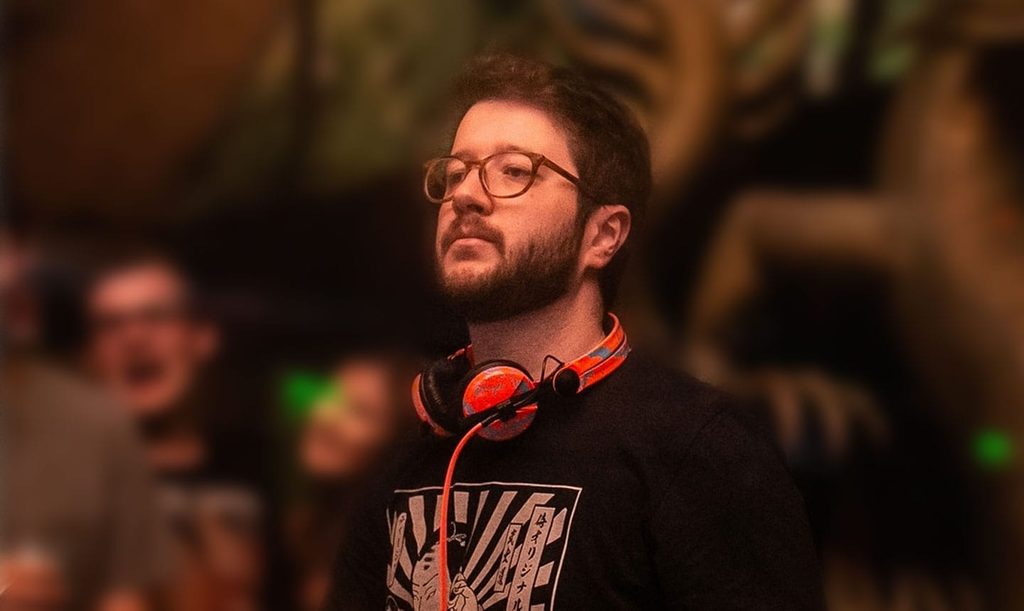
Joshua Moreno’s new single on Where The Heart Is keeps things grounded — melodic house with space, intention, and a sense of emotional control. It’s a fitting home for his work, which often plays at the intersection of introspection and drive. But behind that focus is a process that doesn’t always follow the usual rules.
In this interview, Joshua talks about the lessons he’s learned from over-perfectionism, the importance of trusting your own taste over technical polish, and how teaching other producers has helped sharpen his own instinct for when something’s worth finishing. He also explains why he hasn’t mixed on speakers in years — and why that’s a feature, not a flaw.
It’s a conversation about taste, belief, and learning how to finish your own thoughts before chasing trends.
What’s a piece of creative advice you wish you got earlier in your career?
The best advice I wish I had gotten when I first started doing music is: stop overthinking.
The consistent need to perfect every flaw in my music has left an everlasting effect on the completion time of records and most importantly, the perception of my music done by none other than myself. Experience will always improve you, therefore you should reflect on what you’ve accomplished and try to always achieve better than the last.
Do you think technical skills or taste carries you further in the long run?
I like this question a lot. Consider this: What’s the difference between Coca Cola and Pepsi?
Both produce the same product with the same possible machinery and possible processes. So technically, they have the same skills applied as it relates to the same product. But for what reason does a Coca Cola always seem more appealing? Well, aside from the signature red & white branding and marketing efforts, it always relies on the fundamental of reasons: choice.
In this example, “taste” is literal between the two soda companies, but for me having a distinctive style or signature will always be above the technical skills when looking back.
Consider the difference between Kerri Chandler and Daft Punk. Both make house. Both make “music”. But depending on the person, either or is considered higher than the other artist. So contemplate on that a bit and hopefully it helps answer the question.
How do you know when an idea is worth finishing?
That’s pretty simple. Even with my personal students who mentor under me, I tell them the same thing. If you create an idea, even if it’s just the chords or the simple bassline, if you can listen to that loop about three to five times and not feel like it already lost its spark, then go further with it.
The best “hit” can come from anyone, anywhere, anytime. So just focus on making the BEST version of your music as possible and stop focusing on if it would be the next big thing.
Are there any “rules” in music production you purposely break?

Yes. All the time. One of my two personal favourites is that there is an unspoken rule that you should compress your busses and sounds during the mixing process so they “glue” together and make the music a bit “tighter”. While there may be some instances of that being true, I have learned that doing so is exactly why music has lost its soul.
I always go back to the golden era of music such as the 1980s–2000s. Why do we love those raw, sometimes unbearable and cheap sounds of that time? Why does the music feel so… alive? Because back then the producer or artist focused on the “fun” of the music, therefore resulting in giving the production a sense of realism and life.
I usually wait until all the stems are finalized and rendered and my project is committed before I focus on compression techniques.
My second rule that I always break is that I have not mixed on speakers for the past… like three to four years or so. I mix and master exclusively on headphones. Now, please understand before you go haywire in criticism, I do it with the knowledge that this technique has its flaws, therefore I have been teaching my students how to overcome them — especially when they can’t access a professional studio at the time.
How do you balance experimentation with actually finishing tracks?
For me, I usually start a track as if I am composing a piece of music. The foundation is key. If the foundation is not resonating, then I simply move on and do not look back.
Once the foundation is established, I write out the track to the length of time that I think the music needs. Sometimes it can be 5 minutes or in some cases, 8 minutes and more.
Once this is done, I work around the core of my track and try to “compliment” the core rather than just “fluff” the core up with a bunch of wasted sounds. This then cuts my production time down to feasible amounts of time in which my tracks are completed.
What keeps you coming back to the studio?
Music. Nature. Life. My marriage. My children. My beliefs. God. Frustration. Exhaustion.
There are so many things I can add to that list but the main thing that I always come back for is because I am me. I love what I do. I love creating. I love creating something amazing and hearing it come out of my headphones and become something that never existed until I just made it.
That alone makes me feel inspired to come back every time. Even if I do not have the “biggest hits” or the “hottest tune” on the market, I left an acoustic signature on this universe that transcends the barriers and limitations of the human brain to comprehend.
Because how I see it is like this: At which point in history has a human being ever “unhear” a sound?

Magnetic byline note: This byline is used for staff produced updates and short announcements, often based on press materials and official release information. Editorial responsibility: David Ireland (Editor in Chief) and Will Vance (Managing Editor). About: https://magneticmag.com/about/ Masthead: https://magneticmag.com/masthead/ Contact: https://magneticmag.com/contact/