Table of Contents
2026 update: The headphones are now sold as the écoute TH1, and the direct price has increased from $799 in my original review to $899. The current model also has an iOS and Android tuning app, active and passive wired modes, USB-C audio, LDAC, ANC, and a 30-day return period.
When I first reviewed the écoute headphones in 2025, the idea was unusual. The company had placed a Korg Nutube preamp, a DAC, discrete analog amplification, wireless playback, and active noise cancellation inside one over-ear headset.
That design still separates the TH1 from most premium wireless headphones. The decision is now harder because the price has risen and newer competitors provide longer battery life, lighter construction, newer Bluetooth options, or better noise cancellation.
Quick answer: Yes, the écoute TH1 is still worth buying in 2026 for listeners who prioritize midrange detail, stereo placement, build quality, and active or passive wired playback. Skip it when battery life, low weight, call quality, or class-leading noise cancellation matter most. Use the 30-day return period to check fit and tuning.

Is the écoute TH1 still worth buying in 2026?
The écoute TH1 still earns a recommendation because it offers a combination that current alternatives do not directly reproduce. The Nutube preamp changes the tonal balance, the separate channel amplifiers produce wide placement, and the headphones support Bluetooth, USB-C digital audio, active analog playback, and passive analog playback.
The recommendation is narrower at $899. Sennheiser now sells an audiophile wireless model with a 60-hour battery for far less, while Bowers & Wilkins offers its current flagship at $799. Focal’s Bathys MG costs considerably more, though it weighs less and offers longer playback.
Buy the TH1 because you prefer its sound and audio architecture. Do not buy it simply because it contains a tube. The tube is part of the tuning and amplification system, though the complete result still depends on the driver, enclosure, DSP, fit, source, and recording.
How much does the écoute TH1 cost?
The écoute TH1 currently costs $899 in Gunmetal or Satin Aluminum. The $999 bundle adds a single-crystal copper 3.5mm cable, while the cable costs $130 on its own. A standard oxygen-free copper cable costs $25 in a straight version or $40 in a coiled version.
écoute lists free international shipping, an estimated delivery period of ten business days, a one-year limited warranty, and a 30-day refund period. Those terms make the direct store the correct current destination, especially when older reviews still point toward the completed Kickstarter campaign or earlier pricing.
The price increase changes the buying calculation. The TH1 moved from slightly below several luxury wireless headphones to a position above the Bowers & Wilkins Px8 S2 and well above the Sennheiser HDB 630.
The challenge comes in being mobile and using a device like a smartphone, which most people do. This experience for serious sound enthusiasts can be lackluster, and there have been many attempts to make mobile fidelity more palatable for audiophiles, from portable DACs and headphone amps to high-end HiFi media players to better streaming quality through apps like Quoboz. Nothing is all that great if you want to be mobile; you end up just lugging around more gear, defeating the purpose of being mobile. Enter écoute stage left.
If I’ve lost you already, the best way to explain the écoute philosophy is they thought of headphones like a stereo system, taking those components and putting them into headphones.
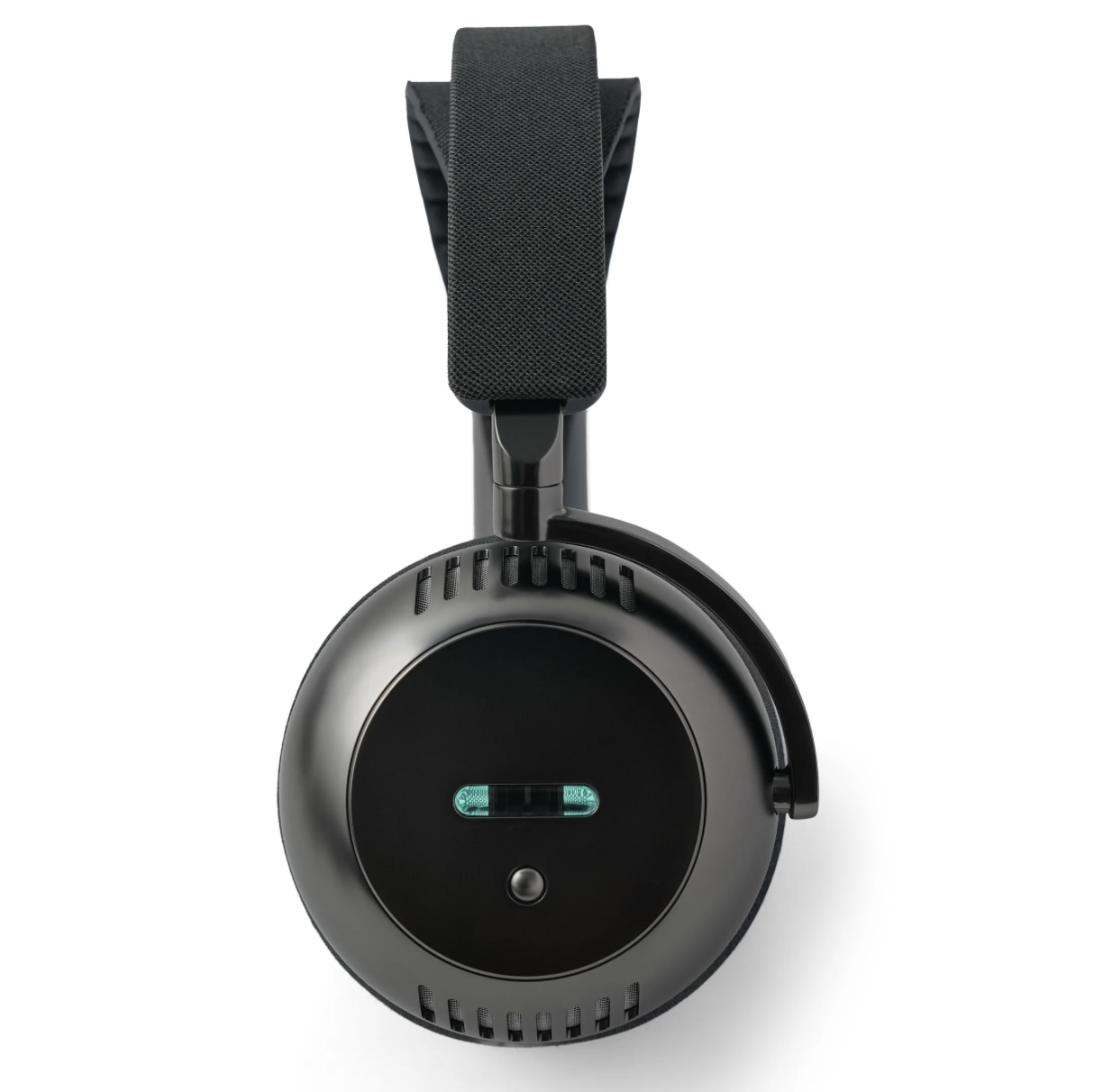
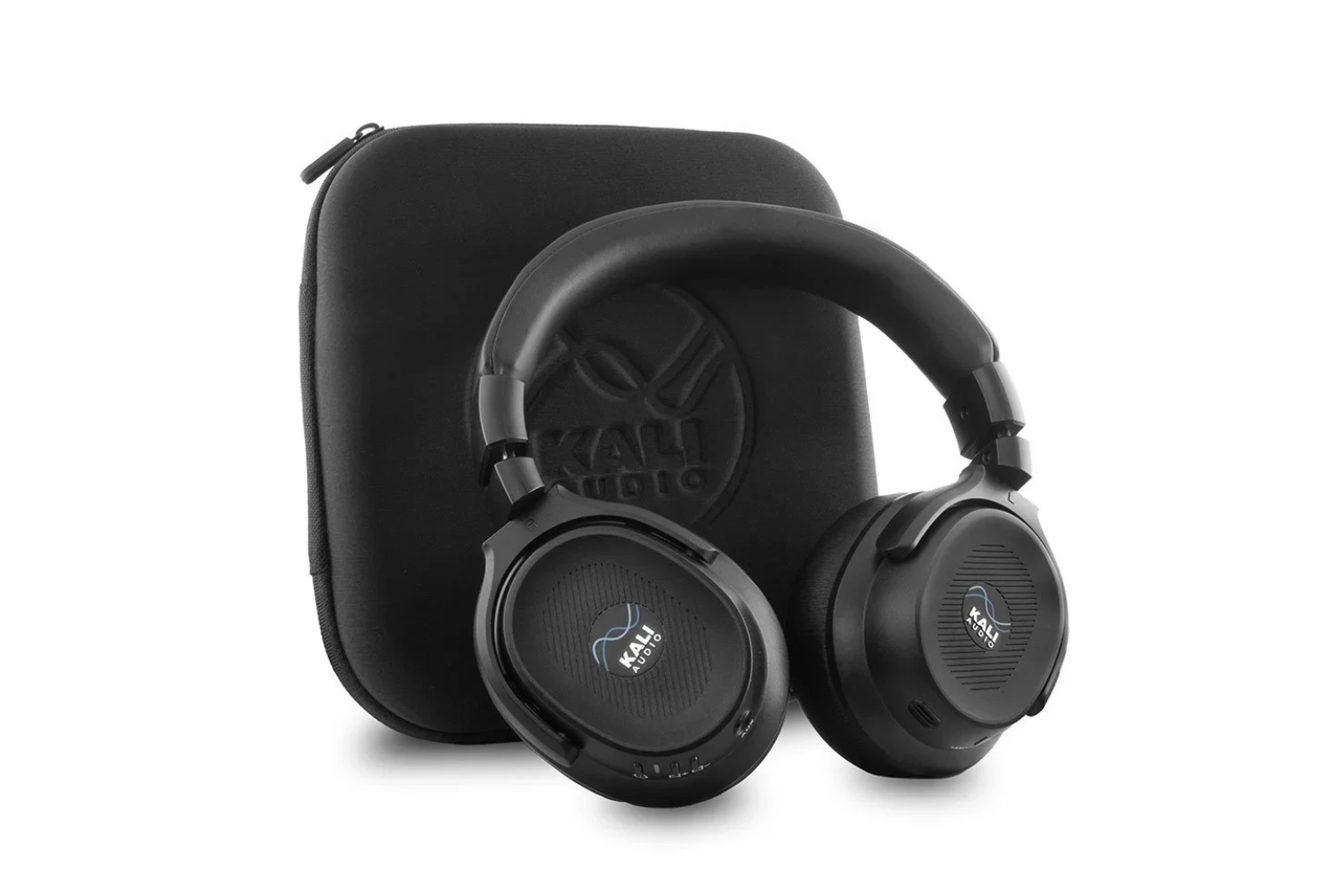
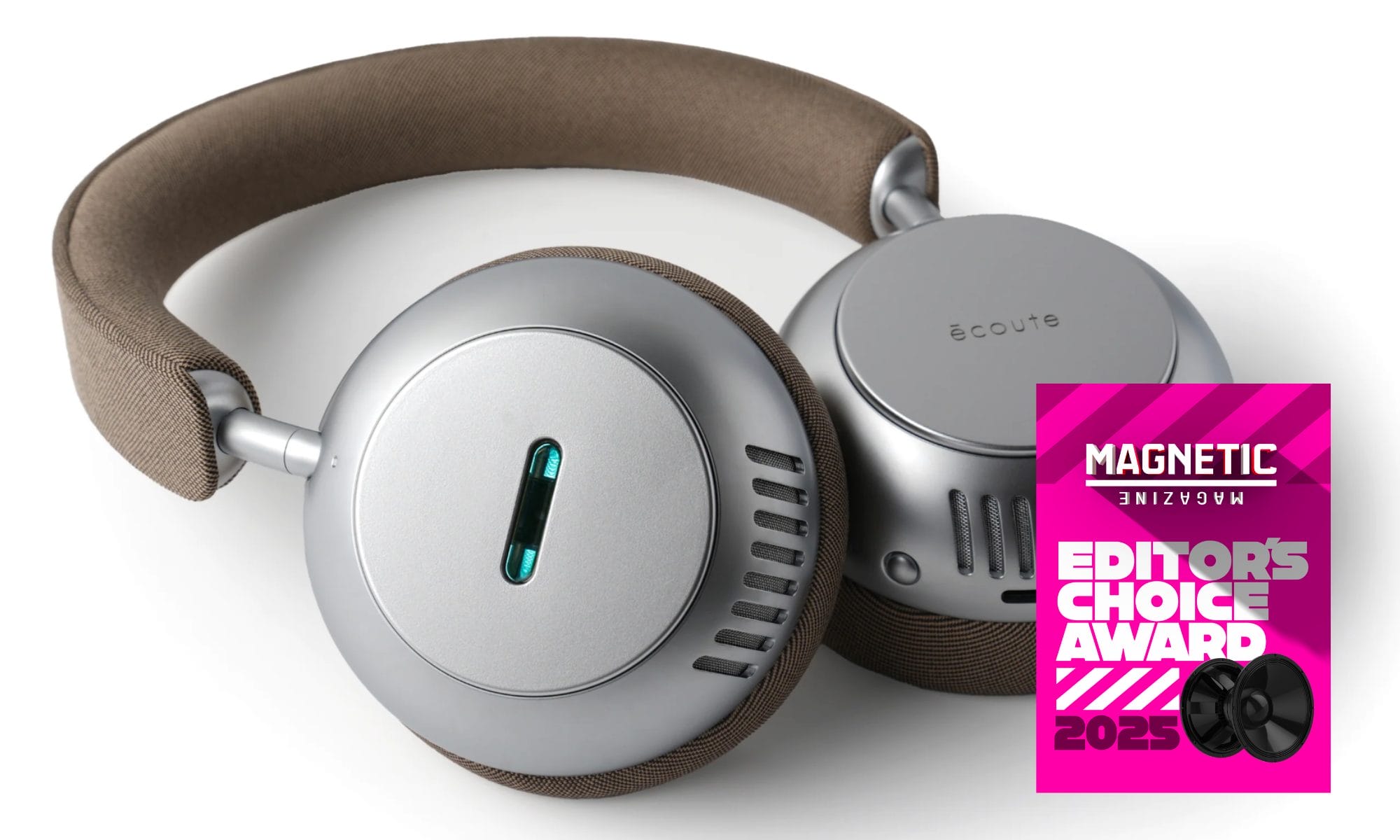
écoute headphones have a fresh approach to mobile high-quality audio, one that, while not perfect, is excellent for a maiden voyage. At first glance, these cans have a charming 1960s retro look, and you will get people doing double takes if you are rocking these out in the wild.
The build is top-notch, with quality materials and not a hint of plastic in sight. These aren’t just headphones in the traditional sense. They are, in essence, a fully realized, component-based, high-fidelity system, shrunken down and placed directly over your ears.
What changed since the original écoute review?
| Area | 2025 review | 2026 position |
| Product name | écoute headphones | écoute TH1 |
| Direct price | $799 | $899 |
| Bundle | $849 at the time of outside testing | $999 current direct bundle |
| Tuning | Early product tuning and controls | Current iOS and Android app with saved curves |
| Competition | Compared mainly with earlier premium ANC models | New options from Sennheiser, Bowers & Wilkins, and Focal |
| Product status | Early direct-market release | Current model with direct stock and retail distribution |
The tuning app is the most meaningful ownership update. It applies changes inside the headset DSP and lets the listener save up to five custom curves. Each adjustable band covers a range of plus or minus 12dB. A saved curve can remain active during Bluetooth, USB, or powered analog listening.
The adjustments do not operate during passive analog playback because the headset electronics are bypassed when the power is off.
Let me explain why écoute has me rethinking everything I thought I knew about personal HiFi.
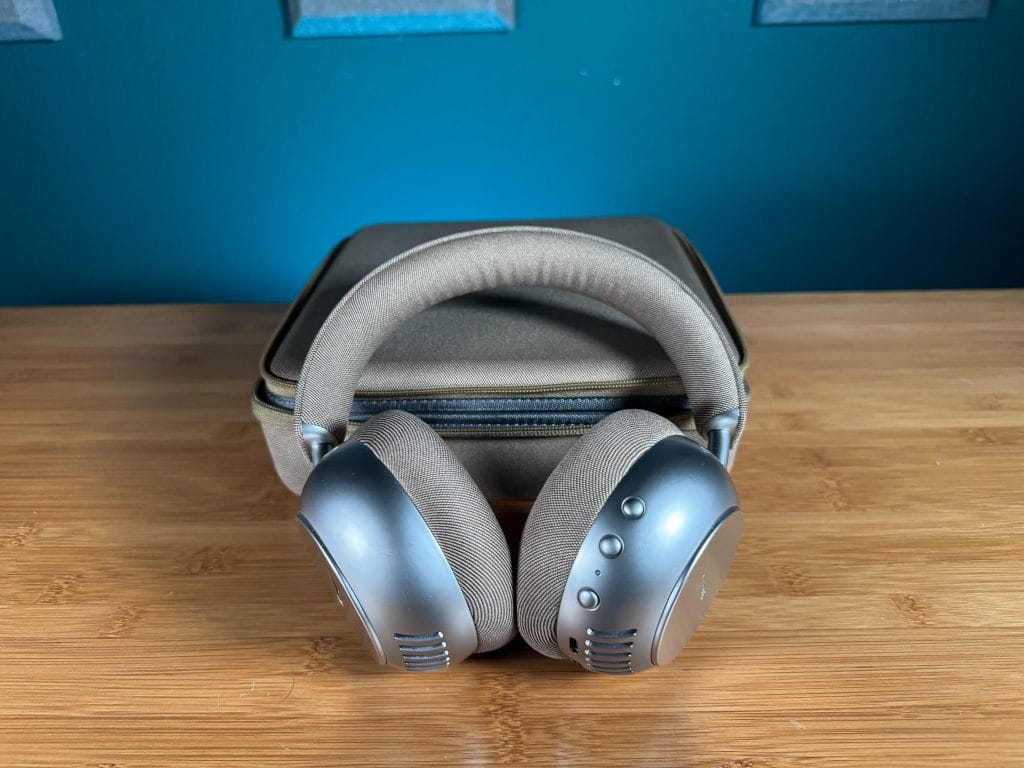
To start, I tested these headphones extensively, giving them time to burn in and using different sources to see if they differed in any dramatic way. The headphones were tested with all genres of music, with a focus on electronic, jazz, live rock/indie.
Source One – écoute’s analog coiled cable with an Astell&Kern AkJR media player and on my laptop using high-end streaming service Qobuz.
Source Two – écoute’s USB-C digital cable (also the cable that charges it) directly connected to my laptop using Spotify and Qobuz
Source Three – wirelessly connected to my iPhone and Macbook Pro using Qobuz and Spotify.
My favorite source of the three was the first because of the slightly warmer sound, and the AkJr is a purpose-built HiFi media player, so it was the perfect companion for the écoutes.
Note – These headphones do feature active noise canceling (ANC), but since that function can mess with the sound output, it was never used. The ANC is solid but not at the level of other mid- to high-end headphones. However, that is NOT what you are buying these for, and for most users, it will be just fine.
The Sound
The first time I put on the écoutes, everything sounded like vinyl: warmer, wider, and more realistic. The other thing you hear is the flaws of the recording, little things that might not be evident on a pair of lesser headphones that have been overly tuned. So that might annoy some people, as recordings you used to like might sound lesser than before. These are the risks I’m willing to take, but they aren’t for everyone.
With Miles Davis’ Kind of Blue, I felt as if I was inside the venue listening to the performance. The space between notes, the artifacts, the air in the recording, the three-dimensional placement of instruments—it all felt as if I could smell and hear the smoke in the room. These headphones don’t sound like headphones. They sound like a reference-grade two-channel system, where music isn’t just presented—it’s performed in front of you.
The Vacuum Tube Preamp
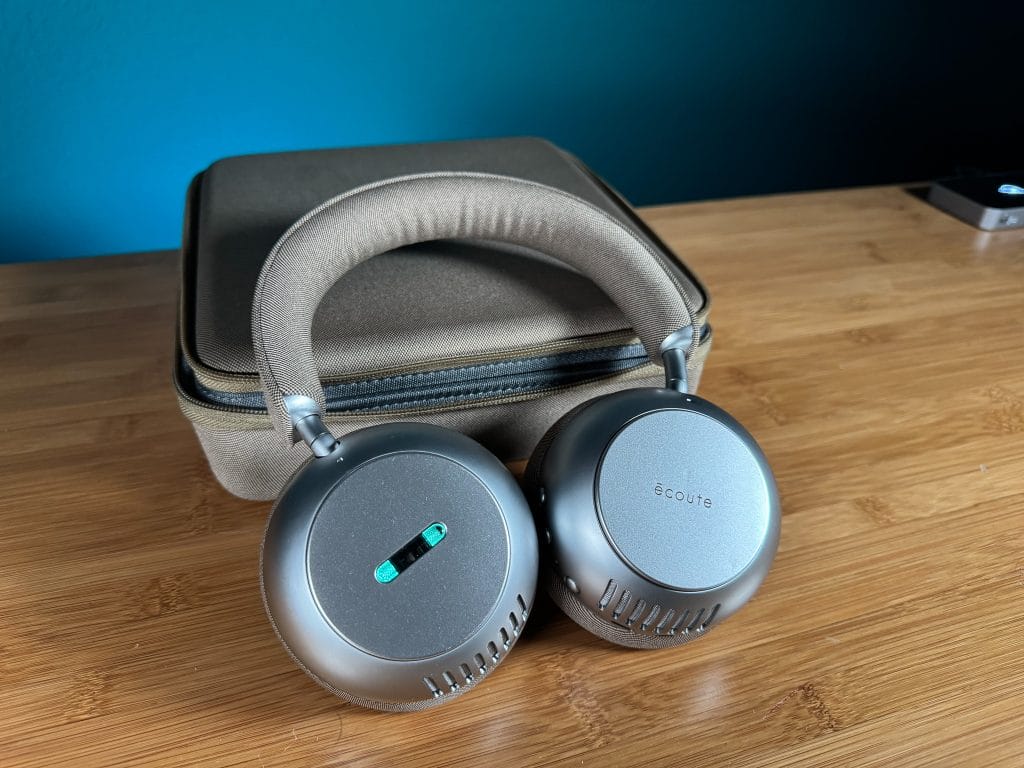
Most high-end headphones rely on solid-state amplification, which, while clean and efficient, often lacks the warmth and musicality that vinyl lovers and tube enthusiasts crave. This is all VERY subjective, but for most people I’ve put in front of my HiFi system at home, there is a discernable difference between digital and analog sources like vinyl.
écoute’s integrated vacuum tube preamp brings richness and depth to the sound that solid-state designs don’t really replicate for me, but again, this is subjective. Why does this matter? Because tubes do something almost magical to music, especially in the midrange—the frequency range where our ears are most sensitive.
With écoute, vocals gain a human presence that feels eerily real. Guitars have wood and resonance instead of just sharp transients. Pianos breathe rather than just play notes. It’s an effect that’s immediately noticeable—like stepping into an intimate recording studio session, where you can hear every tiny nuance of the performance, or listening to vinyl on a great system.
The Dual Mono Integrated Amplifier
One of the biggest limitations of headphones is crosstalk—when the left and right channels bleed into each other, collapsing the soundstage into a more confined, in-the-head experience. Many headphones try to compensate with angled drivers or artificial DSP (Digital Signal Processing) effects, but écoute solves the problem at the source. By using a dual mono integrated amplifier, écoute achieves channel isolation, meaning the left and right signals are entirely independent. The result? A soundstage that sounds like a full-sized HiFi systems.
I tested écoute with various recordings, from spacious live jazz to intimate acoustic folk to complex, layered electronic music. Every time, the effect was astonishing. Instead of sound being “placed inside my head,” as with most headphones, it existed in front of me, around me, beyond me. Nerds call this soundstage, and the écoute’s provide a big one that I’ve not experienced in many headphones.
I could hear the vocalist dead center, the guitarist to the left, the drummer slightly behind, the bass resonating from a distinct pocket in space. It wasn’t just stereo imaging—it was a true spatial realism that didn’t feel fake; it just sounded wide.
Midrange Purity
Suppose you’ve spent years refining a HiFi setup. In that case, you know that the midrange is what is usually missing in most listening experiences, lost to over-tuned bass or shouty treble to mask mediocre headphones. It’s where vocals live. It’s where the richness of acoustic instruments is found. It’s where the soul of music resides.
écoute absolutely nails this.
Most modern headphones are engineered with an emphasis on booming bass and sparkling highs, but they often neglect the midrange, either scooping it out for a “V-shaped” tuning or making it too forward and unnatural. If you are not trained to hear the difference, most people find overly tuned headphones OK, even great. It’s like eating a steak at Sizzler and then having one at a truly excellent steak house; you can’t go back. écoute, on the other hand, delivers a pristine, lifelike midrange that feels like stepping into the studio with the artist. If you love the organic, true-to-life warmth of vinyl, this is the closest I’ve heard to that experience in a headphone.
Design and Build
écoute isn’t just designed to look good—it’s engineered like a HiFi system. Every part of these headphones has been meticulously crafted with a pure signal path in mind. Unlike most high-end headphones, which rely on software-based tuning and DSP tricks, écoute keeps things pure and analog, mirroring the architecture of a rack-mounted reference system.
From the component choices to the construction materials, everything about écoute exudes audiophile-grade precision. These aren’t just headphones; they are a statement piece—an extension of the tradition of high-fidelity craftsmanship that HiFi purists have gravitated to for decades.
What are the best écoute TH1 alternatives?
| Headphone | Checked price | Battery | Best reason to choose it |
| écoute TH1 | $899 | 20 hours | Tube preamp and active or passive analog use |
| Sennheiser HDB 630 | $449.95 current retailer price | Up to 60 hours | Lower cost, long battery, and included high-resolution USB dongle |
| Bowers & Wilkins Px8 S2 | $799 | 30 hours | Premium construction, aptX Lossless, and lighter daily travel |
| Focal Bathys MG | $1,499 current U.S. price | 30 hours Bluetooth | Magnesium drivers, lighter weight, and longer USB-DAC playback |
Who Are These Headphones For?
écoute isn’t for everyone, and sadly, most people don’t care about the quality of sound, that is, until they hear it. Most people never will compare and contrast, but for those who do or those who crave incredible sound, this headphone was made for you. It is meant to savor music and hear the details and the rich sounds between every note. If you live for music, seek truth in sound, and crave a listening experience that removes the barrier between you and the artist, then écoute will change how you think about personal HiFi.
For the first time with a mobile wireless (and wired) headphone, I feel like I’m not just listening to a reproduction of music—I’m experiencing it as if it were being played live. If you’ve ever wished for a headphone that sounds like a true, high-end two-channel system, écoute is that dream realized. This isn’t just a great headphone—it’s a revolution in personal high-fidelity audio.
LUM’s discussion of the lost art of listening supports the same point from another direction. Premium headphones earn their place when they lead to closer attention, rather than adding another specification to the shelf.
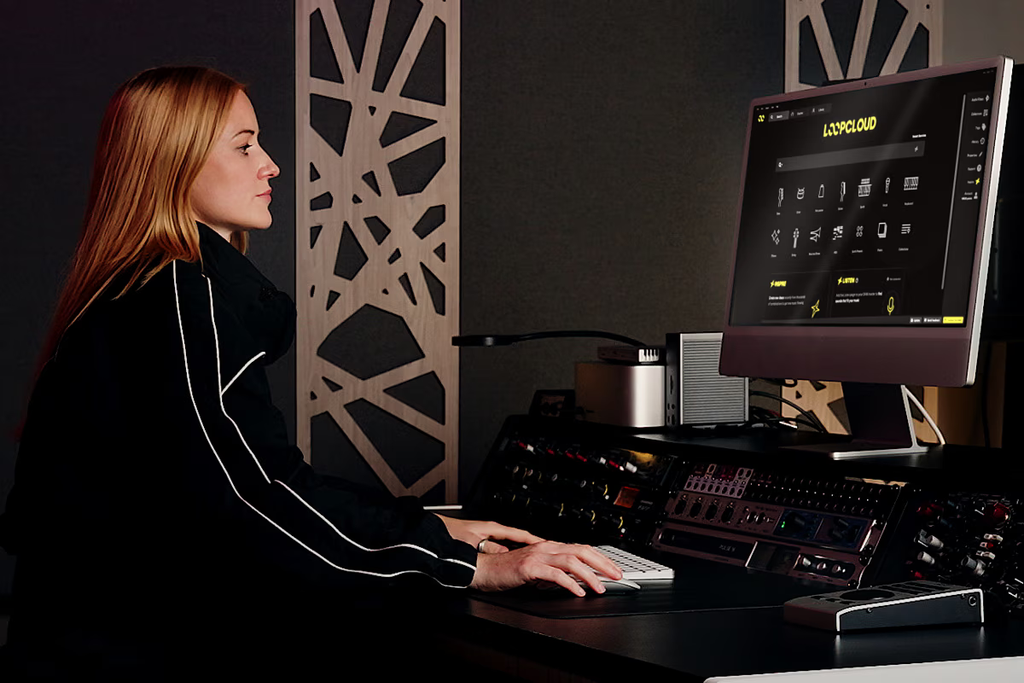
Can you use the écoute TH1 for music production?
The TH1 works as a secondary playback check for width, vocal position, harshness, and low-mid density. I would not use it as the sole headphone for mixing because the tube preamp gives the midrange a defined character and the extreme low and high frequencies receive less emphasis.
My Audeze MM-100 studio headphone review covers a wired option aimed more directly at production decisions. The broader article on headphones for music producers also compares models according to recording, editing, travel, and mix work.
For wireless studio operation with low latency, my AIAIAI TMA-2 Studio Wireless Gen 2 review covers a system made around production and performance. The TH1 targets personal Hi-Fi listening first.
Why does the Editor’s Choice award still hold up?
An Editor’s Choice award should reflect repeated ownership value, a clearly defined job, and execution that justifies the price. The TH1 still meets that standard because no direct alternative combines its tube preamp, separate analog amplifiers, onboard DAC, active wired mode, passive wired mode, and wireless playback in the same design.
The same reasoning informed my Joolca HOTTAP V2 Nomad Kit review. An award carries greater meaning when a product addresses a real ownership problem and continues to work after the first test period.
My Legion Go S Editorial Choice review applied that test to a separate category. Daily operation and product fit mattered as much as headline specifications.
The HumminGuru Orbit vinyl static remover earned its place by addressing a recurring listening issue with a defined product. The TH1 follows the same rule. Its award rests on how it handles mobile album listening, not the novelty of the glowing tube.

David Ireland is a professional strategist, creative, and marketer. He began his career in 1995 as creator and publisher of BPM Magazine. In August 2000, BPM Magazine merged with djmixed.com LLC, an online media company based in Los Angeles, which later evolved into the Overamerica Media Group [OMG] in 2003. In 2009, Ireland left Overamerica Media Group to serve as the VP of Marketing at Diesel. In 2011, he returned to his roots in media and cofounded the online electronic music publication Magnetic Magazine and created The Magnetic Agency Group. In June 2018, Ireland joined Winter Music Conference (now owned by Ultra Music Festival) as the Director to lead the reboot for 2019 and usher in a new era for the iconic brand. He served as Chief Marketing Officer at Victrola for three years, guiding product innovation and brand growth. He currently serves on the advisory board of Audiopool, a new music tech startup focused on AI-generated music licensing and artist revenue models.