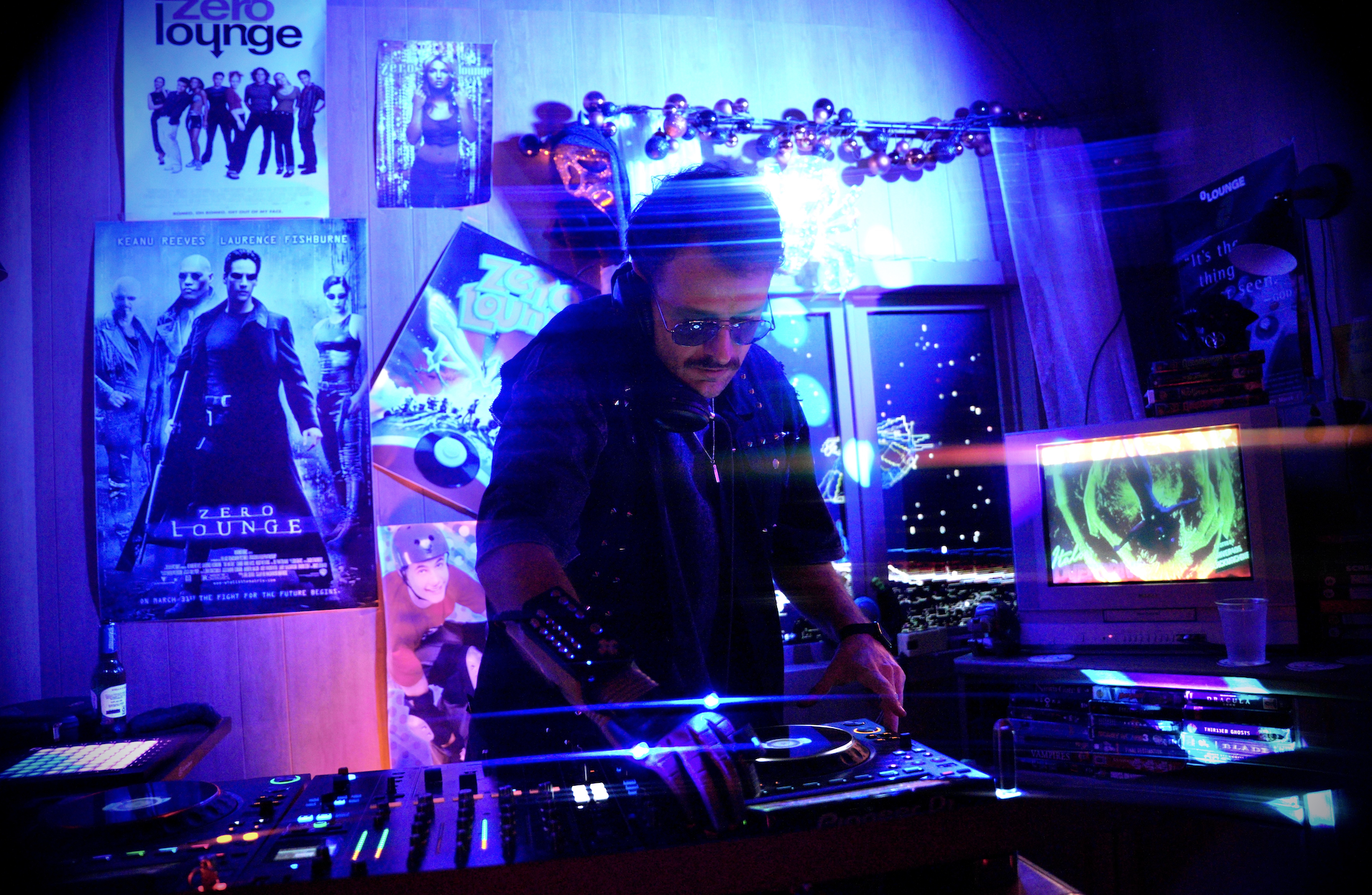
Scorch Felix’s studio is a place where creativity and technical skill come together. With a career spanning various genres from Trance to Techno, Scorch Felix has developed a signature sound that carries a distinct toughness, rooted in his early days as a DJ. Known for his deep understanding of music production tools and techniques, he is always eager to explore new approaches and adapt to the evolving landscape of the industry.
In this interview we caught up with Scorch Felix to discuss his creative process, the importance of experimentation, and how he balances the art and science of making music.
Hi Scorch Felix, how’s it going?
Very well, thank you.
What’s your typical workflow in the studio when starting a new track? Do you begin with a melody, rhythm, or something else?
I usually start, as you said, with a melody based off a strong chord progression, as I like to have that emotion-based breakdown, depending on what I’m trying to convey on a particular track.
You’ve released tracks across several genres, including Trance and Techno. How would you describe your signature sound, and how has it changed as you’ve evolved as an artist?
A high percentage of my tracks have all got that heavier sound based around the bottom end. Whether it’s Tech House, Future Bass, or now Techno and Trance, it all has a toughness to it. I think this has stemmed from my early DJ sets where I always played the harder sounding genres.
What DAW do you primarily use, and why is it your go-to for production?
I use Ableton Live. I moved over from Logic Pro and before that, early Cubase. I look at Ableton as a sampler on steroids, as it enables you to deep dive into sound sample manipulation. The workflow (once you’ve learned it) is superbly fast.
Mixing and mastering are crucial stages in production. Do you handle this process yourself, or do you prefer collaborating with others for the final touches?
Personally, I like to see the whole process through to release-ready. There are so many great tools now to help producers be more self-critical. I enjoy the whole process, from mixing on the old Yamaha 02R digital desk back in the day to mixing completely in the box now (with a good audio interface). If the mix is right, the mastering should be easier. I’m not saying I get it right every time—I don’t—but I try and learn from my mistakes.
How do you stay organised with your projects, especially when working on multiple tracks at once? Do you have any productivity tips for other producers?
Yes, most definitely. I usually have folders, for instance, “Ableton 2024,” then the months, and then the weeks, etc., with tracks within each week so I can always reference back to the month or year I worked on a project. As you know, you always want to go back to an old project to do remixes, etc. And just a random Ableton tip for when you dig up old projects: as you’re working on a project, there’s an Ableton feature “save all files.” Use it—it’ll definitely save you a lot of time in the future.
How important is it to you to experiment with new genres or production techniques, and how do you stay inspired to keep evolving as a producer?
I think it’s very important to be open and excited over new genres and production techniques. Having an open mind means you can incorporate emerging or existing genres into your own sound, giving you uniqueness. For example, for the past few years, I’ve been slowly adding a lot of heavy Techno elements into my tracks. In the past, I added Hardstyle to my projects, but unfortunately, I didn’t execute it very well, but I tried anyway.
Do you prefer working with hardware or software synths? How do you balance the two in your productions?
I do love hardware synths. I’ve had two Viruses, a Moog, and still own the original Arturia Minibrute. I think my first synth was a Roland JX-3P, but now it’s all mainly soft synths. When I did have the Virus, I used the VST plugin with it, but unfortunately, it stopped being updated.
How do you manage your time between creative production and the more technical aspects of mixing and sound design?
I try and capture the creative aspect early on—basically, get the vibe down in a day, like the breakdown and drops, etc. I’ve found personally, if I don’t capture the essence initially, I come back the next day with different vibes and not in the same headspace. So once past that stage, I can tweak the elements before then arranging. I do like to mix as I go—I find it very difficult to arrange then go, “Right, time to mix.” Every time I’ve tried this approach, I end up ruining the mix and overall feel of the track, so I swear by mixing as you go now. Plus, recently over the past year or so, I’ve incorporated mixing into the 2-bus with mastering already activated. I love this approach—it seems to work for my personal approach, as I can hear how my track sounds when referencing other inspirational tracks, plus it stops me from running everything too hot. This is just my personal preference, though.
Looking ahead, are there any new production techniques or technologies that you’re excited to experiment with in your upcoming projects?
Most definitely, the over-used phrase “AI,” but it has opened up so many different creative possibilities, including original vocal creation and laying down inspirational ideas to get your creative juices flowing. It’s amazing what’s happening at the moment. A lot of people are shouting it’s the end of the music industry, but I personally see it as an evolution of the industry. Just as computers came into the industry, everybody thought the computers did the creating—it’s still that old adage, “rubbish in, rubbish out,” so it’s still down to the individual’s creative input.
Scorch Felix’s approach to music production is a blend of tradition and innovation, balancing his love for classic hardware with the flexibility of modern software. As he continues to explore new technologies like AI and refines his unique sound, his passion for evolving as a Producer remains evident. Whether it’s through crafting powerful bass-driven tracks or experimenting with genre-crossing elements, Scorch Felix shows no signs of slowing down in his creative journey.
Scorch Felix Online