Table of Contents
There’s a lot of slang and industry jargon in the music world that renames and rehashes things, which can be confusing, especially if you’re new to how everything works. Producer points are a concept that is simple to understand but complex to grasp in their entirety.
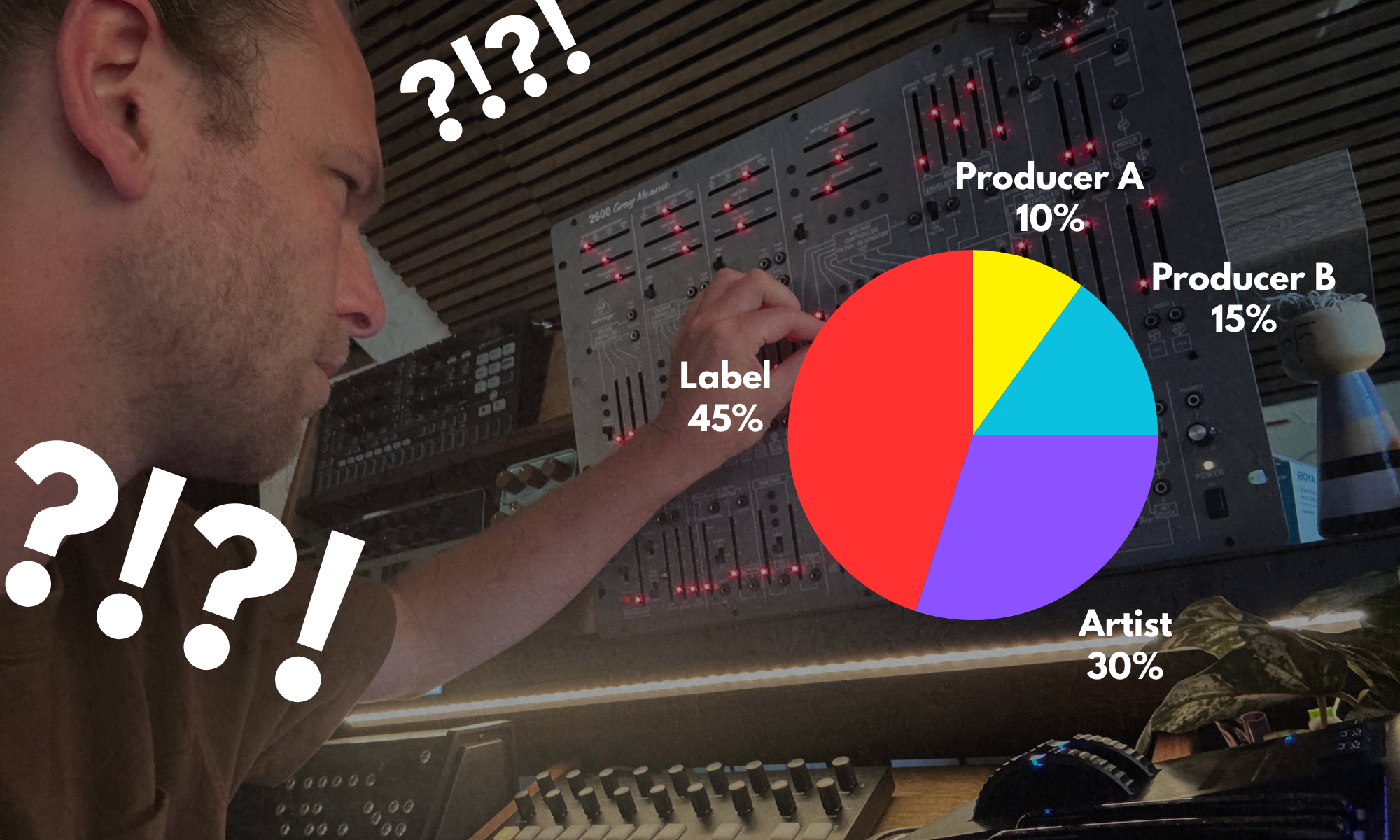
Producer points are percentage points of royalties paid out to music producers. These points represent a significant share of the revenue generated by the sales and streams of a song or album, or at least sho the potential to do so, as long as their contracts are negotiated properly (I’ll share some of my own wisdom on this later in the article).
We’ll dive deep into all of this throughout the article because understanding producer points is crucial for how music producers and artists like us get paid. Different niches and genres in the industry have their own standards regarding producer points, so I’ll do my best to be as genre-agnostic as possible so the widest breadth of you can take away as much high-value information as possible.
Oh, and if you’re still hungry for more, I’ll share some insider tips, tricks, and advice I’ve learned from working in music production and the industry for the better part of the last decade. So, let’s dive in.
WHAT ARE MUSIC PRODUCER POINTS?
I touched upon this in the introduction, but it deserves its own dedicated section. After all, this article is about producer points, so let’s take a second to unpack the concept further.
The true definition of a producer point is a percentage point or royalty payout given to producers as a share of the revenue from a song or album. One point equals one percentage point of income from the sale, stream, or other song revenue.
For example, if an artist or producer has two points on a track, they receive two percentage points of the royalty. They take half of the track’s revenue if they have fifty points (a common split in dance music but overly generous in the world of pop or hip-hop). It’s important to note that these splits and producer points can vary widely and are often based on negotiations between the artists, producers, record labels, and everyone involved. Newer producers might only get a couple of percentage points, perhaps one or two, maybe up to five. In contrast, more established producers, like Scott Storch or Southside, might command much higher percentage points.
But even that is not always the case as A-Tier producers are working on records that often bring in hundreds of thousands of dollars so three points of that pie is still a chunk of change, whereas a two-point cut of a record that even does only mildly well from a newer producer might equate to just a few dollars. As you can see, it all varies wildly and I’ll be mentioning this time and time again as we go further into the topic.
If you’re curious to hear how real working producers talk, negotiate, and reflect on their experiences with producer points and royalty payouts, I highly recommend the podcast Producer Grind. It’s more focused on the hip-hop side of things but is packed with invaluable information, regardless. The artists featured often share rags-to-riches stories and discuss producer points extensively through their own firsthand knowledge. They talk about negotiating higher points, mistakes they’ve made by not pushing for bigger payouts, and everything in between.
Here’s one of my favorite episodes with Sonny Digital.
This might seem like pennies on the dollar, and it is when you’re dealing with smaller tracks, smaller payouts, and less successful records. However, as you climb up the music industry ladder, these payouts can become very lucrative. For example, if a track generates $100,000 in revenue and you have two points, that’s $2,000. That’s a substantial chuck of cash, especially if you’re a newer artist who is still at the “starving artist” stage of your career.
Value for Music Producers

Producer points create a framework and structure that’s very valuable for music producers. They give you a basis to talk, negotiate, and manage your career around. There’s a ton of value in points for music producers, and let’s highlight some of the main ones.
A Push For Quality
Producer points and royalty payouts are among the best incentives for quality a producer can have. The better the record they make, the better the record they are involved in, and the higher the quality of the music, the more potential for a hit. This incentivizes producers to work hard and be involved in the track’s commercial success. Points can be a fantastic motivational tool, especially in pop and hip-hop, where producers often create beats and even entire tracks.
This incentive for quality over quantity is crucial not only to push the careers of individual producers forward but also to advance the sounds and styles of their respective genres.
Long-Term Revenue
Producer points offer significant potential for long-term revenue from the song.
You get paid a percentage of all the royalties from the song from its release until the end of time (or as long as the contract specifies, but let’s cross that bridge when we get there). Producer points in specific songs that an artist-producer works on help build the foundation for a sustainable career, song by song.
Because working producers often work on many songs, producing or being involved in dozens, if not hundreds, of songs over their careers. While one song might not be enough to pay rent for a month, having five massively successful records coupled with hundreds of less successful ones can create a sustainable income stream enough to support a family and more.
This approach can be more predictable than just receiving a one-time payout for a beat or license for a single song or instrumental.
Lower* Risk Bargaining Chip
I listen to a ton of music industry podcasts, much like the Producer Grind podcast mentioned above, and these A-list, top-level producers and artists frequently talk about the importance of points and the value and financial incentive they see in points, often more so than just upfront payouts. If these A-list artists believe in the music, they’ll often take a generous amount of points instead of upfront fees. This allows smaller producers to get bigger artists featured as collaborators or partner producers on records without needing the upfront capital that these expensive features often require.
It’s a lower-risk bargaining chip that can help you get more prominent producers to work on your projects and collaborate on tracks. Of course, finding these artists, networking with them, and presenting them with opportunities in the first place is the hardest part. However, know that having points at your disposal and offering them to A-list producers or those further along in their careers can be just as incentivizing as upfront cash payouts without the same back-end deals.
So, it’s something to keep in mind!
It’s Standardized
I’ve worked in the music industry long enough to know that 90% of everything that goes on is smoke and mirrors, carrots being dangled on sticks, etc. But at least producer points are kind of a standard measurement that, once you understand what they are, hopefully by the end of this article, you will be able to at least discuss and communicate about effectively.
Obviously, you want to be reading the fine print and the red tape and everything on the contracts you sign and with the artists you work with, but at least they’re a standard unit of measurement that everyone is on the same page about.
Invaluable Lessons I’ve Learned

As a producer, label manager/director, and having had many mentors throughout my career, I’ve dealt with splits and royalty payouts extensively and I’m going to distill all of the most valuable lessons that I’ve learned, both by direct hand knowledge and also with discussions with my mentors into this short list here.
Some of it will nudge on the legalities behind things, and it’s important to know that I am not a lawyer. I’ve just worked directly with some of this stuff, so I’m sharing personal experience of how I’ve done it and navigated through it, but it is far from legal advice (I just wanted to cover my bases).
Get It In Writing
Making music is one of the best, and most fun things producers like us can do. It can be super exciting to get in the studio, work with different producers, swap ideas, and create some of the best beats of our lives. But when money starts to get involved, it’s crucial to get things in writing as early as possible. Labels and producers often promise the world, whether through the best intentions or just being caught up in the moment. But when money gets involved, things can often get dicey; even if you are working with producers, friends, and labels, you are close with.
It’s best to be as communicative as possible, get things in writing, and clearly discuss who is involved in the record. Once money starts flowing and payouts increase, having a track record in writing can help avoid the pitfalls of handshake deals that people might forget when it’s most inconvenient for you.
Get it in writing, even if they’re your friends, and all your relationships will be better for it.
…Then Read The Fine Print!
Remember all that jargon I mentioned in the introduction of this article? Well, the contracting is where the rubber of this industry jargon really meets the road. Oftentimes, contracts can be legally dense and convoluted, especially if you’re not a music industry or entertainment lawyer. So, it’s crucial to read the fine print, see exactly how the money is being distributed, what the label is responsible for, what you’re responsible for, what deliverables they have, and most importantly, the time schedules.
When and how you get paid is as important as how much you’re getting paid. Are you paid yearly, quarterly, monthly, or bi-weekly? Do you have to hit some royalty payout thresholds before they’re obligated to pay you? All these details can be hidden in the fine print, the red tape, and the italicized clauses in a contract. It’s essential to understand what’s going on before you sign anything, as it can be the difference between having the legality of it all come back to bite you versus have contracts working in your favor and ensure you paid your worth as an artist.
At the end of the day, it’s just good to be on the same page with everyone involved.
Points As Investments
A piece of advice a mentor gave me many years ago is to think of points as an investment in artists/communties. Don’t rely as heavily on upfront cash payouts, buyouts, or beat licenses when making songs in the early stages of your career as a producer. Often, these artists, who may be at a similar stage in their own career, are just as strapped for cash as the cash-hungry producers looking to make their first bag. While a few hundred bucks or a couple of thousand dollars for a beat sale might seem like a lot, doing point payouts and back-end deals without the quick dough instead of demanding upfront fees can be a gesture of goodwill and a valuable investment if the artists you’re making beats for end up blowing up.
It’s a great way to set yourself apart from other producers and beatmakers looking to make a quick buck by selling beats and licensing them for a few hundred dollars. This approach can get you involved in bigger projects, especially artists you believe have the potential to explode.
I mentioned above that I’m not a lawyer; well surprise, I’m also not a financial advisor, and I know everyone’s money situation can be different. Even my situation has varied case-by-case as I’ve worked through my career. What will likely happen is that you’ll have a mix of both—some deals that are more point-based and some that involve more upfront payments. It’s up to you to balance immediate payments versus long-term investments to get the most value out of your work, all the while building long-term relationships and juggline cash flow in the moment.
Remember, points are a bargaining chip and a negotiating lever that goes beyond just the raw financial incentive.
Contracts Are Negotiable
The music industry has a meta that evolves over time when it comes to industry norms, assumed payouts, structures, and different types of deals. This constant change happens for a reason: producers, artists, and labels are always negotiating to figure out what works best for them at the moment. So, it’s very important to do your research beforehand and understand the norms of any given day, month, year, or era. Use that as a starting point to negotiate contracts.
The last thing you want to do is either accept a contract that isn’t fair and gives you the short end of the stick, or come in so hot with redline retractions and adjustments that you appear naive, as has happened to me before in the earlier stages of my career. Knowing where the goalposts are by doing your research will help you understand how much you can negotiate.
This is a perfect segue to my last piece of advice.
Know Your Worth
With music production being as democratized and accessible as it is today, it can be easy for producers and beatmakers to be so hungry for an opportunity that they race to the bottom and charge very little for their work. It’s crucial to know what you’re worth, understand what you contribute to a song, record, or album, and negotiate payout fees and deals that reflect your time and skill level. This will change throughout your career and on individual projects, as I mentioned above, whether it be for direct payouts or back-end deals.
It’s also easy to listen to podcasts like The Producer Grind and hear artists like Sonny Digital or Southside talking about negotiating two or three-point deals and think you should be asking for the same. Remember that they’re getting two or three percent of a much larger pie, most likely. For them, two or three percent might mean thousands to tens of thousands of dollars for hit records. In contrast, two or three percentage points of an album you produced, spending months or years of your life on, especially for a newer artist who isn’t going to have the same level of commercial success, doesn’t equate to the same thing.
Know what you’re bringing and be realistic about the financial benefits and risks. Invest your time and craft in artists you see potential in, but don’t devalue your work by giving out music for free or for tiny payouts. Chasing down invoices for minimal amounts, like 15 cents, is demoralizing and not worth the effort.
Wrapping It All Up
Learning about producer points and negotiating them with record labels, artists, and other producers is one of those things that’s basic to understand but hard to master. It’s not too dissimilar from playing chess against the wider music industry. However, it’s an invaluable skill set and knowledge base to acquire, and once learned can be a bargaining chip builds a sustainable life for you as an artist, music producer, and more.
Hopefully, you’ve not only learned what producer points are but also taken away some valuable lessons from the mistakes I have made while working as a producer in the music industry. Additionally, I hope you’ve gained insights from the best wisdom I’ve learned from running record labels and being close friends with other well-established music producers. These lessons have been imparted to me through mentorship and close friendships.

Will Vance is a professional music producer who has been involved in the industry for the better part of a decade and has been the managing editor at Magnetic Magazine since mid-2022. In that time period, he has published thousands of articles on music production, industry think pieces and educational articles about the music industry. Over the last decade as a professional music producer, Will Vance has also ran multiple successful and highly respected record labels in the industry, including Where The Heart Is Records as well as having launched a new label with a focus on community through Magnetic Magazine. When not running these labels or producing his own music, Vance is likely writing for other top industry sites like Waves or the Hyperbits Masterclass or working on his upcoming book on mindfulness in music production. On the rare chance he's not thinking about music production, he's probably running a game of Dungeons and Dragons with his friends which he has been the dungeon master for for many years.













![Baby Audio HyperWarp Review: Why Less [Processing] Is More](https://magneticmag.com/wp-content/uploads/2026/10/Untitled-Design-88-1024x683.png)