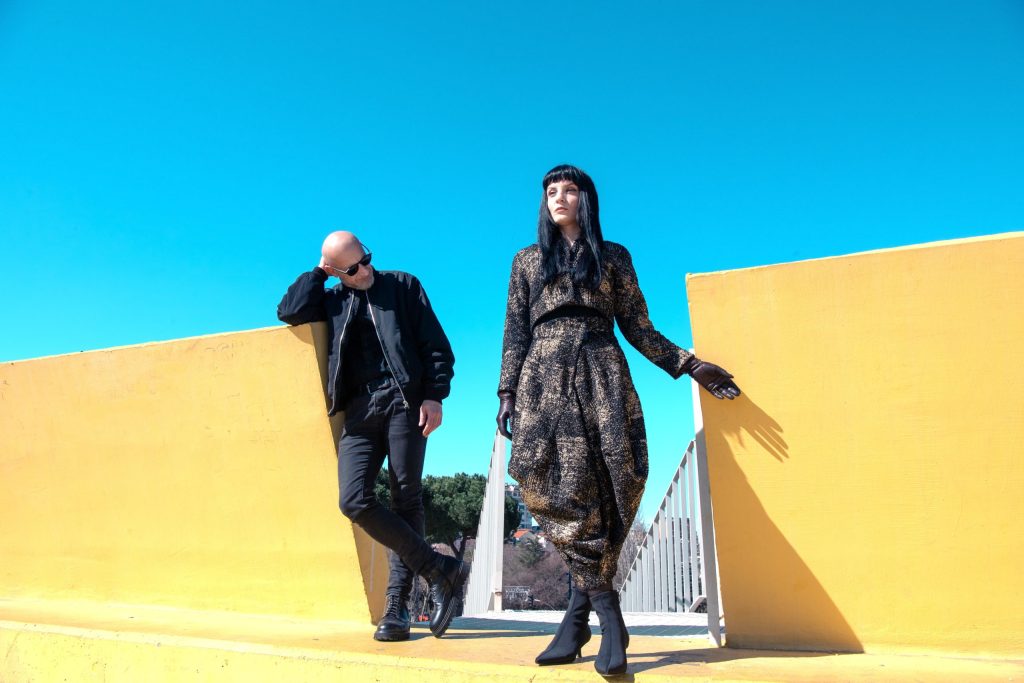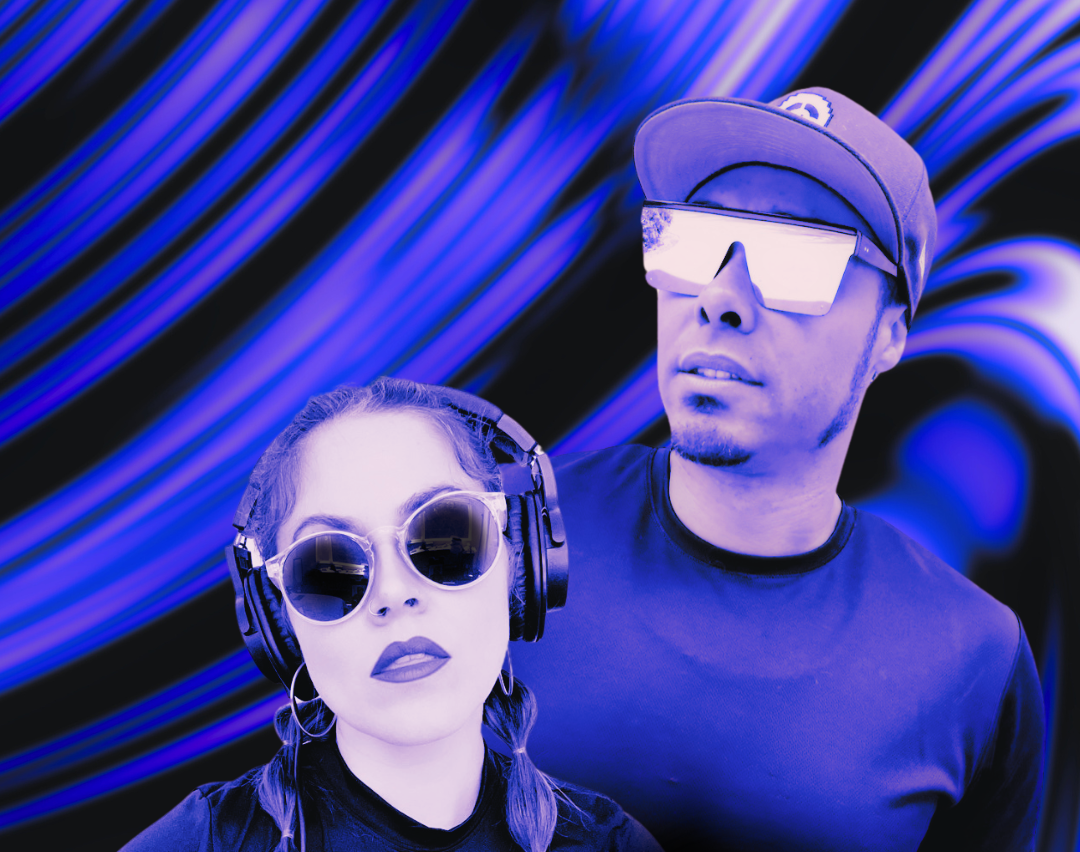
A powerful duo, Blak Likorish have been working to craft a unique signature style, blending their varied influences to create music distinct in sound and live DJing sets that are consistently captivating in energy. As they marry elements from genres like Midtempo Bass, Bass House, and Dubstep, Blak Likorish put forward their impressive skillset and talents, offering thrilling sonic experiences to listeners time and time again. So, we’re looking forward to sitting down with the duo for this exclusive interview to learn more about the processes behind their music, talking through their favourite plugins, techniques, and equipment as we discuss their approach towards their music.
Hi Blak Likorish! How are you doing today?
We are excellent! Just finished a session in the studio and we have some shows coming up that we’re prepping for and we’re just so excited about all of it.
What started your collaborative pursuit towards a career towards Electronic Music?
We connected through our mutual passion for music and shared tastes. We both had been in the rave scene for years. In 2017 we got married at Bass Coast and then celebrated our honeymoon at Shambhala. This was when we officially decided that this was how we wanted to spend our lives together. We wanted to be a part of this community forever and we wanted to give back to the culture that had given us so much. Since we have both been enamored with music, it was kind of a no-brainer in a lot of ways to start an Electronic Music Duo. It was simply a natural progression of our own personal evolution and interests together. We were living on Salt Spring Island at the time and had to take a three-hour ferry ride home. It was on that ferry ride that we wrote out our plan for how we were going to pursue a career in music as DJs and Producers.
How did you arrive at producing in the genres of Mid-tempo Bass, Bass House and Dubstep?
As DJs, our job is to keep people dancing. As artists, we want to present intensity, uniqueness and character for the audience to vibe with. For us, these three styles perfectly exhibit that combination.
Mid-tempo is that perfect, sexy, walking speed, where people can dance super hard and lean into their bodies without having to move crazy fast. The Mid-tempo speed and groove just allow that freedom of self-expression.
Bass House has those hard, heavy elements that we love but it gets the audience moving faster. It’s a little less serious, a little more fun and universally enjoyed by so much of the community.
Dubstep allows us to indulge in our truly heavy side! Watching the audience head-bang and stomp their feet crazy hard is so satisfying for us as entertainers. Plus, the breakdowns in Dubstep, which we pair with ethereal vocals, whisks people away to space before we drop the bass hard on them again.
These three, essentially four-on-the-floor, styles embody the grit, intensity, beauty and danceability that we love to experience on the dance floor. And the styles just flow so well together over the course of a DJ set.
How did you both learn to produce music?
We were mainly self-taught for a few years. We bought some online courses which gave us some basic skills, but it wasn’t until the pandemic when we began mentoring with Stickybuds that our skills skyrocketed. Having a proper teacher, someone who embodies skill, patience and honesty, made so much difference to our progress. He helped us to break down, customize and refine our creative and technical process, which allowed us to zero in on our sound and style.
Music production, like every art form, is an ever-evolving set of skills though. So as producers, we are always learning new techniques and new skills to further refine and enhance our music.
Which DAW is your favourite and why?
Ableton Live has been our DAW since the beginning. Honestly, we just compared the various interfaces of each of the major DAWs out there. This was years ago when we first started. For us, Ableton Live seemed to have the sleekest, least complicated interface with great functionality. It just felt like the most practical option for us. And we’ve never looked back.
Which plugins, VSTs and effects are your go-to?
We mainly use Serum, Ableton’s Operator, the full suite of Fabfilter VST devices, Celemony’s Melodyne, iZotope’s Ozone, Oeksound’s Soothe2, Nicky Romero’s Kickstart, CamelCrusher, Voxengo’s SPAN and MSED and Scaler 2. We also use an Arturia KeyLab 49 MIDI controller and that has its own suite of built-in instruments that we utilize.
Where do you both draw inspiration to produce your tracks? How do you find ways to spark your creativity?
Sometimes it starts with just a sound we like, which becomes a loop before we flesh it out into a full track.
Other times it’s a chord progression from another song or sample pack from an entirely different genre that inspires a melody or bass line.
Sometimes we just think, how do we want the crowd to feel when they hear this track? Do we want them to bang their heads? Do we want them to feel sexy and free? Do we want them to just stomp? Do we want them to have an ecstatic rave moment? Then we just follow our instincts.
No matter how we begin writing a song, we always remember to include narrative elements, the story of the song, to allow the audience to connect in a personal way to the track. Sparking that creativity, we find, comes from just consistently spending time in the studio, learning new techniques or augmenting our approach to how we use old instruments or devices or patches.
We also have a love for sci-fi, alien technology, paranormal phenomena, the afterlife and humanity’s connection to the fabric of the universe. We have had so many discussions at 5 am after the party, where, amidst the jokes and deep connective conversations, we’re just tripping out and going off on all these pseudo-scientific/philosophical topics. Those conversations have played a huge role in inspiring ideas for tracks and the stories they tell.
Could you shine a light on your approach to creating a well-crafted song?
I think that an essential part of creating any ‘well-crafted’ piece of art is allowing that pure, wild, creative freedom to spill out in an uncontrolled way, and then later tempering and controlling it within a pleasing overall structure. We use that structure to guide the presentation of that creativity in an inevitable yet surprising way. Throughout the writing process, we’ll often circle back to the theme or idea of the track, whether it’s expressed in poetry, vocals, or samples, and make sure that the overall idea and message of the track are consistent with the instrumentation and arrangement.
What is your process like when it comes to starting a new production?
After the initial inspiration (loop, sound effect, chord progression, narrative idea, lyric) is adapted, we start by utilizing a series of templates we’ve created to begin crafting a tune. Obviously, the shape of those templates changes and develops significantly as the song is being produced, but it helps us with the timing of the track as well as giving us a framework with which to build and release tension.
From there we build an evolving series of drum progressions. We like to get the drums dialed in early, making them super solid, to the point where you almost don’t need the rest of the song to enjoy it. It is dance music after all, and the drums are the backbone of every song we create.
We do sound design in separate, dedicated studio sessions, where we just focus on making patches. There’s no structuring or arranging or composing. We just make sounds that we think sound cool or that represent us. It’s actually one of the most enjoyable parts of the process because it’s pure creative freedom.
Depending on the type of track, we’ll move into finding/recording vocals or finding samples that really characterize the track.
After that, it comes down to arrangement. This is where the style of the track is really set, and we finalize the overall idea that the song is presenting.
Which music equipment do you use most often in your tracks?
We typically only use our Arturia KeyLab 49 MIDI controller.
Could you share more about your studio setup? Do you have a studio that you use or have you built your own at home?
We built our own studio at home. We currently use a Behringer U-phoria UMC 404HD Audio Interface, JBL MkII 3 Series Studio Monitors, JBL LSR 310S Studio Subwoofer, and AKG 702 Open Back Headphones. Our production computer is a Mac mini (M1, 2020) with dual Samsung monitors. We’ve also built a vocal booth where we use a ZINGYOU BM-800 Condenser Microphone.
What are some pieces of advice you would give to a starting producer starting their music journey?
Keep doing it!
Take time every day to learn new things and try them out in your productions. Over and over. A lot of things you learn won’t work or sound good, but those skills and techniques will inevitably carry over to other productions down the line.
Listen to weird, different or unusual kinds of songs in wildly different genres. They will present unique ideas that will inform and expand your chosen style.
As they continue on their musical journey, Blak Likorish no doubt remain a talent to keep an eye on; motivated, committed, and passionate, the duo continue to drive their creativity to exciting heights, exploring new sonic territories as they propel themselves to fresh ground within the genre. So, be sure to keep them on your radar by following Blak Likorish across social media.
Blak Likorish Online