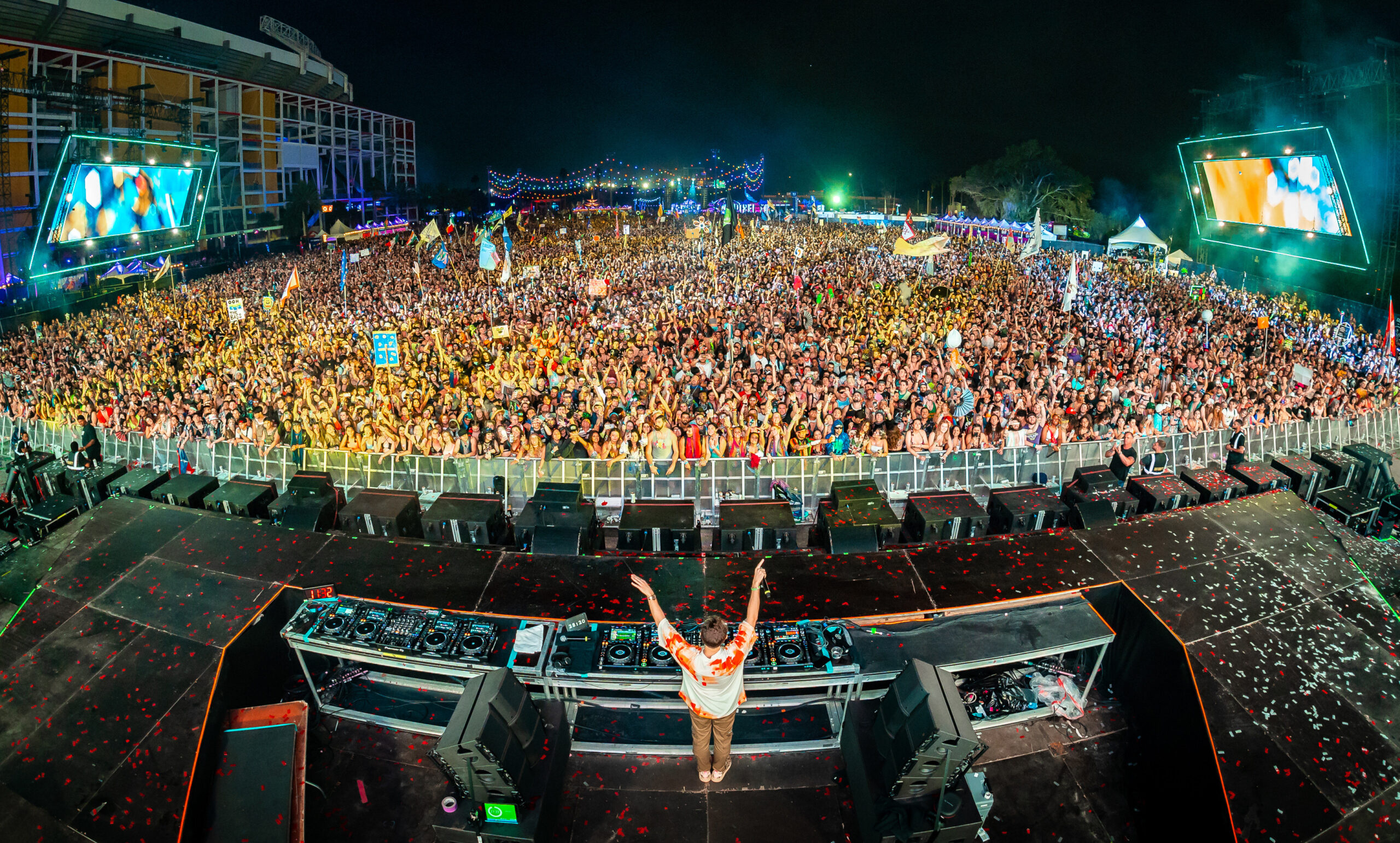
In their early days, DJs were celebrated for the challenging task of blending two records seamlessly and facilitating the vibe of a dancefloor or space from the start of the night, often until the wee hours of the morning. Now, technological advancements simplify these aspects, empowering DJs to focus more on creative expression, which mirrors the spectacle-driven showmanship of DJs and the more condensed narratives of their sets that are common in today’s club culture. And while technology has revolutionized the tools available, the primary goal of DJing remains the same—to engage and transport audiences through a musical journey.
As the landscape changes, Pioneer DJ is a brand whose commitment to respecting the craft’s history while driving forward with innovation remains steadfast, mirroring the enduring spirit of DJing itself. Lars Schlichting, Director of Product Planning and Artist Relations at Pioneer DJ, is on the frontline of this change, and, in a recent exclusive interview with us, shared professional insights and unique perspectives on how the craft, artistry, and industry have collided to push DJing into tomorrow.
Interested in spontaneous DJing? Learn from ‘How to DJ Spontaneously: Spencer Brown Shares Tips on Reading a Room, Learning Your Music, and Performing Entirely in the Moment’ – hone your skills here.

What is the biggest difference between DJing in its naissance (Birth/beginning) and where it is today?
At the beginning, simply mixing two records seamlessly was a challenge, whereas today, all sorts of tools are available that make that much easier. This frees the artist up to be creative in new ways by playing multiple tracks, creating loops, adding FX, adding samples, and so forth.
The responsibility of the DJ, which is to entertain an audience, tell a story, and transport them to a new place, has not changed. Great technology does not make a great DJ, it can only aid. One thing to add is that DJs tend to be more genre-specific, whereas at the beginning, DJ sets were more cross-genre.
How has the transition from vinyl to digital DJing affected the industry and Pioneer DJ’s approach to product development?
Massively.
For one, the amount of tracks available to the DJ has gone from roughly 100 (the size of a record crate) to thousands. Now that streaming has come into the picture, you can access almost every song. That is fantastic, but it also presents new challenges, as the DJ is a curator and finding a few gems in a sea of 100s of new promos is not easy.
For another, as alluded to above, digital technology has made the technical part of DJing easier because you have access to a beatgrid and Cue Points for example, which allows the DJ to experiment with samplers and FX units and even add instruments to their performance.
We have always been about digital DJing.
Our very first product, in 1994, was a tabletop CD-player with Instant Start. We didn’t start making analog turntables until Technics stopped making the 1200, but even then, most customers bought those for their DVS (Digital Vinyl Solution). The CDJ-1000, released in 2001, had a large jog that allowed you to scratch the music and by 2004, most DJ’s had moved away from vinyl. In 2009 we released the CDJ-2000, which allowed you to playback from a USB-stick/SD-card, which is the medium of choice for House/Techno DJ’s, whereas Open Format DJ’s tend to use Performance Software.
We recently released the world’s first hybrid turntable, PLX-CRSS12, that allows you to play back vinyl as well as manipulate performance software, so things have come full circle. We aim always to provide the DJ with multiple solutions with our products so they are not boxed into one way of doing things. While we are primarily known as the brand of choice of top DJ’s, today, we provide solutions for everyone: beginners, Mobile DJ’s, Open Format DJ’s, House/Techno DJ’s, you name it…
Curious about festival prep for DJs? Dive into ‘How DJs Prepare for Festivals: Four Acts Share How They Get Ready for the Same Gig’ – get the insider perspective here.
How do you think streaming and other forms of performing in online spaces will affect the live qualities and spontaneity of DJing and an ability to “read the room”
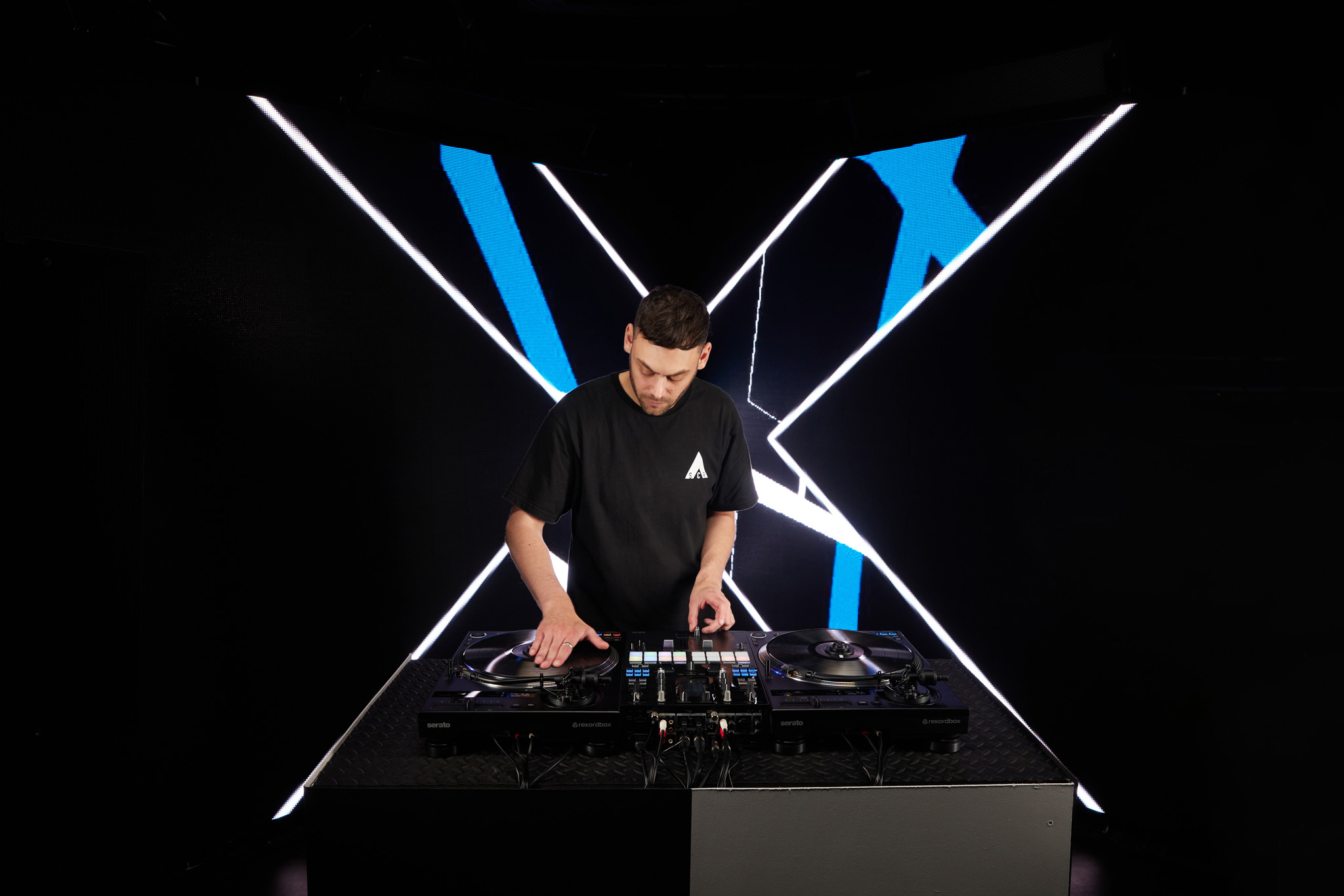
Streaming is great if you play multiple genres or are a DJ that takes requests, but most DJ’s will prefer to play back a song that they have beat-gridded and created Cue Points for.
If you perform online, you can’t see your audience’s faces, but on a platform like Twitch, you can get some sense because they can leave comments or cheer. But there is nothing like a live audience to inspire a DJ.
Intrigued by how introverts excel in DJing? Read ‘An Introvert’s Guide to DJing: Advice on Stage Presence for the Shy Selector’ – gain unique insights here.
How has the evolution of DJing shaped the way Pioneer DJ approaches its product development and user experience?
Our Artist Relations team is in daily contact with DJ’s, providing support and receiving complaints and suggestions for improvement. This information gets fed to our Product Planners, so when it’s time to begin the development of a new product, we already have a pretty good sense of how DJing has changed in the past few years. We then go through a market research phase where we reach out to users, and we continue to have DJ’s involved in every step of the process.
This takes time, but we end up with products that address the DJ’s needs, are versatile, and stand the test of time.
How do you think AI will affect the world of DJing, and does it worry you as much as AI worries the production community?
While I find AI worrisome in a general way, it does not worry me when it comes to DJing. We are already seeing AI used to help DJs find music, and more tools will emerge. Technology and change are constants in DJing and change has consistently yielded creativity.
Discover ‘How DJs Make Money Online: Strategies for Sustainable Income’ – a concise guide on monetizing DJ skills digitally. Learn innovative online income strategies here.
Looking ahead, what is Pioneer DJ’s vision for the future of DJing, and how does the company plan to continue innovating within the industry?
Our challenge is achieving a balance between respect for history and pedigree with a determination to innovate and improve. That extends beyond technology to culture, community and music as well. The one constant is listening – we need to continue listening to the audiences, listening to the mobile DJs, the club DJs, and the enthusiast DJs — because inspiration and innovation will come from listening. We also need to continue listening to music — every genre, every type — because music is at our core as humans, as a community, and as an organization!
If we can achieve all of that, then AlphaTheta will be successful.

Will Vance is a professional music producer who has been involved in the industry for the better part of a decade and has been the managing editor at Magnetic Magazine since mid-2022. In that time period, he has published thousands of articles on music production, industry think pieces and educational articles about the music industry. Over the last decade as a professional music producer, Will Vance has also ran multiple successful and highly respected record labels in the industry, including Where The Heart Is Records as well as having launched a new label with a focus on community through Magnetic Magazine. When not running these labels or producing his own music, Vance is likely writing for other top industry sites like Waves or the Hyperbits Masterclass or working on his upcoming book on mindfulness in music production. On the rare chance he's not thinking about music production, he's probably running a game of Dungeons and Dragons with his friends which he has been the dungeon master for for many years.