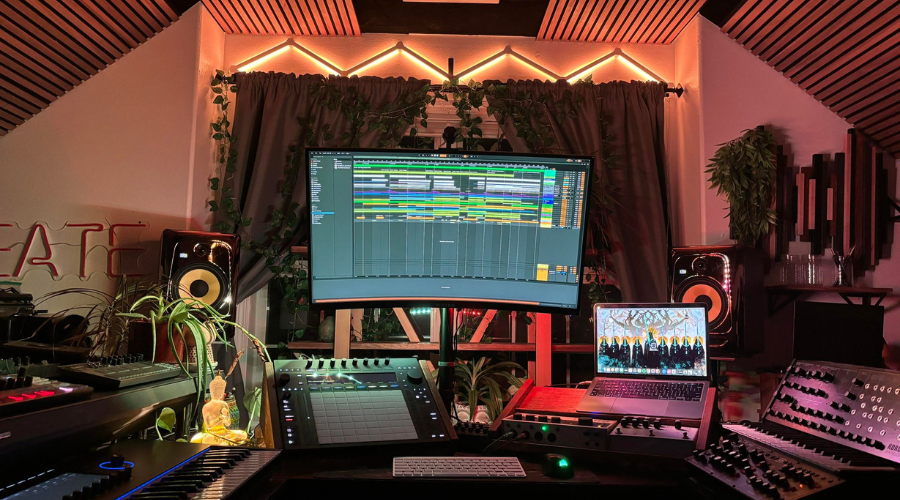
When the studio is your creative sanctuary, the ambiance is everything. Enter the Nanoleaf 4D Kit, a revolutionary lighting ensemble that synchronizes with your screen to flood your production space with colors that dance to the beat of your visuals. As a music producer, you’re no stranger to the power of a well-crafted environment, and the Nanoleaf 4D Kit promises to amplify the mood without demanding center stage, allowing you to focus on what matters most — your music.
Picture this: you’re knee-deep in the mix, and with every note that resonates through the monitors, the walls around you come alive with colors that follow the rhythm. This is not just lighting — it’s an experience meticulously designed to enhance the flow and feel of your music-making process. The Nanoleaf 4D Kit doesn’t complicate your setup; it complements it, offering an intuitive, subtle backdrop that shifts with the dynamics of your project.
But Nanoleaf certainly has received its fair share of “feedback” from the community, making many skeptical about whether it warrants its often-high price point. So, let’s dive into the technical aspects of the 4D Kit, what I liked most about it, and a couple of factors I would have liked to have seen in this deep-dive review.
Learn More On Nanoleaf’s Website Here
What Is The Nanoleaf 4D Kit?

The Nanoleaf 4D screen mirror camera kit offers an immersive experience that extends vibrant visuals beyond the TV or monitor, synchronizing screen colors with an LED light strip mounted on the back. Its dynamic color-changing capability supports over 16 million colors, which can be customized for various moods or activities. The light strip, adjustable and trimmable to fit different screen sizes, features 10 color zones per meter, ensuring a high-resolution gradient and precise mirroring effects. With simple setup procedures and versatile camera positioning, the system is user-friendly, supporting various mounting configurations and incorporating a privacy cover for the camera when not in use.
The product enhances the viewing experience with four mirror modes, ranging from ambient to direct ‘4D’ mirroring, for varying levels of engagement. Sync+ Technology enables the expansion of the 4D effect across multiple Nanoleaf RGB devices, offering a coordinated visual experience throughout the space. In addition to the visual effects, the Rhythm Music Visualizer syncs lighting with music for a complete sensory display. The Nanoleaf 4D kit is controllable via app, voice, or manual controls and is compatible with both TVs and monitors, making it a versatile addition to any entertainment setup.
Understanding the technical aspects, the kit comprises a camera, a light strip, and a controller box, which work together without a direct connection to the TV, ensuring easy installation and universal compatibility. The camera’s function is to capture onscreen colors and project them through the light strip for an augmented visual experience. Despite the system’s reliance on 2.4GHz Wi-Fi and not being compatible with 5G services, it ensures broad usability and accessibility. The product is set to release around mid-August, with anticipation building for this innovative approach to enhanced screen viewing.
What I Liked Most About The Nanoleaf 4D Kit
It’s Easy To Set Up
As a full-time writer, father, and music producer all at once, I’ve come to prioritize ease of setup in almost all things that I introduce to my creative space. But often, with lights, it’s an uphill battle to find outlets for them (already hard enough to come by when I have computers, synths, keyboards, and other things vying for juice). I hesitated to bust these lights out of their packaging before I knew I had enough time to commit to the long game of electric Tetris that comes with such endeavors.
But I was pleasantly surprised to find that everything I needed was included in the box, and the small profile made slotting everything that needed a total breeze. All in, I spent about 30 minutes setting up these lights, which included finding a more powerful adhesive (an issue I will address here shortly).
They Look Pretty Cool
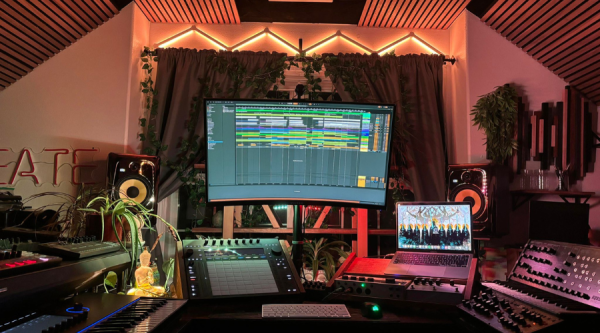
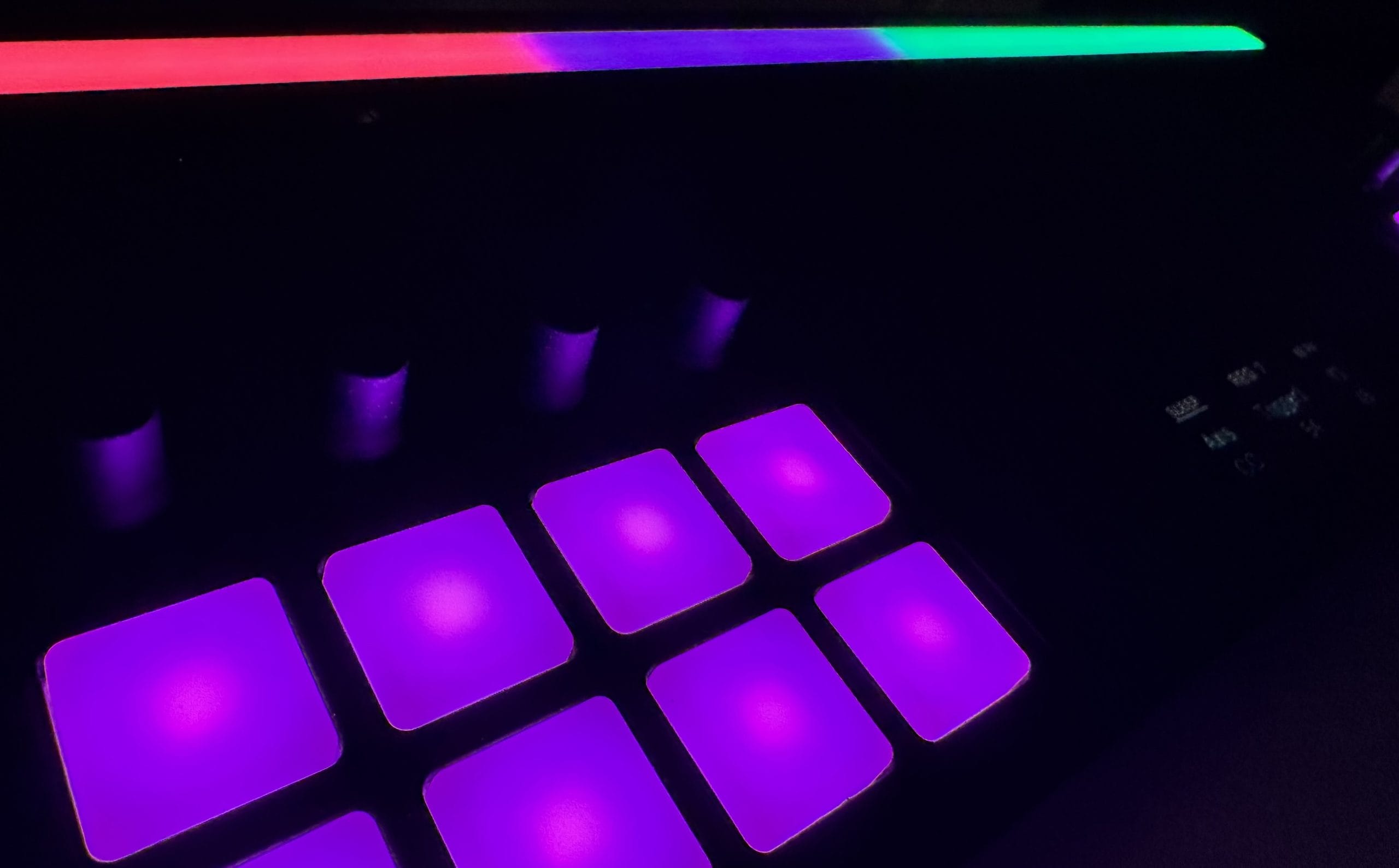
This is the most important factor, right? When I turned the overhead lights of the studio down and turned on the lights from the 4D kit, they added the exact level of WOW factor that they advertised.
When used during music-making, the lights aren’t that dynamic and stay as stagnant as Ableton’s display screen. But when the work was done for the night and it was time to switch over to gaming, I was pretty damn impressed by how much the shifting lights added to my evening gaming sessions. Even though I sit close to the screen, the backlighting that the 4D kits added created an even more immersive sense of depth and scale that took the game beyond the confines of my screen.
They’re Subtle
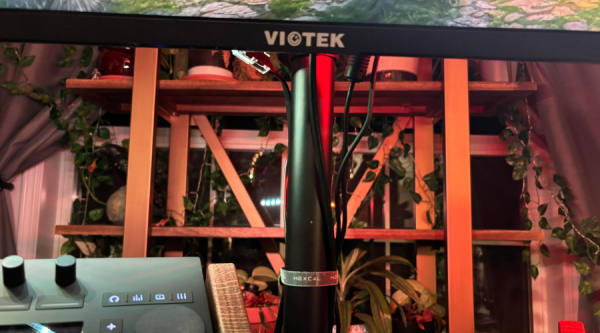
Part of why I was so hesitant to unbox these things, as I had mentioned before, is the amount of cords and wires that wound up in the box. I thought it would be a veritable rat’s nest of electric wiring that I had to further finesse and manage in the studio. But when all was said and done, and the lights were set up in the studio, they managed to be completely tucked away from view, most of which was hidden behind the display with the rest tucked in and around the rest of the gear in my studio.
Overall, they have a subtle and discrete profile that slotted easily into my creative space, adding nothing more intrusive than a great vibe that could be toggled off and on at the click of a button.
What I Wasn’t Crazy About
They Have An App…
I’ve gone on this rant more times than I can count, and I guess it’s just a sign of the time that most of the devices and tools you buy have an accompanying app that goes along with them. These apps take up space on your home screen and, more frustratingly, require you to enter an email and create an account to activate. It’s the new norm, and I’ll be the first to laugh at myself for feeling like an old fart for detecting.
All this being said, the app is not required to get most of the functionality out of these lights. While you need to download the app to get the lights online and working, once they are set up and synced, you can delete the app and use the lights! But there is still that nagging feeling that I’m not getting the most out of the lights simply because I don’t want the app on my phone…
They Could Be Stickier
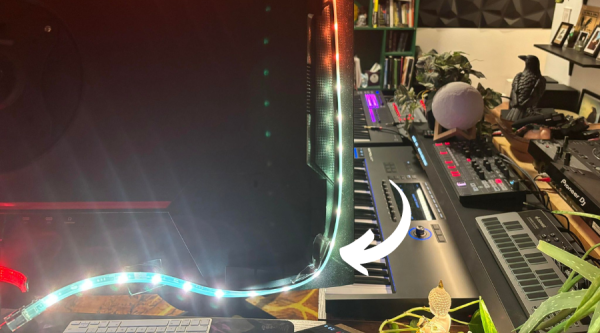
The lights come with adhesive material that helps get the lights to stick onto the back of your monitors or television. And while I’ve always found that Nanoleaf’s adhesive strips are incredibly sticky, the ones that came with these lights didn’t meet my expectations. It’s probably because of the added weight the cords bring alongside on top of the less-than-ideal surface on which they are stuck (I have a curved monitor, meaning the contact struggled to remain flush).
But with a touch of Alien Tape, which I’ve come to absolutely love for a wide range of studio needs, they stuck to the back of my monitor with no further issue, and I haven’t had to think twice about it!
Final Thoughts
In conclusion, the Nanoleaf 4D Kit is a compelling addition to any music producer’s studio, marrying the visual with the auditory for a genuinely immersive creative experience. While it may not be essential for everyone, its ability to sync with on-screen activity and bathe the studio in responsive, dynamic lighting can certainly elevate the mood and potentially inspire the production process. The kit brings depth to the studio environment that static lighting or traditional studio setups can’t match. It offers an easy-to-integrate upgrade that could become as integral to a session as the instruments.
Final thoughts? The Nanoleaf 4D Kit is a testament to the evolution of the music production space, where the environment is an extension of the creative mind. It’s a non-intrusive, adaptable, and visually striking option that complements the modern producer’s workflow. Whether it’s used to deepen the immersion of a late-night mixing session or to add a new layer of sensory feedback while composing, this kit proves that when technology meets creativity, the possibilities are as expansive as the palette of colors it displays.

Will Vance is a professional music producer who has been involved in the industry for the better part of a decade and has been the managing editor at Magnetic Magazine since mid-2022. In that time period, he has published thousands of articles on music production, industry think pieces and educational articles about the music industry. Over the last decade as a professional music producer, Will Vance has also ran multiple successful and highly respected record labels in the industry, including Where The Heart Is Records as well as having launched a new label with a focus on community through Magnetic Magazine. When not running these labels or producing his own music, Vance is likely writing for other top industry sites like Waves or the Hyperbits Masterclass or working on his upcoming book on mindfulness in music production. On the rare chance he's not thinking about music production, he's probably running a game of Dungeons and Dragons with his friends which he has been the dungeon master for for many years.