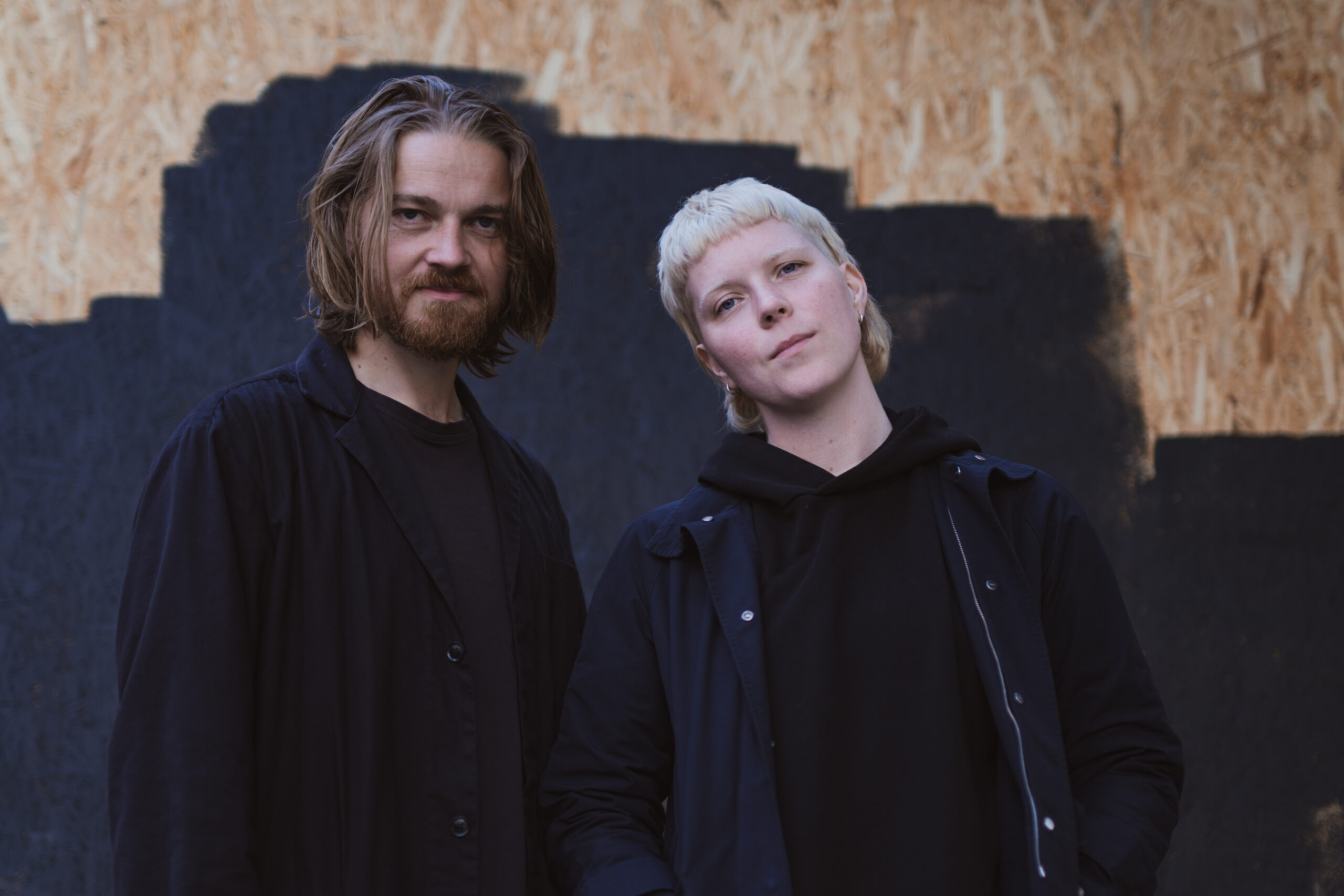
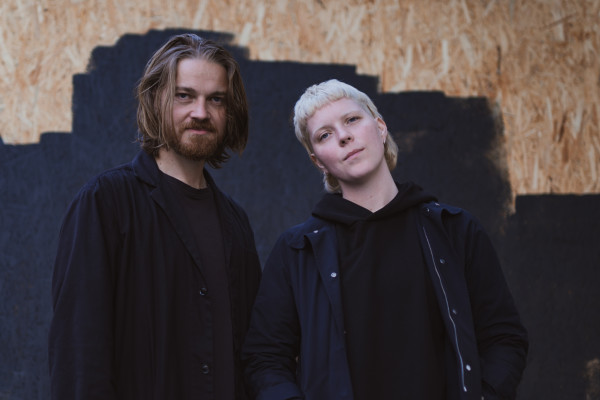
Since their 2013 debut album, ‘Óró’, ORKA has built a creative partnership spanning genres, identities, and the Atlantic Ocean. Band members Jens from the Faroe Islands and Francine from England, initially met in London while immersed in the city’s club culture, a city they both cite as hugely influential on much of their work.
‘All At Once’ sees the duo deliver their danciest record to date. Across 10 tracks, ORKA embraces its knack for meticulously crafted soundscapes and future-facing production, drawing inspiration from the Hardcore Continuum and UK sound system culture, blending it with elements of minimal techno, progressive electro, and ambient music. The collective result is ORKA’s own brand of queer erotic dance-floor mysticism, a shimmering futurist city of the night: collective, inclusive and alluring.
Twice nominated for the Nordic Council Music Prize as ORKA, they also have a string of accolades as individuals – Francine is the musical director for Romy XX, while Jens was named Producer of the Year at the Faroese Music Awards 2022.
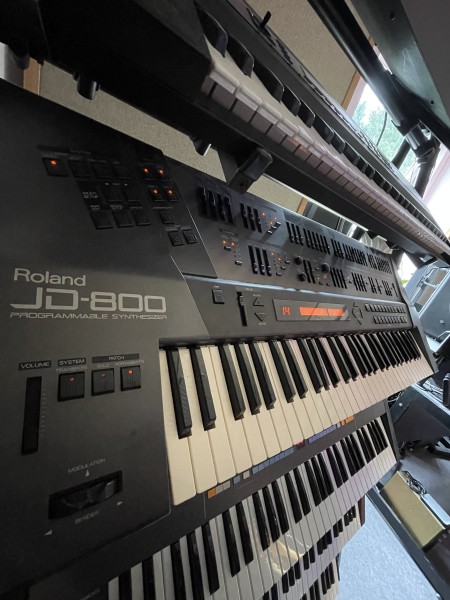
Roland JD-800
We often tend to focus on one piece of kit more than others on our albums. While we used the classic Roland Juno 106 and Sequential Circuits Prophet-5 extensively on our last two albums, we dove deep into the Roland JD-800 for this one. We have a great love for early digital synthesis, the Roland D-50 being a favourite which we explored on ORKA’s Leipzig album. At the time of its release digital synthesisers typically had only limited hands-on control.
The D-50 and Yamaha DX7 being classic examples where the manufacturers had stripped down the controls to the most basic and the synthesisers required heavy menu diving in order to program sounds. The JD-800 changed this by adding a controller for virtually all aspects of the synth. It’s plastered in controllers and sliders which make it very tactile and intuitive and it just looks incredible. The sound is very similar to the D-50 but the layout makes you feel like you’re sitting in front of a piece of alien technology; as if you’re in a 90s sci-fi. It added a light digital sheen to juxtapose the heavy, organic low end of the record. Most notably in Mother and Glory Dust.
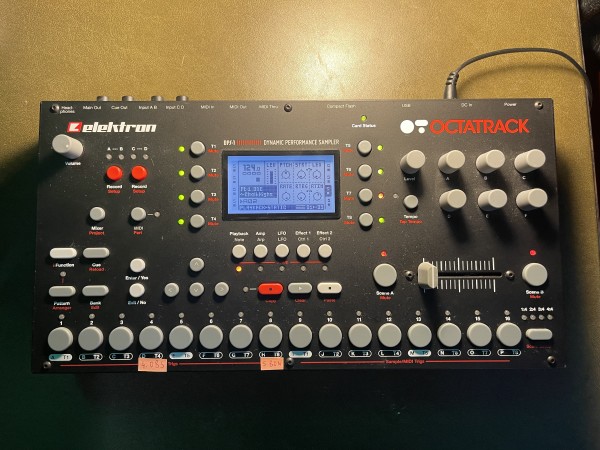
Elektron Octatrack
The Octatrack is a creative workhorse, it’s a sampler that has 8 different tracks you can sequence and do an incredible amount of modulation with. It’s a really great way to start off creative ideas especially when working with samples, bending and stretching them any way you like. We used it to work on lots of the vocal sample ideas in the album, especially in the track Gold. It has quite a steep learning curve at first but once you get to know it, it’s a great tool for working outside of the box and coming up with something totally different than how you would in the computer.
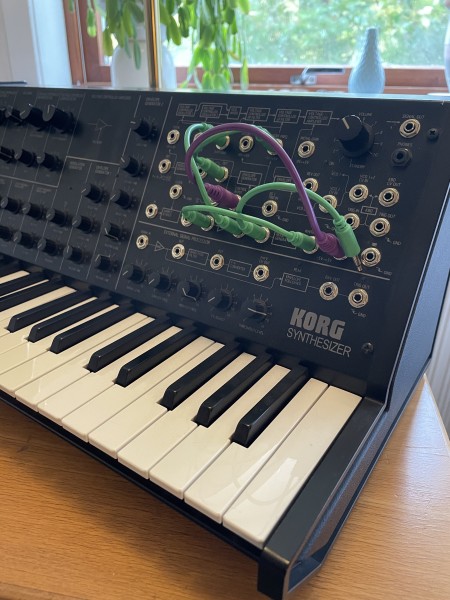
Korg MS-20 mini
Although we’ve known about this classic synth for a while it wasn’t until Jens started touring with Yann Tiersen that we discovered its potential. Yann has an original MS-20 in his studio and soon after we bought the reissue, which Jens now uses on stage with Yann. It’s such an incredibly well-laid-out synth. You can quickly dial up a sound but if you want to dig deeper you can use its patch section to create patches. It is incredibly well laid out and it’s so fast and intuitive to use that you can safely patch and repatch on stage. At the same time, the patch possibilities are virtually endless and you can create complicated patches without getting lost. Sound-wise It’s a very versatile synth, which can be used for most parts of a production, but its stand-out feature is its filter. The way it distorts and screams when driven is unique and we haven’t heard it replicated by any other filter. We used it on Gold and N176.
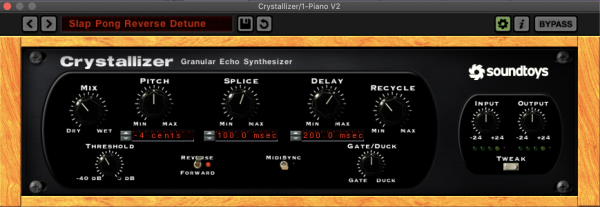
Soundtoys Crystallizer
Every Soundtoys plugin is amazing, but Crystallizer is especially great at making things sound otherworldly. At its core, it’s a delay effect with the option of pitching the delayed signal up and down. It can really add depth and space and also create new melodies. We used it a lot throughout the record, especially in the track Mother. You can hear it in the intro of the track pitching up the main synth line and adding a dreamy harmonic layer.
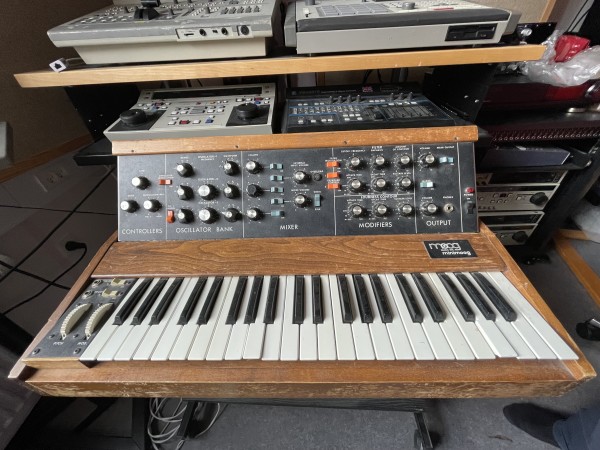
Moog Minimoog Model D
There isn’t much we can add to what has already been said about the Minimoog. It’s a classic for a reason and has been used by all the greats. It has been used on all of ORKA’s albums and it can be used for literally anything. It’s such a versatile and incredible-sounding synth; whole albums have been made using this synth only, including Mort Garson’s Plantasia which is a favourite chill-out album of ours. For this album, we used the Minimoog for risers on many of the tunes and we created a ripple drone for the track Bird by running it hot through a Space Echo. We often also distort it even further by running its output back into its own external input. It sounds phenomenal.
There is a funny story about how we acquired it. In the 00s when Jens was starting out in music, inspired by Kraftwerk and John Carpenter he wanted to buy an analog synth. He put an ad in the newspaper that he was looking for a synth and someone called and said they had a Minimoog for sale. “How much?”, Jens asks. “£500” “I have to be honest with you,” Jens says to the seller “it’s worth a lot more than that”. “I know” he answers “[he mentions an established musician’s name] has been trying to buy it from me for years but I want to sell it to you for £500”. Jens was at work but told his boss, that he had to leave, drove to the bank to get cash, and then straight to the seller to pick up the Moog. He must have liked the ad. What a gent!
Empirical Labs FATSO
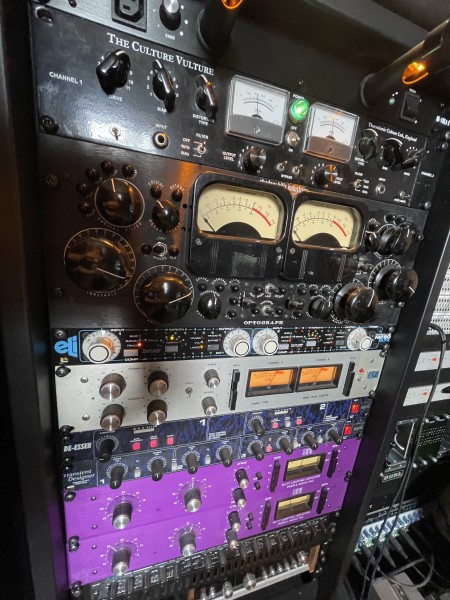
We mix our records using quite a bit of hardware. It’s such a big part of the sound. ORKA’s debut Livandi oyða was mixed on an old API desk in Kensaltown Studios in London while ÓRÓ was mixed on an SSL desk at Medley Studios in Copenhagen. Just before the Leipzig album we had built our own studio where we have mixed all of ORKA’s releases since. We have a nice selection of outboard which we have curated over the years. They all have their own quality and idiosyncrasies and we use them depending on what we need to achieve. We of course also use plugins when mixing, but always in tandem with outboard. We do the broad strokes set the tone with outboard and get surgical with plugins. It’s hard to pick one piece of outboard as they all play a role in creating the final sound.
The Lexicon PCM 70, the grittier Midiverb II, the Space Echo, and the Culture Vulture are effects favourites, the API 550A and 5500 equalisers are used on most mixes and so are the API 2500 and Shadow Hills Optograph compressors. We have a great love for compressors in particular and typically use them to sculpt the colour of a sound rather than solely controlling dynamics. Among our favourite compressors are the Urei 1178, the Empirical Labs Distressor, and the FATSO. They all are amazing pieces of kit in their own right and when we in this case picked out the FATSO it’s because of the role it played for this particular record. We use it on a parallel bus send and the way it compresses and saturates brought something unique to the sound of the album. It can be heard on all tracks but perhaps on the tracks Mother and Bird in particular. When you run sounds out of the DAW and bring them back from the FATSO summed, you can tell that they’ve hit something on the way back; it’s as if they have shed their digital skin. The FATSO has a unique way of adding saturation and controlling dynamics in a three-dimensional way while at the same time making the sounds pop.
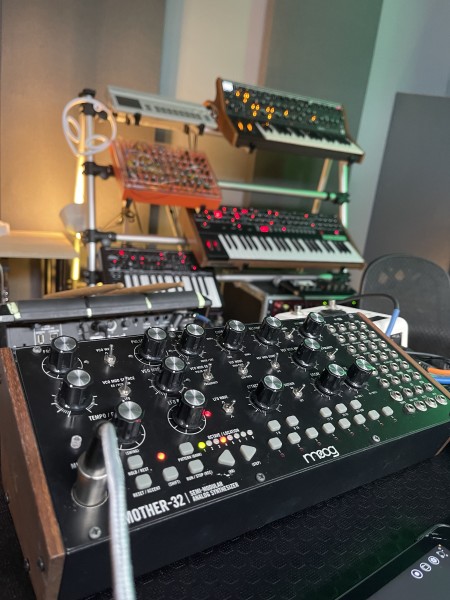
Moog Mother-32
This is such a huge-sounding synth. Similarly to the MS-20, it has modular capabilities, but at its core, it has that incredible Moog sound that can’t be replicated. We used it on our techno single Juno for the main synth arpeggio, and also on the album for the Glory Dust bassline, and on the track Atlantic for lots of modular improvised textures and noise builds. Since it only has one oscillator, it’s not as versatile as the Model D but at the same time, it has a finer, cleaner quality that we sometimes require. If you’re going for either bass, lead, or text
Stream the album here.