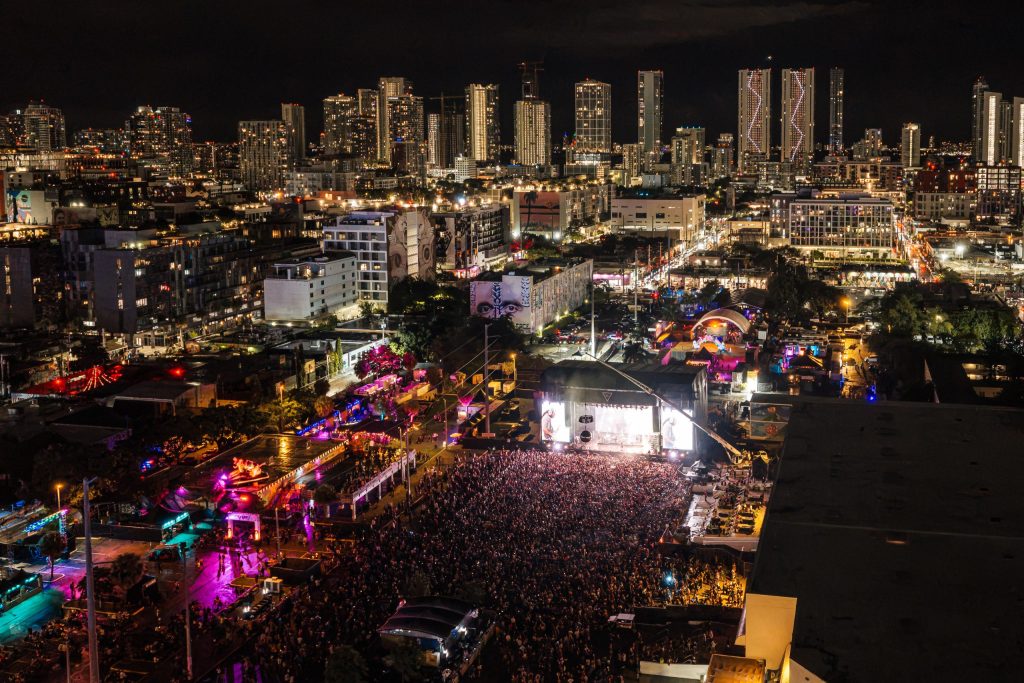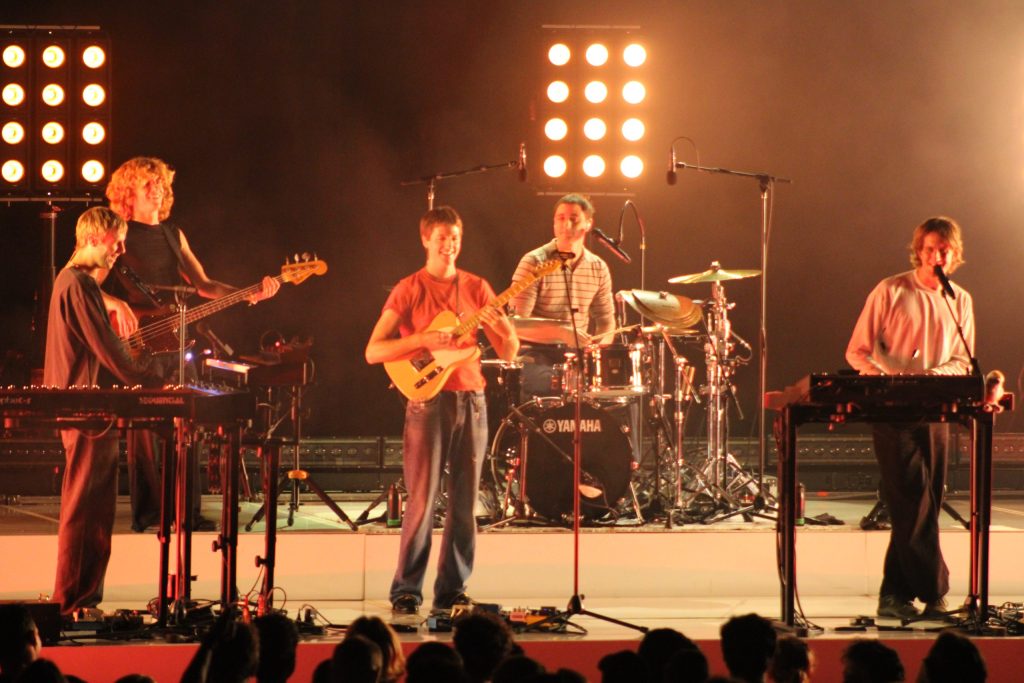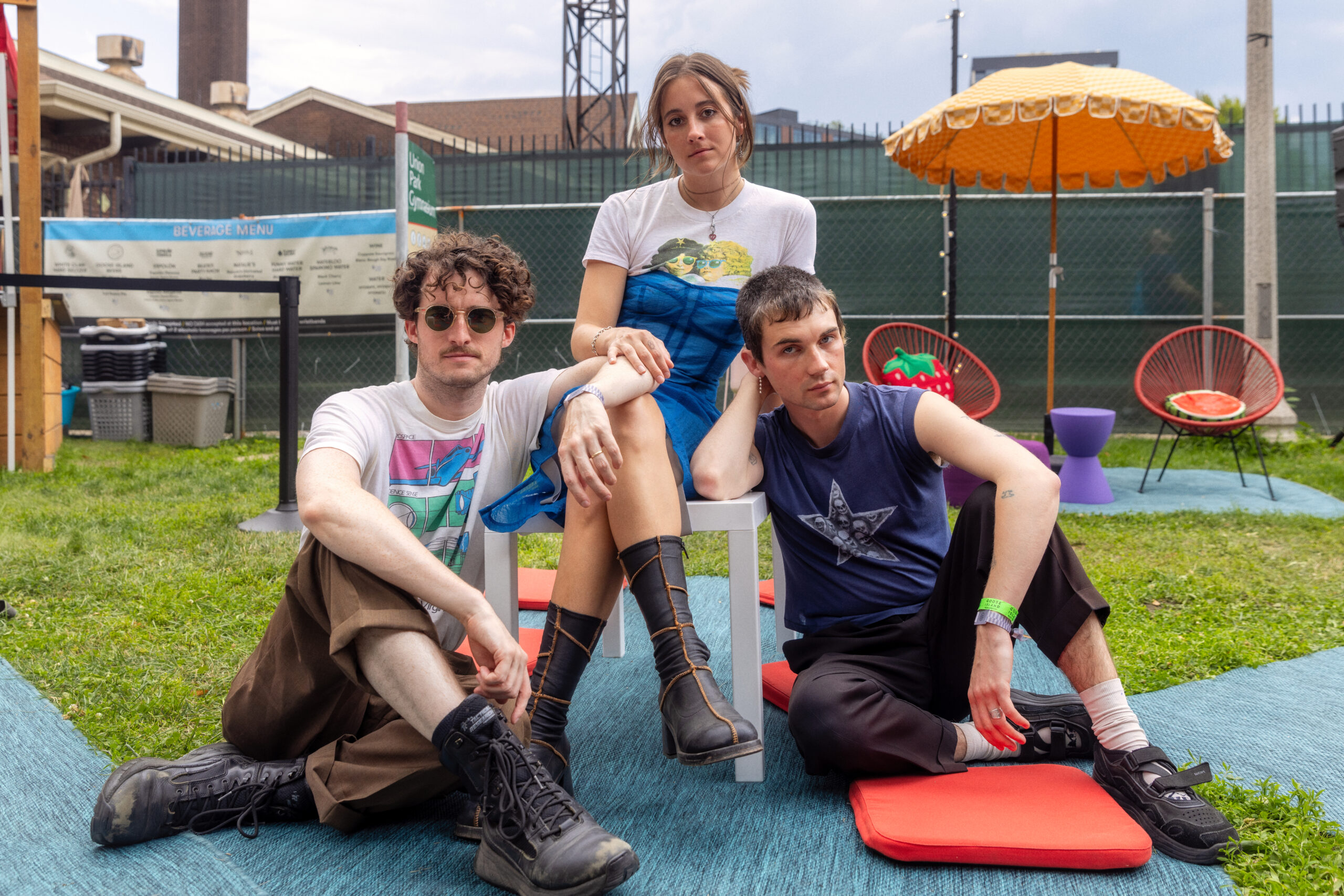
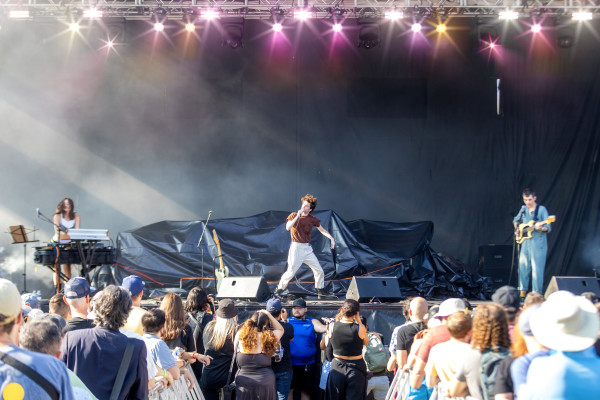
The vibrant Union Park in Chicago came alive as the highly anticipated Pitchfork Music Festival welcomed up-and-coming indie-electronic trio Nation of Language to the stage. Hailing from New York, their captivating performance left the crowd spellbound.
As if blessed by the rock gods themselves, bright warm light from the fading day sparkled across the stage as Nation of Language delivered a show that epitomized their unique fusion of retro nostalgia and futuristic allure.
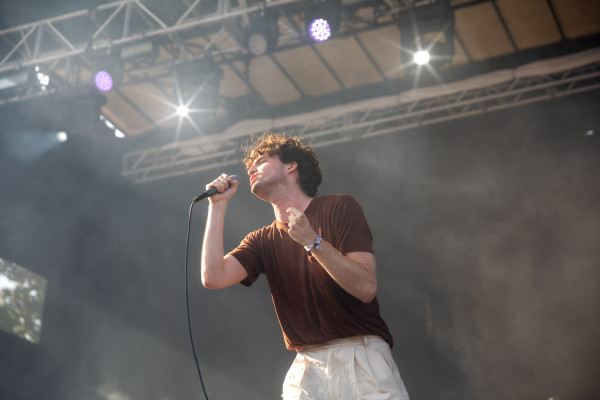
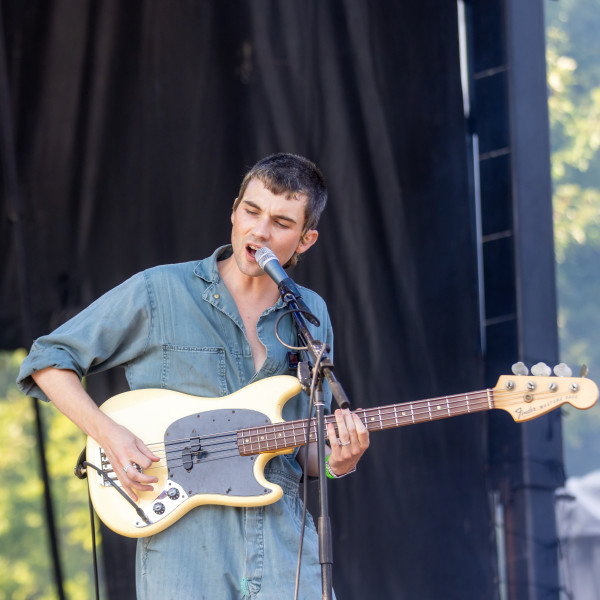
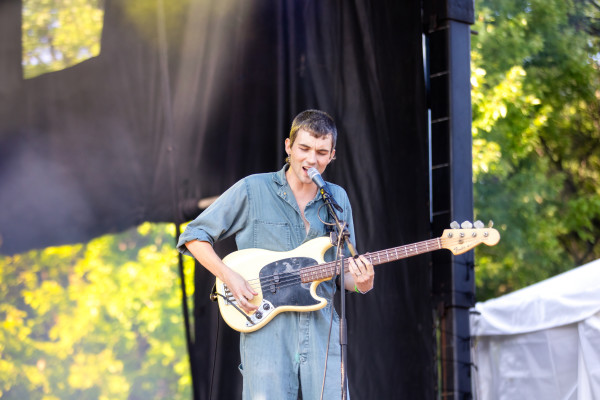
Led by the enigmatic Ian Devaney along with equally brilliant band members, Aidan Noell, and Alex Mackay, Nation of Language took the stage with an electrifying energy that immediately connected with their loyal fanbase. Their dynamic stage presence, combined with the pulsating synths and infectious beats, had the crowds grooving to every song.
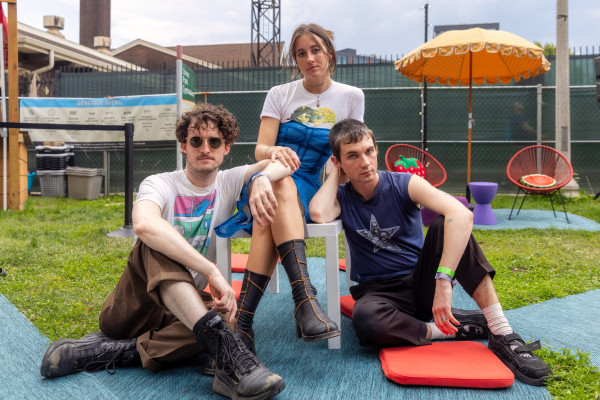
With a mesmerizing performance at Pitchfork Music Festival under their belt, we caught up with Nation of Language before they set out on the rest of their tour.
Exclusive interview with Nation of Language
Chris (Magnetic): Have you had a chance to enjoy Chicago and do you live a little while touring other cities?
Aiden: Yes, we actually did get a chance to enjoy Chicago on the first night that we arrived. We went to a little bar and played some pool. Yeah, we had a really good day that day. I mean, we love Chicago. I personally am a Midwesterner so I really love Chicago.
…and usually we get a couple hours in each city, so we try to see as much as we can within the five-block radius around the venue that we’re playing. But yeah, we do our best.
Chris (Magnetic): Do you typically try to explore while you’re touring or do you enjoy just hanging out and taking a little space to yourself before a performance?
Alex: As the tour goes on, we sort of start to shift more towards taking space to ourselves and just relaxing, because you’re kind of trying to get rest whenever you can. But when we have the time, we love to explore. That’s one of the nice things about this last run we did in June. We had, we were doing mainly festivals, so we had more days off than usual because, you know, usually they’re on the weekends. So we had a lot of time to really wander and kind of experience the city properly – which is not something we always get a chance to do.
Chris: Do you find inspiration either for upcoming songs or new albums that you’re putting together through your travels and through experiences while on the road?

Ian: Yeah, definitely. I mean, specifically with this album we’re going to release – our third album. As we were recording, I wanted that sort of “excited, fast paced walking” experience that was really inspired by being on tour. Cause you know, the other two records, when we made them, we were just in New York and it was the pandemic. There was no touring. And so we finally get to actually go out and try to see things. And so having a bit of that energy injected into the music was definitely on our minds.
Chris: With the grueling tour schedule you have the next handful of months, how do you stay energized and inspired on the road?
Ian: Certainly exhaustion sets in at a certain point, but even then, once you kind of step out on stage a lot of things just kind of get erased from your minds. The adrenaline kicks in, there’s people there, you can see them being excited, and it’s hard to not get infected by that excitement. You just sort of forget whatever exhaustion you’re experiencing or anything like that.
Aiden: I’d say the sickest I’ve ever felt on tour was a show we were playing over the last month in Portugal. I had tonsillitis and I was so ill, but it was one of the greatest shows we’ve ever gotten the chance to play just because it was a huge audience and they were all so totally invested in the show too that I didn’t feel miserable at all for those 45 minutes on stage. So it really takes you to a different place physically and mentally.
Chris: You kind of get into that flow state, right?
Alex: That’s the hope for sure. I think you definitely just feel you’re in the song. You’re thinking about what’s about to happen, trying to do your job, trying to also enjoy yourself, and outside of that, there’s not a whole lot more space for other thoughts and concerns.
Chris: There’s no denying the 80s new wave of romanticism in your sound; reminiscent of Depeche Mode, New Order, OMD. Tell us: who are some of your modern contemporaries you’re inspired by?
Ian: I’m always, as far as synth bands, very inspired by LCD SoundSystem and Future Islands…even just seeing The Smile yesterday here at Pitchfork. I mean, they’re all playing like every instrument you’ve ever seen over the course of the set, but whenever they’re over on the synths, I’m like – what’s going on there? Trying to see from so far away on the screen what gear they’re using. You know, the nerd report, as we call it.
…because every band that uses synthesizers and these things, everyone’s going to come at it totally their own way of what seems to make sense to them. And so it’s very interesting to nerd out about these things because you’ll see someone else doing something some way, and you’ll be like, I never would have thought to put that next to that.
Alex: The band Sextile, who are kind of friends of ours… Brady is like a priest of the MS-20 synthesizer. He’s really so devoted to it. The Korg MS-20 and MS-10 and that whole series and you can just learn a lot by sort of starting to understand how other people use them and even if you start to imitate them or take something from that it’s gonna end up sounding very different just because you have your own sensibilities and your own thing going on. I especially love when you see a concert video that has a top-down camera that’s straight eye-in-the-sky and you can pause it, zoom in, screenshot it, maybe run it through like an upscaler. You know… enhance, enhance, enhance.
Chris: How has your sound evolved since the inception of the band to where you are now?
Ian: When we first started, we tried to keep the influences a little bit more concise. As we’ve gone on, we’ve tried to get a little more fluid, a bit more free, and inclusive with the various other types of things that I listen to. I definitely did want, especially with that first album, people to be able to hear the core influences super clearly. Now that I feel like we have that base covered with that album, with each record we can kind of add in something a little more. For the second record it was a little more like 70s German krautrock, like Kraftwerk sort of influence. On this record, there’s a couple other things. There’s a record called “Freedom” by Amen Dunes and that has some aspect of that vibe I was sort of trying to capture in the third album. And maybe a little more of a shoegaze influence. To whatever extent these things come through, I can’t tell because I’m too close to it. In the creation of them, you look to progressively broaden what people think a Nation of Language record can sound like.
Chris: On this newest single that just released, you have quite a few really cool cameos in the video. Can we expect some collaborations or features either on this new album or down the line?
Ian: Not on this new album. As far as down the line, I never want to close the idea of anything off. But as of right now, there’s no one else featuring on anything.
Alex: There are some remixes that will be coming out
Ian: And have already started to come out.
Chris: Speaking of collaborations and features, is there anyone in the future you’d like to work with? Either as a featured or collaborated artist or as a producer?
Aiden: Ian’s not interested in collaboration, not because he doesn’t think other people have valuable ideas, but just because his vision is so specific and unique to him that he wants to see it through in the way that he conceived it. And slowly, I feel like you’ve [speaking to Ian} been able to be more open to input from producers than at first when you were very close to your demos and had a bit of “demo-itis” – where you didn’t want to let anything go and change that much. And recently, through working with Abe Seiferth and Nick Millhiser, I feel like you’ve slowly gotten to be more and more able to relinquish some control in the studio. And maybe that will continue as you go, and you might want to start collaborating with people. But I feel like at this point, Nation of Language is still so much a product of your specific vision that I don’t really see it becoming a collaboration anytime soon.
Ian: I mean yeah, it was like I came up playing in bands that were like everyone contributes everything and I think in some ways me starting this band was kind of a response to the frustrations that can come with like not getting your way or feeling like things almost got to where you think they should go, but didn’t quite get there. And to be honest, I think I was actually probably the biggest problem in that situation with the worst taste.
Alex: I think that the more people that are involved, there’s always a risk that things can get kind of diluted or things can get unfocused in terms of the direction. But I feel like you always say that about yourself [reassuring Ian], but I don’t think that you’re a bad collaborator by any means. I think it is very understandable to want to have your vision fulfilled, but I think you’re never resistant to people. I mean, I do think that bands often should be autocracies or should have someone who at least is able to just veto. You know, I think you’re always open to other ideas and hearing people out. That’s, I think, as much as you can hope for because I think you need someone to be guiding things both to make sure that they get done more quickly and also to make sure that the ideas come to fruition in the way that you had conceived them. So it’s reasonable to me.
Chris: With New York City as home base for you, how much has living there influenced who Nation of Language is and the first three albums?
Ian: I think New York has influenced us a lot, even just in the sense of there are so many bands. There are so many people that are trying to make a name for themselves that you really feel like you have to present your best and give your all – all the time.
Aiden: It’s a big motivating factor.
Ian: I think it’s like a big motivating push. Like, I don’t know what to do today. I’m gonna write because I need to keep at this.
Aiden: Because That’s what a New Yorker would do. That’s what Patti Smith would have done. That’s what Eileen Myles would do. You just have all these visions of New York icons, past and present, in your head and you’re always trying to channel that energy.
Alex: Yeah. I remember really thirsting for that. I was in a place where I just didn’t feel like I had anyone to look up to. I remember saying that I wanted to feel intimidated. I wanted to feel out of my own depth so that I could try to rise to the occasion. That was one of the reasons I moved to New York and definitely found that.
Chris: I definitely feel that. There’s something to be said about seeking discomfort for the sake of growth and evolution.
Aiden: There’s a great lyric in this song called “Hard Livin’ “ by Andrew Cedarmark where he sings, “comfort is the enemy” and I just always think about that lyric in my mind.I mean I’m sure he’s not the first person to have said that but I just hear it – that lyric in my mind, all the time.
Chris: What’s your creative process like and how, if at all, has your creative process evolved since your first album.
Ian: Since the first album it’s evolved a little bit in that I would sit down and start to write something and kind of see that one thing through before I moved on to the next thing. Whereas now I feel like so many songs for the second two records have come about from finding scraps of old things that never got finished, that at the time I felt like I had gotten to the end of the road of what I could think to do. But then after giving it some time and coming back to it, you’re like, oh, clearly I should go to this progression from here. Everything just sort of becomes clear once you give it some space.
It can be frustrating when you’re writing, you get a verse, a chorus worth of instrumental, but then you really don’t know where to take it. Something I’ve gotten better at is being okay with the idea of saying this is a seed for the future and planting as many of those as possible. Still, the best situation is when you can sit down and something just makes itself clear and just flows out of you. But being kind to your future self by planting those seeds now is a nice thing.
Chris: I love that. Okay, cool. I’m obviously looking forward to this next release and whatever is in the future for Nation of Language. Looking three years into the future, where do you see yourselves?
Aiden: I would like to still be doing this. I mean, for like the rest of my life I would like to still be doing this. So if we could be on tour doing our fourth, fifth album cycle that would be great. Just like playing shows forever would be great…
Ian: People sometimes be like, wow, you guys turn out albums pretty quick. I don’t really know what else to do with myself. You know – I love writing, I love recording, I love touring. These are the things I would want to do anyway. And so, yeah, I’d have to develop a new hobby. {laughs}. I don’t know if I can manage that.
Aiden: Woodworking, perhaps?
Ian: Whittling?{everyone laughs} I could get into woodworking or whittling.
Chris: Do you have a dream venue or festival you’d like to play?
Alex: Oh, Red Rocks. There’s some hometown venues for me that I’ve always wanted to play in the San Francisco Bay Area. So that would be the Fillmore, the Warfield, Fox Theater for sure. We’re starting to check off a few of them. We got to play at Brooklyn Steel, the Fonda, and Razzmatazz in Barcelona – which is a club that I got that I got denied entry to as a young kid, so that felt good. So we’re starting to get there, which is really exciting.
Aiden:I have some idealistic visions of festival shows that I would love to play. Like, in my mind, getting to play Lollapalooza would be fucking awesome because that was like my first festival I ever went to. I feel like that’s something we can attain. Maybe in the next three years we could be on Lollapalooza. Glastonbury would be dream.
Ian: Yeah, I think Red Rocks or Hollywood Bowl..
Aiden: Like a big amphitheater?
Alex: Yeah
Chris: Alright, y’all. I’m looking forward to your new album coming out later this year and looking forward to the future of Nation of Language. I’m super stoked to see where you guys go and how you evolve. Thanks for taking the time to chat. Good luck on the rest of the tour! Appreciate you
Nation of Language: Appreciate it! Thank you!
Nation of Language’s newest single, “Too Much, Enough,” released July 26th with some fun cameos in their music video. Make sure to check it out below:
With a new album releasing later this year, Nation of Language tours through the end of the year. Find tickets for future tour dates at NationofLanguage.com/events