Roland’s Jupiter-8 synth is one of the most iconic hardware synthesizers. Whether it’s the synth’s sleek color scheme, tones as bright as they are warm, or the producer’s flex of having one of these behemoths in the studio, the allure of a Jupiter-8 is undeniable.
But there’s always a catch…
and in regards to this synth specifically, it’s the price. The limited quantity of the Roland Jupiter-8s on the market and the even more scarce number of producers looking to part with them make authentic units hover around $25k. And even that might be lowballing it a bit.
But luckily, we’re living in the twenty-first century, and many other alternative hardware synths are more accessible than ever. So let’s dive into the best alternatives for any producer looking for that classic Roland Jupiter-8 sound but who doesn’t want to fork over a downpayment on the house?
Snag Premium House Music Samples Without Breaking The Bank With Our Massive Curated List Of Warm, Punchy Sounds From Across The Internet. Click Here To Get 4k+ Free Sounds and Samples
What is The Roland Jupiter-8?
Roland’s Jupiter-8 was released in 1981 as an eight-voice follow-up to the four-note polyphonic Jupiter-4. The JP-8 (as it’s also known) set the standard for analog polys in the 1980s.
The synth had two VCOs, which allowed you to split the keyboard into two zones with separate patches. It also had pulse-width modulation, cross-modulation, and sync, a switchable 2-pole and 4-pole lowpass filter, a non-resonant highpass filter, an LFO, and two envelopes.
Roland’s flagship model until 1985, when it ceased production.
The Jupiter-8 was popular among many musicians in the 1980s, appearing on records by Duran Duran, Michael Jackson, Howard Jones, Tears For Fears, ABBA, Queen, Marvin Gaye, and others. Producers often used it for its clean sound and ability to fit comfortably in a mix.
But now that they are off the market, let’s dive into the synths you can potentially get your hands on.
Ready to explore the world of top-tier hardware synths? Dive into our comprehensive guide on Fantastic Hardware Synths for Making Massive Leads and Ear-Catching Hooks in Music Production and elevate your tracks with unmatched sonic brilliance.
Roland MKS-80 Super Jupiter
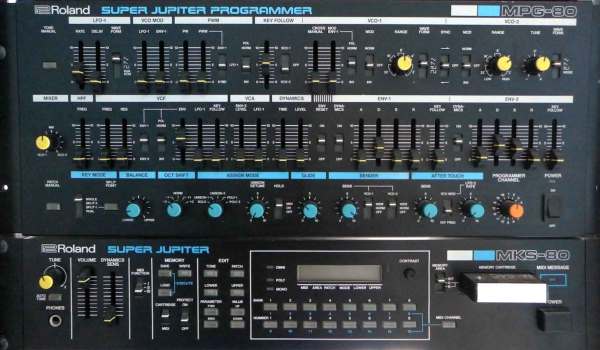
The MKS-80 is a Jupiter 8 refined and placed in a module. It is called the Super Jupiter because it is very fat and analogous. Its excellent sound is responsible, in part, for the iconic analog Roland technology in its filter modules, modulation functionality, and a warm cluster of 16 analog oscillators at 2 per voice. The MKS-80 comes in a two-space rack module – there is no keyboard.
It has a lot of editing options, even though editing can be time-consuming.
It has all the classic sounds of the Jupiter synths, plus much more. Hardfloor, Astral Projection, Vince Clarke, Vangelis, Pet Shop Boys, and Snap all use it. The MPG-80 lets you more quickly and traditionally edit MKS-80 with slider control.
Elka Synthex
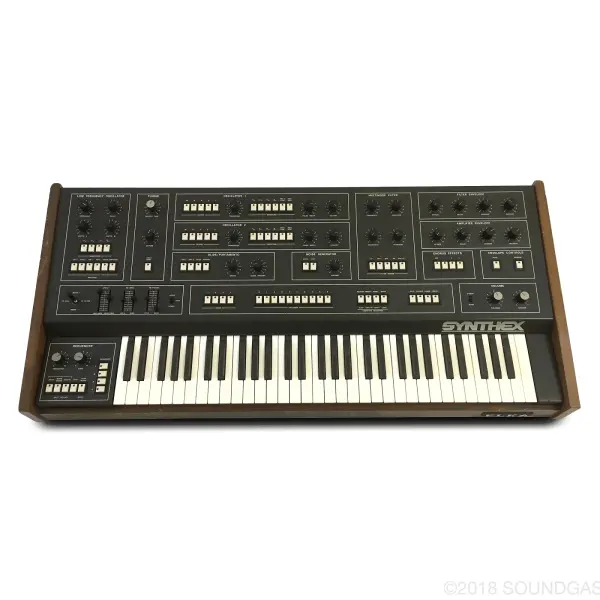
The Synthex is an 8-voice classic analog synthesizer that sounds very lush. Subsequent versions brought essential MIDI functions. It has 30 knobs, six sliders, 80 switches, and a joystick. Powerful sounds with two oscillators per note, separate envelope generators, a chorus, and even a sequencer!
The use of digital control over analog oscillators (DCOs) cross modulation of Pulse Width and a multimode filter made it unique in its time.
Need expert tips on choosing monitors for beat-making? Read ‘Choosing the Right Monitors for Beat-Making and Hip Hop Production: Scott Storch Shares Advice for Creators’ – find his insights here.
A joystick gives you more real-time control over the LFOs, oscillator, and filter modulation. The six sliders next to the joystick determine what (LFO, OSC, and filter) goes to the joystick.
The keyboard can layer or split voices across itself. Additionally, there is an onboard digital Ring-Modulator, Chorus effect, and Dual or Layer modes. Finally, a four-track sequencer is included. Two of the tracks can output MIDI data.
Behringer Deepmind
The unforgettable synthesizer sounds from your favorite progressive rock, pop, and jazz fusion records from the 1970s and ’80s have left a lasting mark on music history.
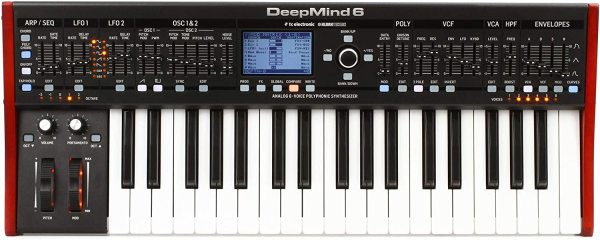
The DeepMind 12 was designed to be the ultimate analog polysynth, with 12 voices that can easily create any classic synth sound you’ve heard or imagined.
This synthesizer has many features, including two digitally controlled analog oscillators, two LFOs per voice, three envelopes, a noise generator, unison mode with detuning fader, an 8-bus modulation matrix, a 32-step sequencer, four digital FX engines, built-in Wi-Fi, aftertouch-enabled keybed.
UDO Audio Super 6

The UDO Super 6 is a powerful, binaural twelve-voice polysynth that can create a wide range of sounds, from classic pads and synth key sounds to rich stereo textures. Its voice architecture, based on FPGA-based oscillators, an analog filter section, analog VCA section, and 192kHz, 24-bit effects, is uncommonly robust and clean.
Including an intense and carefully designed modulation section, a Fatar keybed with velocity and aftertouch, and an integrated arpeggiator and sequencer, the Super 6 gives us the feeling of being back in the early 1980s and imagining what synthesizers would be like in the future.
System80 810 Eurorack Synth Voice Module
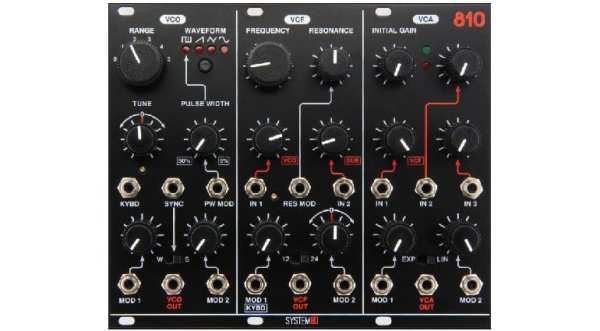
The System80 810 is a reasonably priced synth voice module with a recognizable and nostalgic sound. It does not compromise features, including two types of oscillator sync, multiple modulation inputs, and triple inputs on the VCA.
It also allows for CV control over resonance.
The 810 has familiar-sounding bass lines and leads that come out quickly. Suppose you add an envelope and an LFO module. In that case, you have a little semi-modular analog monosynth that would be easy for beginners to learn and provide a solid analog foundation for any modular setup.
Jupiter Spirits Module
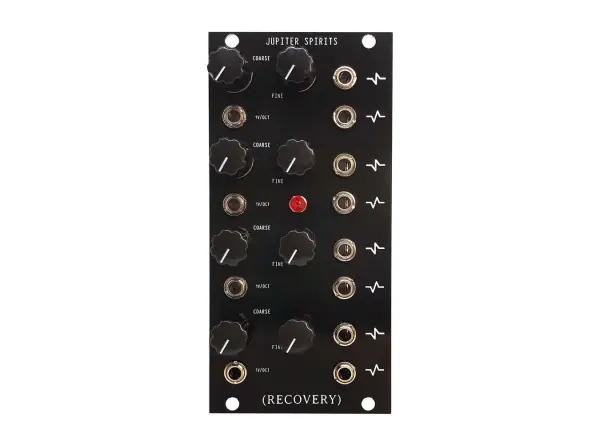
Jupiter Spirits encircle the engine of various iconic synths from the 1970s that used the classic CEM3340 chip. We drew inspiration from the oscillator sections of the Moog-designed Crumar Spirit, Roland Jupiter, and SH-101.
Jupiter Spirits offers a thick, rich analog sound by combining four independent voices to create a triangle and sawtooth waveforms. With eight total outputs, it’s the perfect tool for anyone looking for multiple sound sources in a small package.
Roland JP-08 Boutique
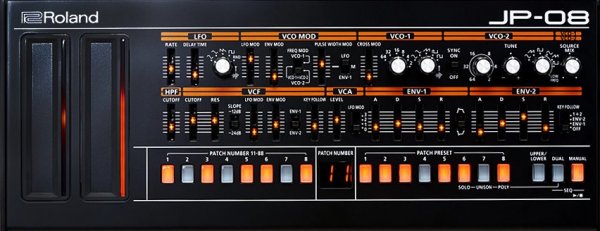
Roland’s Jupiter-8 synthesizer has been recreated in the JP-08 sound module. Part of Roland’s Boutique Series of synth modules, the JP-08 uses Roland’s Analog Circuit Behavior modeling to faithfully replicate the tone and sound-design potential of one of the world’s most iconic synthesizers.
The Roland JP-08 four-voice synth module has many enhanced features that even synth purists are pleased with, such as more LFO waveforms and an expanded VCO range. You have great control with this module, a built-in 16-step sequencer, and it is very portable. The best part is that it sounds just as huge as the original Jupiter.
Roland Jupiter-X

Roland became a top synth maker in 1978 when it released the Jupiter-4 poly synth. Since then, the company has represented its premier sound technologies and keyboard actions through synthesizers bearing the Jupiter badge.
The Jupiter-X Synthesizer is a classic Roland design with uncompromising build quality and the new ZEN-Core synth engine. The Jupiter-X re-creates coveted instruments from Roland’s vaunted legacy of genre-defining synths while blazing new synthesis frontiers.
Looking to master plate reverb in production? Explore ‘How Producers Should Be Using Plate Reverb for Space, Modulation, and That Pro-Grade Polish’ – elevate your sound here. ️ ️ ️
The Jupiter-X has multiple layers, a lot of polyphony, and profound hands-on control, so you can easily create evolving warm soundscapes that have a lot of punch and shimmer.

Will Vance is a professional music producer who has been involved in the industry for the better part of a decade and has been the managing editor at Magnetic Magazine since mid-2022. In that time period, he has published thousands of articles on music production, industry think pieces and educational articles about the music industry. Over the last decade as a professional music producer, Will Vance has also ran multiple successful and highly respected record labels in the industry, including Where The Heart Is Records as well as having launched a new label with a focus on community through Magnetic Magazine. When not running these labels or producing his own music, Vance is likely writing for other top industry sites like Waves or the Hyperbits Masterclass or working on his upcoming book on mindfulness in music production. On the rare chance he's not thinking about music production, he's probably running a game of Dungeons and Dragons with his friends which he has been the dungeon master for for many years.