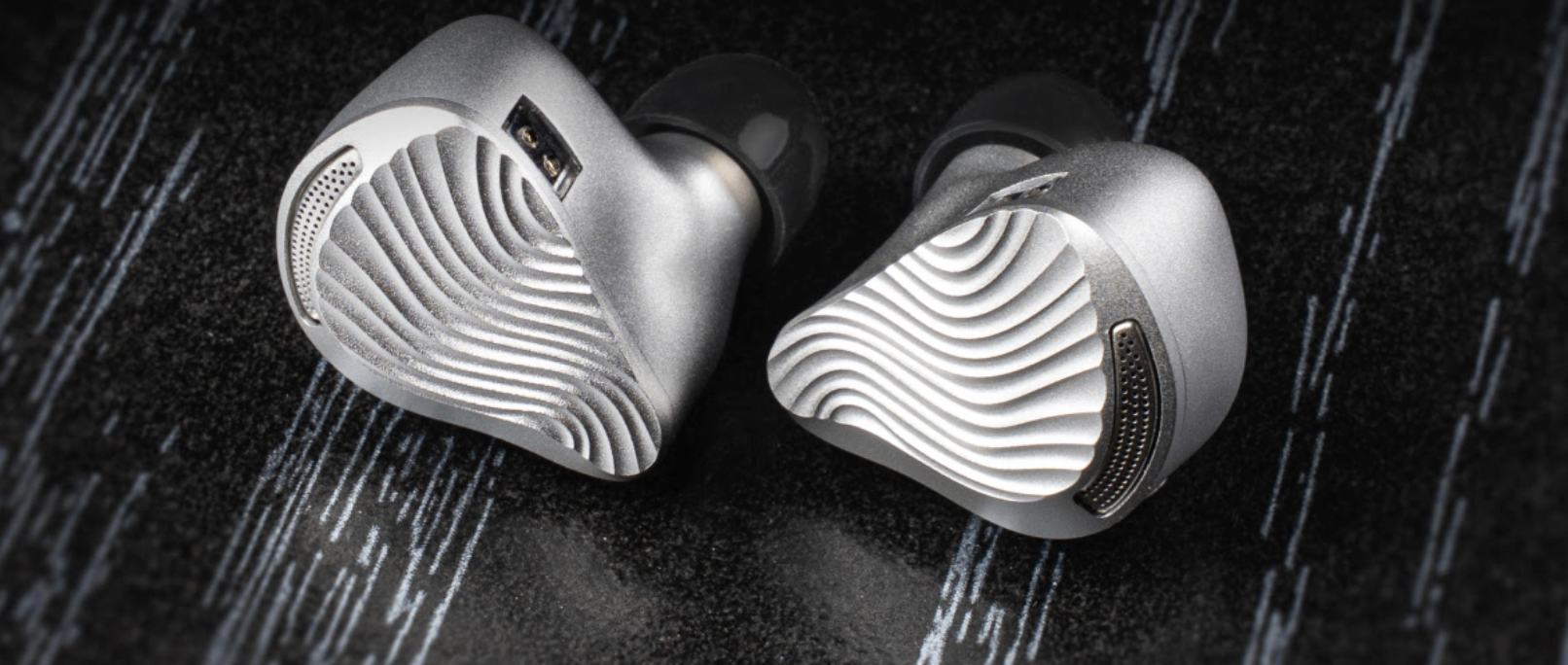
Images Courtesy Of linsoul
The problem with bass-forward IEMs is that the fun part usually shows up before the tradeoff does.
At first, it feels great. The kick has size. The sub range moves. Electronic tracks feel bigger. Games feel more cinematic. Hip-hop and pop records get an extra physical push that many tiny earphones never quite deliver.
Then, after a few songs, the problem creeps in. The bass starts sitting on the vocal. The lower mids get thick. Guitars lose shape. Snares lose their edge. Everything starts sounding expensive in the wrong way, impressive for thirty seconds and tiring after twenty minutes.
That is the line ZiiGaat and Jay Audio are trying to walk with Seraphim.
The headline spec is a 2DD + 3BA hybrid layout, with isobaric dual dynamic subwoofers providing a claimed 10 dB sub-bass lift while keeping spill into the midrange under control. Not bass for the sake of bass. Bass that can hit without dragging the rest of the tuning down with it.
That is why Seraphim is more interesting than another driver-count announcement. The question is not whether it can move air. With two dynamic drivers handling the low end, it almost certainly can. The real question is whether it can do that and still keep vocals, instruments, and high-frequency detail from feeling like they are fighting their way out of the low end.
The Driver Setup Has a Clear Job
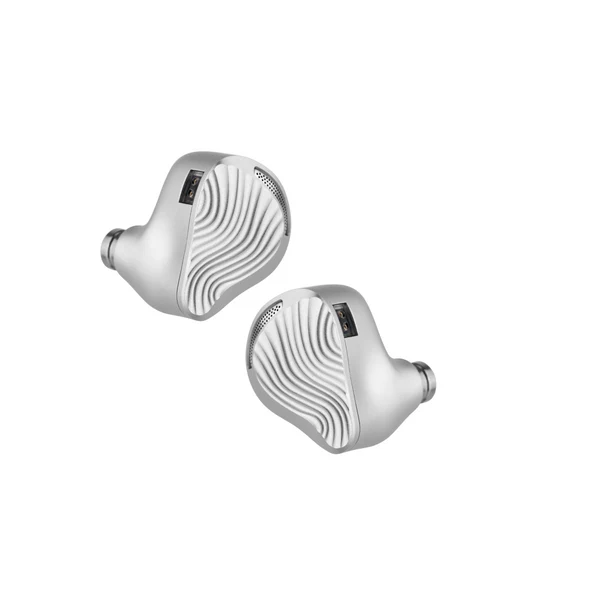
Seraphim uses two dynamic drivers and three balanced armatures per side.
That layout tells you what ZiiGaat is chasing. The dual dynamic drivers handle the sub-bass, where physical movement still feels more satisfying than a more clinical low-end presentation. Then the balanced armatures take over the mids and treble, where speed, separation, and fine detail matter more.
The Knowles driver choices are specific too.
Dual RAF 32873 drivers handle the mids, which should keep vocals and instruments from feeling abandoned in a tuning that clearly wants low-end authority. A RAD 33518 ultra-tweeter handles the upper treble, giving the set a dedicated driver for air, extension, and smaller details.
On paper, that division makes sense.
The danger with hybrid IEMs is not that they lack technology. They can sound like a committee. The low end does one thing, the mids do another, the treble does something else, and the whole thing never quite becomes a single musical object.
When hybrid tuning works, the driver split disappears. You stop thinking about the parts and start hearing the shape. That is what Seraphim has to prove.
ZiiGaat is meant to be detailed, textured, and energetic enough to suit a wide range of listeners. But the layout suggests the company knows the bass can only be the selling point if the rest of the range still feels looked after.
Jay Audio Gives the Tuning a Point of View
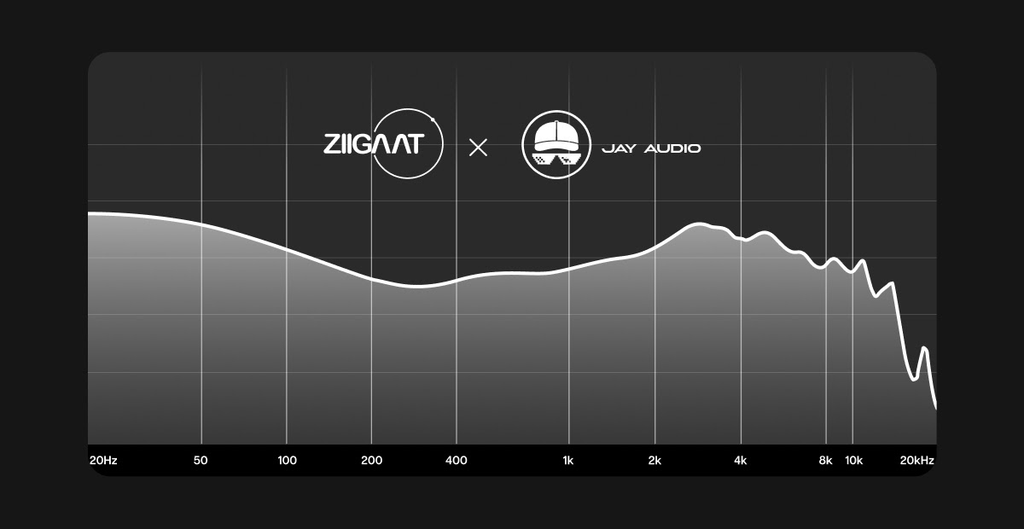
The Jay Audio collaboration is a real part of the story here.
IEMs have become a very community-driven corner of audio. A lot of people buying these sets are not walking into stores and pulling boxes from a wall. They are watching measurements, reviewer impressions, Discord reactions, YouTube breakdowns, Reddit threads, and long comment-section arguments over two decibels at 8 kHz.
That can get exhausting, but it has also made the category more interesting. Tuning has become a conversation, not just a spec sheet.
With Seraphim, the Jay Audio name tells buyers this is meant to have a point of view. It is not being sold as a faceless house tuning with a pretty shell. The collaboration gives people a reason to expect a deliberate balance between slam, detail, and everyday listenability.
That matters because the mid-priced IEM space is crowded enough that “good for the money” is not much of a hook anymore. A set needs a clearer reason to exist.
Seraphim’s reason seems obvious: give listeners the low-end thrill they want without making the rest of the music pay for it.
That is a good target. Plenty of listeners want bass. They just do not want the side effects that usually come with it.
Audiophile and Gamer Is Not a Weird Pairing Anymore
The copy positions Seraphim for audiophiles and gamers, and that pairing makes more sense now than it would have a few years ago.
Gaming audio and personal hi-fi have been drifting closer together for a while. Gamers now want more than loud explosions and exaggerated treble. They want positional information, cleaner dialogue, lower fatigue, better separation, and enough low-end impact to make the experience feel physical.
Audiophiles, meanwhile, are often more open to fun tunings than the old neutral-or-nothing framing would suggest. Many people want detail and excitement at the same time. They want a set that can handle music, film, games, and long listening without becoming boring or punishing.
That is where Seraphim’s tuning pitch fits.
The dual dynamic subwoofer system gives games and bass-heavy music the weight people want. The Knowles armatures keep small cues, vocals, strings, synth detail, cymbals, and environmental sounds from getting buried. In gaming terms, that means impact and information. In music terms, it means pressure and readability.
I covered a different part of that crossover in my piece on Audeze’s Maxwell 2 headset redesign, and the same larger idea applies here. Gaming gear and hi-fi gear are no longer completely separate conversations. Good sound is good sound. The use case changes, but the ear still wants impact, space, and detail without fatigue.
Seraphim Is Selling a Fun Tuning, Not a Dry One
Nothing about Seraphim’s pitch sounds like it is trying to be a sterile reference monitor.
That is fine. Honestly, it is probably better that way.
A 10 dB sub-bass lift is not a neutral statement. It is a choice. It tells you the set wants to hit. It wants electronic music to feel physical. It wants games to have scale. It wants modern pop, hip-hop, bass music, and cinematic material to have a deeper floor under them.
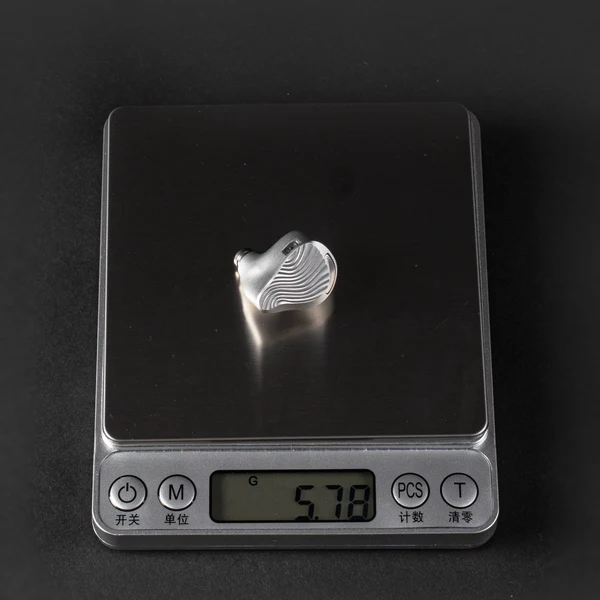
The important thing is that ZiiGaat is not pretending bass alone is enough. The company is also talking about natural vocals, instruments, extended highs, and precise detail. That makes Seraphim sound like a fun tuning with some discipline behind it.
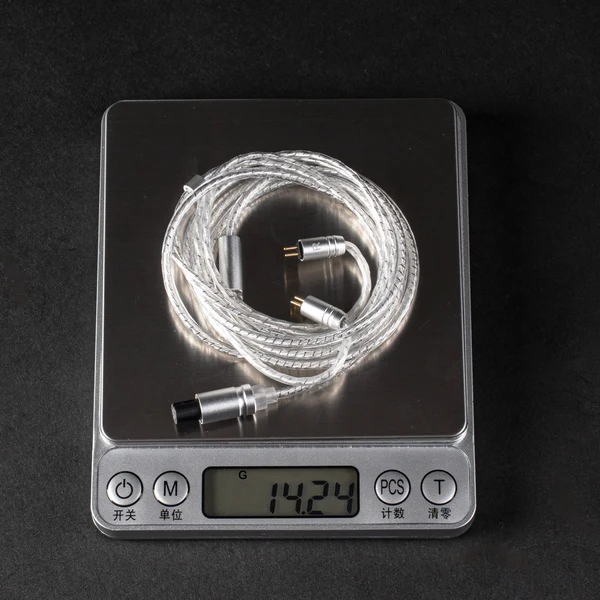
That is a better place to be than chasing fake neutrality. Some IEMs seem afraid to admit they are made for pleasure. Seraphim is not afraid of that, but it also knows that pleasure gets old quickly if the tuning is sloppy.
For listeners who follow in-ear monitors across stage, studio, and hi-fi use, our IEM roundup gives a wider view of how different sets approach fit, tuning, isolation, and purpose. Seraphim is clearly aimed more at engaged listening than pure stage monitoring, but the same basics still apply. Comfort, coherence, and tuning matter more than the driver count printed on the box.
The Question Is How Long It Stays Exciting
The real test for Seraphim will be long-term listening.
A bassy IEM can impress fast. That is the easy part. The harder part is staying enjoyable across a full album, a long gaming night, or a few hours of daily use without the low end becoming too much.
That is where midrange control becomes so important. If the dual dynamic drivers stay mostly in the sub-bass and avoid thickening the vocal range too much, Seraphim could hit a sweet spot for listeners who want impact without mud. If the bass creeps upward too much, it risks becoming another set that sounds fun until the novelty wears off.
The treble is another part of that equation. The RAD 33518 ultra-tweeter should add extension and detail, but the top end shouldn’t feel like it is overcorrecting for the bass. That is a common trick in energetic tunings: boost the low end, add treble sparkle to keep things from sounding dark, then hope the ear calls it detail instead of fatigue.
The best version of Seraphim would avoid that trap. It would give bass music real depth, keep vocals present, let cymbals and small effects breathe, and still sound comfortable after the first rush wears off.
That is what separates a fun IEM from a gimmick.

Will Vance is a professional music producer who has been involved in the industry for the better part of a decade and has been the managing editor at Magnetic Magazine since mid-2022. In that time period, he has published thousands of articles on music production, industry think pieces and educational articles about the music industry. Over the last decade as a professional music producer, Will Vance has also ran multiple successful and highly respected record labels in the industry, including Where The Heart Is Records as well as having launched a new label with a focus on community through Magnetic Magazine. When not running these labels or producing his own music, Vance is likely writing for other top industry sites like Waves or the Hyperbits Masterclass or working on his upcoming book on mindfulness in music production. On the rare chance he's not thinking about music production, he's probably running a game of Dungeons and Dragons with his friends which he has been the dungeon master for for many years.