The TR-808 is one of those rare instruments that stopped belonging to the company that made it almost as soon as artists got their hands on it.
Roland released the TR-808 Rhythm Composer in 1980, and the machine’s strange version of realism became its superpower. The kick did not sound like a real kick. The cowbell did not sound like a real cowbell. The whole thing sat in an uncanny space between imitation and invention, which is exactly why it kept spreading.
Roland’s 808 Day 2026 celebration leans into that idea.
This year’s program is not framed around nostalgia alone. It looks at how the machine moved from Japan into Chicago house, Detroit techno, hip-hop, trap, and countless regional scenes, then kept mutating once its sounds were sampled, chopped, pitched, and detached from the hardware itself.
That is the real reason 808 Day still works. The TR-808 is not frozen in a museum case. It is still being pulled apart by producers who may never touch the original drum machine, but know exactly what that low-end pressure means when it hits.
I wrote about the production side of that in my article on ways producers can use 808s, and the same point sits under Roland’s 2026 celebration: the 808 became a language because people kept misusing it creatively.
NTS is telling the story through sound
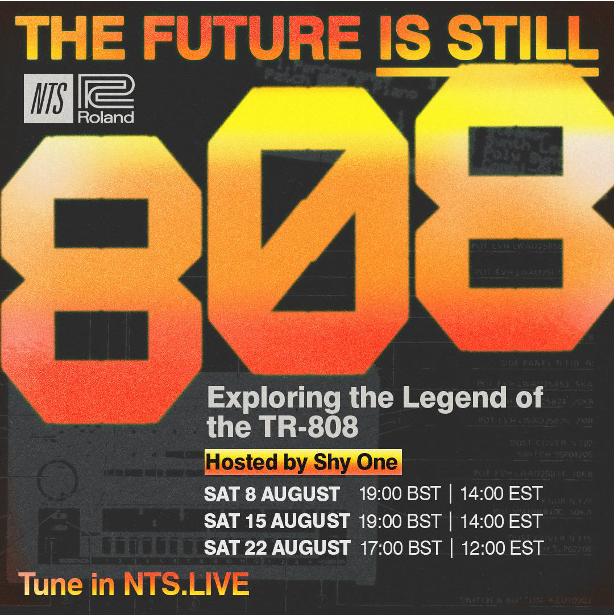
For 808 Day 2026, Roland has teamed with NTS for a three-part radio series called “The Future Is Still 808.”
Hosted by Shy One and produced by Nick Dwyer, the series follows the TR-808 across generations and cultures, tracing how its resonant low end and artificial percussion language traveled through clubs, studios, bedrooms, and regional scenes. NTS is a smart partner for this because its audience already thinks about music historically, geographically, and experimentally.
The series also includes a recurring “Happy Accidents” segment that breaks down some of the 808’s most recognizable sounds, including the cowbell and bass drum. That is the detail I like most. The 808’s history is full of errors that became identity. Its sounds were not realistic enough to replace acoustic drums, but they were strange enough to create new genres.
That is the better version of an anniversary program. Do not simply say the machine mattered. Open it up, sound by sound, and show why the parts were weird enough to survive.
Mannie Fresh gives The Rhythm Creators its New Orleans chapter
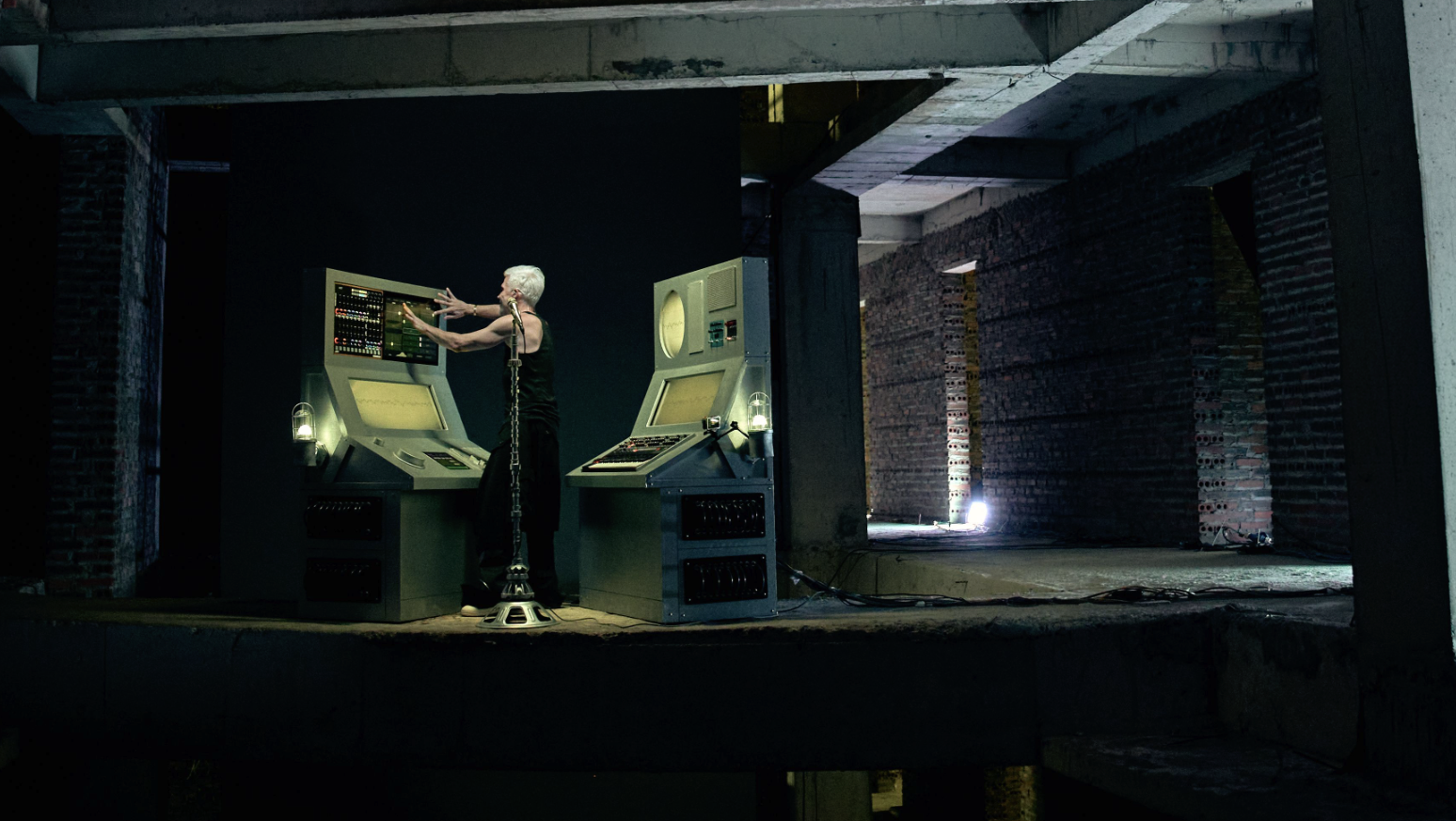
Roland is also bringing back The Rhythm Creators, its animated series built around artists whose work helped define 808 culture.
The new episode features Mannie Fresh, the New Orleans producer and bounce pioneer best known as one-half of Cash Money Records’ in-house production team behind records like “Back That Azz Up” and “Get Your Roll On.”

That choice makes sense. Mannie Fresh’s production language is inseparable from rhythm, humor, pressure, and regional identity. The 808 was never a neutral machine in his hands. It became part of a New Orleans framework where drums, chants, bounce patterns, and personality all had to hit immediately.
The Rhythm Creators series has already featured Egyptian Lover, Fatboy Slim, Prince Paul, Jazzy B, Orbital, and Kink, with stylized animation by Detroit artist Vaughn Taormina and narration from the artists themselves. The format works because it treats music history as something a little looser than a lecture. It gives the artists room to tell the story with some personality still left in it.
Premiering today here, this 808 Day episode features hip-hop and bounce music pioneer Mannie Fresh, best known as one-half of Cash Money Records’ in-house production team behind hits like “Back That Azz Up” and “Get Your Roll On.” Check others in The Rhythm Creators series here:
The software sale brings the machine back to the DAW
Roland Cloud is also marking 808 Day with a limited-time discount on the TR-808 Software Rhythm Composer.
The plugin is available for $49 through August 31, down 66% from its regular $149 price. Roland says the software recreates the original hardware while adding workflow updates for current producers, bringing the 808 into the DAW without needing the vintage unit.
That is probably the most immediate part of the 808 Day package for working producers. The NTS series gives the history. The Mannie Fresh episode gives the artist story. The sale gives people a way to put the instrument’s sound into a session right now.
The plugin is also included with Roland Cloud Ultimate, alongside Roland’s catalog of vintage instrument emulations, ZENOLOGY, ZENOLOGY FX, Zenbeats, and more. New Roland Cloud users can try it free for 30 days.
I covered the TR-808 plugin in my earlier Roland Cloud tutorial piece, and that context still applies. The software version is not only about owning an 808 tone. It is about getting those patterns, envelopes, decay decisions, and machine behaviors into a modern writing setup fast.
808 Day is really about how machines outlive their first use
The best thing about the 808 story is that nobody could have planned its full afterlife.
Roland made a drum machine. Artists turned it into a low-end architecture for entire scenes. Producers sampled it, pitched it, stretched it, distorted it, placed it under vocals, made it melodic, made it violent, made it smooth, made it regional, then handed it to another generation to keep changing.
That is why the 2026 program feels better when it looks forward. “The Future Is Still 808” is a good title because the 808 has never worked only as a retro object. Its sounds keep resurfacing because they are simple enough to recognize and flexible enough to bend.
You can hear that same Roland thread in newer hardware conversations too, including our article on the Roland TR-1000 Rhythm Creator. Roland’s drum-machine history keeps returning because producers still want rhythm tools with identity, not only blank grids waiting for samples.

Will Vance is a professional music producer who has been involved in the industry for the better part of a decade and has been the managing editor at Magnetic Magazine since mid-2022. In that time period, he has published thousands of articles on music production, industry think pieces and educational articles about the music industry. Over the last decade as a professional music producer, Will Vance has also ran multiple successful and highly respected record labels in the industry, including Where The Heart Is Records as well as having launched a new label with a focus on community through Magnetic Magazine. When not running these labels or producing his own music, Vance is likely writing for other top industry sites like Waves or the Hyperbits Masterclass or working on his upcoming book on mindfulness in music production. On the rare chance he's not thinking about music production, he's probably running a game of Dungeons and Dragons with his friends which he has been the dungeon master for for many years.