
WDNA 88.9FM sits in a tricky audio position. It is a public radio station, a Miami cultural institution, and a live performance space tied closely to jazz, Latin jazz, salsa, reggae, blues, and local programming. That means its monitoring setup has to serve more than one kind of work. A room may be used for recorded programming one day, interview edits the next, promo spots after that, then live-to-air broadcast needs on top of it all.
That is why the station’s move to KRK Kreate Series monitors is more interesting than a typical gear-install story. WDNA has deployed KRK Kreate 5 and Kreate 8 monitors across three production and broadcast spaces, giving the station a unified listening setup where rooms speak a little more alike.
For a station handling that many types of audio, consistency is not a luxury.
It is the thing that keeps a mix decision from falling apart as soon as a project leaves one studio and opens in another.
KRK: KRKMUSIC.COM | X | INSTAGRAM | FACEBOOK | YOUTUBE
WDNA Needed the Rooms to Stop Disagreeing With Each Other
Before the KRK upgrade, WDNA had different speaker brands across different studios. That made project movement harder than it needed to be. Daniel Collazo, audio engineer at WDNA, says it could be difficult to tell whether changes were coming from the mix itself or from the monitors in each room.
That is the kind of problem that slows down radio production fast. If one studio makes the low end feel bigger and another makes the midrange feel more forward, every handoff creates doubt. A promo spot, recorded show, or interview edit should not need a full recalibration just because the project moved down the hall.
Collazo’s comment gets to the practical win: “Now that we’re standardized across the station, the transition from room to room is minimal.”
That is the real story here. KRK did not only give WDNA newer monitors. It gave the staff a more shared listening reference across the station.
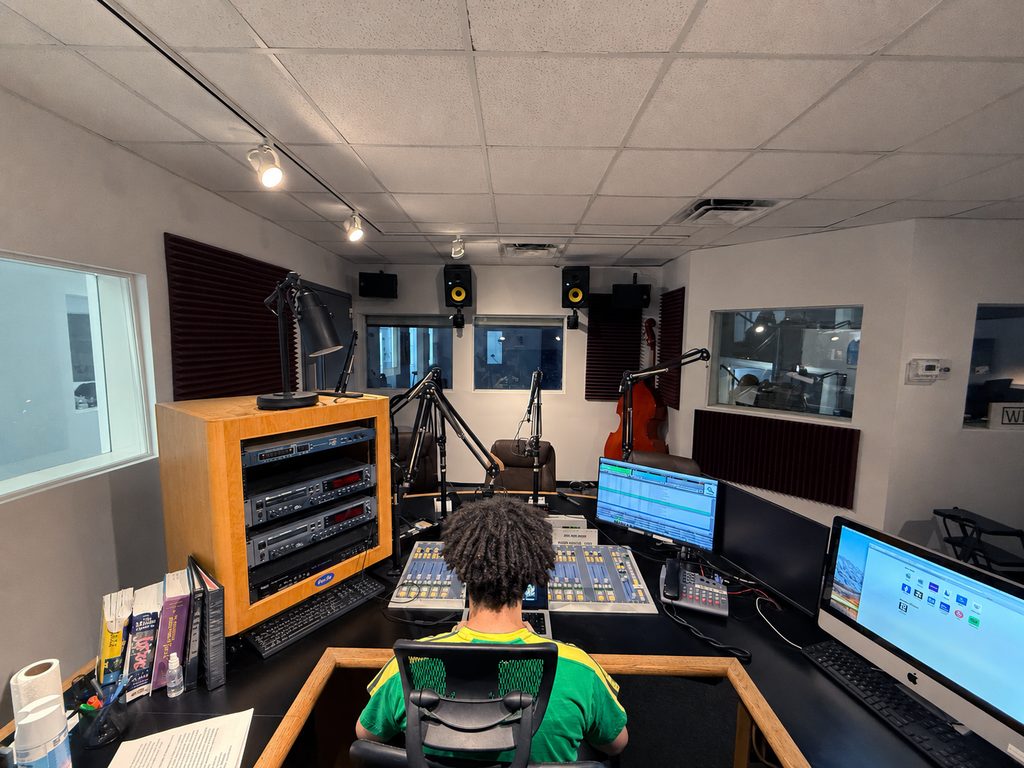
Kreate 5 and Kreate 8 Serve Different Rooms at the Station
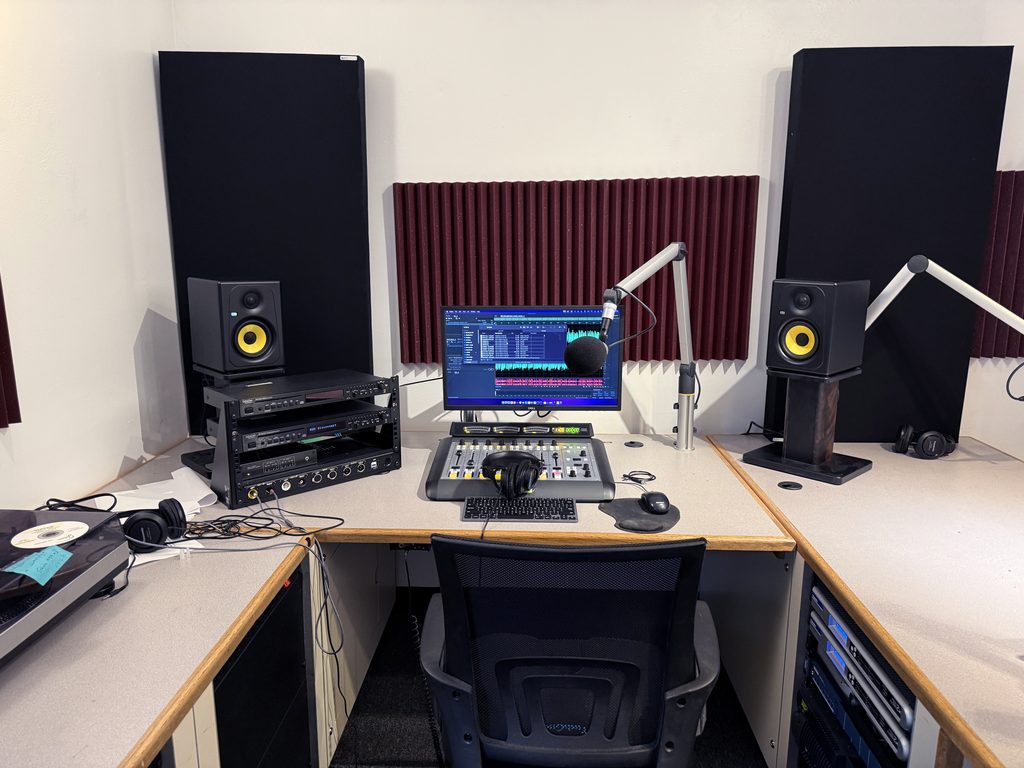
WDNA installed Kreate 5 monitors in one production studio, where hosts and producers work on recorded programming, show edits, and promotional content. The Kreate 8 monitors are installed in the station’s primary production studio and live-to-air studio, where the needs are broader and the output demands are higher.
That split feels practical. The Kreate 5 gives a smaller production room a balanced reference without overfilling the space, while the Kreate 8 gives the bigger and more critical rooms more output and detail.
In the live studio, hosts may choose to monitor on speakers while cueing content and running shows. Collazo says the Kreate 8s give that room the fidelity and output needed for that kind of work. That is especially relevant in a station environment because the speakers are not only for mix checks. They become part of how hosts work in real time.
Translation Is the Whole Point of a Reference Monitor
Collazo’s most telling quote is about translation: “When I mix on these KRK monitors and then listen somewhere else, whether that’s in a car or another environment, the audio still reflects what I intended. That’s what you want from a reference monitor.”
That is the sentence that makes the install relatable for producers outside WDNA. Whether you are mixing a radio segment, a DJ promo, a podcast intro, or a full record, the monitor’s job is not to flatter you in the room.
It is to tell you enough truth that the work still holds up somewhere else.
I covered a similar problem from the mastering side in my article on the importance of mastering music, where playback translation is often the difference between a track that only feels right in the studio and one that survives in cars, earbuds, venues, and streaming platforms. WDNA is dealing with broadcast audio instead of club releases, but the listening problem is the same.
The Upgrade Fits WDNA’s Role as a Radio Station and Live Music Space
WDNA is not only playing records. The station hosts local institutions, including Florida International University and the University of Miami’s Frost School of Music, and operates with a deeper tie to South Florida’s musical culture. That makes audio quality part of its public identity.
A station like WDNA needs gear that can support everyday radio work while still treating music with care.
Jazz and Latin jazz programming can expose weak monitoring quickly because detail, dynamics, and low-end balance all carry a lot of information. Salsa and reggae bring their own low-end and rhythm demands. Live performance adds another layer, where room sound, microphones, and monitoring choices all shape the broadcast result.
Standardizing on KRK Kreate monitors gives WDNA a cleaner baseline across that mix of work. It lets producers, hosts, and engineers move with less uncertainty between rooms, which is exactly what a busy station needs.

Magnetic byline note: This byline is used for staff produced updates and short announcements, often based on press materials and official release information. Editorial responsibility: David Ireland (Editor in Chief) and Will Vance (Managing Editor). About: https://magneticmag.com/about/ Masthead: https://magneticmag.com/masthead/ Contact: https://magneticmag.com/contact/






![Baby Audio HyperWarp Review: Why Less [Processing] Is More](https://magneticmag.com/wp-content/uploads/2026/10/Untitled-Design-88.png)



![Baby Audio HyperWarp Review: Why Less [Processing] Is More](https://magneticmag.com/wp-content/uploads/2026/10/Untitled-Design-88-1024x683.png)
![How It Was Made: Lang Father i(Junkyard Dog) [Welofi]](https://magneticmag.com/wp-content/uploads/2026/10/Press-Pic_2-1024x576.jpg)