This feature was created in paid partnership with Dreamtonics
Dreamtonics built its reputation by making synthetic vocals feel less stiff.
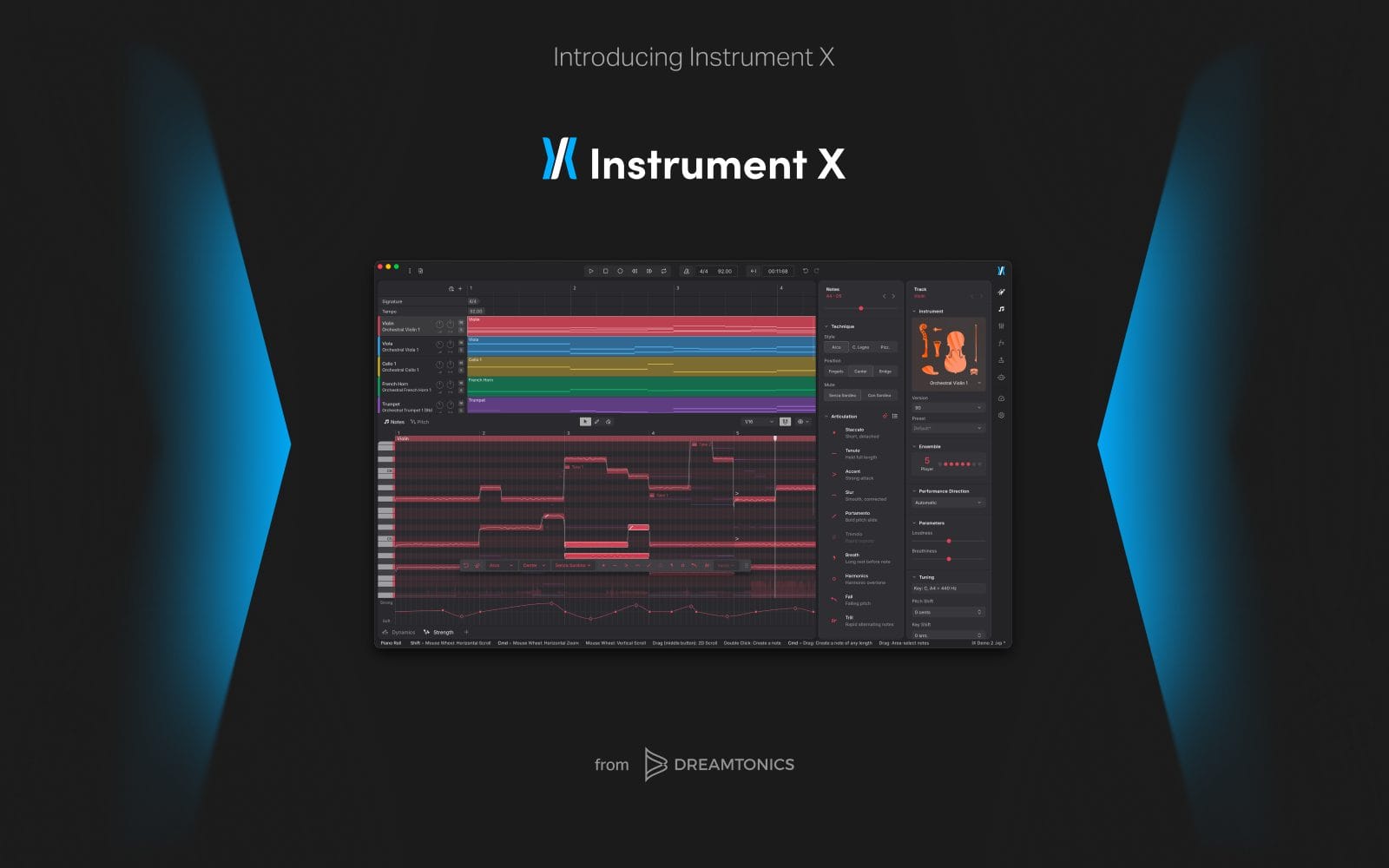
That is why Instrument X is such an interesting move. The company is taking the same obsession with controllable performance detail and applying it to acoustic instruments: strings, woodwinds, and brass. It completes the company’s current trio alongside Synthesizer V Studio 2 Pro and Vocoflex, but this is not a vocal-adjacent add-on. It is a separate platform aimed at composers, producers, and sound designers who want orchestral parts that feel less trapped inside old sample-library habits.
Visit the Dreamtonics store for all pricing and purchasing HERE.
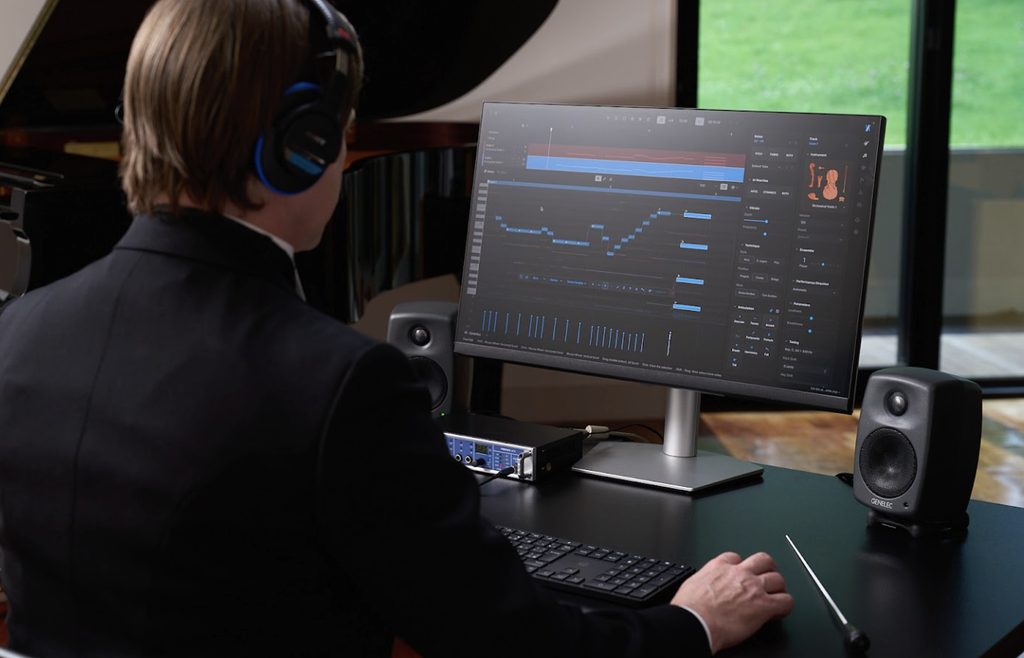
The pitch is simple enough. Instead of relying on huge static sample libraries, Instrument X uses physics-augmented Neural Acoustics Modeling to generate instrument performances locally inside the DAW. No cloud processing. No dedicated GPU requirement. No internet connection needed once the software is running.
That last point is important because composers and producers still need reliability. A new orchestral system can be clever, but it has to behave in a working room, on a laptop, under a deadline, and inside a session that already has too many moving parts.
Instrument X seems built around that exact problem: make the performance editable without making the user babysit the technology.
The Articulation Editor Is the Real Story
The most important part of Instrument X is not the AI.
It is the articulation system.
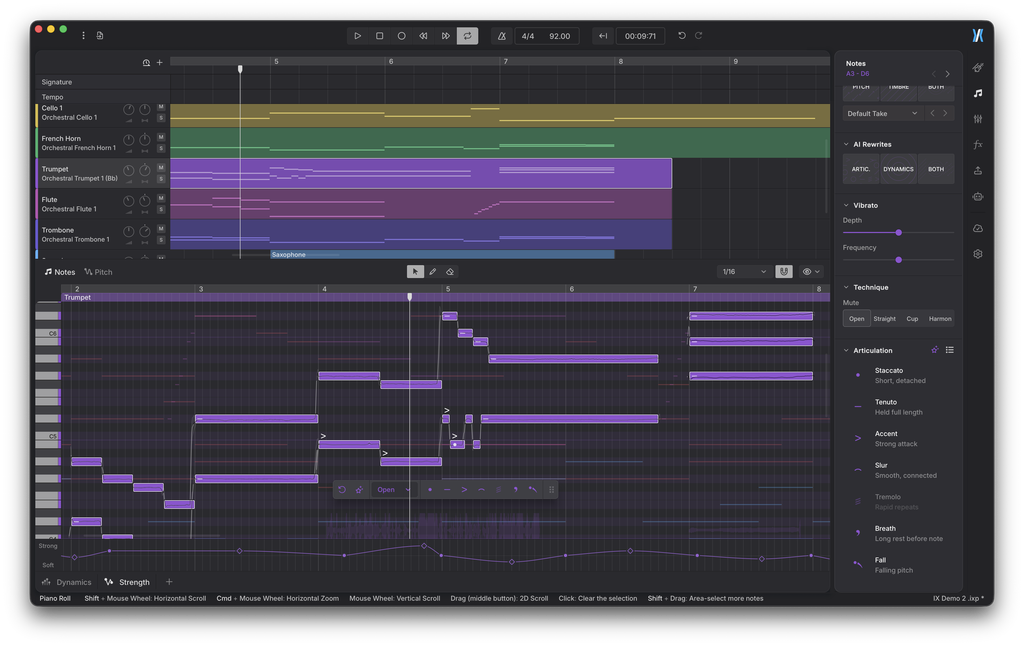
Traditional orchestral software often asks producers to think like programmers before they can think like writers. Keyswitches, maps, layered patches, separate tracks, articulation routing, and hidden MIDI lanes can turn a simple phrase into a small technical argument. Instrument X is trying to clean that up with a Unified Articulation Editor that lets users manage staccato, legato, tenuto, tremolo, col legno, mutes, portamento, harmonics, and other techniques from one place.
The better part is that articulations can stack on a single note.
That means a composer can add an accent over tremolo, mix techniques in a single phrase, or push an acoustic gesture into a hybrid texture without splitting the musical idea across a mess of lanes. For scoring, that can save time. For electronic producers, it opens a different door entirely, because strings and brass can become more malleable source material without sounding like a chopped stock phrase.
That same fight against technical drag is something I touched on in my article on how learning chord progressions can speed up music production. The faster you can get past setup, the faster you can hear whether the musical idea is actually worth chasing.
Dynamics Are About Physical Behavior
Instrument X also treats dynamics as performance, not volume.
That distinction is where the platform starts to separate itself from standard sample playback. The Dynamics Lane can automatically shape musical intensity based on pitch, note length, and phrase behavior, while still letting users take manual control. But the point is not simply making a note louder or quieter.
The system is built to shift physical timbre.
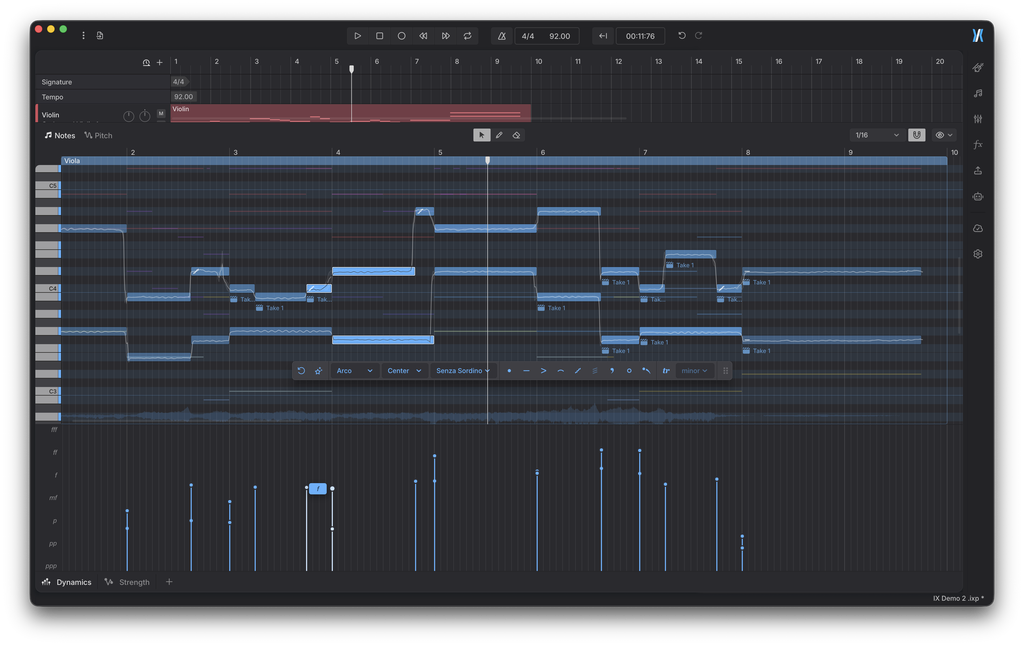
That means breath pressure, bow friction, harmonic saturation, kinetic intensity, and the kind of detail that makes an acoustic instrument feel like someone is actually pushing air, pulling a bow, or changing pressure in real time. A real violin does not only gain volume when a player digs in. The note changes texture. Brass does not only get louder. It gets more bite. Woodwinds do not only rise in gain. The breath and register behavior change.
That is the part Instrument X is trying to model.
The AI Performance Retakes feature sits in the same area. Users can re-roll sections or target details like timbre drift, micro-pitch curves, and performance intensity. That is a much better use of AI than asking the software to write the part for you. The composer still decides the line. Instrument X helps create a less frozen version of the performance.
The Room Is Part of the Instrument
Instrument X also makes a serious claim around space.
The platform includes an 11-channel Microphone Mixer with spot mics, Decca Tree positions, and ambient pairs. Dreamtonics says its engine uses acoustic measurements captured with a custom dodecahedral speaker array, allowing the system to separate room directionality from the dry instrument source.
In plain terms, the room is not treated as a reverb slapped on afterward.
That could be a major part of why composers care about this platform. Orchestral sound is never only about the instrument. It is the player, the distance, the microphone position, the acoustic field, and the way those pieces sit together without phase problems.
For electronic producers, that spatial control could also be useful outside normal scoring work. A single trumpet, violin, or bassoon phrase can sit closer, wider, wetter, tighter, or more cinematic depending on how the room is handled. That makes Instrument X relevant for hybrid production, ambient music, dramatic breakdowns, intro sections, and soundtrack-style details inside dance tracks.
We covered a related idea in our article on spatial audio changing DJ mixes. Different context, same underlying point: placement changes how a listener understands sound.
The Launch Covers Strings, Winds, and Brass
Instrument X launches with 15 Instrument Expansions.
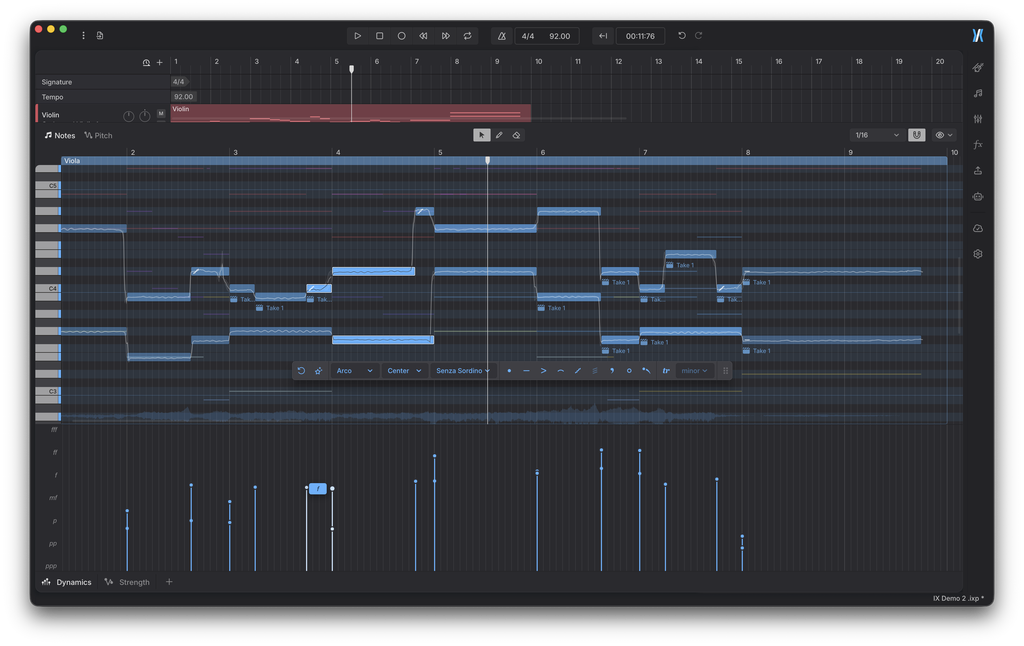
The Orchestral Strings Collection includes Violin 1, Viola 1, Violoncello 1, and Contrabass 1. These are built for legato lines, swells, micro-pitch bowing changes, trills, tremolos, falls, portamentos, harmonics, pizzicato, col legno, sul ponticello, sul tasto, and con sordino mute behavior.
The Orchestral Woodwinds Collection includes Flute 1, Piccolo 1, Oboe 1, Clarinet in A 1, and Bassoon 1. This section focuses on breath behavior, register changes, inhalation triggers, trills, falls, and instrument-specific harmonic detail.
The Orchestral Brass Collection includes Trumpet 1, Trombone 1, Horn 1, and Tuba 1. Brass features include breath tracking, trumpet trills and tremolos, trombone portamento glides, horn stopped notes, and mute modeling for trumpet and trombone, including straight, cup, and harmon mutes.
There are also five performance instructions that steer the feel of an arrangement: Adagio, Allegro, con Fuoco, Pop, and Ballade. Those give users a fast way to redirect the emotional execution of a part without editing every note one by one.
That part will probably be valuable for producers who are not full-time composers. You can get close quickly, then go deeper when the line needs detailed work.
Instrument X Is a Serious Bet
Instrument X is not going to erase sample libraries overnight.
That is the lazy headline. The better read is that Dreamtonics is betting orchestral software can move away from static playback as the default way of thinking. The company is not only chasing realism. It is chasing controllable performance behavior.
That is a much more interesting target.
A sample library can sound incredible and still feel rigid when the phrase needs to bend in a way the library does not expect. Instrument X is trying to make the performance less fixed, so the user can shape articulation, intensity, room, phrasing, variation, and instrumental behavior from the actual line.
For composers, that could mean faster orchestral mockups with fewer routing problems. For producers, it could mean acoustic parts that behave more like expressive instruments and less like loops. For sound designers, it could mean a new source of physical material that can be pushed into less expected places.
Dreamtonics already proved with Synthesizer V that detailed performance editing can make synthetic vocals feel far more convincing. Instrument X brings that philosophy to acoustic instruments, but with a platform built for the physics and spatial behavior of strings, winds, and brass.
That makes it one of the more serious music-software launches of the year.

Magnetic byline note: This byline is used for staff produced updates and short announcements, often based on press materials and official release information. Editorial responsibility: David Ireland (Editor in Chief) and Will Vance (Managing Editor). About: https://magneticmag.com/about/ Masthead: https://magneticmag.com/masthead/ Contact: https://magneticmag.com/contact/