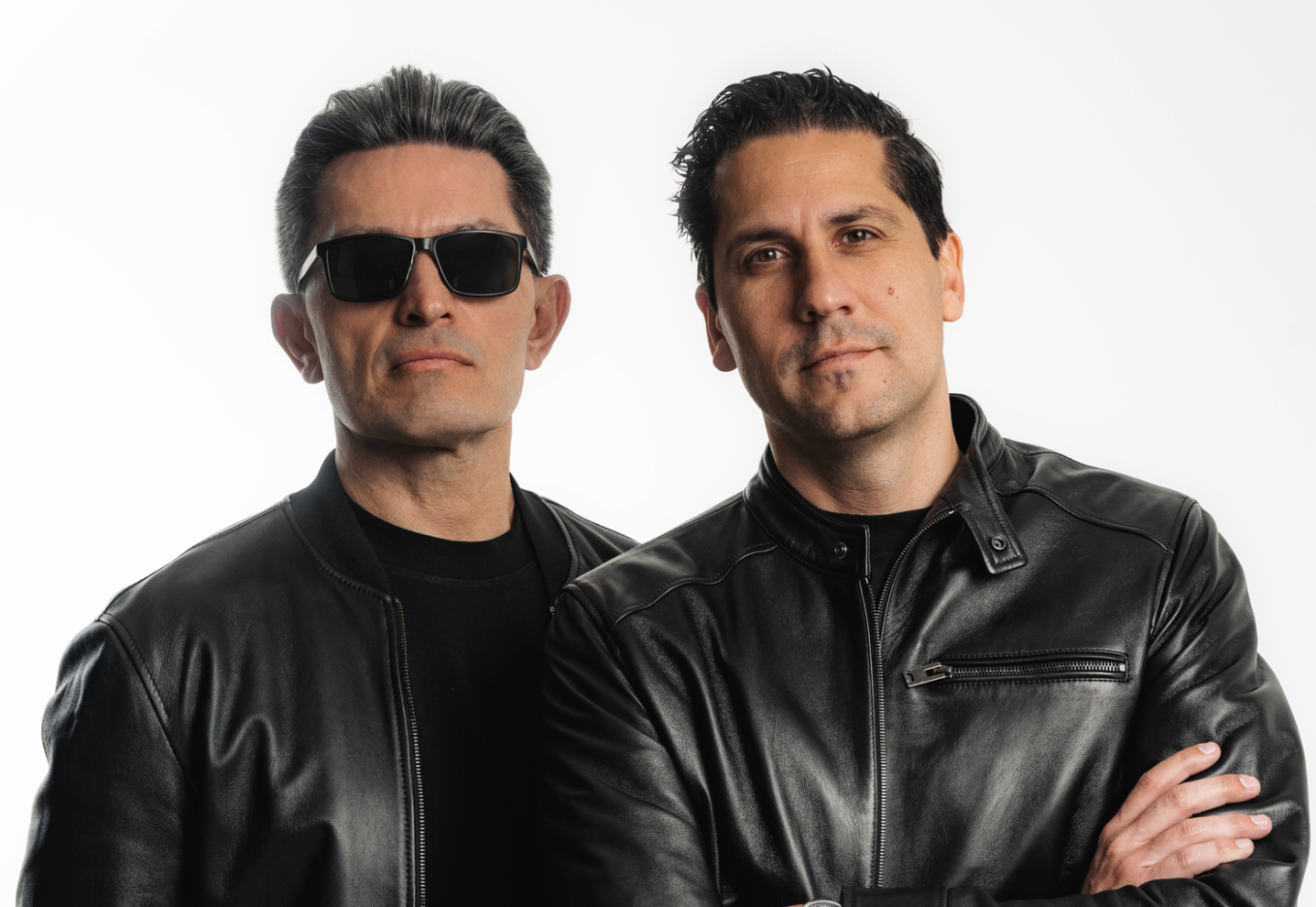
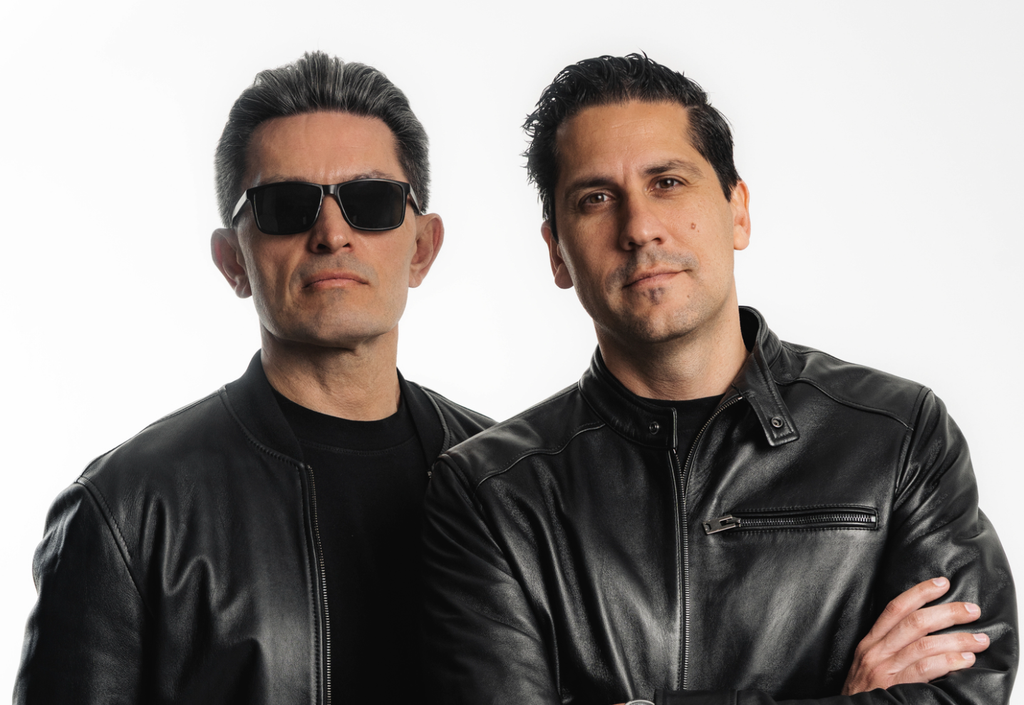
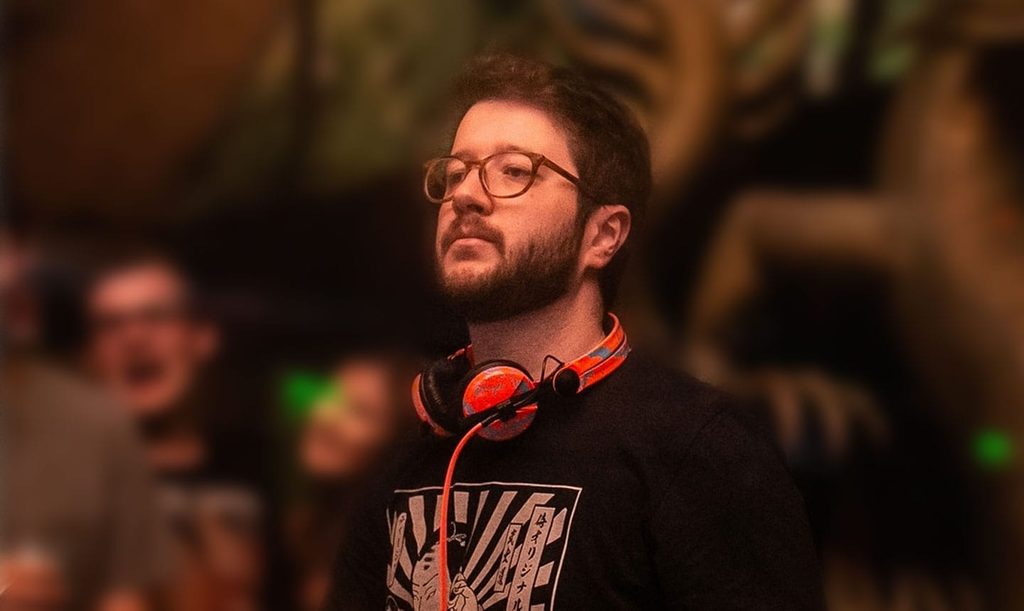
Quiet Husband’s, aka Richie Culver (@richieculver), The Architecture of Perception sits in the overlap between techno, painting, performance, and the way attention changes when you stay with something long enough. Richie Culver frames the record around a pretty direct comparison: tracks in a club can function like colors in a studio.
Both are built through layering, contrast, texture, and intensity, but one disappears into the room while the other stays fixed on a surface.
That idea makes sense coming from Culver, whose practice moves between sound, visual art, language, and performance. Under Quiet Husband, abrasion and rhythm become material in their own right, while his visual work continues to deal with memory, fragmentation, support, and collapse. With performances at spaces such as Berghain Klubnacht, Atonal, Tresor, The White Hotel, Carlos/Ishikawa, and Camden Arts Centre, alongside his painting studies at the Royal College of Art, Culver is working from a place where club music and visual art are not separate references so much as two ways of building an environment.
In the interview below, Culver talks about generative tools, AI, MIDI generators, and what can be lost when convenience steps into the creative process too early. His point is less about rejecting technology and more about protecting the slow part of becoming an artist: developing taste, judgement, and a personal language through the decisions you actually have to wrestle with yourself.
In a culture where tools can produce polished results quickly, Culver keeps coming back to the same thing: the finished work only matters if someone’s point of view is still inside it.
Interview With QUIET HUSBAND
What part of an artist’s work loses something when it gets outsourced too early to generative plugins and tools like MIDI generators or AI, even if these feel like useful tools?
What risks being lost when generative tools are introduced too early is not simply authorship, but the formative process through which an artist develops judgment or a personal visual or sonic language.
Tools such as AI image generators or MIDI generators can be highly useful for overcoming creative blocks, but if they begin making key decisions before an artist has wrestled with those decisions themselves, they can short-circuit the slower process of discovery that gives work its personal feeling.
Most of an artist’s practice is not the production of outcomes, but the cultivation of sensibility: learning what to include, what to reject, and what to keep working on.
As production tools keep getting faster and smarter, what separates a finished record from one that actually carries the artist’s point of view?
For me, as production tools get faster and smarter, what separates a finished record from one that really carries an artist’s point of view is judgment rather than execution.
A record can be technically polished and still feel kind of anonymous. What gives it identity is the artist’s particular choices and the sense that someone has shaped the work rather than simply assembled it.
Technology can help make a record, but obviously it cannot replace the distinct way of seeing and expressing the world.
Where do you think convenience starts to blur the line between helping an artist move faster and making too many decisions on their behalf?
Convenience becomes a problem when a tool stops helping you make decisions and starts making them for you.
I do not think speed is the issue. Authenticity is. If the most important artistic choices are being made by the software, there is a risk that the work starts reflecting the tool more than the artist, which is problematic in my opinion, but also the new normal.
Which parts of making music still need to stay hands-on because they build the ear, judgment, and instincts that an artist relies on over time?
Hands-on music-making is essential for developing the ear, judgment, and instincts that artists rely on throughout their careers.
Those things do not really come from shortcuts. They come from listening closely, experimenting, making decisions, and gradually developing a sense of what to keep, what to reject, and what feels authentic to you.
How can artists stay open to new technology without letting the tools quietly train their taste for them?
I think artists should stay open to new technology 100 percent, but the parts of making music that build taste and community still need to remain hands-on.
Listening closely, writing, arranging, editing, collaboration, and deciding what to keep or get rid of are the processes through which artists develop their own voice and feeling.
New tools can speed things up and open new possibilities, but they work best when they support those decisions rather than make them.

Will Vance is a professional music producer who has been involved in the industry for the better part of a decade and has been the managing editor at Magnetic Magazine since mid-2022. In that time period, he has published thousands of articles on music production, industry think pieces and educational articles about the music industry. Over the last decade as a professional music producer, Will Vance has also ran multiple successful and highly respected record labels in the industry, including Where The Heart Is Records as well as having launched a new label with a focus on community through Magnetic Magazine. When not running these labels or producing his own music, Vance is likely writing for other top industry sites like Waves or the Hyperbits Masterclass or working on his upcoming book on mindfulness in music production. On the rare chance he's not thinking about music production, he's probably running a game of Dungeons and Dragons with his friends which he has been the dungeon master for for many years.