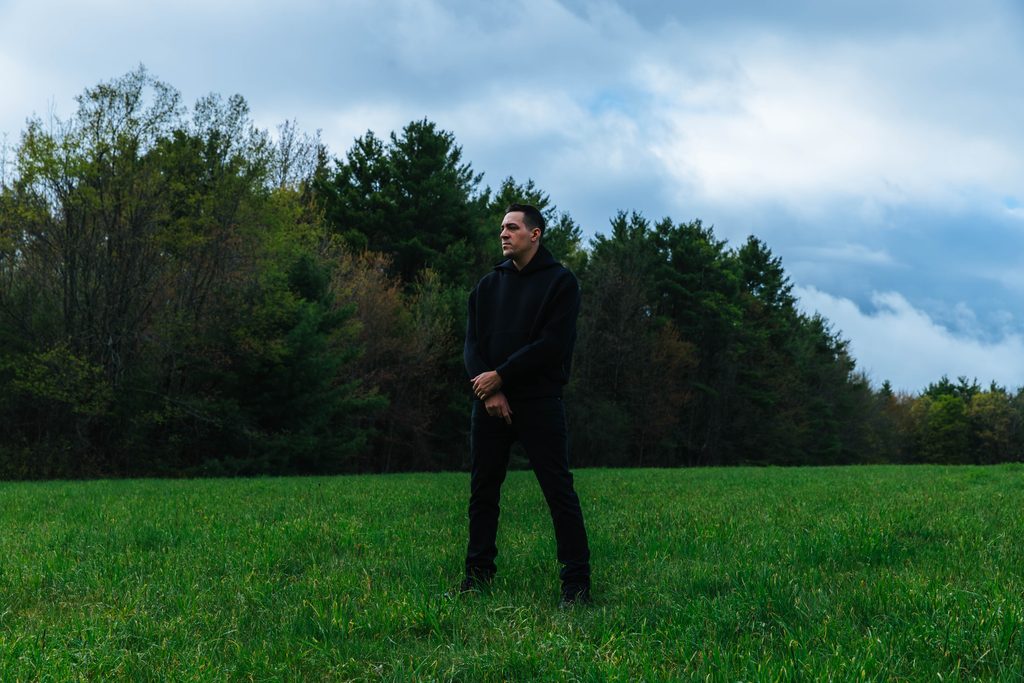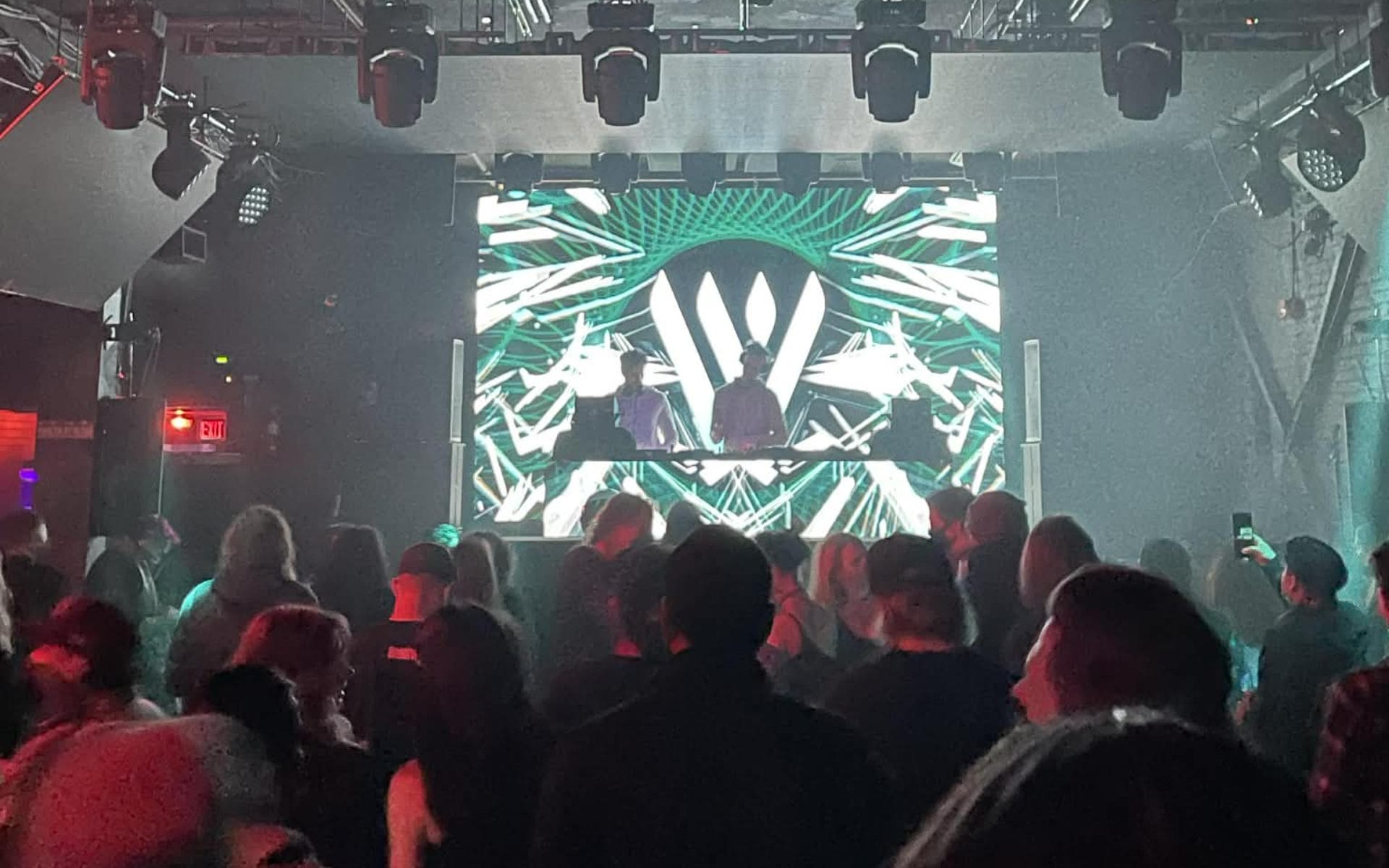
Photo Cred; Me, the author, while playing at 45 East in Portland, Oregon
Putting yourself against another artist is one of the earliest ways to erode and distort your creative process, which is why learning how to stop comparing your music to other producers is a hard internal battle to fight, but a necessary one. Because comparison can change the outcome and your voice before you have had the chance to fully hear yourself.
Once comparison enters the room and works its way into your mind, it starts shaping the choices you make before your voice as an artist and all of your inspirations have had time to be synthesized, distilled down, and brought to fruition. It’s a topic that kept coming up throughout my research while writing Sequencer: A Music Producer’s Guide to Building an Artistic Life, and I wanted to put some of my own thoughts on the matter down in a more casual setting (check out the book if you want to really get into the weeds with it)
That is the real problem. Artists sit down thinking about playlist placements, chart rankings, DJ support, or other visible markers that seem to define success, and they start comparing themselves against the sounds, styles, and structures of the highest-performing tracks on the market.
These reference points create a mental scoreboard, and decisions start to bend toward it instead of your own internal voice.

Comparison Starts Before You Notice It
The shift happens quietly, often before you realize it.
Human beings are wired for comparison, and artists are no different. It is almost impossible to avoid unless you are actively mindful of it. The moves themselves may still work in isolation, yet the track starts to be guided by placement logic and external metrics rather than personal expression.
That is where the disconnect begins and the process stops following internal markers and starts copying patterns tied to approval. The problem is that those patterns worked for another artist because they found their own voice. Trying to recreate their success creates a weaker copy, and now you are sacrificing your own voice to become a second-rate version of someone else.
That can look like replicating the drop of a bigger release, reusing the same vocal sample because it sounds like the latest club record, or discarding an idea that may have had real potential because it does not sound like what is trending.
These choices can seem minor. They can even feel responsible if you are chasing career milestones. They are usually justified as quality control.
Over time, they develop a reactive relationship with your art rather than the proactive exploration that keeps you at the forefront of your sound.
Stop Letting The Scoreboard Shape The Song
The track may still come together quickly.
It may hit the right marks for mix quality, sound design, and arrangement. It may feel efficient and polished, as if the session is clicking. That is not the point. The edge that defined your authorship starts to fade, and whole genres begin to sound like construction kits of themselves.
Once that pattern takes hold, it feeds itself. No single event triggers it. No single session in Ableton will make you feel guilty about it. It builds through repetition, and through failing to stay mindful of the constant curation and refinement of your taste as an artist happening alongside your technical skills.
Mixing, mastering, songwriting, and sound design can keep improving, yet if the taste guiding those skills is shaped by outside validation, the whole thing becomes passive rather than intentional. Future music starts adjusting to the field instead of building from your own perspective.
Catch Burnout Before It Takes Root
Comparison also feeds burnout because it can keep the motion going after the meaning has started to fade. Burnout among artists is one of those slow killers that usually stays hidden until it has already settled in. It may look like exhaustion on the surface, yet it often grows out of schedules built around constant posting, shallow studio sessions that appear productive, and routines that keep motion going without asking whether that motion still means anything.
Tracks are being finished but productivity starts replacing legitimate artistic progress and the search for an authentic voice.
The first move is not to solve your entire life, but instead it is to decide whether this moment is asking you to continue, pause, or change the task. That slide usually begins when forward motion or small wins get mistaken for alignment with the creative voice in the first place.
Pause Before The Session Turns Against Itself
Senses Of Mind put it clearly: “We’ve learned that when creativity starts to feel forced or when ideas don’t land with the same energy, it’s a clear sign we need to hit pause.”
That pause is not avoidance. It is a way of asking what the next move should actually be. Maybe the track needs another hour. Maybe it needs a different kind of task. Maybe it needs distance before the next decision. Separating yourself from those ideas gives you clean space to decide which ones are worth pursuing.
These slower phases should still be deliberate. Some artists use them for mixing, studio cleanup, file organization, room rearrangement, or designated listening days. Others step away from production for a short stretch and refill the part of the mind that the studio drains. The point is not to stay busy for the sake of motion. The point is to keep the next move honest.
Compare Against The Music You Made Yesterday
The only comparison that consistently helps is the music you were making yesterday. External checkpoints can be reduced. Immediate reactions can carry less weight. Peer feedback can prompt fewer pivots because you stay oriented to what your own voice is trying to do.
The Alexsander said it well: “Comparison can be a dangerous game if you’re not rooted in your own vision.” His correction is the real answer to how to stop comparing your music to other producers: “The biggest shift for me was turning down the noise and turning up the inner voice.”
That is where the process becomes steadier. You write, return to the studio, and come back to the writing amazing hooks and melodies without hoping for validation. Decisions stay connected and focused on and to the music you are making and the artistic life you are building, instead of a larger competitive field. The routine becomes active instead of reactive, and progress is measured by the process that keeps the music and your artistic life intact.

Will Vance is a professional music producer who has been involved in the industry for the better part of a decade and has been the managing editor at Magnetic Magazine since mid-2022. In that time period, he has published thousands of articles on music production, industry think pieces and educational articles about the music industry. Over the last decade as a professional music producer, Will Vance has also ran multiple successful and highly respected record labels in the industry, including Where The Heart Is Records as well as having launched a new label with a focus on community through Magnetic Magazine. When not running these labels or producing his own music, Vance is likely writing for other top industry sites like Waves or the Hyperbits Masterclass or working on his upcoming book on mindfulness in music production. On the rare chance he's not thinking about music production, he's probably running a game of Dungeons and Dragons with his friends which he has been the dungeon master for for many years.