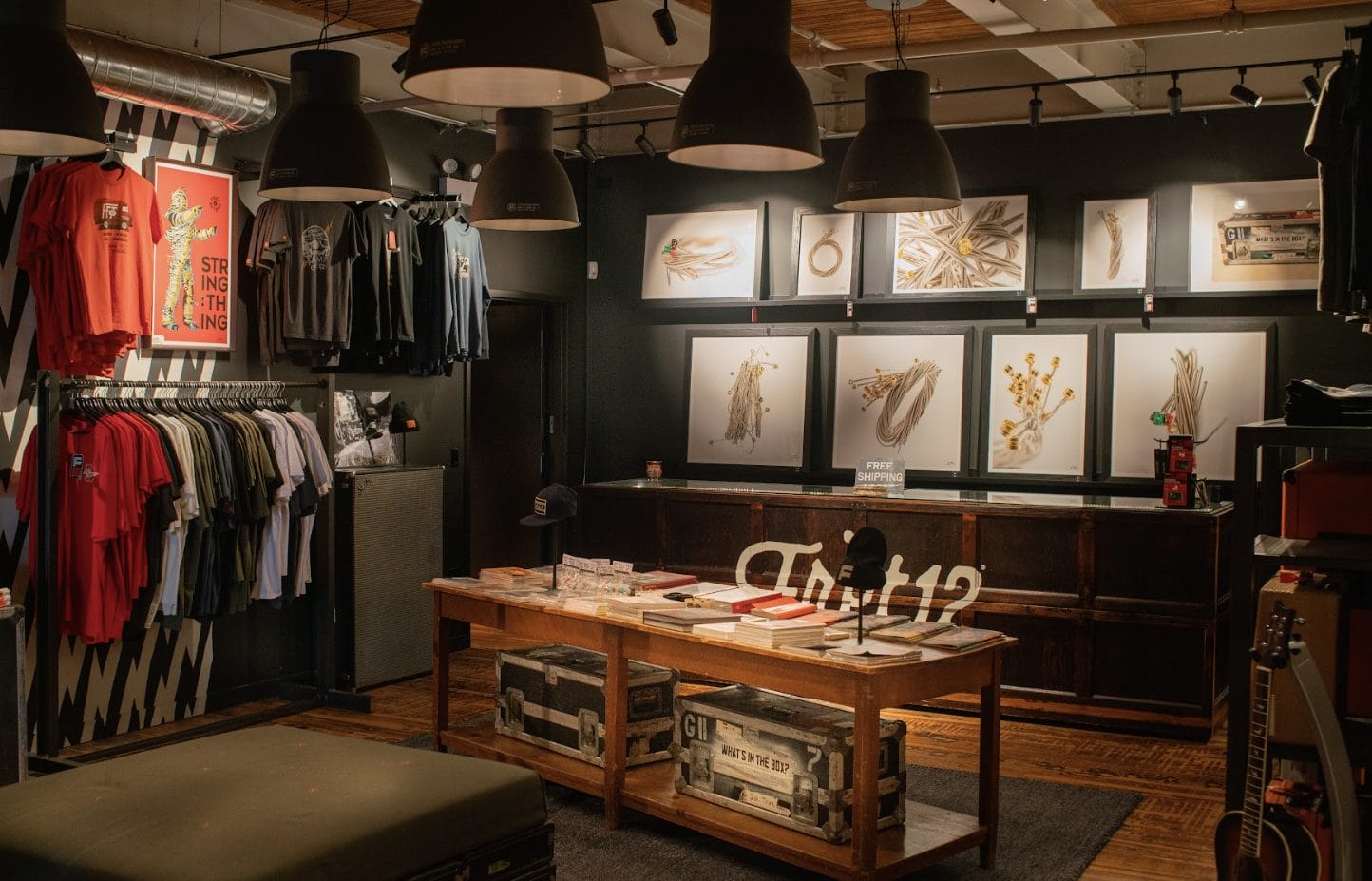
FRET12 is difficult to place in a single clean retail category, which seems to be the point. The Chicago company sells guitars and pedals, produces instructional content, makes clothing in its own studio, and films rising musicians through FRET12 Sessions.
The String Thing sits in the middle of all of it. The mummy-shaped mascot is designed to wrap old guitar and bass strings, turning something players normally throw away into a physical record of the sessions, shows, or tours they played.
The part I like is that the environmental idea came from an actual musician’s habit. It did not begin with a corporate sustainability campaign. It started with a guitar tech saving old strings backstage.
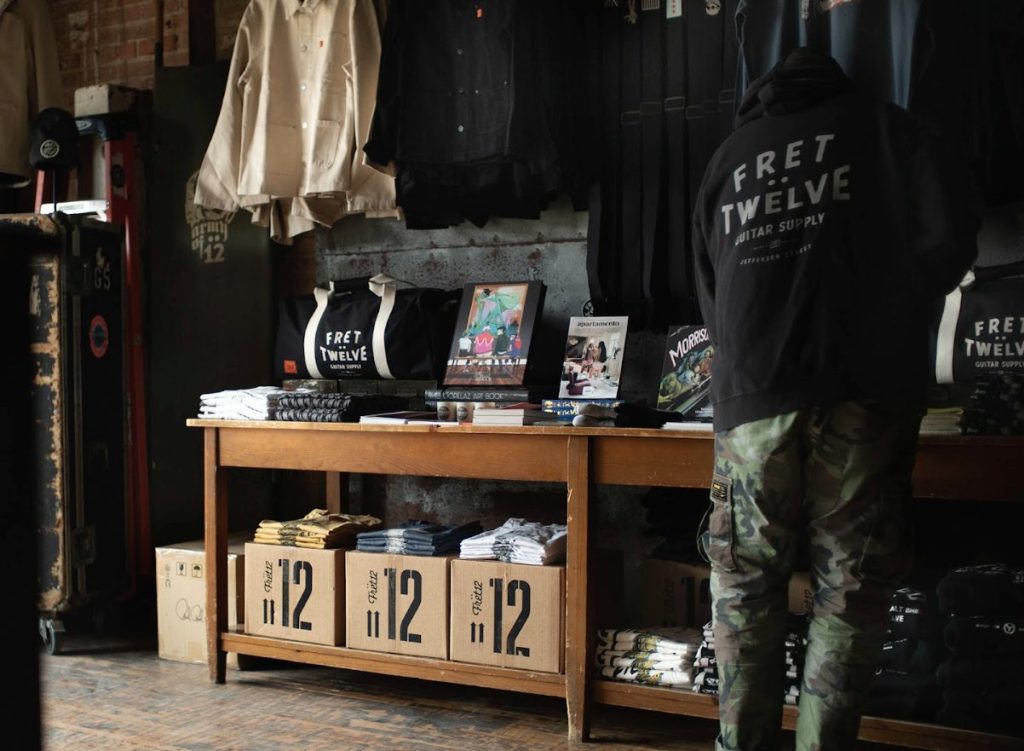
The String Thing Came From a Road Case Full of Memories
Years ago, FRET12 co-founder Dan Tremonti watched a guitar tech restring an instrument during a show. Inside the tech’s road case was a stack of coiled strings, with each set marked by location and date.
“He kept them as mementos from the tour,” Tremonti explains.
Tremonti took a group of those strings home and wrapped them around an action figure. The mummy-like shape became the basis for the String Thing and later served as FRET12’s mascot.
The finished product gives guitar and bass players a basic way to save their old strings without leaving them loose in a case or sending them to the trash. That matters because players discard roughly 1.5 million pounds of used strings each year, and the mixed metals can be difficult to process through local recycling services.
Music companies have started finding better uses for discarded materials, including AIAIAI and Ninja Tune’s headphones made with recycled vinyl. FRET12 approaches the same problem on a smaller and far more personal scale.
FRET12 Started With Access to Working Musicians
Before FRET12 opened its current shop, the company focused heavily on documentaries and behind-the-scenes artist content. Tremonti had spent time working as an artist and designer alongside his brother Mark Tremonti of Creed and Alter Bridge, which gave him access to parts of touring life that fans rarely encountered.
“I wanted to find a way to share that experience,” he says.
That original idea explains FRET12’s description as a “back alley to music culture.” The phrase came from a supporter who saw the brand as an alternative entry point to rehearsals, soundchecks, gear rooms, and the conversations happening between performances.
“The back alley is where the work actually happens,” Tremonti says.
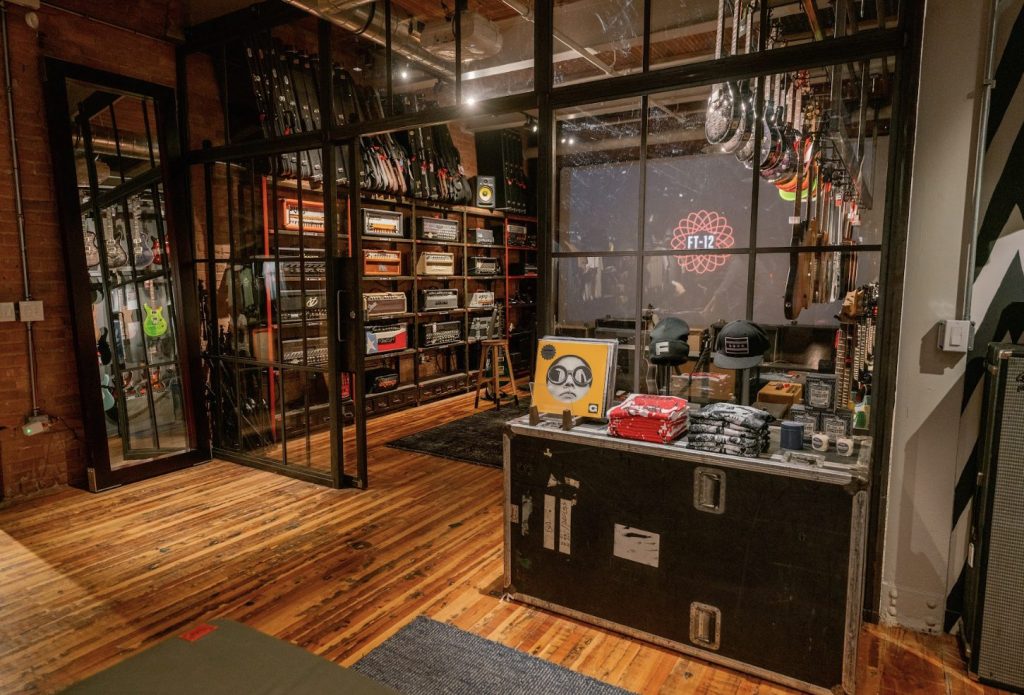
FRET12 built its identity around those working details. The shop stocks PRS guitars and other instruments, along with an exclusive Electro-Harmonix collaboration and a wider selection of pedals. Instructional videos give the gear side added context by placing products in the hands of musicians instead of treating the shop as a catalog.
That close relationship between education, personality, and product also comes through in our interview with Safari Pedals founder Noam Levinberg about building an independent music software company.
The Clothing Grew Past Standard Band Merch
FRET12’s clothing began with graphic tees tied to the artist-content side of the company. It has since expanded into hand-sewn jackets, one-of-one bags, and menswear made inside the Chicago studio.
The company uses Japanese denim, imported mill fabrics, and cotton milled in the United States. The references come from rehearsal rooms, touring crews, and the practical clothing worn during long days around venues.
That background helps the clothing feel connected to the rest of the shop. FRET12 is selling apparel shaped by touring life, and the pieces are designed to handle the physical wear that comes with it.
There is still room for the lighter graphic side of the company, including shirts built around the String Thing. The handmade pieces take the same idea further through better fabrics and in-house construction.
Rising Artists Are Part of the Business
FRET12 Sessions and its in-store events keep the company connected to musicians outside the established touring circuit. The video series includes live sessions, profiles, and conversations with players who may have limited access to larger media platforms.
“The independent music ecosystem is what produces the next generation of touring musicians,” Tremonti says.
That support fits the history of the company. FRET12 began by documenting musicians and giving fans access to their working lives. The shop, clothing, and String Thing grew from that same interest in the people and objects surrounding live music.
Plenty of retailers can sell a guitar or print a shirt. FRET12 has built a clear reason for those products to live in the same room.

Will Vance is a professional music producer who has been involved in the industry for the better part of a decade and has been the managing editor at Magnetic Magazine since mid-2022. In that time period, he has published thousands of articles on music production, industry think pieces and educational articles about the music industry. Over the last decade as a professional music producer, Will Vance has also ran multiple successful and highly respected record labels in the industry, including Where The Heart Is Records as well as having launched a new label with a focus on community through Magnetic Magazine. When not running these labels or producing his own music, Vance is likely writing for other top industry sites like Waves or the Hyperbits Masterclass or working on his upcoming book on mindfulness in music production. On the rare chance he's not thinking about music production, he's probably running a game of Dungeons and Dragons with his friends which he has been the dungeon master for for many years.