Article Breakdown:
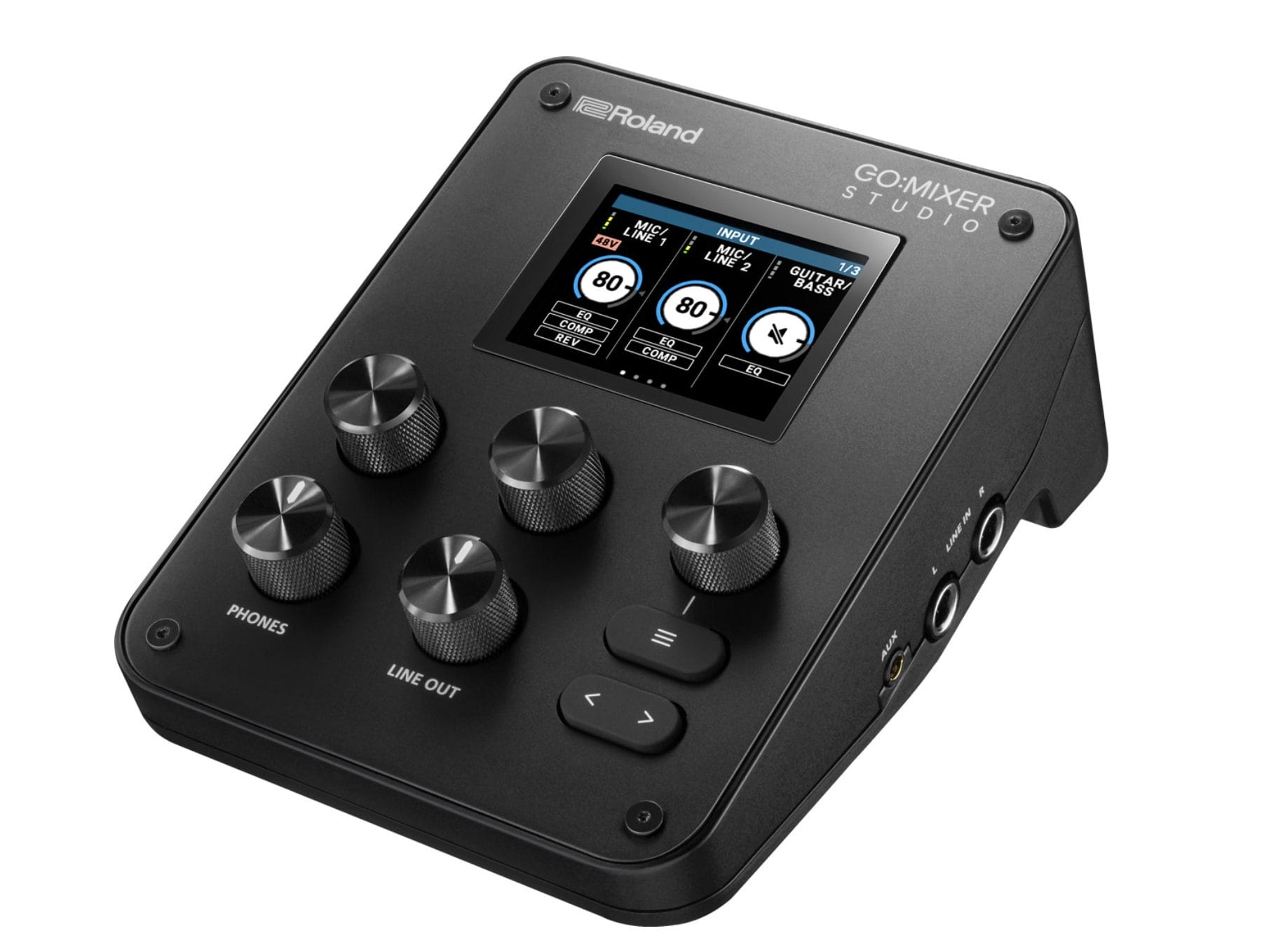
I take a closer look at the GO:MIXER Studio to see if it’s something to add to your kit.
Content creators are more ubiquitous than ever, and the demand for portable gear that can deliver big is the new essential tool everyone is seeking. How can I take a studio on the road without hauling a ton of gear? A lot of companies are in this race, from RODE Microphones to IK Multimedia and many more, so there are a lot of options out there right now, but Roland just delivered big with the latest in their GO:MIXER lineup.
Roland’s latest entry into its portable mixer line, the GO:MIXER Studio, is a leap forward in input flexibility, sound quality, onboard effects, and overall usability. It’s a mobile audio interface and an all-in-one portable mixing station, giving creators the tools they need before they hit record, not after. Does reducing time in post sound good to you? Keep reading.
This is a “content creation console” powerful enough to handle serious recordings on the road, and punches way above its weight on features and price.
It’s ideal for performance video creators, DJs, multi-instrument recording, livestreamers, vloggers, podcasters, and hybrid music workflows that span smartphones, tablets, and desktops. This is one of the best-priced, full-featured mixers of its kind, and this is why we have also given it our Editor’s Choice Award for 2026.
Build Quality & Design
Roland has never been one to skimp on construction, and the GO:MIXER Studio feels tough enough for the road. The layout is simple, with a clean layout of knobs, buttons, and a bright full-color display that actually matters once you start managing multiple inputs.
Whether you’re on a desk, mounted on a mic stand, or perched between camera and laptop, the GO:MIXER Studio is ergonomically friendly and has a very small footprint. Dedicated controls for each channel keep you out of menus when time is tight, a nice departure from software-only mixers that bury every function behind clicks.
The inclusion of both USB-C connectivity and support for external power sources (bus power + adapters/batteries) means mobile shooting isn’t held hostage by phone battery life.
The GO:MIXER Studio – Inputs & Features
For $299, you are getting a mobile production hub tailored for the creative workflow. Check out the GO:MIXER Studio HERE on Roland’s website to learn more or purchase.
Multi-Channel Inputs
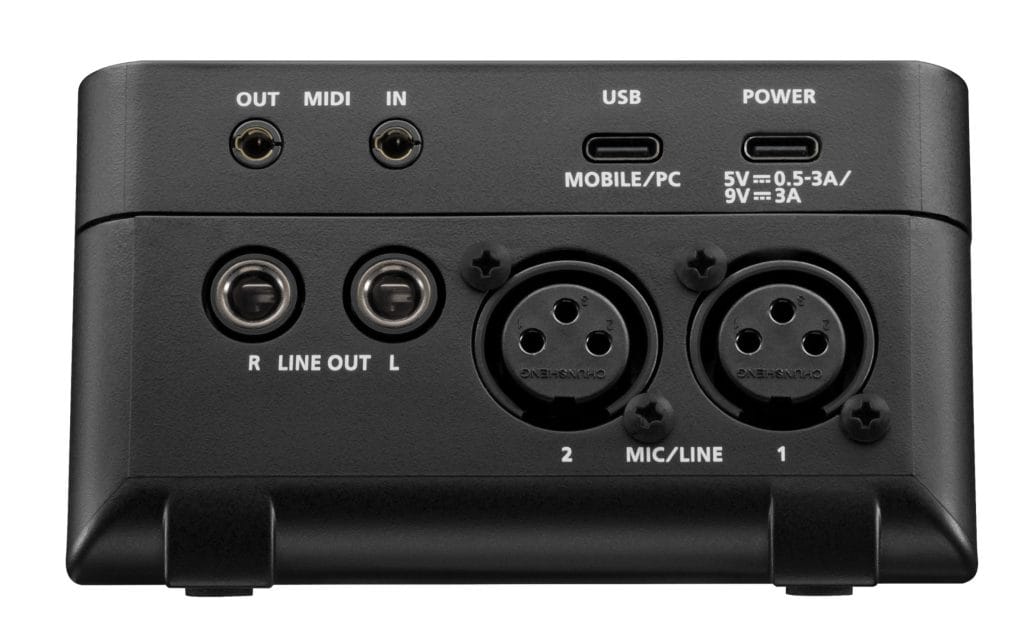
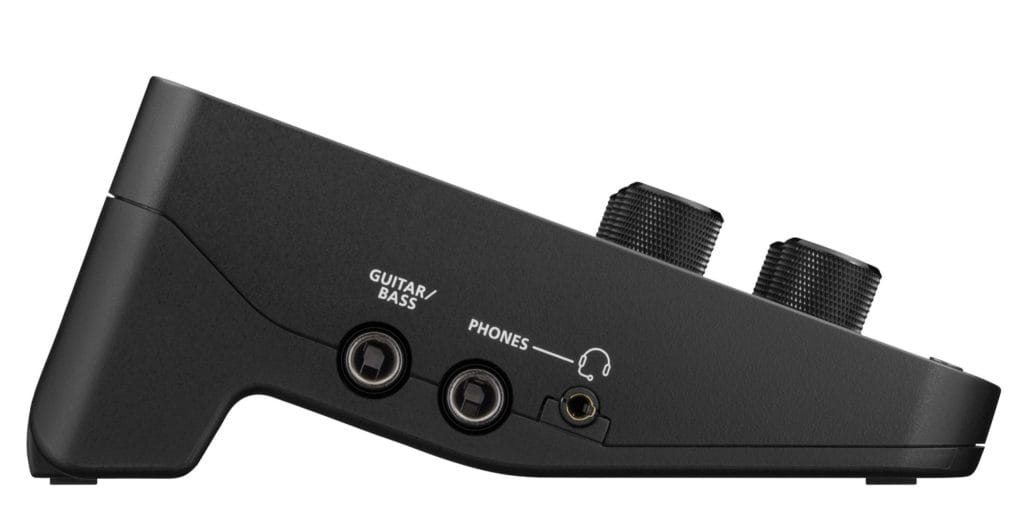
- 2 × XLR / Line Inputs with high-quality mic preamps and switchable phantom power.
- Dedicated ¼″ Guitar/Bass Input — optimized Hi-Z support for direct instrument capture.
- Stereo ¼″ Line Inputs — perfect for synths, drum machines, DJ line-outs, and more.
- Aux / TRRS Input — handy for phones, tablets, or portable playback sources.
- MIDI In/Out — yes, Roland even built in MIDI for connecting controllers and gear without a separate interface.
Outputs & Monitoring
- Dual Headphone Outputs — great for monitoring with artists or collaborators.The wide gain range is helpful for dialing in vocals, instrument recordings, etc.
- Stereo Line Outs for speakers, monitors, or broadcast feed.
- Color Display & Hands-On Control — mix without guessing what you’ve done.
Onboard Processing
Right in the box, you get processing power with three key features that are super helpful: a built-in 3-band EQ, Compressor, and Reverb. These effects can be used both during capture and monitoring. It’s the kind of thing most small creators usually have to deal with in post-production, so now you can get a head start
Scene Memories & Workflow Tools
Save and recall up to 16 mixer presets, a real boon when swapping between podcast, band, and DJ livestream contexts.
Creative Workflows — Real World Use Cases
Bands and Musicians / stopped here.
Whether you’re tracking acoustic sessions in the living room or recording multi-mic setups for YouTube, the Studio lets you capture instead of compromise. Dual XLR and phantom power put it in another league above mobile dongles.
DJs & Live Performers
Line inputs for mixers, built-in effects for performance polish, and multi-output support make this a contender for use as a livestream centerpiece or live recording hub.
Mobile Video Creators
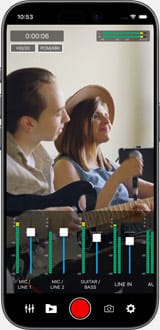
Pair with the GO:Mixer Cam app for simultaneous multitrack capture and video recording, or use the companion GO:Mixer Editor on Mac/Windows for deep control — both workflow boosters that extend beyond just plugging into Camera.
Podcasters & Vloggers
Between onboard effects, dedicated control, and multiple headphone feeds, the Studio can replace a small desktop mixer and interface combo for many creators.
Audio Quality — Studio-Grade Sound
The GO:MIXER Studio supports up to 24-bit/192 kHz recording, with 32-bit floating-point internal processing, a feature you usually see only in dedicated audio interfaces. The preamps are respectable, and the built-in dynamics/EQ/reverb chain means you’re getting the sounds dialed in before you record, not just after editing. I love how this can speed up the workflow and save creators precious time in post.
No, this isn’t an SSL rack converter, but for mobile workflows and hybrid production, it’s rock-solid in a portable format.
Other GO:MIXERS to Consider
- Roland GO:MIXER PRO X · $199.99 Smaller, simpler, and cheaper portable mixer ideal for basic multi-source mobile content.
- Roland GO:MIXER · $59.99 The classic ultra-simple option for quick smartphone audio enhancement.
- Roland BRIDGE CAST · $329.99 Broadcast mixer with voice effects and separate personal/stream mixes — great for streaming-heavy workflows.
Pros & Cons
Pros
- Wide and flexible I/O for diverse sources.
- Studio-grade audio support (24/192 + floating point).
- Onboard effects and EQ/compression.
- Dedicated knobs + color display.
- Scene memory for workflow saving.
- Companion apps extend utility.
Cons
- Not as compact as ultra-mobile mixers.
- Onboard effects may not replace deep DAW processing for pros.
- Power needs (bus or adapter) can add cables.
Specs:
- Inputs: 2 × XLR/Line w/ phantom, Hi-Z guitar input, stereo ¼″ line, AUX/TRRS, MIDI In/Out.
- Outputs: Stereo ¼″ Line Outs, Dual headphone jacks.
- USB Audio: Up to 12 inputs / 6 outputs (8/4 at 192 kHz).
- Recording Rates: 44.1/48/96/192 kHz; 24-bit.
- Onboard Processing: EQ, Compressor, Reverb.
- Scene Memory: 16 presets.
- Display: Full-color LCD.
- Power: USB bus, external adapter, or mobile battery.
- Companion Software: GO:Mixer Cam (iOS), GO:Mixer Editor (Mac/Win).
- Price: ~$299 USD.
Summary
The Roland GO:MIXER Studio is a full-service hub for creators who want control, quality, and flexibility without hauling a bunch of gear. It bridges the gap between phone-centric workflows and proper studio tools, making it a compelling centerpiece for anyone who shoots performance video, livestreams, or portable music sessions. Roland has really hit the sweet spot here for performance, feature set, and price, so the competition will be playing catch-up.
Learn more about Roland GO:MIXER Studio HERE.

David Ireland is a professional strategist, creative, and marketer. He began his career in 1995 as creator and publisher of BPM Magazine. In August 2000, BPM Magazine merged with djmixed.com LLC, an online media company based in Los Angeles, which later evolved into the Overamerica Media Group [OMG] in 2003. In 2009, Ireland left Overamerica Media Group to serve as the VP of Marketing at Diesel. In 2011, he returned to his roots in media and cofounded the online electronic music publication Magnetic Magazine and created The Magnetic Agency Group. In June 2018, Ireland joined Winter Music Conference (now owned by Ultra Music Festival) as the Director to lead the reboot for 2019 and usher in a new era for the iconic brand. He served as Chief Marketing Officer at Victrola for three years, guiding product innovation and brand growth. He currently serves on the advisory board of Audiopool, a new music tech startup focused on AI-generated music licensing and artist revenue models.






![How It Was Made: Lang Father i(Junkyard Dog) [Welofi]](https://magneticmag.com/wp-content/uploads/2026/10/Press-Pic_2.jpg)