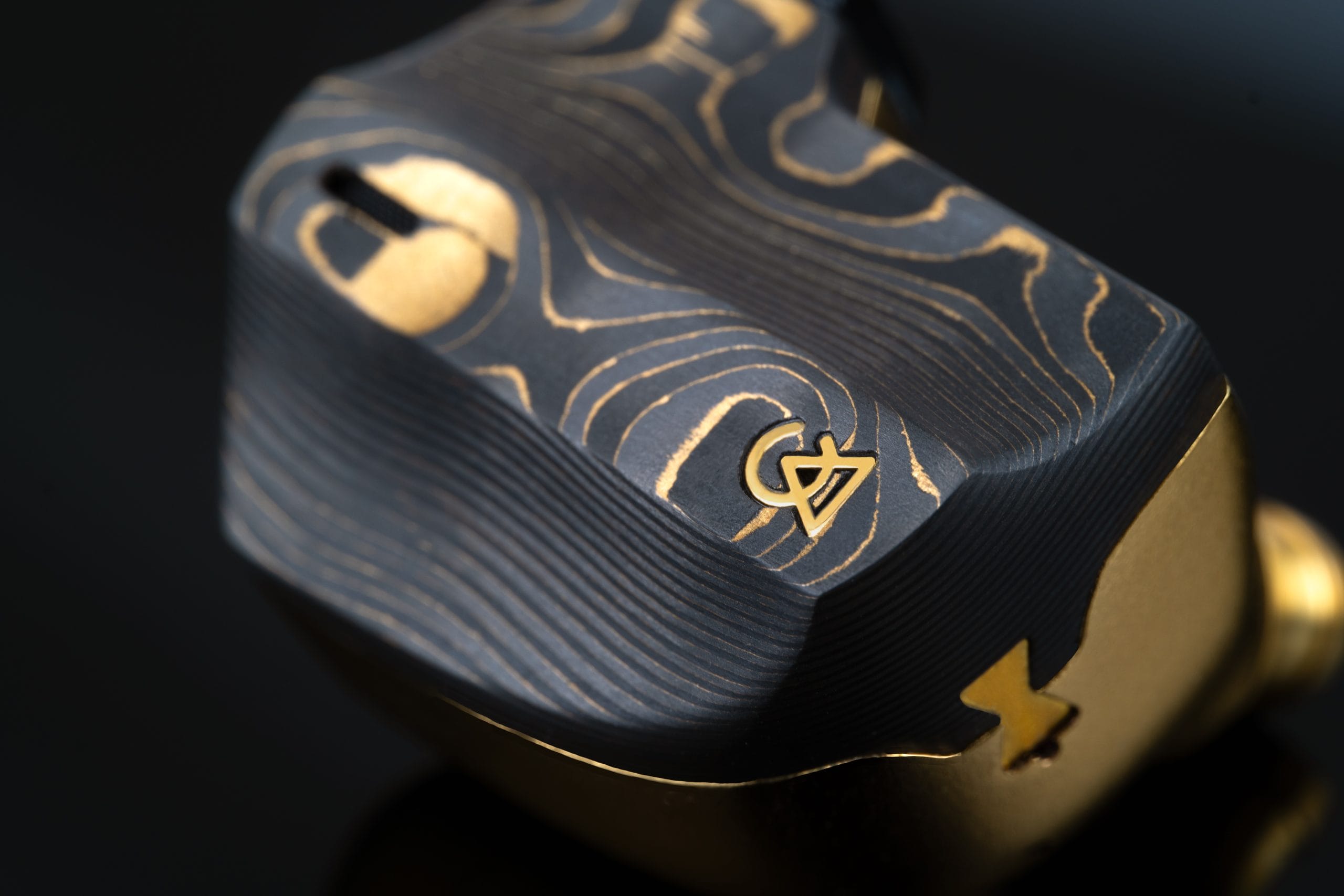
Campfire Audio has announced Chimera, a new flagship in-ear monitor that brings four driver technologies into one nine-driver design. Handbuilt in Portland, Oregon, Chimera combines a dynamic driver, balanced armatures, electrostatic super-tweeters, and bone conduction inside a CNC-machined magnesium shell.
This is clearly Campfire going all the way upmarket.
Chimera is priced at £6,999 or $7,500, with pre-sale opening May 16, 2026, and shipping expected in June. It will be shown publicly for the first time at CanJam Singapore on May 16 and 17, giving the audiophile crowd the first chance to hear how this driver system translates in person.
The headline is the driver layout. Chimera uses a newly developed 10mm True-Glass dynamic driver for the low and low-mid frequencies, a dual-diaphragm balanced armature for midrange detail, two high-frequency balanced armatures for upper-range articulation, and four electrostatic super-tweeters for extension.
Campfire also adds bone conduction for the first time in one of its IEMs, embedding the driver directly into the magnesium shell so low-frequency information can be felt through the housing as well as heard through the acoustic system.
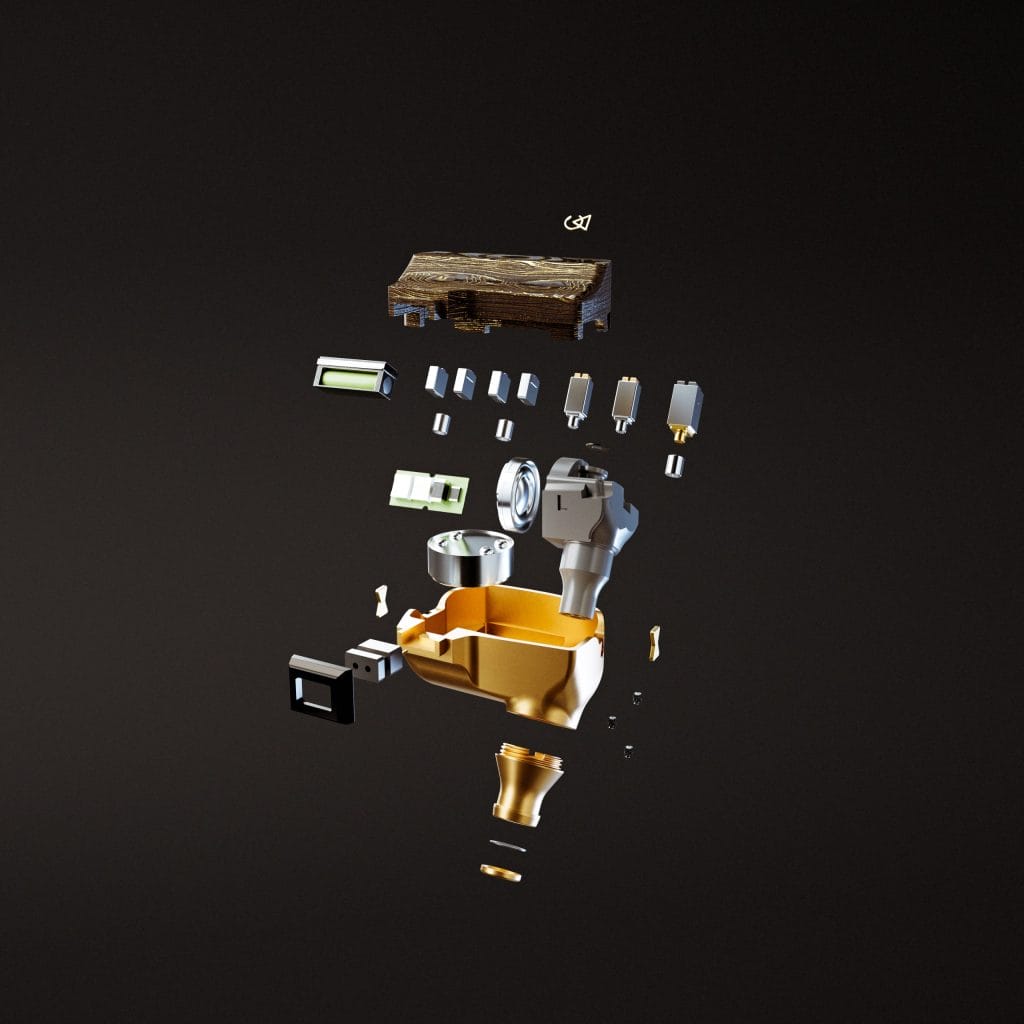
Campfire Audio Chimera Driver Design
The challenge with a multi-driver IEM like this is cohesion. Putting several driver types into one shell can create impressive spec-sheet appeal, though the real test is how naturally the low end, mids, upper range, and bone-conduction system connect during listening.
Campfire is using internal acoustic routing, an embedded pressure valve behind the dynamic driver, and a final-stage Master Track tuning damper inside the nozzle to manage that relationship. Those details point toward a design that tries to keep each driver type in its role while controlling airflow, pressure, and final output at the ear.
That is where Chimera gets interesting. The electrostatic tweeters suggest extended high-frequency detail, the balanced armatures handle mid and high articulation, and the dynamic driver gives the low end its foundation. The bone-conduction driver adds a different physical component, which could give bass information a firmer presence without relying only on acoustic output.
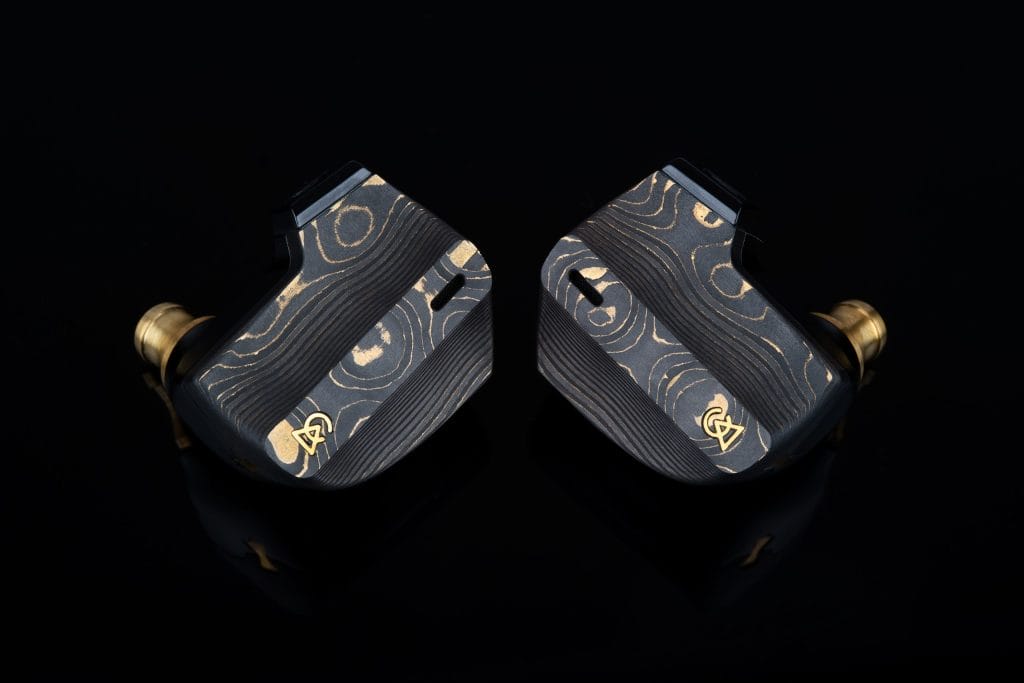
Campfire Audio Chimera Price And Build
The exterior is also built around premium materials. Chimera uses a billet magnesium shell with a PVD coating, available in gold and black. Magnesium keeps the housing lighter than many dense metal alternatives, and Campfire selected it partly because it supports the bone-conduction system inside the shell.
The faceplate uses a carbon fiber and brass Damascus construction, with folded brass layers inside carbon fiber that are CNC-machined into a patterned surface. Each unit has slight visual differences, so no two pairs should look exactly identical.
Campfire is also bringing back the ALO Audio name with the included Valence-6 cable. The cable uses four high-purity copper conductors and two 50/50 copper and silver-plated copper conductors, with black anodized aluminum hardware. The package also includes a black leather zipper case with built-in display, Breezy Bag Micro, cleaning cloth, cleaning tool, and three tip types in small, medium, and large sizes.
Chimera is a very expensive IEM, and it is aimed at a narrow listener: the person who wants Campfire’s most ambitious portable audio design, a complex driver system, and a highly finished physical object in the same package.

Will Vance is a professional music producer who has been involved in the industry for the better part of a decade and has been the managing editor at Magnetic Magazine since mid-2022. In that time period, he has published thousands of articles on music production, industry think pieces and educational articles about the music industry. Over the last decade as a professional music producer, Will Vance has also ran multiple successful and highly respected record labels in the industry, including Where The Heart Is Records as well as having launched a new label with a focus on community through Magnetic Magazine. When not running these labels or producing his own music, Vance is likely writing for other top industry sites like Waves or the Hyperbits Masterclass or working on his upcoming book on mindfulness in music production. On the rare chance he's not thinking about music production, he's probably running a game of Dungeons and Dragons with his friends which he has been the dungeon master for for many years.