There was a moment, somewhere in the mid-2010s, when browser gaming quietly disappeared. Adobe Flash got deprecated, mobile app stores swallowed casual gaming whole, and somewhere along the way the question shifted from which gaming site you used to which gaming app you had downloaded. The browser became a place for spreadsheets and streaming, not for blasting through three rounds of something before your next meeting. Most people didn’t even notice it was gone.
Now it’s back, and the numbers suggest it never really had a successor.
The growth has been unceremonial but hard to ignore. Platform after platform is reporting surging session counts. The global web gaming market is projected to exceed $2.69 billion by 2027.
What changed is simple: the experience caught up. For years the browser was the compromise option, something you tolerated when you didn’t want to download anything. That gap has closed. Games that would have required a dedicated app two or three years ago now run just as smoothly in a tab. When the experience is the same, nobody chooses the extra steps. The browser just removed every reason not to use it.
The Games You Remember, But Not How You Remember Them
The titles driving this resurgence will feel instantly familiar to anyone who grew up with a browser tab open in the background. Endless runners like Subway Surfers, the world’s most downloaded mobile game, are now fully playable without an app. Smash Karts delivers a Mario Kart-style multiplayer experience directly in a tab, free and instant. Precision platformers, physics puzzlers, reflex arcade games. The instincts are the same as the early web gaming era, but the execution has caught up. Smoother framerates, cleaner art, tighter controls. Players who remember Miniclip and Newgrounds will find the format familiar. Players who have never heard of either will just find the games good.
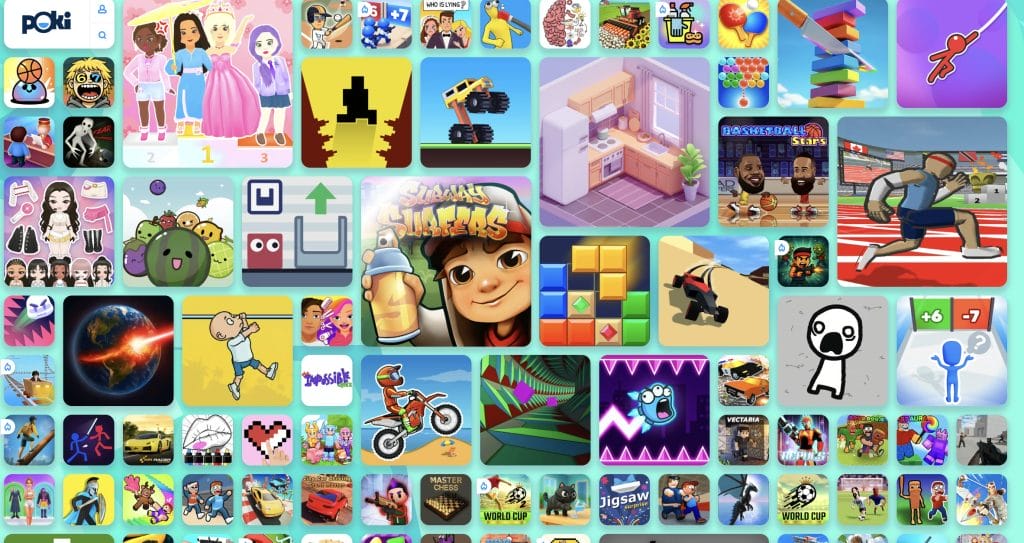
The scale is also getting harder to dismiss. Poki, one of the leading web gaming platforms, is now pulling in 100 million monthly active players and recording 1 billion gameplay sessions a month. That’s a single platform. The broader picture is bigger still, with thousands of games spread across dozens of platforms reaching players who would never describe themselves as gamers.
Mobile gaming shortened session expectations and then frustrated players with aggressive monetization. Console gaming kept growing its budgets and its time commitments. Browser gaming went silent, rebuilt itself, and came back with exactly what both of those formats stopped providing: something you can actually finish in the time you have, on whatever device is in front of you.
Nobody announced the comeback. Bloomberg recently called web gaming video games’ hottest new platform, which probably surprised anyone who assumed it had aged out somewhere around the death of Miniclip. It just showed up one day while people were looking for something to do between things.

Magnetic byline note: This byline is used for staff produced updates and short announcements, often based on press materials and official release information. Editorial responsibility: David Ireland (Editor in Chief) and Will Vance (Managing Editor). About: https://magneticmag.com/about/ Masthead: https://magneticmag.com/masthead/ Contact: https://magneticmag.com/contact/