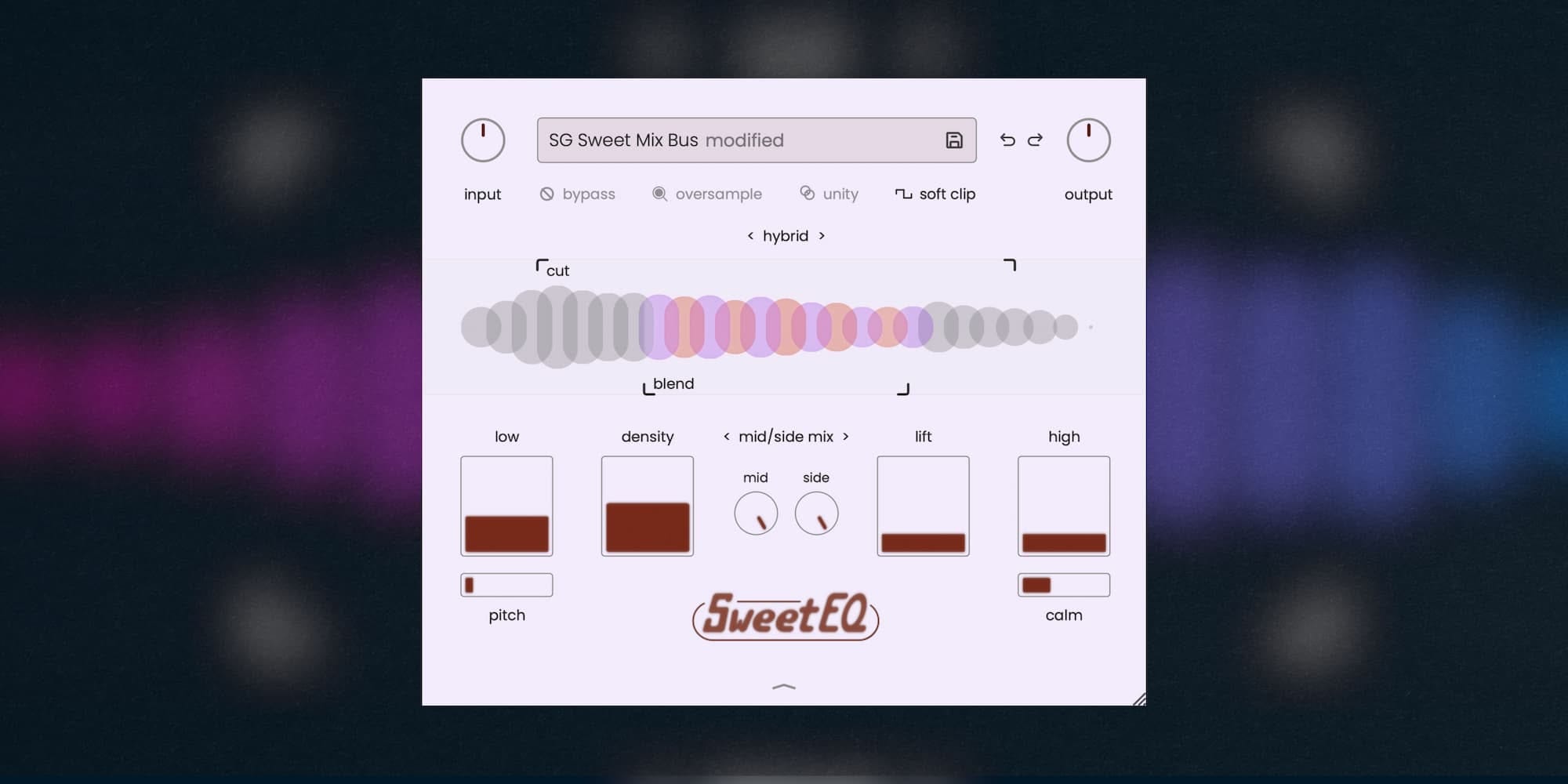
Musik Hack’s latest SweetEQ update feels like the right kind of expansion.
The plugin already had a clear role inside a session. It was quick to trust, easy to place on a track, and useful when you wanted to shape tone without disappearing into a maze of controls. This new version keeps that same sense of speed, but it gives the plugin more range in the exact places where producers tend to need it once a tool becomes part of their regular workflow.
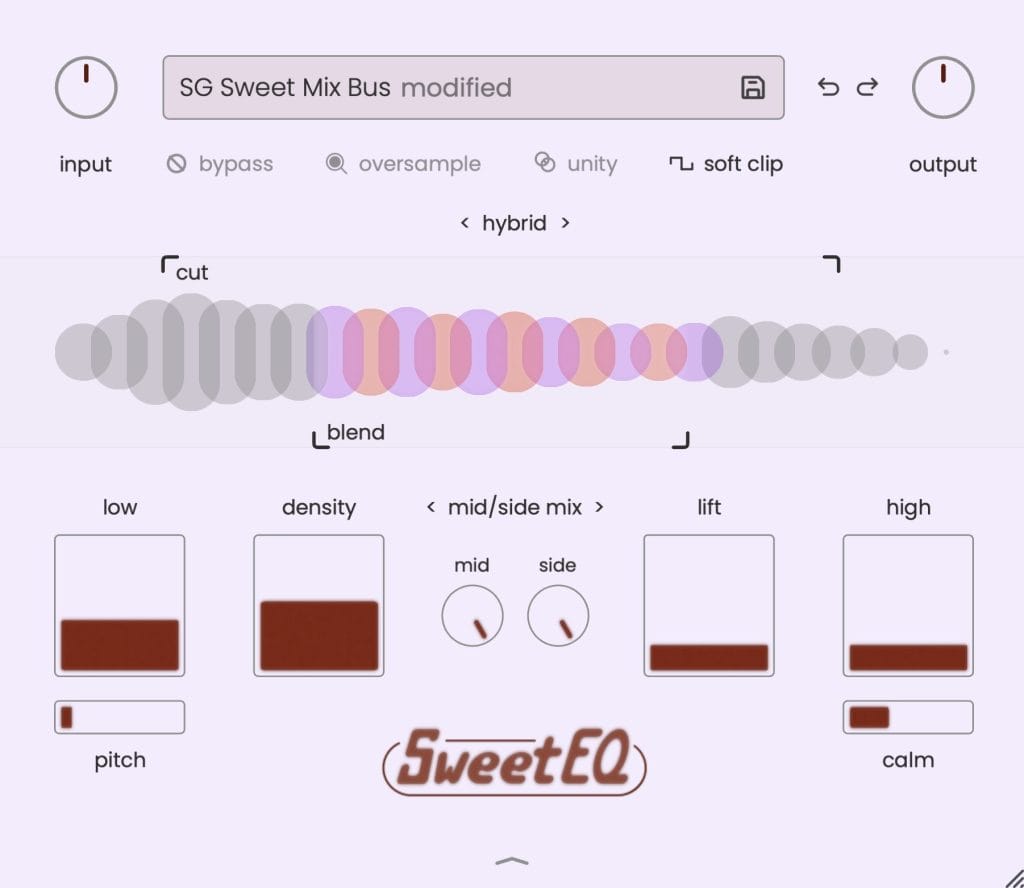
That is why the update works. It does not try to turn SweetEQ into a completely different product. It gives users more ways to push the plugin further while keeping the same immediate feel that made it useful in the first place. The new additions focus on frequency shaping, clipping behavior, stereo handling, and visual customization, which means the plugin now covers more ground without losing its simplicity.
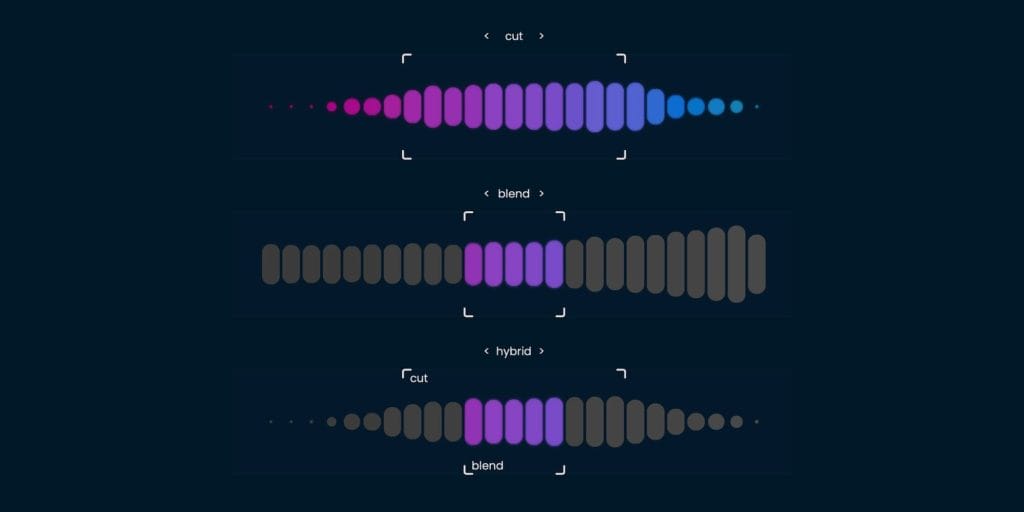
More filtering and clipping control without killing the flow
The most useful changes are the new bandpass modes and clip out modes. Those additions push SweetEQ past broad tonal sweetening and into more deliberate shaping. The bandpass section now gives users filter, blend, and hybrid approaches, which makes it easier to decide how aggressively the plugin should touch a specific range. That opens the door for more focused moves on vocals, synths, guitars, or mix buses without forcing the user into one static character.
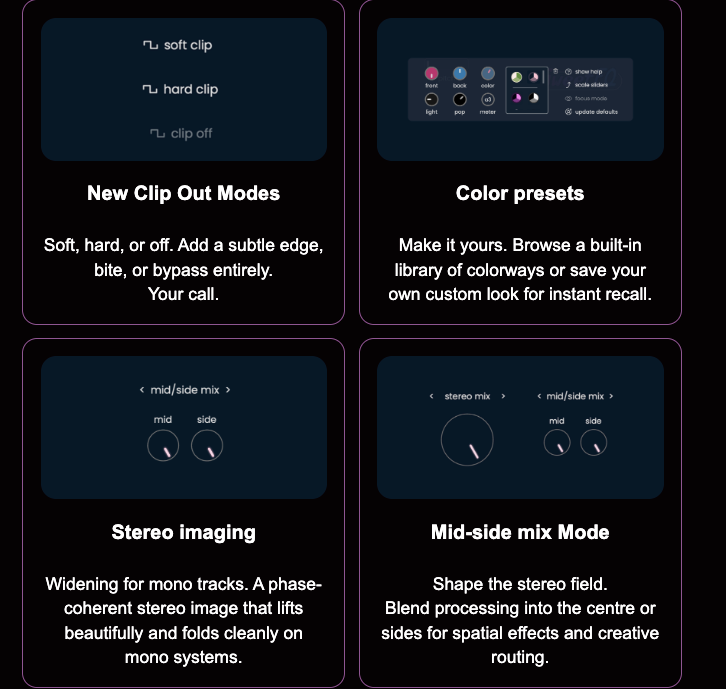
The new clip out options also make a real difference. Soft, hard, or off is a simple enough framework, but it covers a lot of ground in practice. You can add a little edge, leave the signal cleaner, or push the plugin into something that feels more assertive depending on the source. That kind of flexibility keeps SweetEQ in the insert chain longer, which is usually a good sign that the update actually improved the tool instead of just adding features for the sake of it.
There is a clear sense that Musik Hack wants users to keep moving quickly. Nothing about these additions feels like it is asking for more menu diving or more second-guessing. The plugin still feels fast.
Stereo tools make the update more useful across a full session
The stereo additions probably have the biggest long-term value. SweetEQ now includes stereo imaging for mono tracks, with a phase-coherent widening approach that is designed to stay clean when the signal folds back to mono. That gives users a practical way to open things up without immediately creating translation problems later, which is a familiar issue with a lot of widening tools.
The new mid-side mix mode also gives the plugin a broader role in a mix. Being able to steer processing into the center or sides means SweetEQ can now do more than basic tonal shaping. It can help with spatial placement, bus treatment, and subtle movement in ways that feel more advanced without becoming complicated.
Then there is the color preset system. That is not the headline feature, but it does help. Producers spend a lot of time looking at the same handful of plugins, and visual comfort plays a bigger role than people like to admit. Being able to browse built-in colorways or save your own adds a little more polish to the whole experience.
What Musik Hack got right here is restraint. SweetEQ is more capable now, but it still feels like SweetEQ. That is exactly how this kind of update should land.

Will Vance is a professional music producer who has been involved in the industry for the better part of a decade and has been the managing editor at Magnetic Magazine since mid-2022. In that time period, he has published thousands of articles on music production, industry think pieces and educational articles about the music industry. Over the last decade as a professional music producer, Will Vance has also ran multiple successful and highly respected record labels in the industry, including Where The Heart Is Records as well as having launched a new label with a focus on community through Magnetic Magazine. When not running these labels or producing his own music, Vance is likely writing for other top industry sites like Waves or the Hyperbits Masterclass or working on his upcoming book on mindfulness in music production. On the rare chance he's not thinking about music production, he's probably running a game of Dungeons and Dragons with his friends which he has been the dungeon master for for many years.