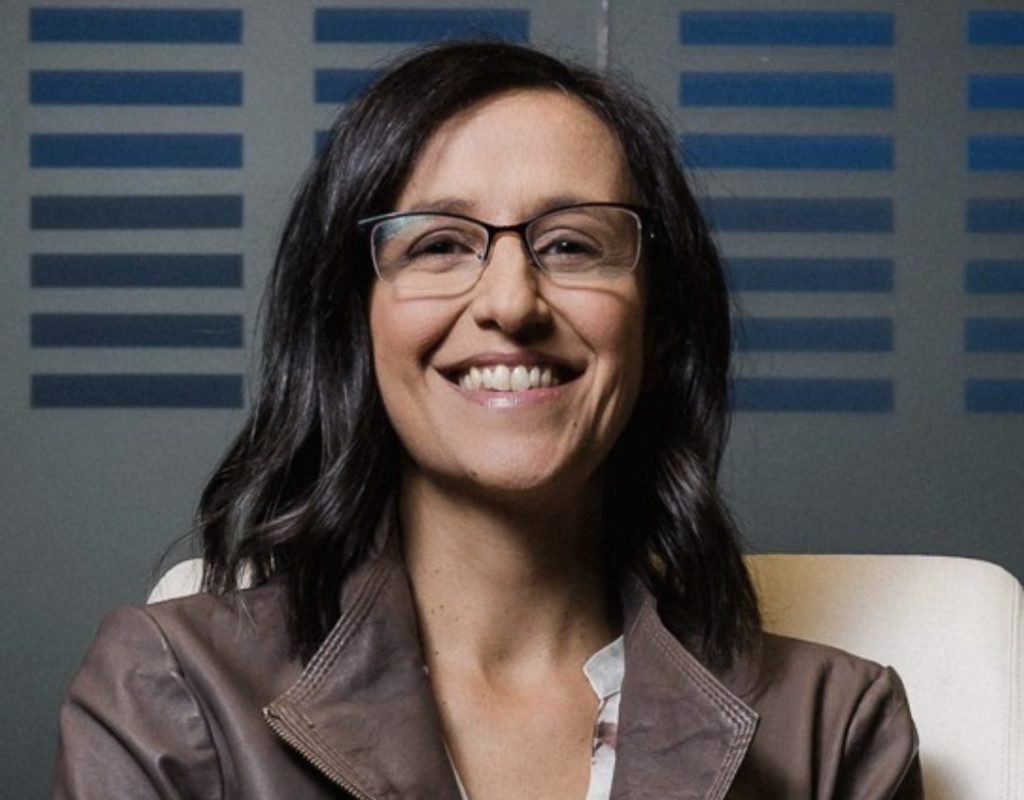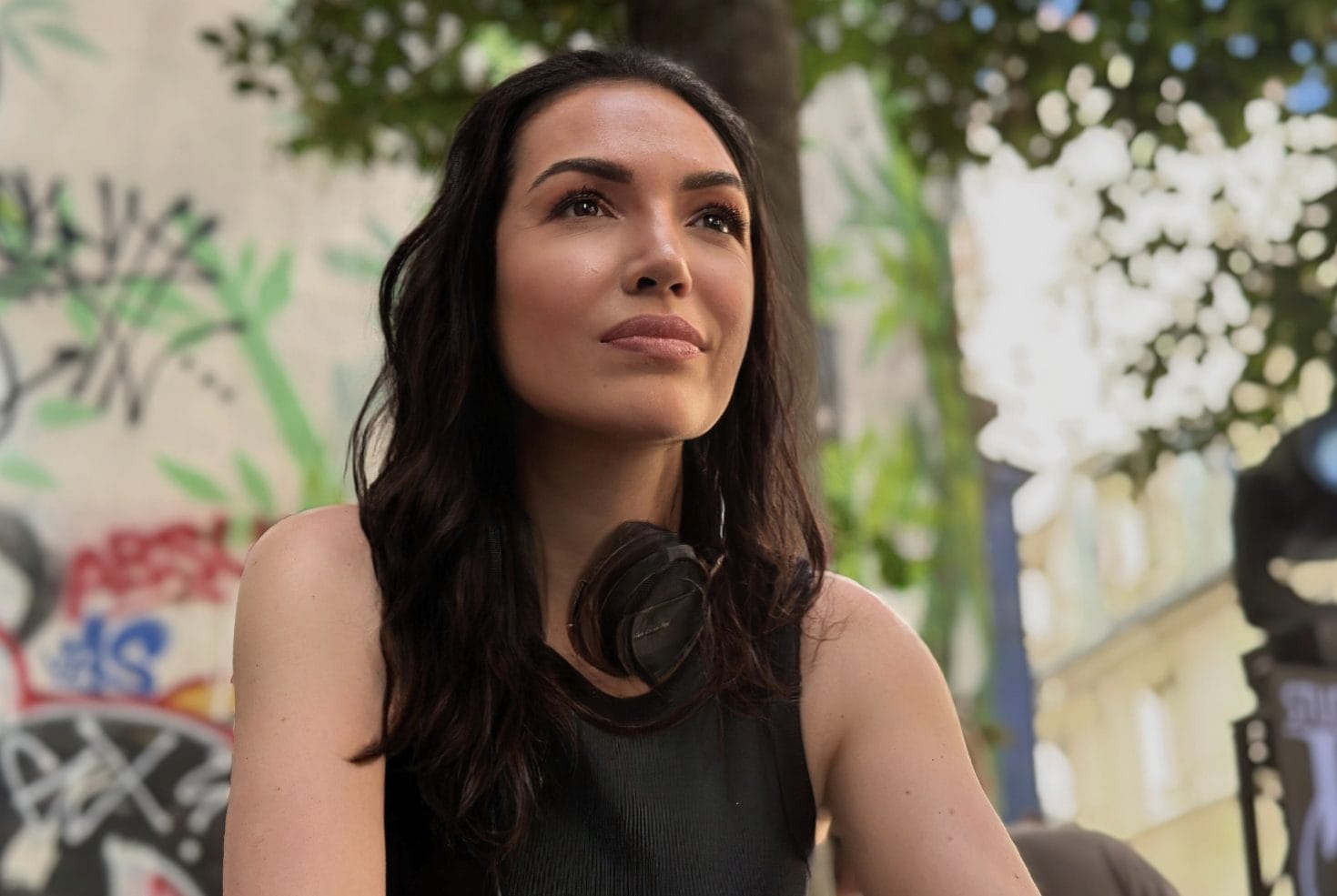
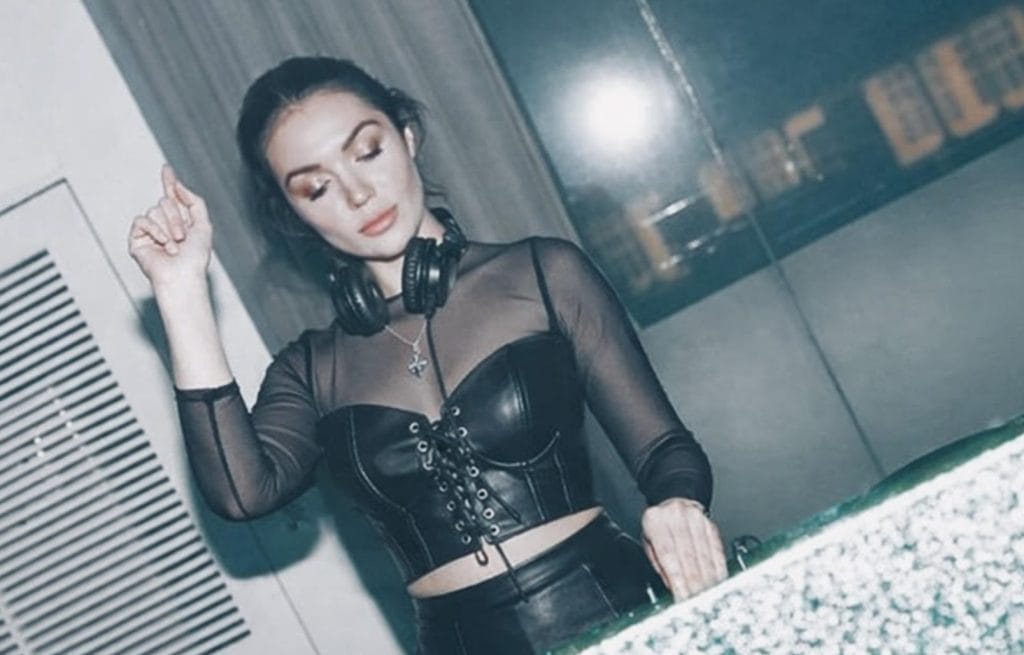
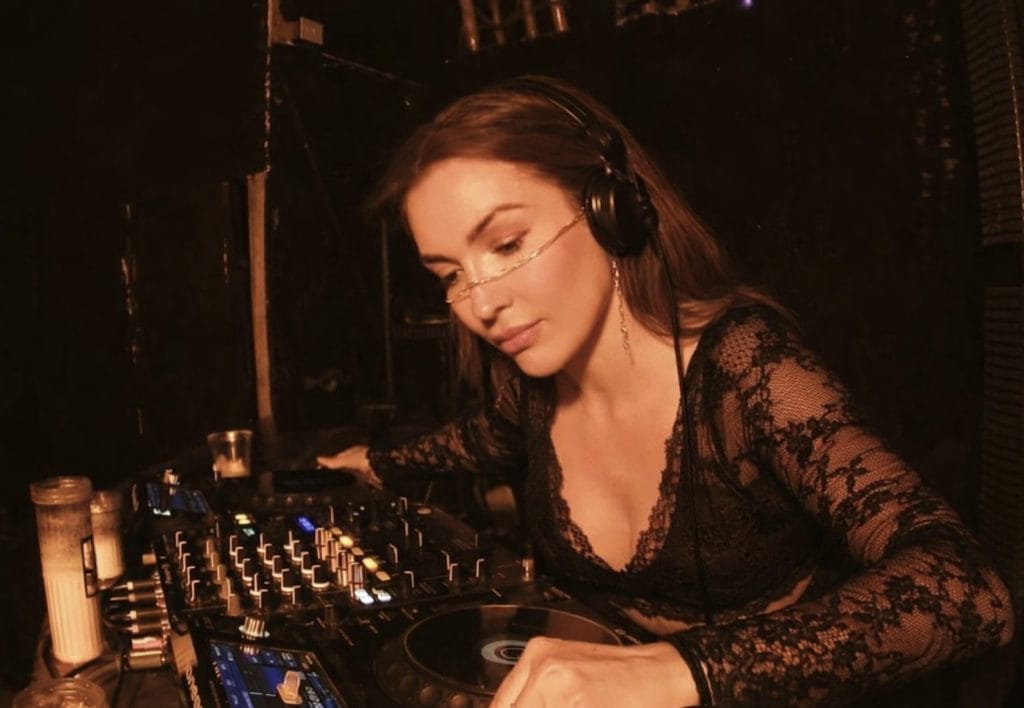
Sophia Sigma’s (@velorraofc) path into electronic music comes from a background that is unusually broad and clearly defined. Born in Armenia with Yezidi roots, raised between Russia and France, and now based in Amsterdam, she moved through classical opera training, rock and metal bands, and eventually into techno about a decade ago. That transition shaped the way she approaches music today, where composition, voice, and structure all carry over into her DJ sets and productions.
Her catalog reflects steady development, including releases on KMS Records and other techno-focused imprints, plus a soundtrack placement that expanded her work into film.
That foundation shows up in how she talks about playing.
There is a clear emphasis on pacing, memory, and emotional continuity, with a focus on letting tracks unfold instead of compressing everything into fast transitions. She also places a lot of value on the shared experience inside the room, especially in environments where distractions are limited and attention stays on the music. Her perspective connects older club culture ideas with current workflows, and she approaches that balance with intent rather than nostalgia.
The timing of this conversation also lines up perfectly with her latest release. She just released “La Melodie” last week, on April 18, continuing her direction while bringing in French vocals. That addition makes sense given her background and reinforces the idea that her work is closely tied to identity and lived experience rather than to a single stylistic lane.
Interview With Sophia Sigma
Have you ever played a track that instantly brought back a specific memory, either for you or the room?
Yes. Children by Robert Miles.
I was very young when that track was everywhere. I grew up in the 90s in a post-communist country, and Western music mostly reached us through television. I remember that melody playing repeatedly. At the time, I couldn’t name what I was feeling, it was something trance music still does to me: a kind of emotional openness that feels both melancholic and hopeful.
Whenever I hear that track now, I’m immediately transported back to Armenia and Russia, sitting in front of the TV, absorbing that sound like it came from another universe. We used to record music from television onto VHS tapes, just to replay it. I would listen to it on repeat. It felt precious.
I’ve played it twice in a club. Both times, I could see the shift in the room immediately, especially with people who grew up in the 90s. You recognize the expression. It’s nostalgia, but also something more intimate. For a few minutes, the entire dance floor shares the same memory.
Do you ever build a set on a specific emotional tone or feeling you want to channel?
Both.
I rarely prepare a set from beginning to end. Unless there’s a very specific requirement, which happened once last year, I prefer flexibility. I usually plan the first 15 to 20 minutes carefully. That opening sets the emotional direction and establishes trust with the room.
After that, it becomes improvisation.
I read the crowd constantly. Sometimes they react in ways I don’t expect. Sometimes they pull the energy somewhere new. I adjust in real time, changing intensity, shifting textures, moving between playlists. A fully scripted set removes that conversation. For me, that dialogue is essential.
Structure gives me grounding. Improvisation gives the set life.
What kind of memories do you think the dance floor holds for both DJs and dancers?
Electronic music was never meant to be about superstardom. The DJ is not above the crowd, and the crowd is not a fan base. This culture was built by outsiders, people who created their own spaces because they didn’t feel represented elsewhere.
It’s a community.
When phones are banned and the room becomes fully present, you can feel that original spirit again. The separation between DJ and dancer dissolves. I’m just on one side of the booth. The roles could easily switch.
The dance floor holds collective memory, nights of belonging, release, connection without language. Of strangers becoming unified through rhythm.
The audience has changed over the years. That’s inevitable. Sometimes it’s positive, sometimes complicated. But I constantly remind myself: this is a shared space. Protecting that sense of community matters.
Is there a track in your own work that feels tied to a person, a place, or a season in your life?
Yes, my track Fly.
Whenever I hear it, I’m taken back to the trance sound of the early 2000s. There’s a piano line in it that carries that era so clearly, that direct, uplifting emotionality that defined pure trance at the time. It wasn’t layered with irony or references. It was sincere.
That sound still gives me goosebumps. Fly connects me to a specific phase of my musical identity. It reflects where I come from creatively. It’s not nostalgia for the past, it’s an acknowledgment of foundation.
When you hear a track you haven’t touched in years, what does that moment usually trigger for you?
It brings back the person I was at that time.
Not just memories of events, but memories of mindset. My ambitions. My fears. My limitations. It’s almost like meeting a former version of myself and thinking, there you are.
Electronic music is a journey. You move through phases. Your sound evolves. You blend genres. Today it’s rare to hear something that belongs purely to one category, everything carries influence from somewhere else. So when I revisit older tracks, I hear them in context. I hear the transformation between then and now. Growth becomes audible.
How do you use tempo, texture, or mood to create shifts in emotional energy across a set?
I build tension slowly.
I don’t like when tracks change every thirty seconds just to maximize quantity. Music needs space to breathe. When you let a track unfold fully, you allow the atmosphere to settle into the room. That’s where depth forms.
I prefer gradual development, starting deeper, more restrained, and building patiently. Breaks are important to me, especially when they include spoken vocals with emotional weight. Early Detroit house, for example, often carried messages about unity and togetherness on the dance floor. That intention resonates with me.
Tempo is fluid. Unless required otherwise, I rarely stay at one BPM. A set might begin around 135 and gradually move toward 150. The shift should feel organic. The rise in tempo mirrors the rise in emotional intensity. Energy is cultivated, not forced.
Do you think DJs are curating memories as much as they are curating songs?
Yes.
We are shaping emotional experiences that people will attach to specific moments in their lives. Sometimes those memories become transformative.
I remember being at Tomorrowland and hearing tracks I never imagined I would witness live. I started crying. Strangers around me were crying too. We ended up hugging without even knowing each other’s names. That wasn’t about fandom. It was about shared emotional release.
In that sense, DJs are collectors of moods. We store fragments of emotion and redistribute them through sound. Sometimes you play a track because of what it once unlocked in you. You want the room to feel that same depth, even if they’re not consciously aware of it yet. Music can reveal emotions people didn’t know they were carrying.
What I’m always searching for is rawness. Emotional honesty without hiding behind trends or structure. That’s also why I’ve produced music for film, it demands transparency. In the end, it’s about reaching the root of the feeling before it’s explained, before it’s filtered. That’s where the real connection happens.

Will Vance is a professional music producer who has been involved in the industry for the better part of a decade and has been the managing editor at Magnetic Magazine since mid-2022. In that time period, he has published thousands of articles on music production, industry think pieces and educational articles about the music industry. Over the last decade as a professional music producer, Will Vance has also ran multiple successful and highly respected record labels in the industry, including Where The Heart Is Records as well as having launched a new label with a focus on community through Magnetic Magazine. When not running these labels or producing his own music, Vance is likely writing for other top industry sites like Waves or the Hyperbits Masterclass or working on his upcoming book on mindfulness in music production. On the rare chance he's not thinking about music production, he's probably running a game of Dungeons and Dragons with his friends which he has been the dungeon master for for many years.