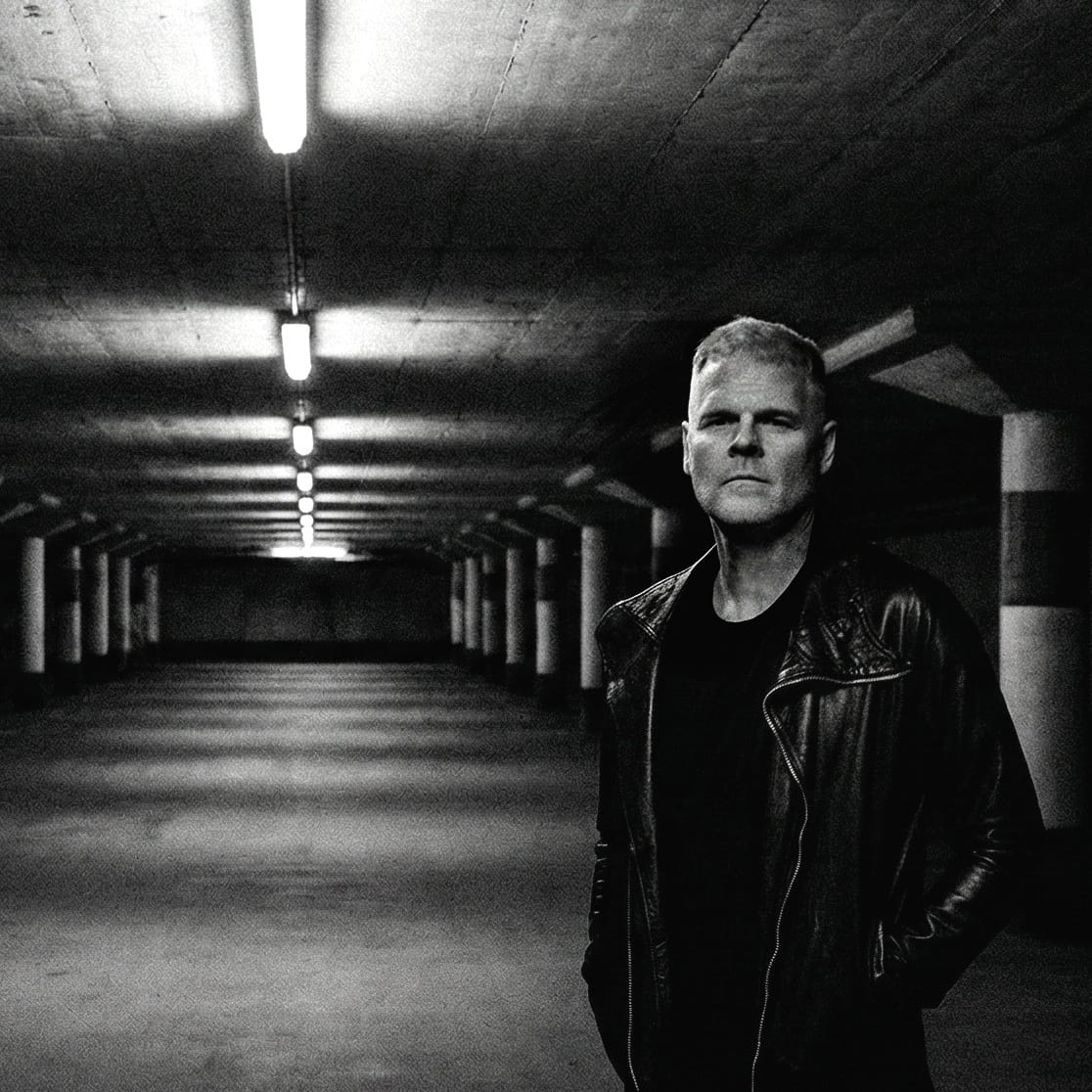
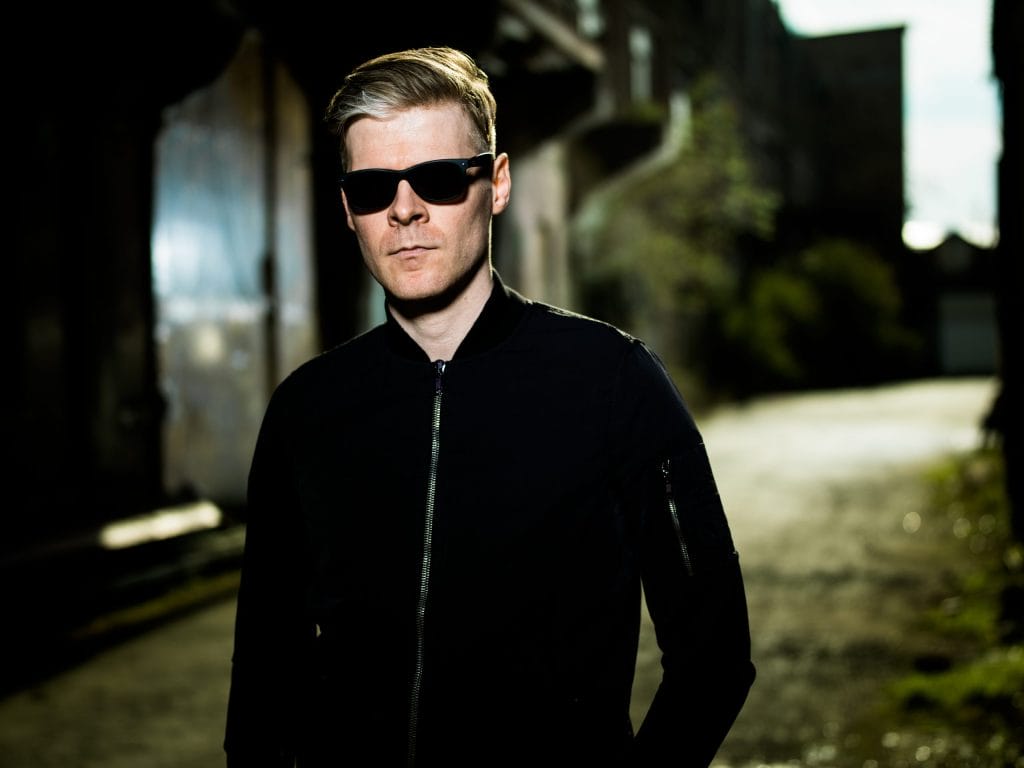
Gregor Tresher (@gregortresher) arrives on Sasha’s Last Night On Earth for the first time with Concrete Echoes, a three-track EP which dropped on April 10. The release brings together the title cut, “Sanity,” and “Stating The Obvious,” and it places Tresher’s melodic, groove-led writing inside a label that has long favored movement, atmosphere, and detailed club music. Coming off recent albums like False Gods and Riot Gear, and with a catalog that already stretches across Cocoon, Turbo, Drumcode, Ovum, Intacto, Music Man, and Moon Harbour, this debut feels like a natural next step rather than a left turn.
What makes the EP interesting is how clearly it reflects his broader view of dance music. Tresher is still looking ahead, still treating techno as something futuristic rather than archival, and that shows up in the way he talks about track selection, nostalgia, and the role of classics in a set.
That tension between history and forward motion sits at the center of this interview. Tresher is clear that older tracks can still have a place, but only when they still speak to the room in the present, not only to memory. He is far more interested in finding new music that earns a reaction than relying on instant recognition, and that outlook lines up closely with Concrete Echoes itself.
Interview With Gregor Tresher

When you play older tracks, are you thinking more about emotional weight or musical fit in the moment?
I’m trying not to play many old tracks in my sets, as I think Techno is supposed to be futuristic music – it was always about looking forward, about imagining something that doesn´t exist yet. That spirit still matters to me. A classic or two in a long set can be great, and sometimes a track just hits differently when the room is in the right place.
But I´m not a fan of dropping classics that everybody knows all the time. It starts to feel like a greatest hits show, and that´s not what I’m about at all.
Do you ever worry about leaning too much into nostalgia when you bring back older material?
I absolutely do. I even named one of my tracks on Cocoon “Nostalgia (Is The Enemy)” – so yeah, it´s something I think about a lot.
Henry Rollins once said in an interview, “Time coats the ordinary with gold”, and I completely agree with him. We tend to romanticize the past, and our minds play tricks on us by memorizing only the good things while blurring out the static in between. There´s always new music to discover, and I believe it´s a crucial part of being a DJ to push yourself to find fresh and exciting music every week.
That hunger has to stay alive; otherwise, you´re maintaining instead of moving.

How do you frame or recontextualize older music to make it feel relevant, not retro?
By playing the “right” tracks – or let´s say the tracks that feel right to me in that specific moment, in that specific room. It´s not really about framing or strategy; it´s more of an instinct thing.
Not that many old tracks stand the test of time when you actually put them back in a club context. A lot of stuff that felt revolutionary back then now sounds dated. But of course, some tracks undeniably made it to that “classic” level – they carry something timeless in them, some kind of tension or energy that doesn´t age, those you can trust.
Have you ever had a moment where an old track completely changed the energy of a set in a way new stuff couldn’t?
Well, of course, old and well-known tracks will work when dropped at the right moment, the crowd recognises them, there´s that instant emotional reaction, people lose their minds, but it´s also a bit of “cheating” in my opinion, because you´re essentially borrowing from a feeling that someone else already built. I find it a lot more rewarding to play new and unknown stuff and watch the room respond to something they´ve never heard before.
That connection feels more genuine to me – like you´re actually bringing something to the table rather than pressing a familiar button.
What’s the difference between playing a classic and honoring a classic, in your view?
Playing a classic is easy – you drop it and let the recognition do the work for you. Honoring a classic is something different. It´s about your understanding of why that track mattered, what it did to the dancefloor when it first appeared, and being thoughtful enough to either leave it alone or bring it back when the context actually earns it. You can honor something by not playing it, you know?
Sometimes, the most respectful thing you can do with a piece of music is let it live in people’s memories, not dragging it out every weekend until it loses all its power.
Are there older tracks that still challenge you or reveal something new every time you play them?
Certain tracks never get old and sound and feel as fresh as when I first heard them; that’s a pretty rare quality, and when a track has it, you know. It´s something in the structure, or the way the elements interact, that keeps revealing little things you didn´t notice before. Most music, no matter how good, eventually settles into something familiar. The ones that don’t – those are the real classics to me.
How do you know when something from the past still has a place in your present?
There are so many older tracks that I love and that never get old to me personally, but there is a real difference between listening to them on my own and playing them out in my sets. Something can move me deeply at home and still would feel completely wrong in a current club setting. I think the question I ask myself is if the track still has something to say to a room full of people right now, tonight, or if it´s speaking to me and my own memories.
Those are two very different things.

Do you find your new productions take influence from older records, or specific themes from your own earlier musical successes?
Well, I´d say that every new track I record is inspired by music I love in one way or another. Every musician processes musical input and gets inspired by that, at least subconsciously. There´s a huge difference in finding inspiration in other people´s music or trying to reproduce it. It´s a thin line to navigate.
For example, my new release ‘Concrete Echoes’ on Last Night on Earth is a good reflection of that – it sits in this space between groovy Techno and up-tempo House, which felt like a very natural fit for the label’s sound and identity, but also the music might remind people that are aware of my back catalogue of some of my older tracks. I feel flattered when people tell me they recognize a track of mine, but on the other hand, I try never to repeat myself or reproduce a certain song that did well.
I hope people will enjoy my music on the dancefloor as much as I enjoyed recording it in the studio.

Will Vance is a professional music producer who has been involved in the industry for the better part of a decade and has been the managing editor at Magnetic Magazine since mid-2022. In that time period, he has published thousands of articles on music production, industry think pieces and educational articles about the music industry. Over the last decade as a professional music producer, Will Vance has also ran multiple successful and highly respected record labels in the industry, including Where The Heart Is Records as well as having launched a new label with a focus on community through Magnetic Magazine. When not running these labels or producing his own music, Vance is likely writing for other top industry sites like Waves or the Hyperbits Masterclass or working on his upcoming book on mindfulness in music production. On the rare chance he's not thinking about music production, he's probably running a game of Dungeons and Dragons with his friends which he has been the dungeon master for for many years.