Most AI tools in music right now are framed around replacing steps in the creative process, which is why a lot of them feel disconnected from how producers and musicians actually work day to day. Klang.io’s new Transcription Studio lands in a different lane, and it feels immediately more usable because of it. This is not about generating ideas.
This is about translating them, organizing them, and getting them into a format you can actually work with inside a session.
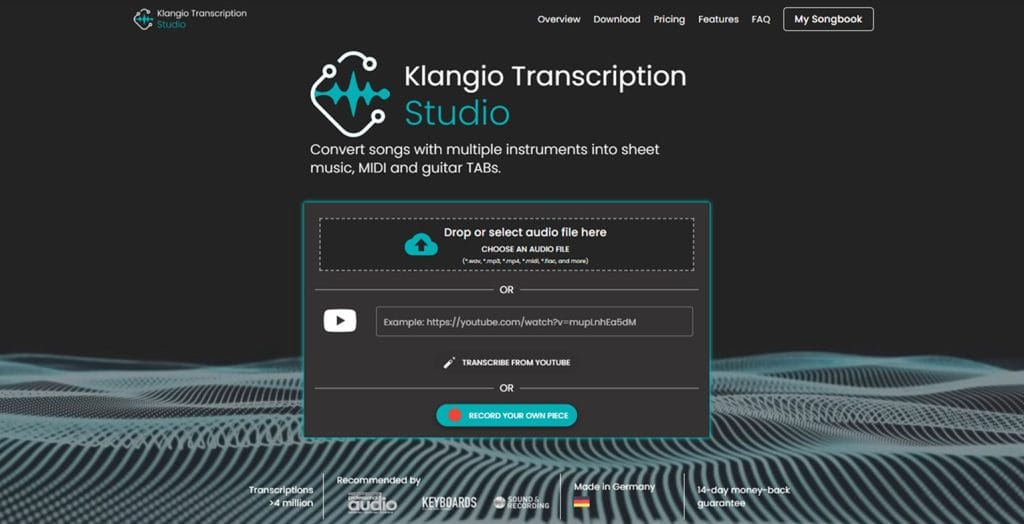
At a basic level, Transcription Studio takes audio from almost any source and converts it into sheet music, guitar tablature, or MIDI. That alone is useful, but the real value shows up when you look at how it handles multiple instruments at once and how quickly it gets that information into a DAW-ready format.
Turning audio into usable session data
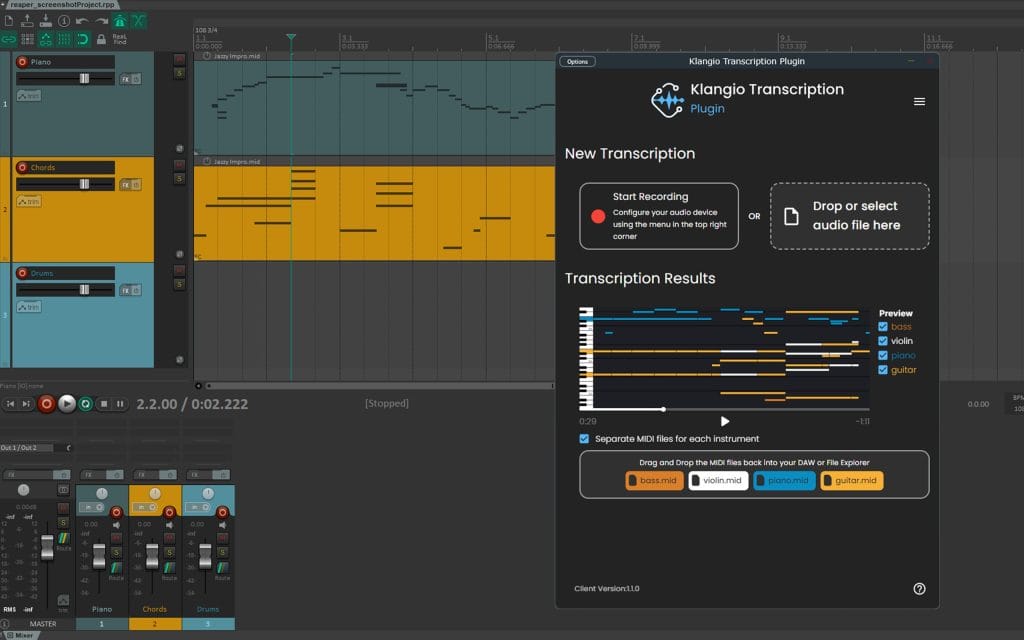
From a production standpoint, the biggest advantage here is speed. You can drop in a full track, a demo, or even a rough voice note, and the software identifies individual instruments, breaks down chords, melody, and rhythm, and outputs that information in under a minute. That removes a step that usually takes a lot of manual work, especially when you are trying to recreate parts or pull inspiration from existing recordings.
The MIDI export is where this gets immediately practical. Instead of trying to rebuild a progression or guess voicings by ear, you can pull that information straight into your DAW and start shaping it. That could mean swapping instruments, layering new sounds, or using it as a starting point for arrangement ideas. It keeps the focus on production decisions instead of transcription work.
The plugin format also matters. Having this inside a DAW means you are not jumping between tools or breaking your workflow. You can analyze material and act on it in the same environment, which keeps momentum moving when you are in the middle of a session.
A tool that actually supports collaboration
One of the more interesting use cases here is how this can bridge gaps between different types of musicians. A producer working primarily in MIDI can take a recorded idea and turn it into notation or tablature that a guitarist or pianist can immediately understand. On the other side, a band recording live parts can convert those performances into MIDI and start manipulating them inside a production environment.
The guitar tablature feature stands out in particular, especially with the arranger mode that can reinterpret parts that were not originally written for guitar. That opens up a workflow where you can take a piano progression, a vocal idea, or even a full arrangement and quickly test how it translates to another instrument without manually rewriting everything.
For producers who move between genres or collaborate with players who have different technical backgrounds, that kind of translation layer can save a lot of time and reduce friction in the process.
A more grounded use of AI in music
The broader angle here is worth paying attention to. Klang.io is applying AI to a part of music production that has always been time-intensive but necessary. Transcription has historically required either formal training or a lot of patience. Automating that step does not remove creativity from the process. It clears out a technical barrier that often slows things down.
That is why this feels like a more grounded use of AI in music. It is not trying to replace songwriting or production decisions. It handles tasks that sit around those decisions, making it faster to move from idea to execution.
For producers, that translates into a simple advantage. You spend less time figuring out what is happening in a piece of audio and more time deciding what to do with it. In a workflow where speed and momentum can define how a track turns out, that shift is meaningful.

Will Vance is a professional music producer who has been involved in the industry for the better part of a decade and has been the managing editor at Magnetic Magazine since mid-2022. In that time period, he has published thousands of articles on music production, industry think pieces and educational articles about the music industry. Over the last decade as a professional music producer, Will Vance has also ran multiple successful and highly respected record labels in the industry, including Where The Heart Is Records as well as having launched a new label with a focus on community through Magnetic Magazine. When not running these labels or producing his own music, Vance is likely writing for other top industry sites like Waves or the Hyperbits Masterclass or working on his upcoming book on mindfulness in music production. On the rare chance he's not thinking about music production, he's probably running a game of Dungeons and Dragons with his friends which he has been the dungeon master for for many years.