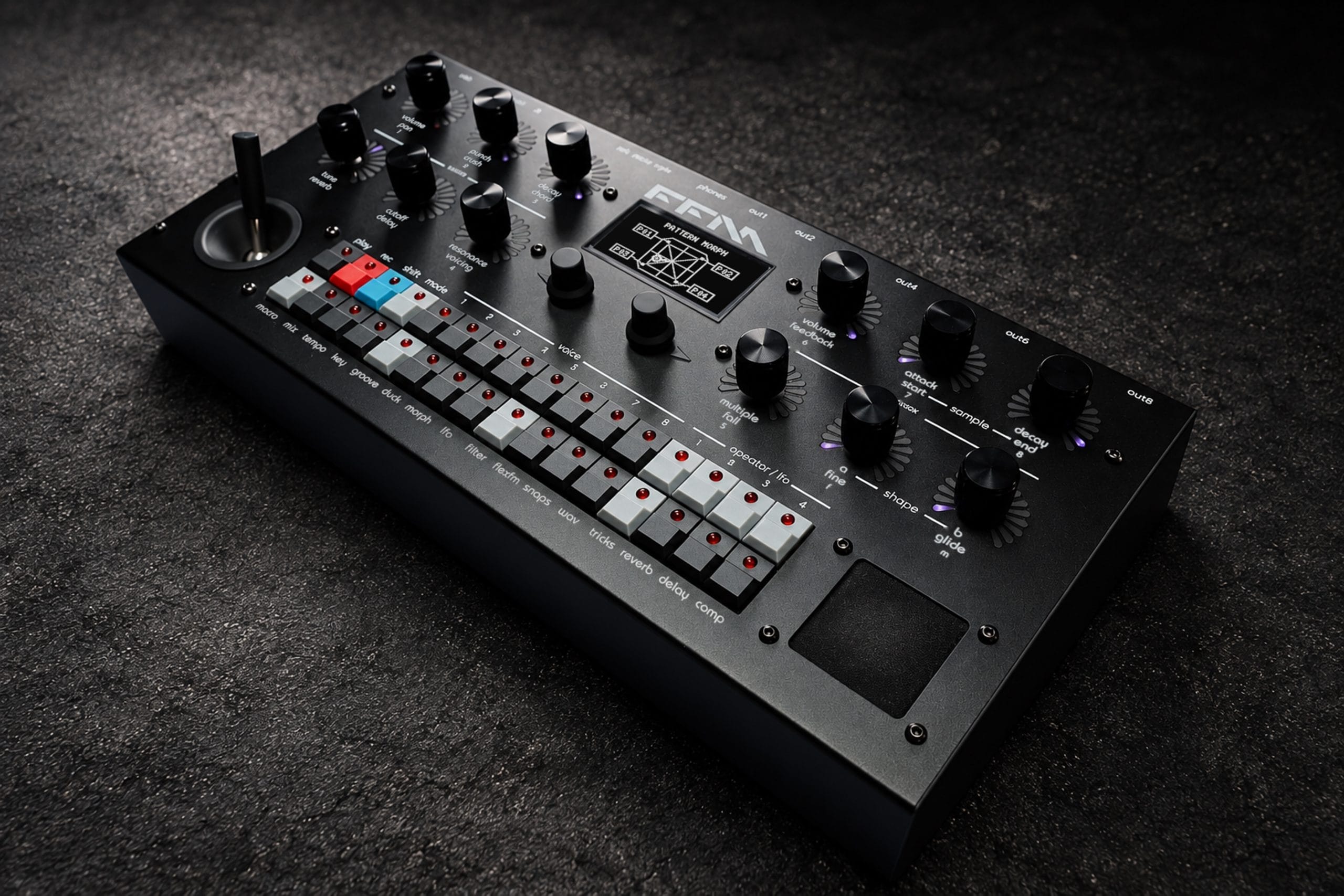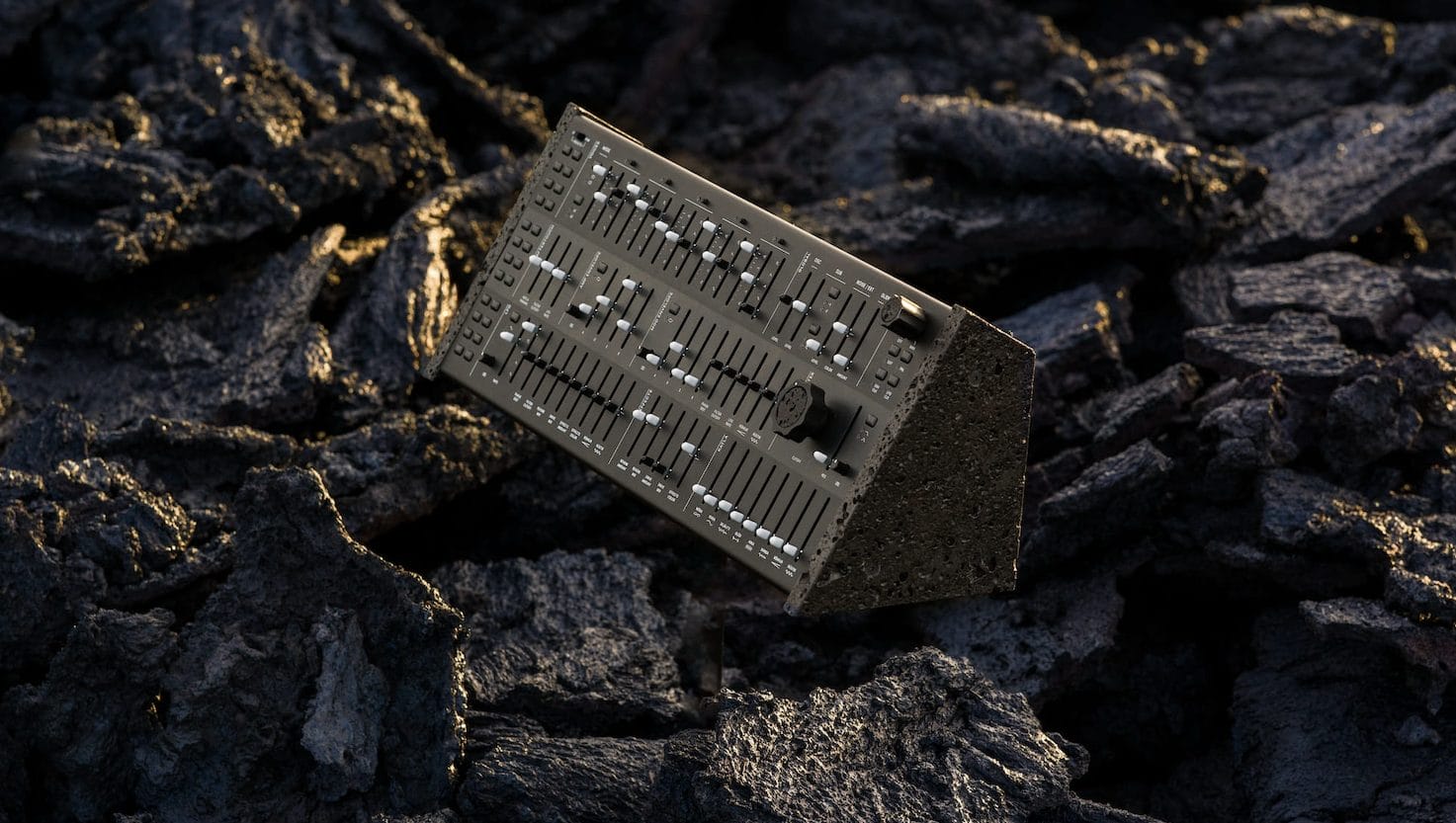
Genki Instruments has officially released Katla, a voice-rotating polyphonic synthesizer that marks the company’s first move into analog hardware, and this is a serious step forward in how they approach instrument design. After multiple preview appearances across events like SUPERBOOTH and Buchla & Friends, Katla is now shipping as of March 31, positioning itself as a high-end instrument built around movement, variation, and per-voice behavior instead of static playback.
What stands out immediately is the instrument’s structure.
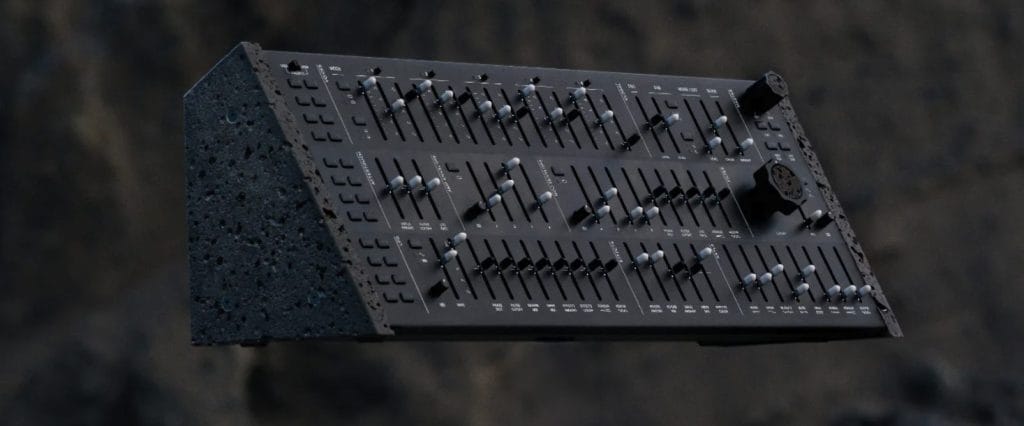
Katla routes notes across five independent voices, each with its own parameters, and cycles through them using multiple allocation modes. That means each note can carry slightly different characteristics, introducing variation at the source rather than relying on modulation layered later in the signal chain. The result is a system that continuously reshapes how chords and sequences play out in real time.
A rotating voice engine with deep modulation control
Katla’s voice engine is built around six allocation modes, including forward, reverse, and random round-robin cycling, alongside three unison configurations that change how envelopes behave depending on performance input. This gives players direct control over how notes are distributed and how those notes evolve over time, which is a meaningful shift from more conventional polyphonic designs.
Each of the five voices includes its own oscillator, sub-oscillator, filter, amplifier, and modulation sources. LFOs and envelopes can be shaped independently, and looping envelopes blur the line between modulation and rhythm generation. Timing can be synced to a DAW or external clock, and modulation rates can be quantized to musical divisions, which keeps everything locked into a session when needed.
Genki also introduces a set of wildcard parameters under the Katla system, which are designed to introduce controlled instability. These include tuning drift, pitch fluctuation, random modulation bursts, and stereo positioning per voice. Each parameter affects voices independently, so the instrument continuously shifts in subtle ways without repeating the same motion cycle.
Built as a performance instrument with strong physical identity
Physically, Katla leans into its Icelandic identity. The instrument uses side panels and knobs made from real lava, which ties directly into the concept behind the synth. Internally, it includes four distortion stages, including a stereo CMOS drive circuit that can push signals into heavier saturation when needed.
Katla also supports MPE, allowing per-note control over pressure, pitch, and timbre, and includes five external audio inputs that route directly into each voice. This opens up the instrument as a processing unit as well, where external signals can be shaped through the same voice-rotating architecture.
At €4,990, this is clearly positioned as a premium instrument, but the feature set reflects that price point. Between the rotating voice system, per-voice modulation depth, and hardware design choices, Katla is built for users who want a synth that behaves differently each time it is played while still staying controllable inside a structured workflow.

Will Vance is a professional music producer who has been involved in the industry for the better part of a decade and has been the managing editor at Magnetic Magazine since mid-2022. In that time period, he has published thousands of articles on music production, industry think pieces and educational articles about the music industry. Over the last decade as a professional music producer, Will Vance has also ran multiple successful and highly respected record labels in the industry, including Where The Heart Is Records as well as having launched a new label with a focus on community through Magnetic Magazine. When not running these labels or producing his own music, Vance is likely writing for other top industry sites like Waves or the Hyperbits Masterclass or working on his upcoming book on mindfulness in music production. On the rare chance he's not thinking about music production, he's probably running a game of Dungeons and Dragons with his friends which he has been the dungeon master for for many years.