French producer CLARAA continues her run of groove-led, melodic records with “No Fear,” a collaboration with vocalist GHSTNR released via Stereo MC’s connected label on February 20th, 2026.
Known for blending afro rhythms with melodic house and afro tech influences, CLARAA builds this record around percussive drive, emotive synth work, and a vocal performance that sits firmly at the center of the mix. With previous releases on Moblack Records and LSF21+ earning support from Black Coffee, Pete Tong, and Bedouin, she has developed a sound that prioritizes movement, clarity, and tension without overcrowding the arrangement.
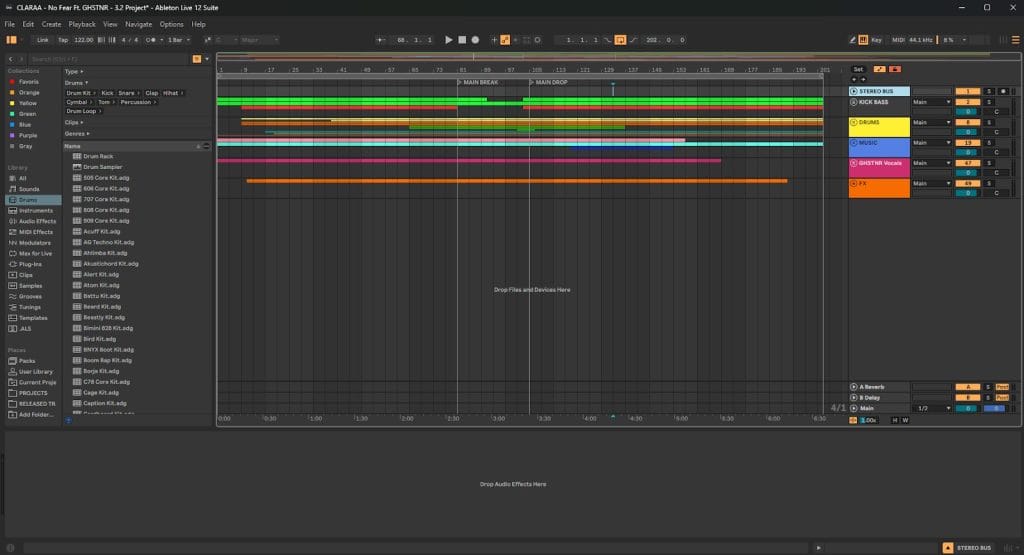
In this edition of How It Was Made, CLARAA breaks down the exact tools and techniques behind “No Fear,” from sculpting a mono glide Serum lead to shaping vocals with FabFilter Pro-Q 3, adding motion to live-recorded hats using EchoBoy, and controlling harmonic buildup on pads with SurferEQ 2. The focus throughout is balance – keeping low-end tight, protecting space for the vocal, and letting modulation and subtle processing create momentum rather than over-layering.
Below, CLARAA walks through the plugins, signal choices, and mindset that shaped the final record.
Serum

Xfer Serum is a wavetable synth known for its clean sound and super flexible modulation. With dual oscillators, filters, envelopes, and built-in FX, it’s easy to shape a lead quickly while still having tons of control. It also handles mono and legato really well, which makes it perfect for expressive glide/portamento melodies.
For this track, I built the main lead from a simple analog-style saw instead of a complex preset. I set it to Mono + Legato and tuned the portamento time so the notes slide smoothly into each other and feel more “performed.” I used a low-pass filter with an envelope to add movement, then added subtle distortion and EQ inside Serum so it stayed upfront. Delay and reverb were kept light—just enough space without washing out the lead. This was an idea coming from a sample I tuned, and then layered for more freedom.
If you’re making house or melodic electronic, Serum is great when you keep the source simple and focus on glide, note length, and small modulations. A clean saw in mono can sound way more musical than an over-designed patch. Automating the filter cutoff (or portamento) across phrases helps a repeating melody stay interesting.
Fab Filter Pro Q3
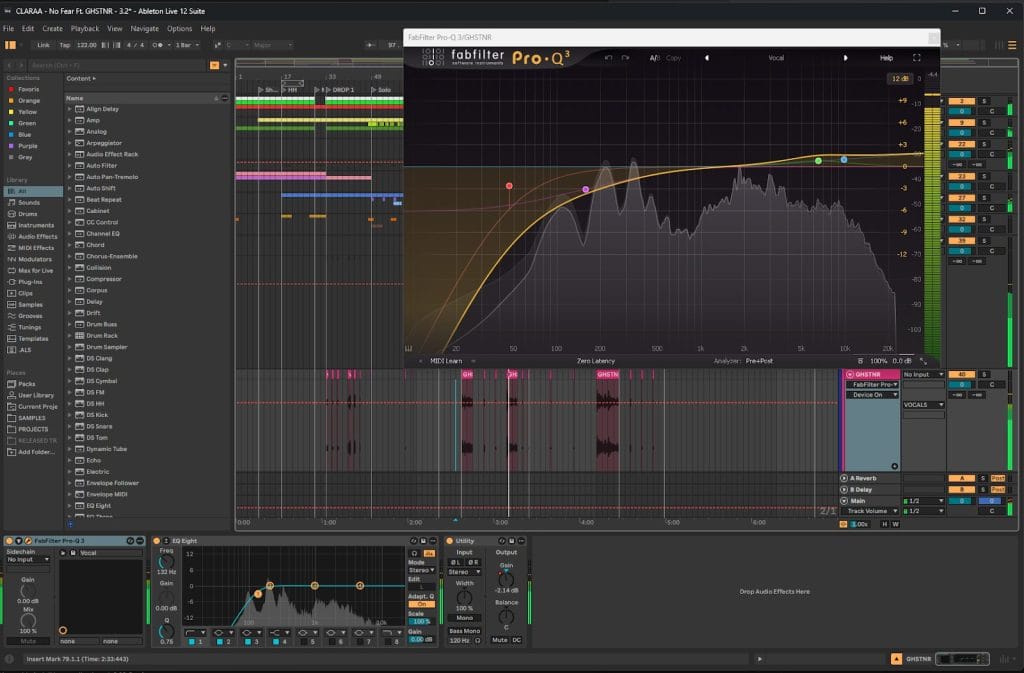
FabFilter Pro-Q 3 is one of those “do-anything” EQs that stays super transparent, so you can shape a vocal without it turning thin or unnatural. It can handle quick tone moves and really surgical problem-solving, and the interface makes it easy to see exactly what’s happening. The killer feature is dynamic EQ, where a band only reacts when a frequency jumps out, instead of permanently carving the sound.
On GHSTNR’s vocals, I used Pro-Q 3 mostly for cleanup and getting the vocal to sit forward without getting harsh. I started with a fairly strong high-pass around ~130 Hz to clear rumble and low-end mud that fights the kick and bass. Then I made a small cut in the ~200–300 Hz area to reduce that boxy buildup and open the voice up. To finish, I added a gentle high shelf around ~6–10 kHz for a bit of presence/air so it pops through the mix without just turning it up.
For house / melodic electronic, Pro-Q 3 is perfect for keeping vocals clean in a busy instrumental while still sounding natural. My go-to chain is: high-pass, one low-mid cleanup cut, then a light top-end shelf. And if a harsh frequency only shows up on certain words, dynamic EQ usually feels way smoother than overdoing static cuts or stacking more compression.
Soundtoys EchoBoy
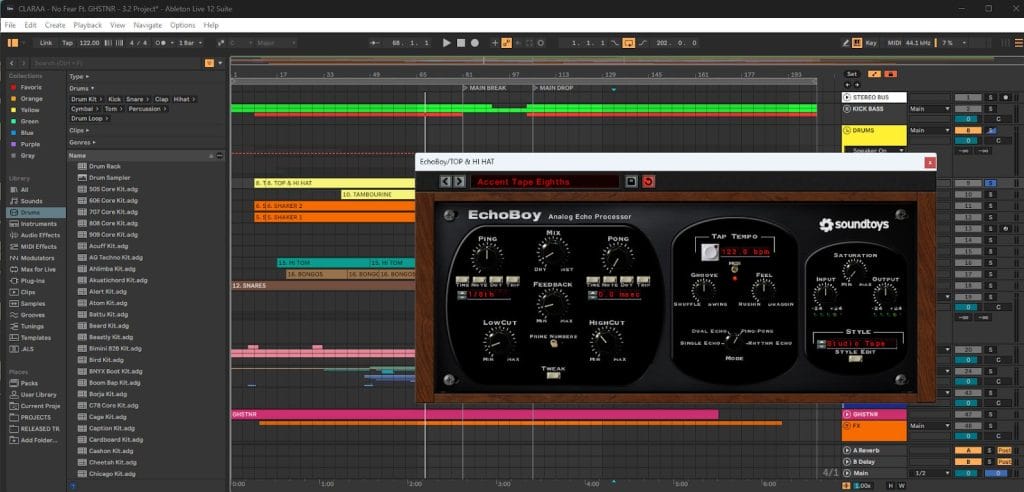
Soundtoys EchoBoy is one of those delays that can stay subtle and clean, or get really characterful depending on how hard you drive it. It doesn’t just repeat audio—it adds tone, movement, and a bit of saturation that feels musical. It’s also super easy to tempo-sync and then shape the repeats with filtering so the delay sits behind the dry signal instead of cluttering the mix.
On the hats/top loop, I used EchoBoy to add a rolling sense of motion without making the drums messy. Those were recorded live in Portugal and were already very good in groove, so I just needed from “Accent Tape Eighths”, a switch to Ping-Pong, with a timing to 1/8T for that syncopated, forward-pushing groove. The Mix stayed low (around ~10%) so it reads more like texture than an obvious delay. The main tweak was filtering the repeats—LowCut up and HighCut down—so the echoes are darker and tucked behind the dry hats. I kept Feedback short (just a couple repeats) to keep everything tight and out of the way.
If you’re making afrohouse or melodic house, EchoBoy on hats is an easy way to add bounce and width without adding extra layers. Keep it as background texture: low mix, short feedback, and always filter the repeats so they don’t fight the vocal or lead. Triplet timings like 1/8T can instantly make a straight pattern feel more alive, especially with Ping-Pong for subtle stereo movement. And for quick ear candy, automate a tiny bump in Mix or Feedback at the end of a phrase to lift the groove without changing the drum pattern.
Sound Radix SurferEQ 2
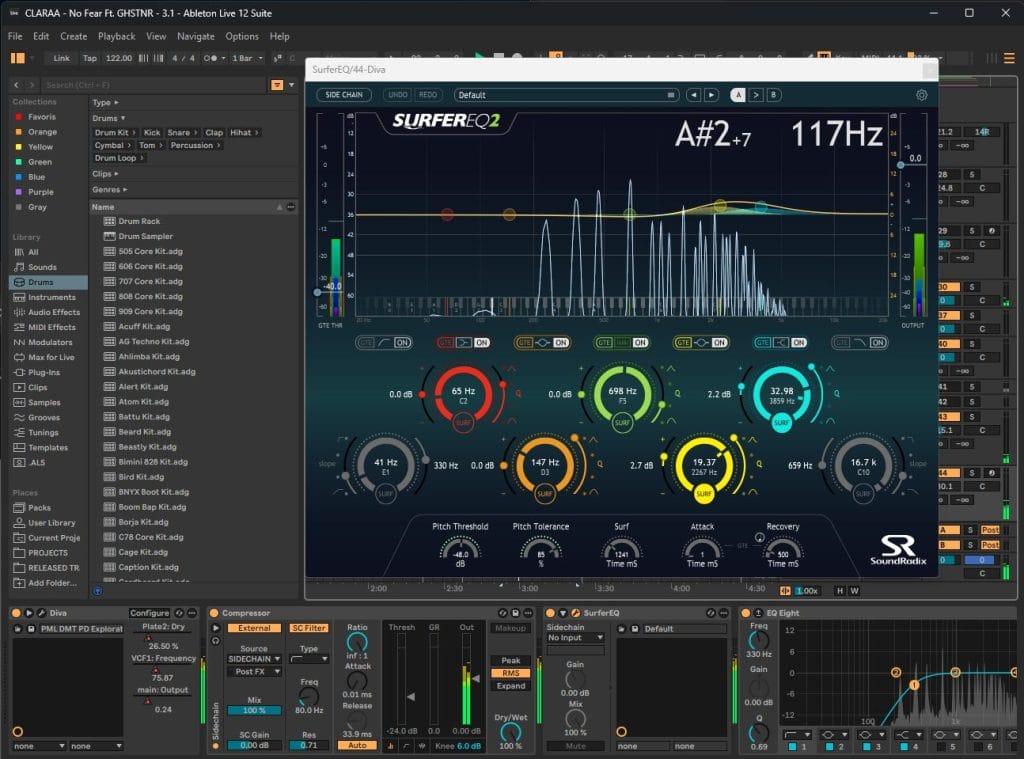
Sound Radix SurferEQ 2 is a really unique EQ because its bands can follow pitch instead of staying stuck on one frequency. That’s huge on musical parts like pads, where resonances and harmonics shift every time the chords change. You can use it like a normal EQ, but in Surf mode it keeps your cut/boost attached to the note, which feels way more natural than chasing moving problems with static EQ.
My sound engineer Martin Blondet added a SurferEQ 2 directly on the Diva pad to keep it wide and emotional without stepping on the vocal and main lead. There were a couple notes where a resonance would jump out as the progression moved, so we’ve set a bell band to Surf and fed it the pad’s pitch/MIDI so the dip follows the harmonic as it changes. We kept it subtle—more polish than effect—and used a fairly gentle Q so the pad stayed lush. We also used another band to lightly manage low-mid buildup, especially when the arrangement got denser.
For house and more melodic electronic, SurferEQ 2 is perfect for that classic problem where a pad sounds great on one chord, then gets honky or harsh on the next. Keep the moves light and usually goes a long way while keeping the vibe intact. It’s also a clean way to make room for vocals without carving a big static hole, because you’re targeting the musical resonance as it moves.
CLARAA’s Tips For Making Music

Tip #1:
Make one lead feel like a vocalist.
Keep it mono/legato, then let “glide” + “note overlap” do the emotion.
Tip #2:
Build wide pads, but protect the center.
Keep the pad on the sides, then carve moving resonances so the vocal and lead stay crystal clear.
Tip #3:
Treat hats like motion design.
Use a tiny ping-pong delay and filter the repeats dark — the groove feels expensive without getting louder.
Tip #4:
Use saturation for confidence, not distortion.
Drive until it feels bold, then gain-match.
Tip #5:
Your drop should feel bigger because it breathes.
Tight ducking + clean low end creates impact without making the mix harsher.

Will Vance is a professional music producer who has been involved in the industry for the better part of a decade and has been the managing editor at Magnetic Magazine since mid-2022. In that time period, he has published thousands of articles on music production, industry think pieces and educational articles about the music industry. Over the last decade as a professional music producer, Will Vance has also ran multiple successful and highly respected record labels in the industry, including Where The Heart Is Records as well as having launched a new label with a focus on community through Magnetic Magazine. When not running these labels or producing his own music, Vance is likely writing for other top industry sites like Waves or the Hyperbits Masterclass or working on his upcoming book on mindfulness in music production. On the rare chance he's not thinking about music production, he's probably running a game of Dungeons and Dragons with his friends which he has been the dungeon master for for many years.