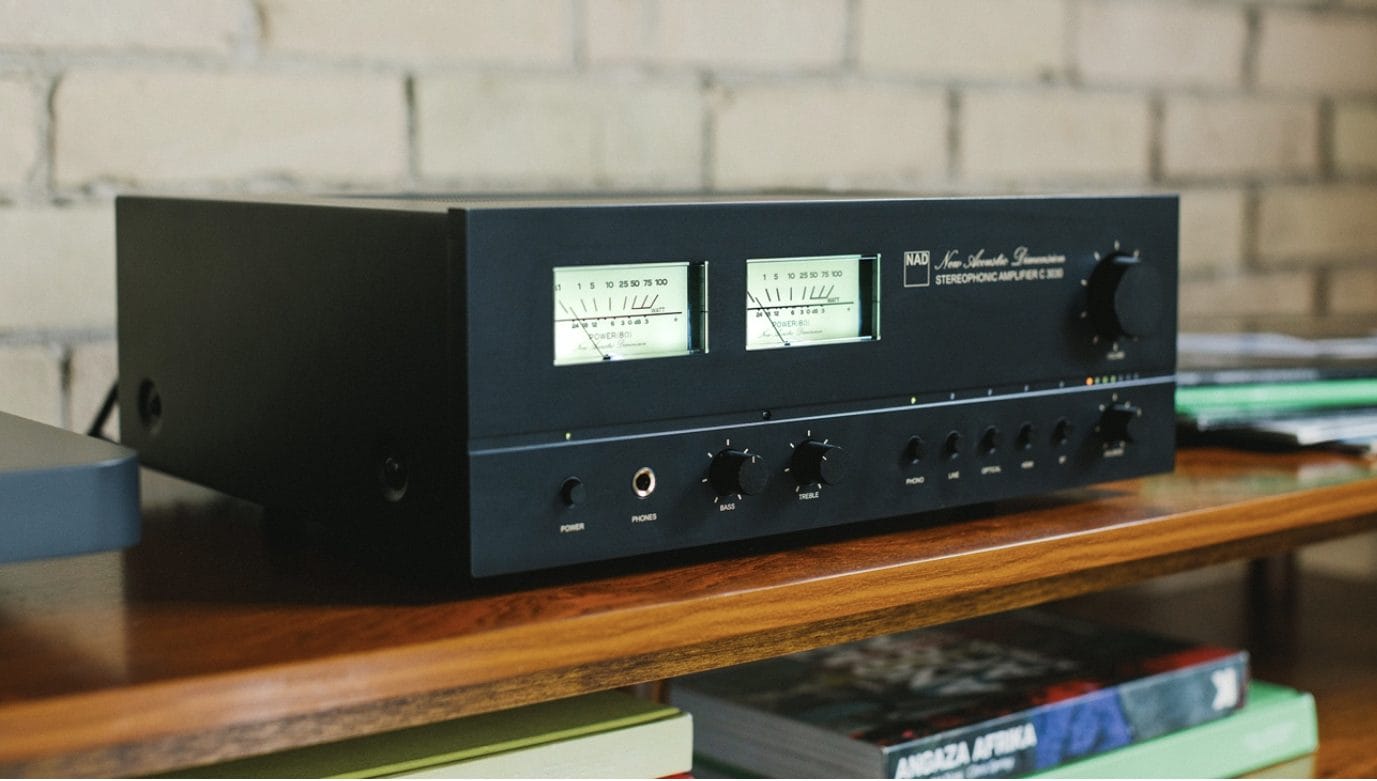
When I first saw NAD announce the C 3030 and C 3030S, my reaction was less about nostalgia and more about continuity. NAD Electronics has been steadily building out its Classic Series since the C 3050 landed, and these two new integrated amplifiers feel like a natural extension of that idea rather than a one-off anniversary exercise.
What I like here is the restraint. NAD clearly understands why the C 3050 could be so damn relevant, but instead of inflating the concept or turning it into a premium-only lane, the company is translating that design language into more compact, accessible components that still feel intentional. The C 3030 and C 3030S look like products designed to be lived with, not stared at from across the room.
Why the C 3030 Design Direction Makes Sense Right Now
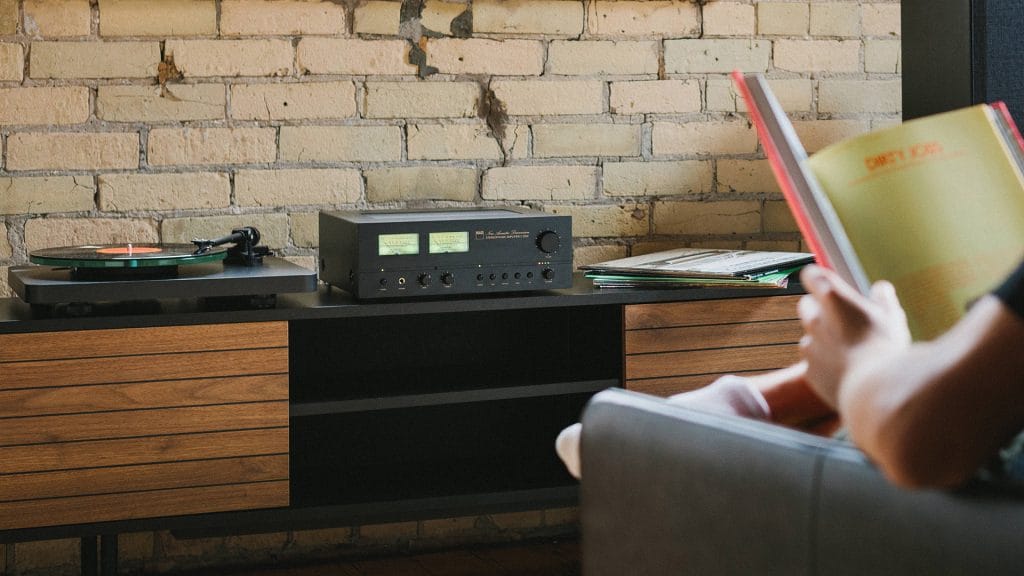
I have been watching more audio brands lean into retro cues lately, and most miss the point by stopping at surface-level styling. What NAD seems to get is that design has to fit into real spaces. The proportions on the C 3030 and C 3030S are closer to the original NAD 3030 from the late 1970s, which results in a compact chassis that actually works on shelves, media consoles, and desks.
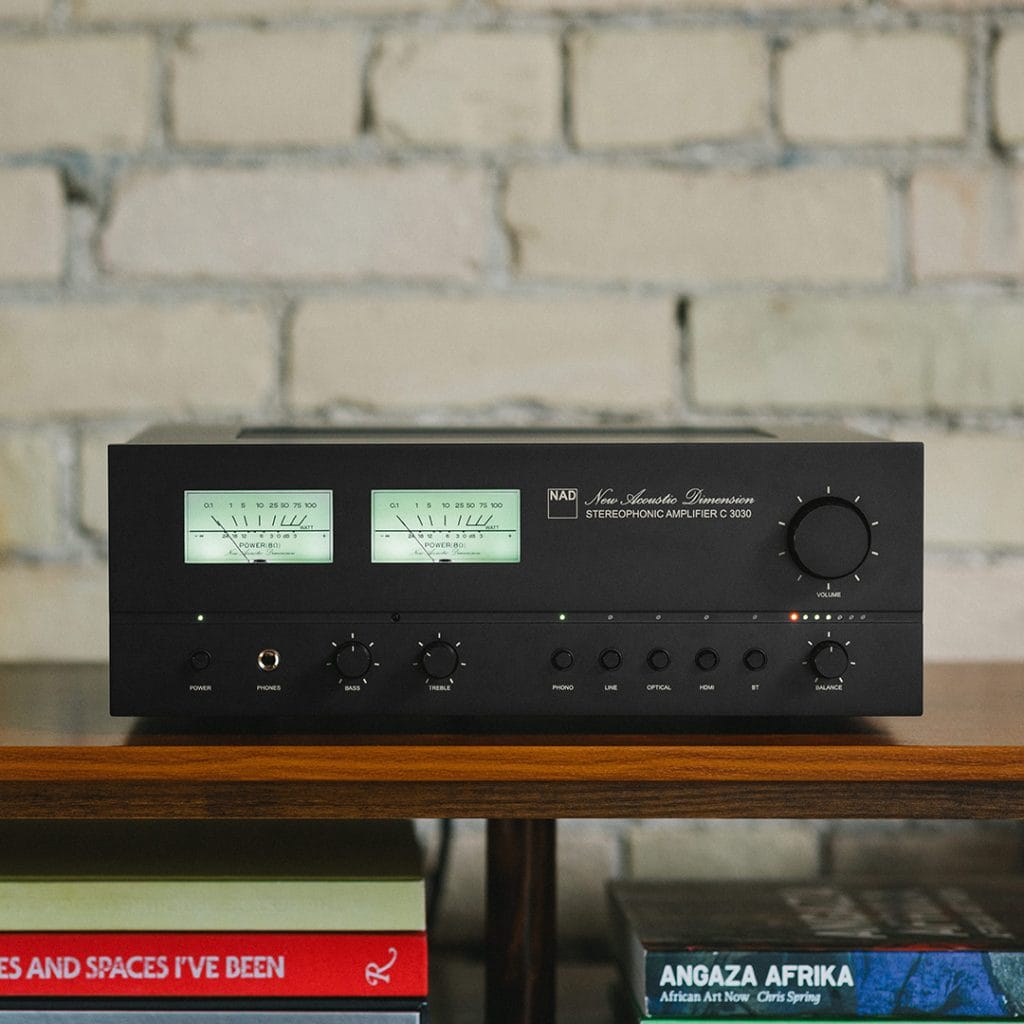
The black faceplate, VU meters, and classic script logo are familiar, but they do not overwhelm the product. For me, this matters because audio gear increasingly shares space with furniture, screens, and everyday objects. These amplifiers feel designed to sit in the open without demanding attention, which is a harder balance to strike than it looks.
Living With the NAD C 3030 Day to Day
The standard C 3030 is the model I see appealing to listeners who want a focused, no-nonsense integrated amplifier that still covers modern needs. It delivers 50 watts per channel of NAD amplification, which historically has translated well to real-world speaker pairing rather than spec-sheet bravado.
What stands out to me is the inclusion of HDMI eARC. That single feature changes how an amplifier like this fits into a modern setup. Being able to route TV, film, and gaming audio through a proper stereo system without extra boxes is a practical upgrade, not a luxury. Bluetooth with aptX HD support handles casual listening, and the bass-managed subwoofer output makes 2.1 systems easier to dial in without external processing.
This feels like an amplifier aimed at people who want personality and performance without turning system building into a project.
Why the C 3030S Is the One I’d Personally Spend More Time With
The C 3030S takes the same foundation and adds BluOS, which immediately shifts how the amplifier functions in a home. With BluOS onboard, the C 3030S becomes a full streaming hub rather than a traditional integrated amp with add-ons.
Support for high-resolution playback up to 24-bit/192kHz, multi-room grouping, and access to a wide range of streaming services makes this feel like a complete system rather than a component you need to build around. NAD also includes a moving magnet phono input, HDMI eARC, Bluetooth, analogue and optical inputs, and the same subwoofer management as the standard model.
For me, the appeal is simplicity. One box, one app, no extra streamers or adapters. That matters for people who want a clean setup without sacrificing capability.
Where These Fit in NAD’s Bigger Picture
Stepping back, the C 3030 and C 3030S say a lot about where NAD is steering the Classic Series. This is not about limited editions or premium-only releases. It is about bringing design-led Hi-Fi into more attainable price brackets while keeping the engineering priorities intact.
Pricing reflects that intent. The C 3030 lands at $1199 USD, while the C 3030S comes in at $1499 USD, with the streaming model arriving in Spring 2026. For what these offer, especially in terms of connectivity and long-term usability, these feel positioned for listeners who want to invest once and keep their system stable for years.
From my perspective, these amplifiers are less about looking back and more about making deliberate listening feel relevant again in modern homes.

Will Vance is a professional music producer who has been involved in the industry for the better part of a decade and has been the managing editor at Magnetic Magazine since mid-2022. In that time period, he has published thousands of articles on music production, industry think pieces and educational articles about the music industry. Over the last decade as a professional music producer, Will Vance has also ran multiple successful and highly respected record labels in the industry, including Where The Heart Is Records as well as having launched a new label with a focus on community through Magnetic Magazine. When not running these labels or producing his own music, Vance is likely writing for other top industry sites like Waves or the Hyperbits Masterclass or working on his upcoming book on mindfulness in music production. On the rare chance he's not thinking about music production, he's probably running a game of Dungeons and Dragons with his friends which he has been the dungeon master for for many years.