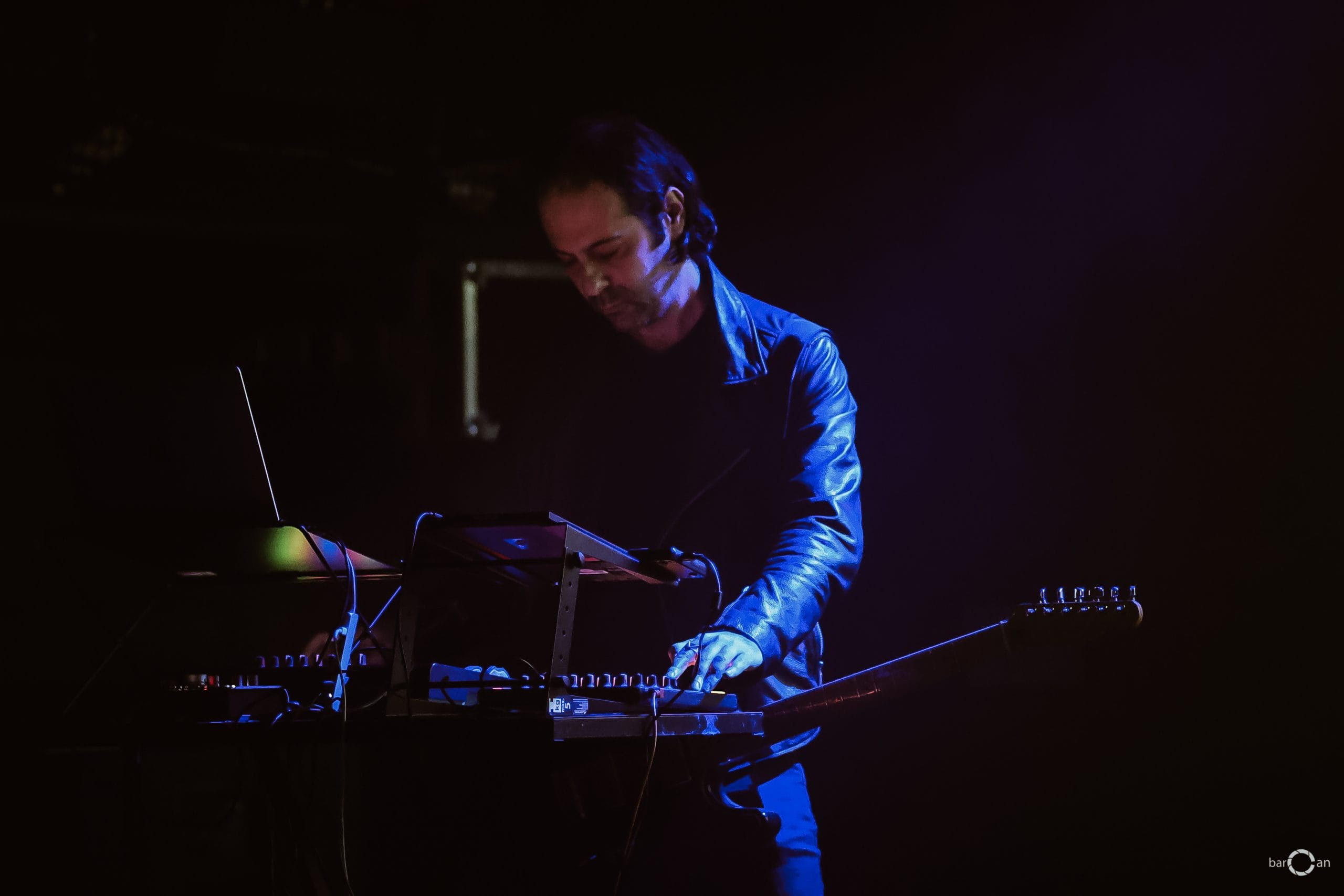
Electrons In Slow Motion (EISM)’s new album MEKANIKARU is a fully engineered world disguised as a concept album. Before the first synth patch was built or the first rhythmic fragment took shape, the project began with a question: what does unpredictability sound like in a future designed to eliminate it?
Set in a near-future city governed by flawless algorithms, MEKANIKARU follows a lone negotiator tasked with entering the synthetic mind of the metropolis itself. Their mission (reclaiming the right to randomness) became the thematic blueprint for every musical decision on the record. Mechanical pulses, fractured glitches, and algorithmic patterns represent the city’s computational order; atmospheric melodies, noise fragments, and moments of harmonic drift embody the fragile human spark pushing back against it.
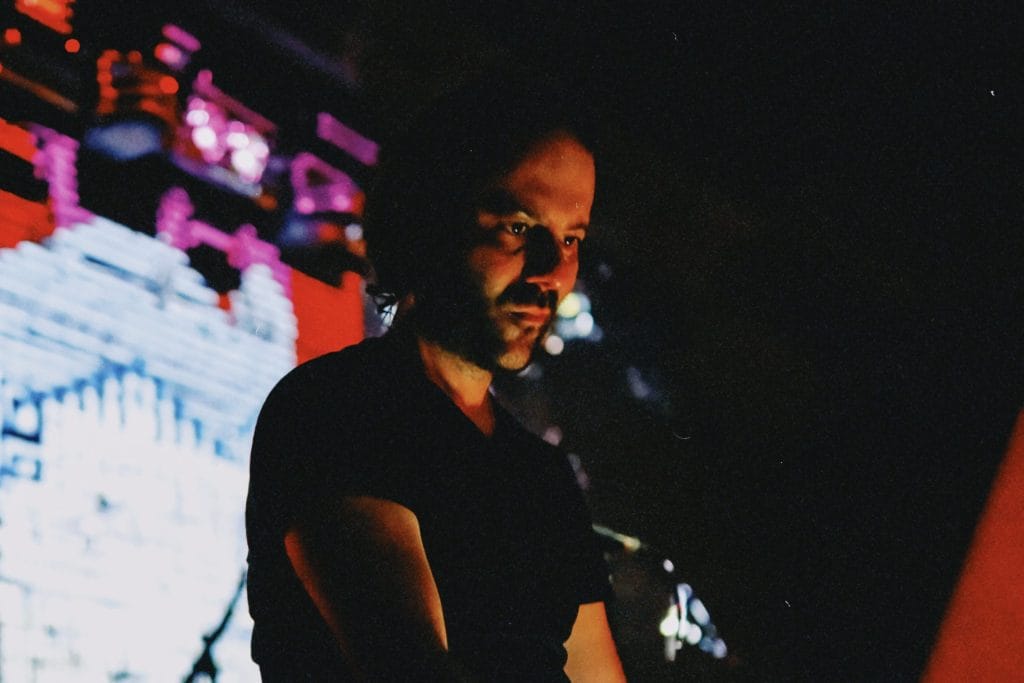
Today, we’ll explore how EISM (the alias of Bucharest-born artist Marius Copel) transformed this narrative into sound: from the hybrid of analog synths and digital processing shaping the album’s neo-industrial textures, to the ambient-cinematic layers that mirror the psychological depth of the agent’s journey. Known for crafting immersive audiovisual environments and for projects spanning film, installation, and avant-electronica, EISM approaches MEKANIKARU as both composer and world-builder, sculpting each element as if it were part of the city’s living machinery.
What follows is a look under the hood of the track “Orochi, The Serpent Woman“, and looking into the choices and tools that built this album. If you’re interested in creating electronic cinematic experiences that tell stories and build worlds, read on to see how EISM did it here.
HYPERION
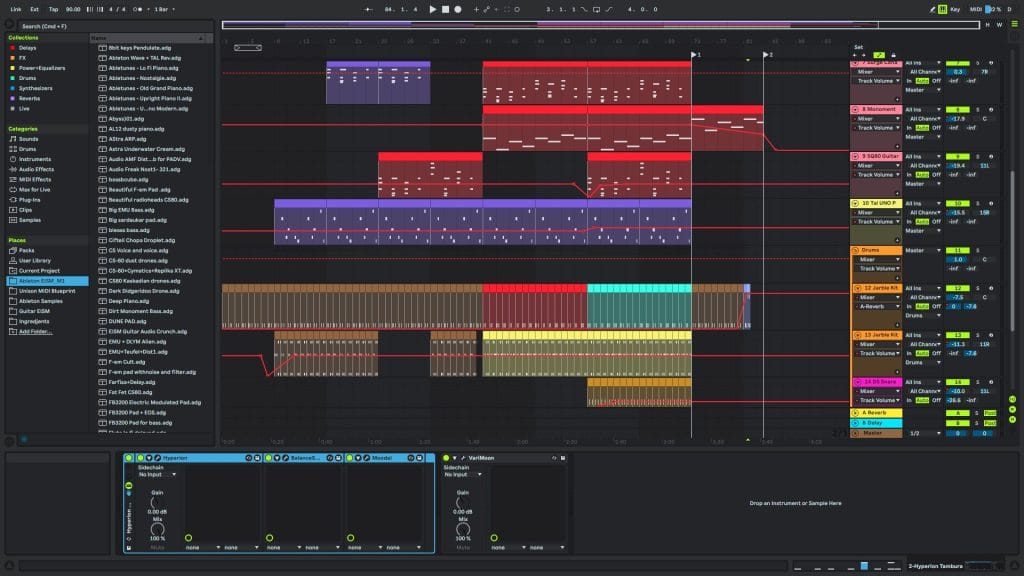
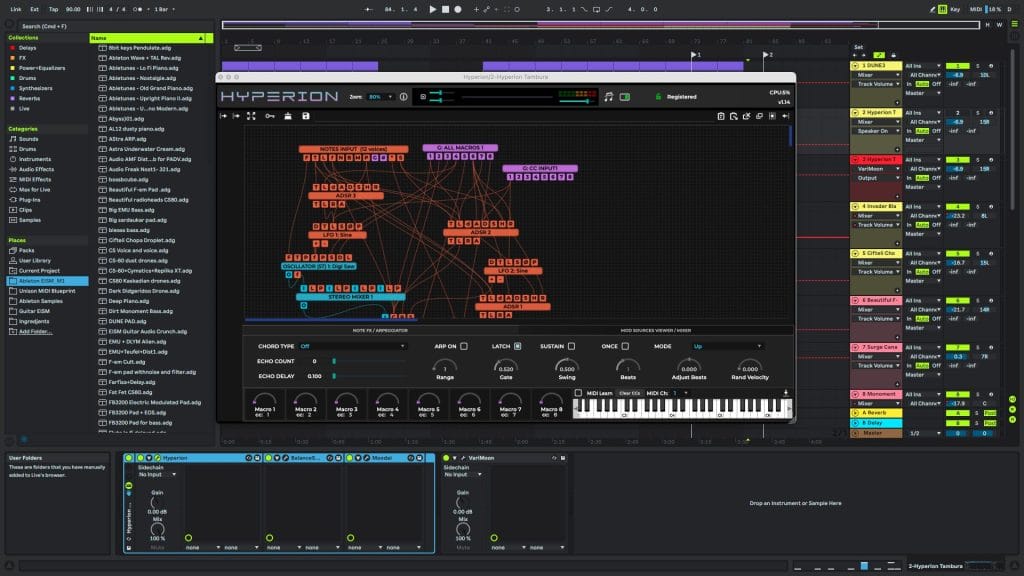
Hyperion is a very interesting and playful multi-layer modular synth. Several core sonic layers in “Orochi, The Serpent Woman” were built using Hyperion VST as a multi-instance sound engine rather than a single-patch instrument. Instead of treating Hyperion as a lead or pad source, multiple instances were stacked and distributed across the spectrum: Low-register instances handle sub-harmonic weight and slow movement, Mid-range instances generate harmonic density and emotional mass, High-register instances provide air, motion, and spectral detail.
Much of the sonic body of “Orochi, The Serpent Woman” was sculpted through Hyperion — not as a single voice, but as a chorus of synthetic organisms layered, detuned, and emotionally misaligned on purpose. Hyperion becomes less a synth and more a machine choir in this track.
Several instances run in parallel, each one breathing slightly differently, occupying its own pocket of space and frequency, creating a shifting organism rather than a flat sound. Through stacked oscillators, drifting modulation, and slow harmonic corrosion, Hyperion behaves like a living circuit — unstable, sensual, and faintly dangerous. The sound becomes thick not by volume, but by density of intention: multiple realities blurred into one voice. It’s not a lead instrument here. It’s the atmosphere thinking. The result is a layered, cinematic surface that feels ancient and futuristic at the same time — like a myth being computed in real-time.
If you’re working in cinematic electronica, or techno-noir sound design, Hyperion is exceptional for building depth through layering rather than relying on single “big” patches. Run multiple instances across low, mid, and high registers with slightly different modulation speeds and filter movement — it creates motion that feels alive instead of looped. Treat it less like a lead synth and more like a texture engine, and let each layer breathe in its own space with different reverbs and stereo positions. The power of Hyperion is not in making one sound loud, but in making many sounds feel like one organism.
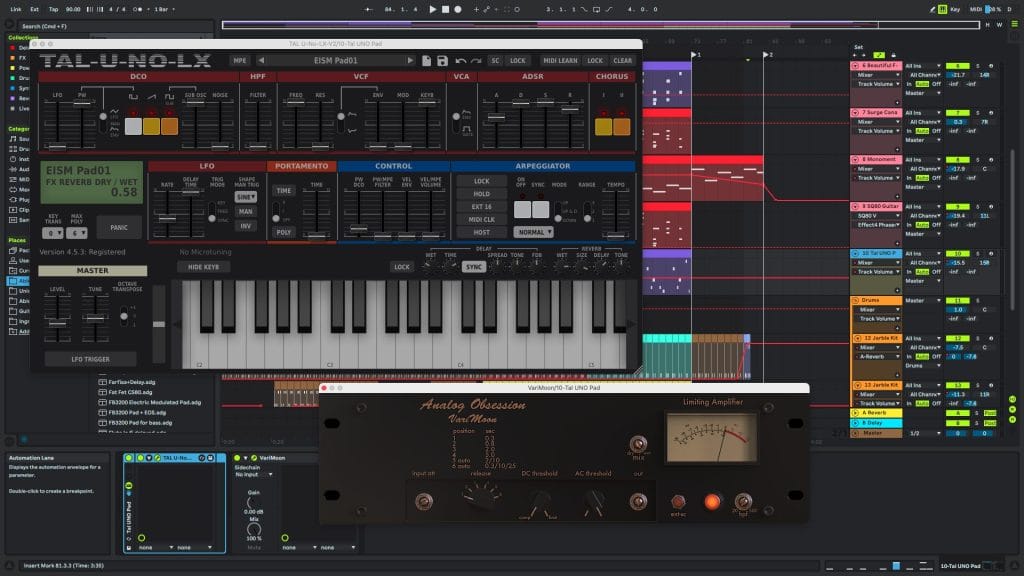
TAL-U-NO-LX
TAL-U-NO-LX is a software emulation of the Roland Juno-60 / Juno-106 architecture, built around classic virtual-analog subtractive synthesis with a single-oscillator signal path enhanced by sub-oscillator, noise, and a signature stereo chorus. Its sound is defined by tight envelopes, a fast low-pass filter, and a chorus circuit that introduces subtle detuning and stereo movement, making it ideal for warm pads, evolving drones, and unstable-sounding textures.
In darker and cinematic genres, TAL-U-NO-LX excels at producing slow-burn atmospheres, degraded harmonics, and wide, melancholic pads when driven gently into saturation and modulation. The simplicity of the engine forces strong sound design choices — filter motion and chorus become the main expressive tools. Used in layers, it adds emotional weight and nostalgia-coded color that contrasts perfectly with more modern or digital synths.
TAL-U-NO-LX is perfect for creating emotionally heavy pads and melancholic harmonic beds with very little effort. Use the chorus generously and keep the filter slowly moving to get that drifting, unstable “nocturnal” character that works so well under darker productions. It shines when layered quietly behind more complex synths, adding warmth and nostalgia without stealing focus. Think of it less as a lead machine and more as your emotional glue layer.
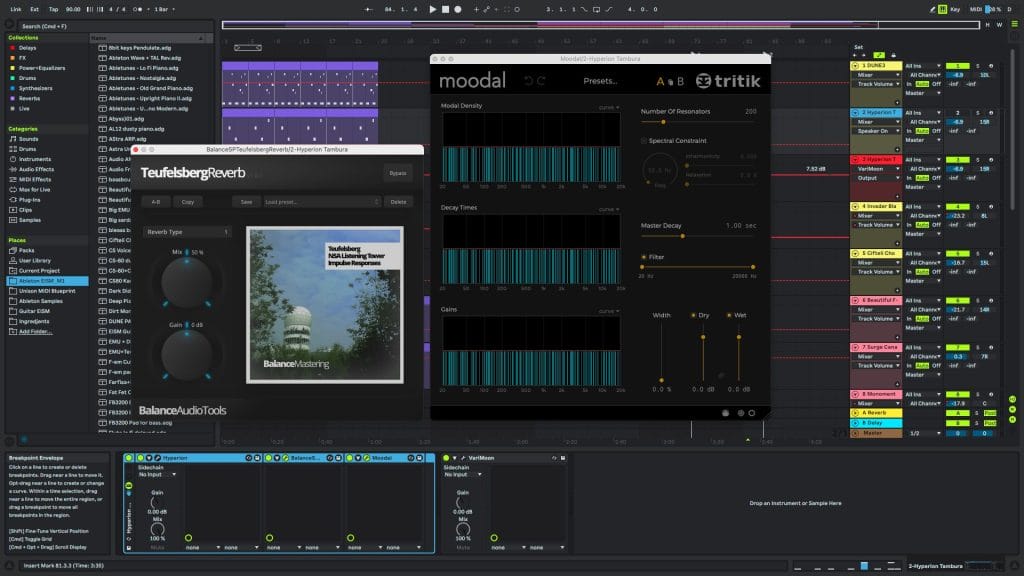
TRITIK MOODAL
Tritik Moodal is used as a spectral coloration and saturation stage to deform the naturally clean output of Hyperion into something more organic, unstable, and ritualistic. Instead of applying it for obvious distortion, it’s driven subtly to introduce harmonic dirt, bias-style asymmetry, and low-mid warmth that mimics the imperfect vibration of acoustic drones.
By carefully shaping the transfer curve and dynamics inside Moodal, Hyperion’s smooth synth layers are transformed into a tambura-like voice — a continuous, breathing resonance rather than a static pad. The result is a tone that feels bowed, strummed, and electric at the same time: synthetic at the core, but texturally ancient on the surface. Moodal doesn’t “fuzz” the sound. It corrupts it musically.
If you’re producing dark ambient or cinematic electronics, Tritik Moodal is a powerful way to make clean synths feel ancient and alive. Try placing it after pads or drones and drive it gently until the tone starts to breathe and shimmer rather than distort. It’s especially effective for turning sterile digital layers into organ-like or tambura-style voices with real texture. Used subtly, it adds soul without shouting.

ARTURIA SQ-80-V
Arturia SQ-80 V, with its hybrid digital-wavetable architecture and analog-style filters, was used as a raw harmonic source rather than a traditional synthesizer voice. Instead of programming it for polysynth duties, a focused single-voice patch was designed to emphasize its metallic upper harmonics and unstable digital character.
The name of the initial preset was “Fading Memory”. What a strange and beautiful metaphor… The signal was driven through a chain of distortion and pedal-style plugins — treating the synth like a guitar DI rather than a keyboard instrument. With staged saturation, clipping, and dynamic shaping, the SQ-80’s synthetic tone was pushed into a vibrating electric-guitar-like layer, full of string-like attack, harmonic bloom, and unstable sustain. What begins as a digital waveform becomes a living filament of electricity, closer to a lead guitar than a synth line in both movement and emotional tension.
Arturia SQ-80 V is incredible when you stop treating it like a synth and start treating it like an instrument to abuse. Push its harsher digital waveforms into distortion, amp, and pedal plugins and it begins to behave like an electric guitar—full of bite, sustain, and unpredictable overtones. Automate pitch and filter slightly and it comes alive like a vibrating string instead of a static tone. It’s perfect for adding danger and electricity to an otherwise synthetic mix.
Quick Fire Tips on Dark Cinematic Electronica
- Most of what’s called “dark or deep electronic” today is just moodboarding for specific, bland, playlists — atmosphere without danger, melancholy without consequence. I’m not interested in making wallpaper for algorithms; I want records that feel like machines developing forbidden emotions in the dark.
- Most producers chase polish instead of presence, sanding their tracks down until there’s nothing left that can provide a memorable taste or ignite a vivid dream. I’d rather let a sound breathe, bleed, and misbehave than trap it inside another perfectly lifeless mix.
- Artists should stop obsessing over visibility and start obsessing over weight — how heavy their work feels when the room goes silent. In a world drowning in content, the only thing that cuts through now is identity that can’t be copied and emotion that won’t behave.
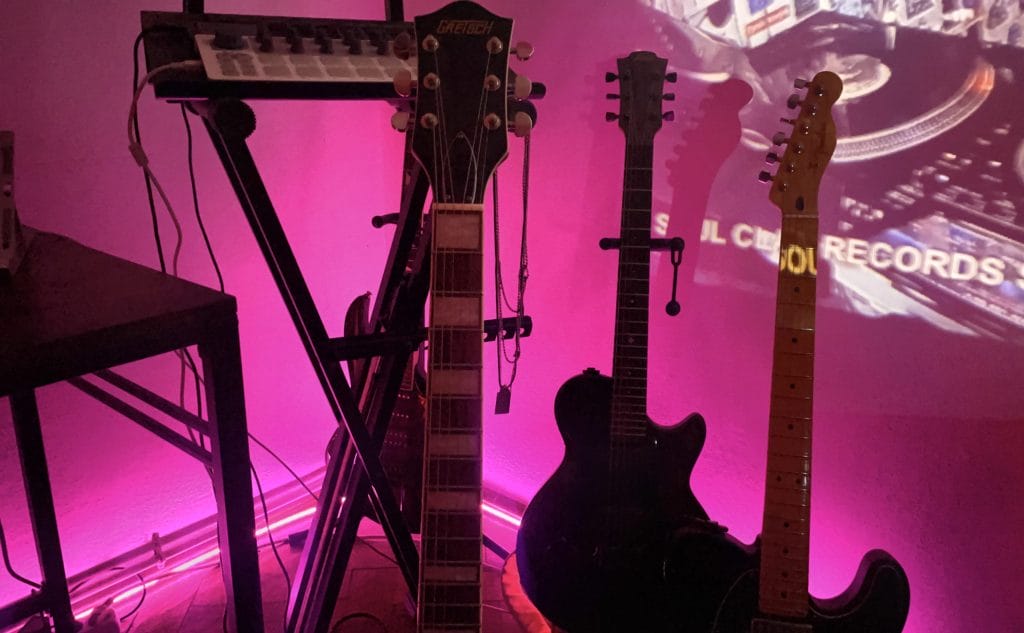
- Creativity doesn’t come from inspiration anymore — it comes from having the nerve to make something that won’t be forgiven (and forgot) by the room. Regarding gear, If your studio doesn’t have at least one electric guitar screaming in the corner, you’re missing the one instrument that still knows how to fight back.
- Trends move fast because nothing underneath them is heavy enough. I’m here to build something that survives when the algorithm gets bored.
Stream “MEKANIKARU” here.

Magnetic byline note: This byline is used for staff produced updates and short announcements, often based on press materials and official release information. Editorial responsibility: David Ireland (Editor in Chief) and Will Vance (Managing Editor). About: https://magneticmag.com/about/ Masthead: https://magneticmag.com/masthead/ Contact: https://magneticmag.com/contact/